
Google's core algorithm updates are crucial for understanding how the search engine giant evaluates and ranks web pages. These updates often create ripples in the SEO landscape, affecting website rankings and visibility. In this comprehensive article, we will delve into the various aspects of Google's core algorithm updates, starting with an overview of what these updates are and why they matter.
Understanding Google'S Core Algorithm Updates
Google's core algorithm updates are regular adjustments made to their search algorithm to improve search results and deliver more relevant and user-friendly content to searchers. These updates are designed to ensure that the search engine provides the most accurate and valuable information possible.
The Purpose of Google'S Algorithm Updates
The primary purpose of Google's algorithm updates is to refine the search engine's ability to understand the intent behind user queries and provide the most relevant results. By analyzing various factors, such as content quality, relevance, and user experience, Google can continually improve its search results and maintain its position as the leading search engine.
One important aspect of Google's algorithm updates is to combat spam and low-quality content. With each update, Google aims to identify and penalize websites that engage in manipulative tactics to rank higher in search results. This ensures that users are presented with trustworthy and reliable information, enhancing their overall search experience.
Another purpose of these updates is to adapt to the changing landscape of the internet. As technology evolves and user behavior shifts, Google needs to adjust its algorithms to keep up with the latest trends. For example, with the rise of mobile devices, Google introduced mobile-first indexing, which prioritizes mobile-friendly websites in search results.
The Impact of Algorithm Updates on Search Results
Google's algorithm updates have a significant impact on search results. Websites that do not comply with the updated algorithms may experience fluctuations in rankings, visibility, and organic traffic. Conversely, websites that adhere to the updated guidelines may see improvements in their rankings and overall online presence.
When an algorithm update is rolled out, it can cause a shake-up in the search engine rankings. Some websites may experience a sudden drop in rankings if they are not aligned with the new ranking factors. This can be a challenging time for website owners and SEO professionals, as they need to quickly adapt to the changes and make necessary adjustments to regain lost visibility.
However, it's important to note that not all fluctuations in rankings are solely due to algorithm updates. Google's search algorithm is complex and takes into account numerous factors. Other factors, such as changes in user behavior, competition, and website updates, can also influence search rankings.
Website owners and SEO professionals need to stay informed about Google's algorithm updates and make continuous efforts to optimize their websites accordingly. This involves regularly monitoring rankings, analyzing website performance, and making necessary adjustments to align with the latest guidelines.
Ultimately, Google's algorithm updates are aimed at providing users with the best possible search experience. By constantly refining and improving their search algorithm, Google ensures that users can find the most relevant and valuable information, making the internet a more useful and accessible resource for everyone.
The Evolution of Google'S Algorithm Updates
The history of Google's algorithm updates is a testament to the search engine's commitment to refining its search capabilities over time.
But let's dive deeper into the fascinating journey of Google's algorithm and how it has evolved to ensure the best search experience for users.
The Early Days of Google'S Algorithm
In the early years, Google's algorithm relied heavily on keyword density and backlinks to determine the quality and relevance of web pages. This approach worked well initially, as it helped Google deliver more accurate search results compared to other search engines at the time.
However, as SEO practices became more manipulative, Google had to adapt its algorithm to ensure that only high-quality content received top rankings. This led to the birth of several significant updates that aimed to combat spammy tactics and provide users with more relevant and reliable information.
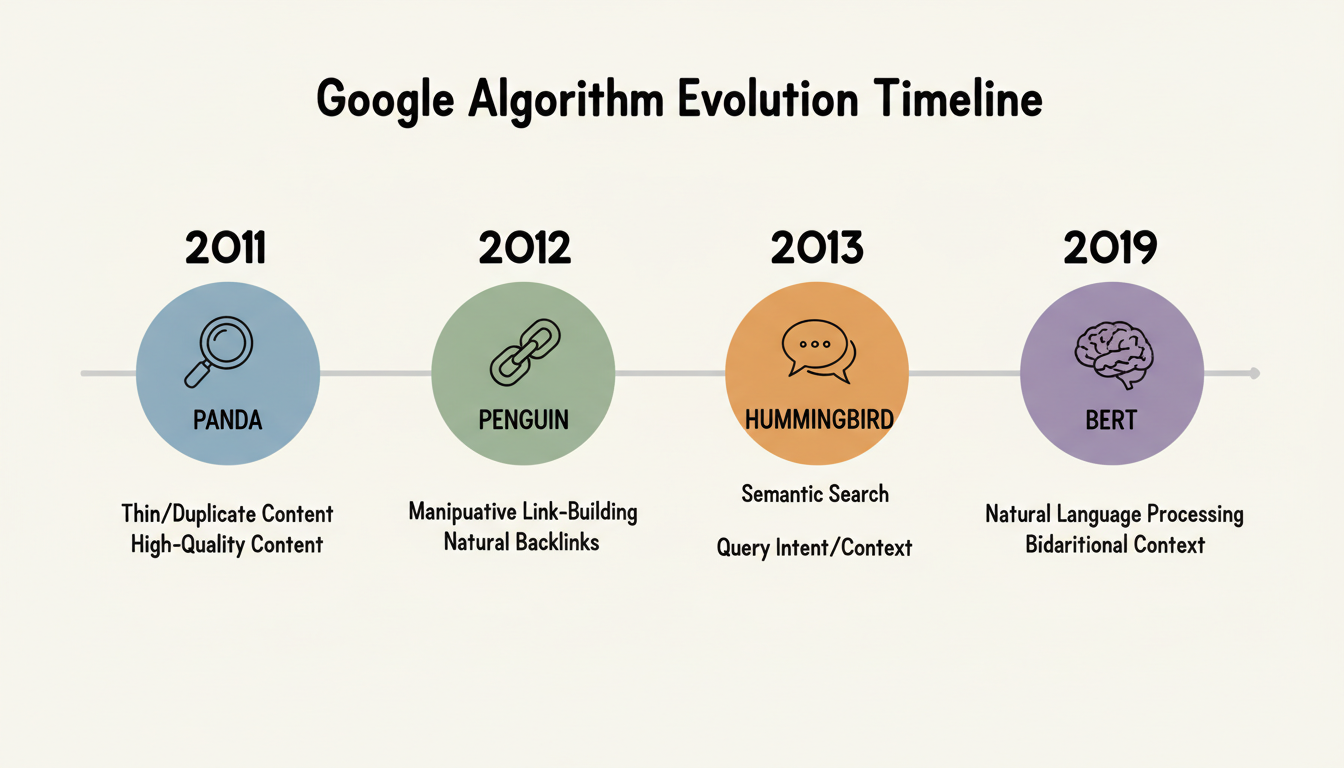
One of the first major updates was the Panda update, introduced in 2011. It focused on penalizing websites with low-quality content, such as thin or duplicate content, and rewarded sites with high-quality, original content. This update revolutionized the way content creators approached SEO, emphasizing the importance of creating valuable and unique content.
Another significant update was the Penguin update, launched in 2012. This update targeted websites that engaged in manipulative link-building practices, such as buying links or participating in link schemes. It aimed to level the playing field by rewarding websites with natural and authoritative backlinks while penalizing those that tried to game the system.
Recent Significant Updates and Their Effects
In recent years, Google has rolled out numerous significant algorithm updates, each with its unique focus and impact on search results. These updates have been designed to address specific challenges and improve the overall search experience for users.
One of the notable updates is Hummingbird, which was introduced in 2013. This update aimed to enhance Google's understanding of search queries and provide more relevant results by focusing on the context and intent behind the search. It marked a shift towards semantic search, allowing Google to interpret search queries in a more human-like manner.
Another significant update that made waves in the SEO community was the BERT update, which was rolled out in 2019. BERT stands for Bidirectional Encoder Representations from Transformers and is a natural language processing model. This update aimed to improve Google's understanding of natural language and context within search queries, leading to more accurate and relevant search results.
With each update, Google continues to refine its algorithm, making it more sophisticated and capable of delivering the best possible search results. The search engine giant remains committed to providing users with the most relevant and high-quality content, ensuring a seamless and satisfying search experience.
As technology advances and user expectations evolve, we can expect Google to continue adapting its algorithm to keep up with the ever-changing landscape of the internet.
Google Algorithm Updates: 2022 to 2026
While the updates from 2011 to 2019 laid the groundwork, Google's core algorithm updates from 2022 onward represent a fundamental shift in how the search engine evaluates content quality, fights spam, and rewards genuine expertise. This period saw some of the most consequential Google search algorithm changes in the platform's history.
The Helpful Content Update (2022-2023)
In August 2022, Google launched the Helpful Content Update, a site-wide ranking signal designed to reward content written primarily for people rather than search engines. Unlike previous core algorithm updates that evaluated pages individually, the Helpful Content Update introduced a sitewide classifier. If Google determined that a significant portion of a site's content was unhelpful or written primarily for SEO manipulation, the entire domain could see reduced rankings.
The September 2023 Helpful Content Update expanded the system further, incorporating signals around first-hand experience and expertise. This update hit particularly hard for sites relying on AI-generated content that lacked genuine human insight. In the March 2024 Core Update, Google integrated the Helpful Content System directly into its core ranking systems, making it a permanent part of how Google evaluates every page on the web.
Product Reviews Updates
Between 2022 and 2023, Google rolled out multiple Product Reviews Updates targeting affiliate and review content. These updates rewarded in-depth product reviews that demonstrated actual hands-on experience, original research, and quantitative measurements. Thin affiliate content that merely summarized manufacturer specifications without adding unique value saw significant ranking declines. The Product Reviews system was also folded into the core ranking systems during the March 2024 update.
Spam Updates and Spambrain
Google's SpamBrain, an AI-based spam prevention system, received multiple updates between 2022 and 2025. The October 2022 Spam Update and the subsequent Link Spam Updates specifically targeted manipulative link-building practices, including parasite SEO (also known as site reputation abuse), where low-quality content is hosted on high-authority domains to exploit their rankings. The March 2024 Spam Update introduced new policies specifically addressing expired domain abuse, scaled content abuse, and site reputation abuse.
The March 2024 Core Update
The March 2024 Core Update was one of the most complex and far-reaching core algorithm updates Google has ever released. Rolling out over 45 days, it simultaneously updated multiple core ranking systems, integrated the Helpful Content System and Product Reviews system into core, and introduced enhanced spam policies. Google stated this update was designed to reduce unhelpful content in search results by 40%. Many sites that had relied on scaled content production or thin affiliate strategies experienced dramatic ranking losses.
2025 Core Updates
Google released three core algorithm updates in 2025, each building on the quality and relevance signals established in 2024. The June 2025 Core Update focused on improving the assessment of topical expertise, placing greater emphasis on demonstrated subject-matter authority over raw backlink strength. The August 2025 Core Update refined local relevance signals and improved how Google surfaces content for location-specific queries. The December 2025 Core Update addressed clickbait reduction and further strengthened signals rewarding original reporting and first-hand expertise.
February 2026 Discover Core Update
The most recent Google core update is the February 2026 Discover Core Update, which finished rolling out on February 27, 2026. This update specifically targeted how content is surfaced and ranked within Google Discover, the personalized content feed that appears on mobile devices and the Google homepage. The update refined Discover's recommendation algorithms to prioritize content demonstrating strong E-E-A-T signals (Experience, Expertise, Authoritativeness, and Trustworthiness) and reduced the visibility of sensationalized or misleading headlines. You can track the status of this and all future updates on the Google Search Status Dashboard.
E-E-A-T: Google'S Core Quality Framework
E-E-A-T stands for Experience, Expertise, Authoritativeness, and Trustworthiness. It is the central quality framework that Google's quality raters use to evaluate content, and it heavily influences how core algorithm updates assess page quality. Understanding E-E-A-T is essential for anyone seeking to maintain or improve their search rankings after a Google core update.
What Is E-E-A-T?
Originally introduced as E-A-T (Expertise, Authoritativeness, Trustworthiness), Google added the extra "E" for Experience in December 2022 to its Search Quality Rater Guidelines. The updated framework recognizes that first-hand, real-world experience with a topic is a valuable quality signal, distinct from formal expertise. For example, a person who has actually used a product provides different value than someone who has only researched it academically.
- Experience: Does the content creator have first-hand or life experience with the topic? This could be personal use of a product, visiting a place, or living through an event.
- Expertise: Does the creator possess the necessary knowledge or skill for the topic? For YMYL (Your Money or Your Life) topics such as medical, financial, or legal advice, formal qualifications matter significantly.
- Authoritativeness: Is the creator or the website recognized as a go-to source for the topic? Signals include citations from other authoritative sites, industry reputation, and consistent coverage of the subject area.
- Trustworthiness: Is the content accurate, honest, and transparent? Trustworthiness is considered the most important component of E-E-A-T by Google. Factors include clear sourcing, author attribution, accurate information, and transparent disclosure of affiliations or conflicts of interest.
How E-E-A-T Affects Core Algorithm Updates
While E-E-A-T is not a single ranking factor or algorithm, it represents the qualities that Google's ranking systems are designed to reward. Each core algorithm update refines how well Google's automated systems can detect and measure these qualities. Sites that score well on E-E-A-T signals tend to be more resilient to core update volatility, while sites with weak E-E-A-T signals are more vulnerable to ranking drops.
To strengthen your E-E-A-T signals, ensure that content is written or reviewed by qualified individuals, include author bios with relevant credentials, cite reputable sources, maintain transparency about your organization, and demonstrate first-hand experience wherever possible.
AI Overviews and Their Impact on SEO
One of the most significant changes to Google Search in recent years is the introduction of AI Overviews (formerly known as Search Generative Experience or SGE). Launched broadly in 2024, AI Overviews use generative AI to synthesize answers directly in the search results, fundamentally changing how users interact with search and how algorithm updates affect website visibility.
What Are AI Overviews?
AI Overviews appear at the top of search results for certain queries, providing an AI-generated summary that draws information from multiple web sources. These summaries include citations linking to the source pages, but they significantly reduce the need for users to click through to individual websites. For informational queries, AI Overviews can answer the user's question directly on the search results page.
How AI Overviews Change Algorithm Update Dynamics
The introduction of AI Overviews has fundamentally altered the relationship between core algorithm updates and organic traffic. Previously, a core update primarily reshuffled the ten blue links on page one. Now, algorithm updates also influence which sources are cited within AI Overviews and whether an AI Overview appears for a given query at all.
Content that demonstrates strong E-E-A-T signals, provides unique data or original research, and answers questions comprehensively is more likely to be cited in AI Overviews. Conversely, generic content that merely restates commonly available information is less likely to earn citations. This makes the relationship between content quality and visibility even more direct than it was in the era of traditional search results.
To optimize for AI Overviews, focus on creating content with clear, well-structured answers to specific questions, include original data and expert perspectives, use proper heading hierarchy, and ensure your structured data is accurate and up to date.
Key Components of Google'S Core Algorithm
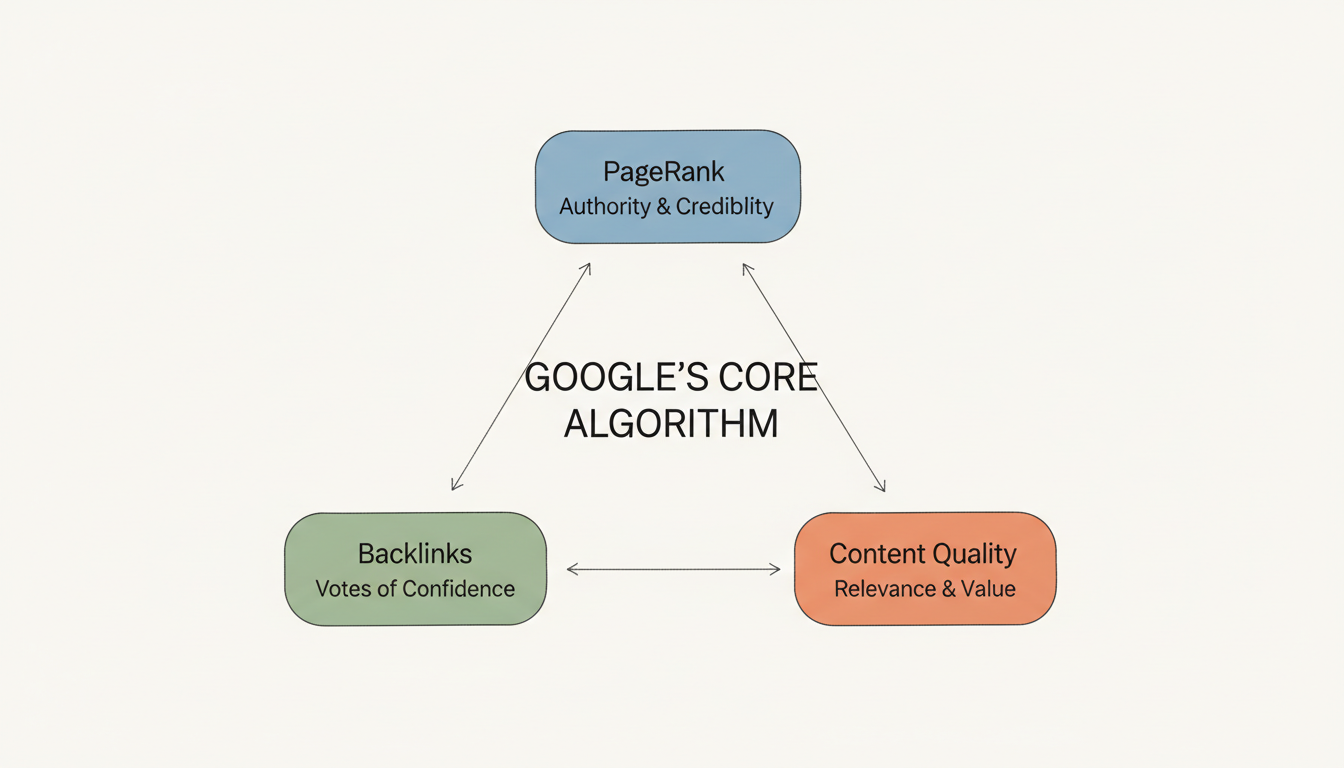
Google's core algorithm consists of several key components that work together to determine the relevance and quality of web pages. Understanding these components is crucial for optimizing websites and staying ahead of algorithm updates.
When it comes to Google's algorithm, one of the fundamental components that cannot be overlooked is PageRank. PageRank serves as the foundation of Google's algorithm, measuring the authority and credibility of web pages based on the quantity and quality of links pointing to them. In other words, it evaluates the popularity and importance of a webpage by analyzing the number and quality of backlinks it receives from other websites. Pages with high-quality backlinks from reputable sources tend to have higher PageRank, indicating their significance in the online world.
However, it's important to note that PageRank is not the sole factor that determines a webpage's ranking. Google's algorithm takes into account various other components to provide users with the most relevant and useful search results.
The Role of Backlinks in Google'S Algorithm
While PageRank sets the foundation, backlinks remain an essential factor in Google's algorithm. Backlinks, also known as inbound links, are links from other websites that point to a specific webpage. These links act as votes of confidence, indicating that other websites find the content valuable and trustworthy.
In the early days of Google, the quantity of backlinks played a significant role in determining a webpage's ranking. However, as the search engine evolved, it became evident that the quality of backlinks is equally important, if not more. Acquiring relevant, authoritative backlinks from reputable websites is still vital for improving rankings and establishing credibility.
Google's algorithm now places a greater emphasis on the relevance and authority of the linking website. For example, a backlink from a highly reputable website in the same industry carries more weight than multiple backlinks from low-quality websites. This shift in focus ensures that the algorithm rewards websites that have earned genuine endorsements from authoritative sources.
Content Quality and Its Influence on Rankings
Content quality is paramount in Google's algorithm updates. The search engine aims to provide users with the most relevant and valuable information for their queries. As a result, websites with high-quality content tend to rank higher in search results.
So, what exactly constitutes high-quality content? It goes beyond simply stuffing keywords into a webpage. High-quality content is informative, engaging, relevant, and unique. It should provide value to users and answer their queries comprehensively. Google's algorithm evaluates various aspects of content, such as its relevance to the search query, its readability, and its overall user experience.
Additionally, Google's algorithm also considers the originality of the content. Websites that publish well-optimized, original content are more likely to rank higher. This encourages website owners to invest in creating unique and valuable content that sets them apart from their competitors.
It's worth noting that content quality is not a one-time effort. Google's algorithm is constantly evolving, and it rewards websites that consistently produce high-quality content. This means that website owners need to stay updated with the latest trends and best practices in content creation to maintain their rankings.
In conclusion, Google's core algorithm consists of various key components, including PageRank, backlinks, and content quality. Understanding and optimizing these components is essential for website owners who want to improve their rankings and stay ahead of algorithm updates.
How to Stay Updated on Google'S Algorithm Changes
Keeping track of Google's algorithm changes is essential for SEO professionals and website owners. Staying informed allows them to adapt their strategies and maintain optimum performance in search results. Here are the most important sources of information:
Google Search Status Dashboard
The Google Search Status Dashboard is the authoritative source for tracking all confirmed Google search algorithm changes and core algorithm updates. When a core update begins rolling out, Google posts an incident on the dashboard with start and end dates. Bookmark this page and check it regularly, as it is the single most reliable way to confirm whether a ranking change you observe is related to an official update.
Google Search Central Blog
The Google Search Central Blog (formerly Google Webmaster Central Blog) publishes detailed announcements about major algorithm updates, new spam policies, and changes to Google's Search Quality Rater Guidelines. These posts often include specific guidance on what the update targets and how site owners should respond.
Official Google Communications and Blogs
Google regularly publishes official communications and blog posts to announce significant algorithm updates and provide insights into their goals. These resources offer valuable information and best practices to ensure compliance with the latest algorithm criteria.
SEO Community Discussions and Analysis
The SEO community is a vibrant space where professionals share their experiences, observations, and analysis of Google's algorithm updates. Engaging in these discussions and leveraging collective knowledge helps stay ahead of the curve and understand the potential impact of algorithm changes.
Google Search Console
Google Search Console is an indispensable tool for monitoring how core algorithm updates affect your specific site. After an update rolls out, use the Performance report to compare impressions, clicks, and average position before and after the update. The Search Console will also surface any manual actions or security issues that may compound ranking changes.
How to Recover from a Google Core Algorithm Update
If your site experiences a significant ranking drop after a core algorithm update, recovery is possible but requires a systematic approach. Google has stated that there is nothing specific to "fix" after a core update -- instead, the focus should be on improving overall content quality. Here is a structured recovery framework:
Step 1: Confirm the Update Caused the Drop
Before taking action, verify that the ranking decline aligns with a confirmed core algorithm update by checking the Google Search Status Dashboard. Compare the timing of your traffic loss in Google Search Console with the update's rollout dates. Not every ranking fluctuation is caused by a core update; seasonal trends, technical issues, or competitor improvements can also be factors.
Step 2: Audit Content Quality Against E-E-A-T
Review your most affected pages through the lens of E-E-A-T. Ask whether the content demonstrates genuine experience and expertise, whether it is authored by or reviewed by someone with relevant qualifications, and whether it provides unique value beyond what is already available in competing pages. Google's own guide to creating helpful, reliable, people-first content provides a detailed self-assessment checklist.
Step 3: Identify and Improve Underperforming Content
Use Google Search Console to identify pages that lost the most impressions and clicks. For each page, determine whether it should be improved, consolidated with other pages, or removed entirely. Thin pages with little unique value can drag down sitewide quality signals. Consolidating similar pages into a single comprehensive resource often produces better results than maintaining multiple weak pages.
Step 4: Strengthen Technical SEO Fundamentals
While core updates primarily target content quality, technical issues can compound their impact. Ensure your site has fast Core Web Vitals scores, a clean mobile experience, proper structured data markup, no crawl errors, and a logical internal linking structure. Fix any issues surfaced in Google Search Console's Page Experience report.
Step 5: Monitor and Iterate
Recovery from a core algorithm update typically does not happen instantly. Google has stated that improved content may not recover until the next core update is released, which can be months later. Continue monitoring your performance in Google Search Console, keep improving content quality, and be patient. Sites that make genuine, sustained quality improvements tend to recover over time.
Adapting SEO Strategies to Google'S Algorithm Updates
Adapting SEO strategies to align with Google's algorithm updates is crucial for maintaining and improving website rankings. While each algorithm change requires a unique approach, some foundational principles remain constant.
The Importance of High-Quality Content
High-quality content has consistently been a priority for Google. By creating valuable, well-structured, and engaging content, website owners can cater to user intent and increase their chances of ranking highly in search results.
The Role of User Experience in SEO
User experience plays a vital role in Google's algorithm updates. Websites that provide a seamless navigation experience, fast page loading times, and mobile-friendliness tend to receive better rankings. Optimizing user experience is essential for long-term success in search engine optimization.
Mobile Optimization in the Age of Mobile-First Indexing
With the shift towards mobile-first indexing, optimizing websites for mobile devices is no longer optional -- it is imperative. Mobile-friendly websites that offer a smooth user experience on smartphones and tablets are more likely to rank higher in search results. Google's mobile algorithm updates have progressively increased the weight given to mobile usability, and with the majority of searches now occurring on mobile devices, ensuring a responsive design, fast mobile load times, and accessible navigation is critical for maintaining search visibility.
Frequently Asked Questions
Are Google'S Algorithm Updates the Same as Google Core Updates?
No, they are not the same. Google's algorithm updates is a broad term that encompasses all changes Google makes to its search ranking systems, including spam updates, product reviews updates, helpful content updates, and more. Google core updates are a specific type of algorithm update that broadly affects how Google's core ranking systems assess content overall. Core updates happen several times per year and tend to produce wider ranking fluctuations than other types of updates. You can track all confirmed updates on the Google Search Status Dashboard.
Why Is It Important to Keep Track of Google Algorithm Updates?
Tracking Google algorithm updates is essential because it helps you understand why your site's rankings, traffic, and visibility may have changed. If you notice a sudden drop in organic traffic, knowing whether a core update was recently released helps you diagnose the cause and plan an appropriate response. It also allows you to stay ahead of competitors by proactively aligning your content and SEO strategies with the latest quality signals Google is prioritizing.
What Should You Do to Keep Up with Google Mobile Algorithm Updates?
To stay aligned with Google's mobile algorithm updates and mobile-first indexing, ensure your website uses responsive design, passes Core Web Vitals thresholds on mobile devices, loads quickly on cellular connections, and provides an accessible navigation experience on small screens. Regularly test your site with Google's PageSpeed Insights and the Mobile Usability report in Google Search Console. Since Google predominantly uses the mobile version of your site for indexing and ranking, any issues on mobile directly affect your search visibility across all devices.
In conclusion, understanding Google's core algorithm updates is crucial for anyone involved in online marketing and SEO. The search landscape has evolved dramatically from the early days of Panda and Penguin to the modern era of E-E-A-T evaluation, AI Overviews, and the February 2026 Discover Core Update. By staying informed through the Google Search Status Dashboard, auditing your content against E-E-A-T standards, and adapting your strategies to each new update, website owners can navigate the ever-evolving search landscape and maximize their online visibility.