
Traditional link building focused on quantity and domain authority scores. AEO link building -- also called link building for ai search optimization -- focuses on the signals AI systems actually evaluate when deciding which sources to trust and cite. The shift from "build links" to "build authority" fundamentally changes how organizations approach citation development for AI visibility. For practical implementations of these principles, see real-world AEO optimization examples across industries.
According to IDX's Authority Flywheel guide, AI search prioritizes semantic proximity—the on-topic relevance between your content and the source linking to it. Combining link development, Entity SEO, and Answer Engine Optimization positions your brand as a trusted node in the AI Knowledge Graph.
How AI Systems Evaluate Authority for AI Search Optimization
AI models use different trust signals than traditional search algorithms.
According to Contently's LLM trust signals analysis, LLMs evaluate multiple trust dimensions: expert authority (verifiable author credentials and domain expertise), factual accuracy (claims that align with authoritative sources), entity consistency (brand information that matches across digital properties), content freshness (recently updated information), and corroboration (facts confirmed across multiple independent sources).
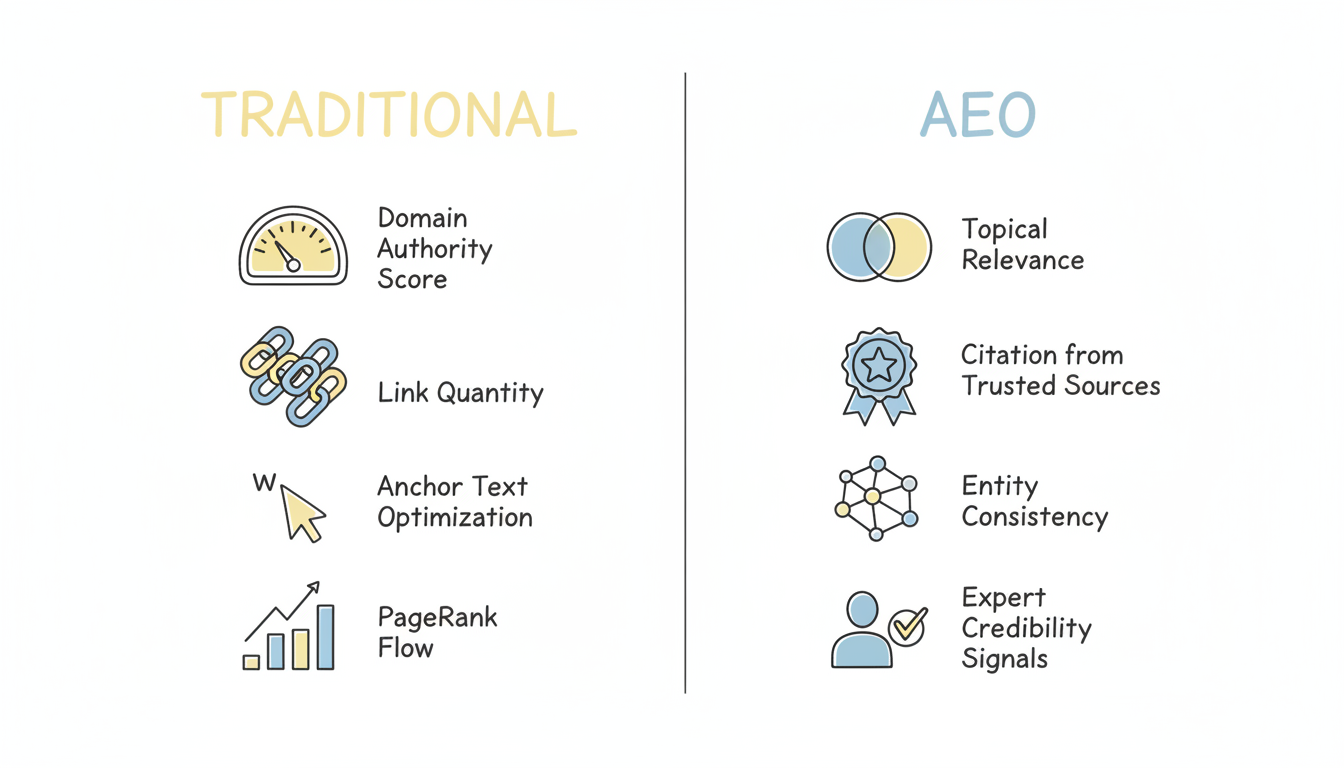
Traditional vs. AEO authority signals:
Traditional Link Building | AEO Authority Building |
Domain Authority score | Topical relevance to linking site |
Link quantity | Citation from trusted sources |
Anchor text optimization | Entity consistency across web |
PageRank flow | Expert credibility signals |
The Earned Media Foundation
Digital PR drives AEO authority more effectively than traditional link tactics.
According to AuthorityTech's GEO optimization checklist, AI engines cite earned media 5x more than brand-owned content. Without earned media, even perfectly structured content struggles to earn AI citations. The GEO search optimization checklist prioritizes what actually works: earned media first, content structure second, technical signals third.
Authority building priorities:
AEO Authority Building Stack
├── Earned Media (Highest Impact)
│   ├── Press coverage in industry publications
│   ├── Expert quotes in news articles
│   ├── Mentions in respected outlets
│   └── 5x citation advantage over owned content
│
├── Citation Development (High Impact)
│   ├── Wikipedia references
│   ├── Academic/research citations
│   ├── Industry report mentions
│   └── Cross-validation sources
│
├── Content Authority (Medium Impact)
│   ├── Expert authorship signals
│   ├── Primary research publication
│   ├── Unique data and insights
│   └── Comprehensive topic coverage
│
└── Technical Signals (Supporting)
    ├── Schema markup
    ├── Entity optimization
    └── Site structure
Strategic PR builds the authority signals AI systems trust most.
According to Jordan Stevens' link building guide, digital PR was the most effective link-building tactic in 2025, according to industry research. Link bait is content designed to get links to your website naturally, and authority works like this: a website with more links is better, and a website with more links from other sites that have more links is even higher quality.
Digital PR tactics for AEO:
Tactic | Authority Signal Generated |
Expert commentary | Credibility through publication association |
Original research | Primary source status |
Data journalism | Citable statistics and findings |
Thought leadership | Expert entity recognition |
Reactive PR | Timely expertise demonstration |
Entity Optimization and Brand Signals
AI systems prioritize recognizable, consistent entities when selecting citation sources.
According to LinkedIn SEO thought leadership, search is shifting from "Which URL answers this?" to "Which brand is credible enough to trust?" If AI can't clearly understand who you are, you're invisible. Strong topical authority -- meaning depth of content and backlinks within a specific topic cluster -- helps AI systems determine whether a domain is a credible source on a subject. This differs from domain authority, which measures overall link equity without topic specificity. Topical authority supported by structured content and real expert bylines helps brands get cited by AI.
Entity consistency requirements:
- Consistent brand name across all properties
- Matching organizational information on Google Business, LinkedIn, Crunchbase
- Author profiles with credentials on multiple platforms
- Structured data confirming entity relationships
- Wikipedia presence where applicable
AI systems also treat unlinked brand mentions as trust signals. When your brand is referenced across authoritative sources without a hyperlink, AI models still register this as a credibility indicator. Monitor unlinked mentions using Ahrefs Content Explorer and convert high-value ones to backlinks to compound both traditional SEO and AEO authority.
Citations That AI Systems Trust
Certain citation sources carry more weight for AI authority building.
According to GetRevised's AI SEO analysis, over 99% of sources cited in Google's AI Overviews come from pages already ranking in the top 10 organic results. A link from Wikipedia, a citation in a respected publication, mentions on Reddit and Hacker News—these signals tell AI-powered search tools your content is worth citing.
High-value citation sources:
Citation Authority Hierarchy
├── Tier 1: Maximum Authority
│   ├── Wikipedia (properly sourced)
│   ├── Academic/research publications
│   ├── Government sources
│   └── Major news outlets
│
├── Tier 2: Strong Authority
│   ├── Industry publications
│   ├── Trade associations
│   ├── Expert review platforms
│   └── Established media outlets
│
├── Tier 3: Supporting Authority
│   ├── Industry blogs with reputation
│   ├── Community platforms (Reddit, HN)
│   ├── Professional networks
│   └── Niche authority sites
│
└── Low/No Value for AEO
    ├── Generic directories
    ├── Link farms
    ├── PBNs
    └── Paid placements without editorial
Sustainable AEO authority requires systematic approach.
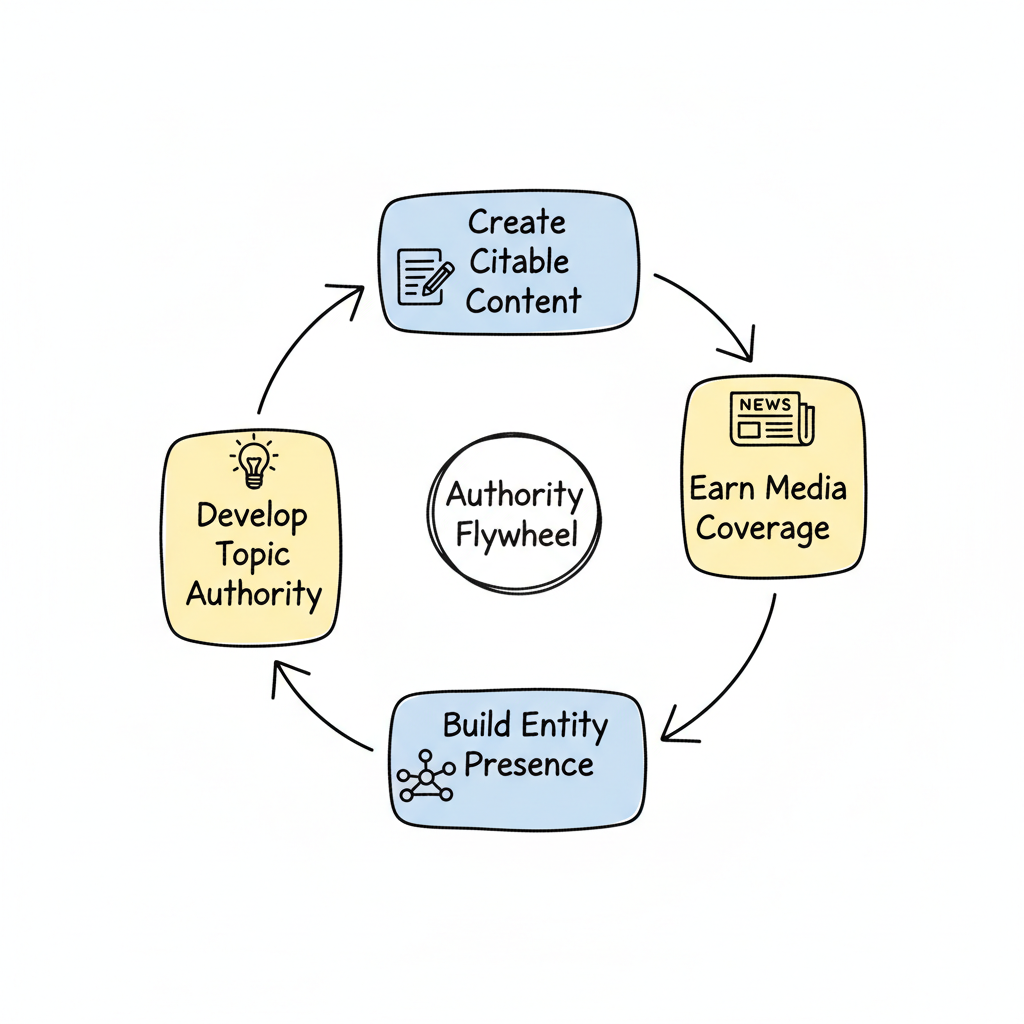
According to IDX, build authority and trust, not just links. The Authority Flywheel is a system for earning high-value, machine-scannable citations that drive lasting visibility in the age of AI search. Link quality indicators include domain authority score, topical relevance and editorial context, and grounding/source diversity. Implementing structured data for AI search through JSON-LD Article and Organization schema reinforces the entity signals that AI systems use when evaluating link authority. These markup patterns help AI models connect your backlink profile to verified entity information, strengthening citation likelihood.
Authority flywheel components:
Component | Activities | Outcome |
Create citable content | Original research, expert analysis | Source material |
Earn media coverage | PR outreach, expert commentary | Third-party validation |
Build entity presence | Profile optimization, mentions | Recognition signals |
Develop topic authority | Comprehensive content depth | Niche expertise |
AEO Link Building vs. GEO: How Strategies Differ
AEO and GEO (Generative Engine Optimization) are related but distinct disciplines. AEO link building targets citation authority across all answer engines -- voice assistants, featured snippets, and AI chat platforms. GEO focuses specifically on optimizing content for generative AI output from systems like ChatGPT and Perplexity.
The practical difference: AEO prioritizes trust signals and entity authority to earn citations broadly, while GEO emphasizes content structure optimized for RAG (Retrieval-Augmented Generation) retrieval pipelines. Both benefit from high-authority backlinks, structured data, and topical depth.
Dimension | AEO Link Building | GEO Link Building |
Primary goal | Citation authority across all answer engines | Visibility in generative AI outputs |
Key signal | Entity trust and domain credibility | Content structure for RAG retrieval |
Link focus | Editorially vetted, topically relevant sources | Sources frequently crawled by AI bots |
Best for | Broad answer-engine visibility | ChatGPT/Perplexity-specific optimization |
When to use each: AEO link building for organizations seeking broad answer-engine visibility across Google AI Overviews, voice search, and featured snippets. GEO for teams specifically targeting generative AI platforms. Most effective strategies combine both, using AEO authority signals as the foundation and GEO-specific tactics for platform optimization. For GEO-specific tooling, explore generative engine optimization tools that complement your AEO link building efforts.
How AI Platforms Evaluate Link Authority
Different AI platforms weigh link authority through distinct mechanisms. Understanding these differences helps prioritize link building efforts for maximum AI citation impact.
ChatGPT (Search/Browsing mode) weighs domain authority of cited sources and prefers pages with clear entity associations and structured data. Links from high-DA editorial sites increase citation likelihood. ChatGPT's browsing mode surfaces sources that demonstrate verifiable expertise and cross-platform credibility.
Perplexity AI uses a RAG-based retrieval model with transparent, URL-linked citations. Perplexity values recency and topical relevance of linking domains. Backlinks from frequently-crawled sources carry more weight because Perplexity's index favors fresh, actively-referenced content.
Google AI Overviews are heavily E-E-A-T weighted. There is a strong correlation between top-10 organic ranking and AI Overview citation -- per GetRevised data, over 99% of cited sources already rank on page one. Backlink quality directly influences organic rank, which in turn feeds AI Overview selection. For a deeper analysis of this dynamic, see the Google AI Overview SEO impact on citation patterns.
Google Gemini operates distinctly from AI Overviews. Gemini pulls from the Knowledge Graph and conversational context, meaning entity-level authority matters more than page-level backlinks. Building a strong entity presence across structured data sources directly influences Gemini citations.
Emerging platforms like Claude and Microsoft Copilot show similar patterns: authoritative, well-structured content from recognized entities earns citations. The common thread across all platforms is that building genuine topical authority through quality backlinks remains the most reliable path to AI visibility.
AEO Link Building Tools and Workflows
Effective AEO link building requires the right tools to identify prospects, earn citations, and measure AI visibility impact. For a comprehensive overview of the broader toolkit ecosystem, see AEO tools and software available for answer engine optimization.
Ahrefs provides backlink analysis for identifying high-authority link prospects within your topic cluster. Use Content Explorer to find unlinked brand mentions -- opportunities where your brand is referenced without a hyperlink. Monitor referring domain quality to assess which backlinks correlate with stronger AEO signals.
HARO / Connectively enables earning expert citations in high-DA publications. Responding to journalist queries positions your brand as an authoritative source that AI systems already reference, building the earned media foundation that drives AI citations.
Semrush offers AI visibility tracking features alongside its link building toolkit. Use it for prospecting link targets, monitoring which backlinks correlate with AI citation improvements, and tracking your share of voice across answer engines.
Moz Domain Authority remains useful as a proxy metric when evaluating link prospect quality for AEO. However, topical authority within your specific knowledge domain matters more than raw DA scores for AI citation purposes.
A practical AEO link building workflow:
- Identify high-authority prospects within your entity cluster using Ahrefs or Semrush
- Earn citations through digital PR, expert commentary on HARO, and original research publication
- Monitor AI citation impact using AI citation tracking tools like Otterly.ai or Peec AI
- Iterate on link targets that demonstrably drive AI visibility improvements
Measuring AEO Authority Progress
Track authority development with appropriate metrics.
According to Contently, Semrush extends its keyword intelligence platform with AI visibility tracking, helping teams identify which content earns citations and which trust signals differentiate cited from ignored sources. Using best AEO tools reviews can help measure your progress across multiple answer engines.
Authority metrics to track:
- Citation frequency across AI platforms
- Brand mention growth in AI responses
- Earned media coverage volume
- Entity consistency scores
- Share of voice vs. competitors
If you are a founder handling your own PR, our guide to using HARO for startups to earn backlinks walks through the journalist-pitch workflow.
Frequently Asked Questions
Is Link Building Still Relevant for AI Search Optimization?
Yes. Link building remains critical for AI search optimization because answer engines like ChatGPT, Perplexity, and Google AI Overviews use authority signals to decide which sources to cite. High-quality backlinks from trusted domains signal credibility to these systems. The difference is that AEO link building prioritizes citation-worthy authority over raw link volume. Links from editorially vetted publications, research institutions, and topical authorities carry disproportionate weight in AI citation algorithms.
What Is AEO and How Does It Work?
AEO stands for Answer Engine Optimization. It is the practice of optimizing content so that AI-powered answer engines cite your brand in their responses. AEO works by strengthening three pillars: entity authority (being recognized as a credible source on a topic), content structure (formatting information so AI systems can extract it), and trust signals (earning backlinks and mentions from authoritative sources that AI systems already trust).
How Is AEO Link Building Different from Traditional SEO Link Building?
Traditional SEO link building focuses on increasing domain authority to improve organic search rankings. AEO link building targets the specific authority signals that AI answer engines evaluate when selecting sources to cite. This means prioritizing links from entities that AI systems already reference, building topical authority within specific knowledge domains, and earning citations in formats that AI can parse and attribute. Volume matters less than contextual relevance and source trust tier.
What Tools Can I Use to Track Whether My Links Improve AI Citations?
Several tools help connect link building efforts to AI citation outcomes. Semrush and Ahrefs track backlink profiles and emerging AI visibility metrics. Dedicated AEO platforms like Otterly.ai and Peec AI monitor when AI systems cite your content across ChatGPT, Perplexity, and Google AI Overviews. For a free starting point, monitor server logs for GPTBot and PerplexityBot crawl activity, which indicates AI systems are indexing your content for potential citation.
Key Takeaways
AEO link building requires evolved approaches focused on authority signals:
- Authority over links - AI systems evaluate trust, credibility, and topical relevance
- Earned media drives citations - PR generates 5x more AI citations than owned content
- Entity consistency matters - Matching brand information across platforms builds recognition
- Quality sources compound - Wikipedia, publications, and expert platforms carry highest weight
- Systematic approach wins - Build authority flywheels, not link campaigns
According to ALM Corp's SEO trends analysis, the brands that dominate search in 2026 understand that SEO is no longer a technical checklist—it's a comprehensive visibility strategy built on genuine expertise, multi-platform presence, and relentless focus on serving user needs better than anyone else.