
AEO Optimization Examples: Real Before/After Success Stories
Answer engine optimization produces measurable, documented results when implemented correctly. These AEO optimization examples from real companies demonstrate what AEO success looks like in practice—from increased AI citations to qualified lead generation. Understanding these transformations helps set realistic expectations and identify optimization patterns that work.
According to Siege Media's GEO analysis, generative engine optimization reflects how users interact with content today through AI-driven search engines, chatbots, and voice assistants. Adapting content strategy to this reality means better visibility, engagement, and conversion in the evolving digital landscape.
See how your own site stacks up with our free AEO grader tool -- it evaluates your content against the same optimization patterns used in these examples.
How Does AEO Differ from Traditional SEO?
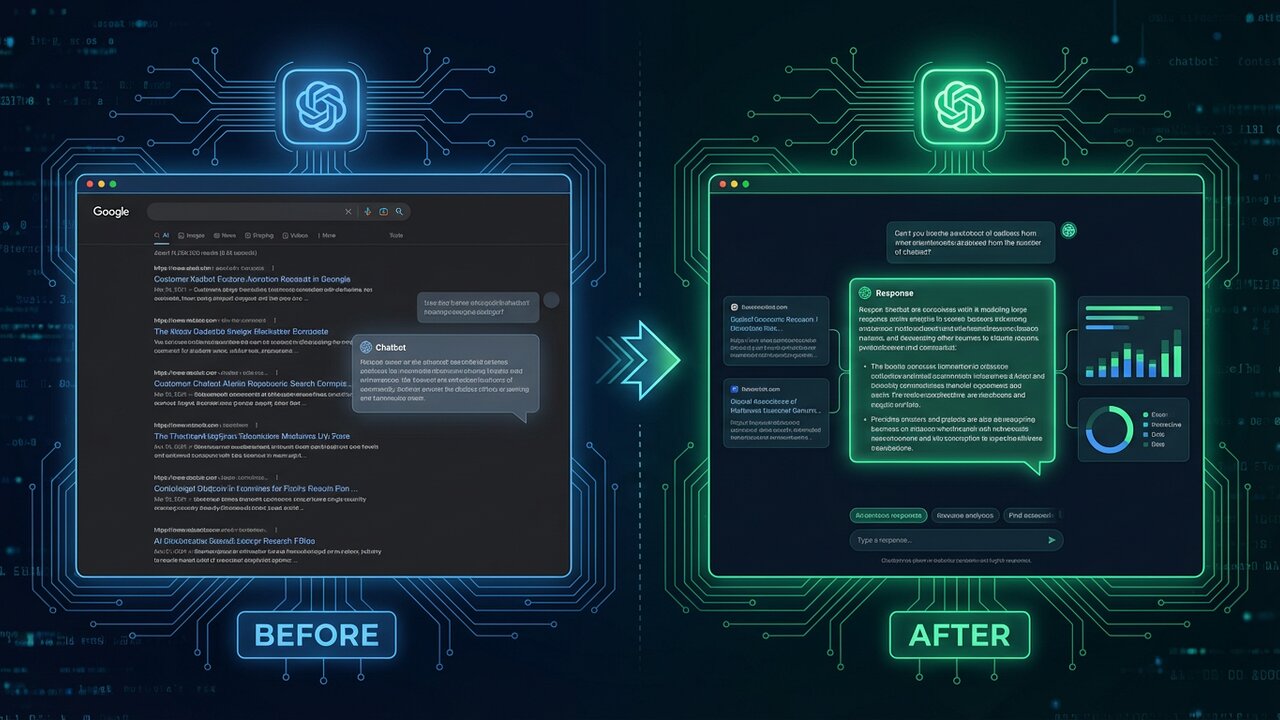
Before diving into real-world examples, it helps to understand how answer engine optimization differs from traditional search engine optimization. While both disciplines aim to increase visibility, they target fundamentally different surfaces and require distinct content strategies.
Dimension | Traditional SEO | Answer Engine Optimization (AEO) |
Primary goal | Rank on search engine results pages | Get cited in AI-generated answers |
Target surface | Google/Bing organic results | ChatGPT, Perplexity, Google AI Overviews, voice assistants |
Content format | Long-form, keyword-rich pages | Concise, structured, citation-ready blocks |
Success metric | Rankings, organic traffic, CTR | AI citation rate, AI referral traffic, share of voice |
Optimization focus | Keywords, backlinks, technical SEO | Schema markup, E-E-A-T, structured answers, FAQ integration |
Timeline to results | 3-12 months typical | 90 days to 6 months for measurable lift |
AEO does not replace SEO. Instead, the two approaches complement each other. Strong SEO foundations such as quality content, technical health, and backlink authority make AEO more effective because answer engines prioritize citing authoritative, well-structured sources.
Documented AEO Success Metrics
Before examining specific AEO optimization examples, understanding what success looks like helps contextualize these results.
According to Conductor's 2026 AEO/GEO Benchmarks Report, organizations must measure AI visibility as rigorously as SEO visibility—tracking citations and mentions as core KPIs. Visibility no longer begins on your website; it starts within the AI experiences that answer questions, guide intent, and shape perception in real time.
The AEO optimization examples below are evaluated against these key success metrics:
Metric | What It Measures | Benchmark |
AI citation rate | How often cited in AI answers | 10-30% of relevant queries |
AI referral traffic | Visitors from AI platforms | Growing percentage month-over-month |
Conversion rate | AI traffic converting to leads | Often higher than organic |
Share of voice | Brand mentions vs competitors | Increasing relative to market |
What Role Do Google AI Overviews Play in AEO?
Google AI Overviews represent one of the most significant AEO surfaces. These AI-generated summaries appear at the top of search results for an increasing share of queries, synthesizing information from multiple sources and often satisfying user intent without a click.
Research shows that between 56% and 69% of Google searches now result in zero clicks, meaning users find their answer directly in search features like AI Overviews, featured snippets, and knowledge panels. For brands, this means traditional click-based traffic is declining even as visibility opportunities grow through AI citation.
Getting cited in AI Overviews requires structured, authoritative content that AI systems can easily extract and attribute. Pages with clear heading hierarchies, concise answer blocks, and proper schema markup are more likely to be referenced. Beyond Google, platforms like ChatGPT, Perplexity, and Gemini each have their own citation behaviors, making multi-platform AEO optimization essential for comprehensive AI visibility.
Real-World AEO Optimization Examples: 7 Case Studies
The following AEO optimization examples span B2B technology, gaming hardware, enterprise software, and home services—each with documented before/after metrics.
Example 1: B2B Tech Services Company (Broworks)
A B2B technology services company implemented comprehensive AEO best practices with remarkable 90-day results.
According to Omnius' GEO Industry Report, Broworks achieved results within 90 days where 10% of their organic visits originated from generative engines, with 27% of that traffic converting to Sales-Qualified Leads.
Before/after comparison:
Metric | Before AEO | After AEO (90 days) |
AI referral traffic | Minimal/unmeasured | 10% of organic visits |
SQL conversion rate | Baseline organic rate | 27% from AI traffic |
Engagement (time on site) | Google visitor average | 30% longer from LLM visitors |
Purchase intent signals | Standard | Higher from AI referrals |
What they implemented:
- Concise, standalone answers for common questions
- Clear headings mirroring question phrasing
- Bullet points and numbered lists for easy extraction
- Self-contained content blocks with citation-ready language
The success of their implementation demonstrates the value of question-based headers in AEO, where structuring content around explicit questions improves AI extraction and citation rates.
Example 2: Web Infrastructure Provider (Vercel)
A major web infrastructure provider saw significant results from AI-optimized documentation.
According to Omnius, web infrastructure provider Vercel reports that ChatGPT referrals now drive about 10% of its new user sign-ups. Each time ChatGPT cites Vercel's documentation, that increases Vercel's visibility in the AI ecosystem and results in valuable traffic.
Key transformation:
- Adapted existing SEO for LLMs and AI Search using GEO strategies
- Optimized technical documentation for AI extraction
- Built consistent citation patterns across AI platforms
Example 3: Gaming Hardware Company (Steelseries)
An established gaming hardware brand achieved dramatic AI visibility improvement through systematic optimization.
According to Marketing Experts Hub's agency analysis, SteelSeries drove a 23x increase in year-over-year AI search traffic and a 75% improvement in Perplexity Visibility Score.
Results breakdown:
Metric | Improvement |
AI search traffic | 23x YoY increase |
Perplexity Visibility Score | 75% improvement |
Platform coverage | Expanded across major AI engines |
Their visibility gains across Perplexity AI and other answer engines showcase how platform-specific optimization drives measurable traffic increases.
Example 4: Presentation Software Company (Mentimeter)
A presentation software company optimized content for AI citation with substantial results.
According to Siege Media, Mentimeter's content showed up in over 124,000 ChatGPT sessions and brought in more than 3,000 conversions. Plus, their overall impressions jumped by nearly 5 million, proving that smart, targeted content still moves the needle in the AI era.
Before/after highlights:
Metric | Result |
ChatGPT sessions | 124,000+ |
Conversions from AI | 3,000+ |
Impression increase | ~5 million |
Example 5: Home Services Franchise Group
A home services franchise with 5,500+ locations across 19 brands implemented AEO at scale.
According to Marketing Experts Hub, the home services franchise group saw a 458% AI visibility growth across 5,000+ blogs and reached 50x more growth against their competitors after a 6-month SEO program.
Transformation metrics:
Metric | Before | After |
AI visibility | Baseline | 458% growth |
Competitive position | Standard | 50x competitor growth |
Content optimized | Limited | 5,000+ blog posts |
Timeline | - | 6 months |
Example 6: Enterprise Tech Companies
Several enterprise technology companies demonstrated measurable AEO outcomes.
According to Marketing Experts Hub, MongoDB achieved 3.4 million impressions in a single quarter, while Gelato saw a 200% increase in growth-attributed revenue through AI search optimization.
Enterprise results:
Company | Metric | Result |
MongoDB | Quarterly impressions | 3.4 million |
Gelato | Growth-attributed revenue | 200% increase |
These organizations leveraged AEO marketing strategies to integrate answer engine optimization into their broader digital marketing frameworks, demonstrating how AEO complements traditional channels.
Example 7: Technology Consultancy vs Industry Giants
A smaller technology consultancy demonstrated that AEO can level competitive playing fields.
According to Marketing Experts Hub, Future Processing achieved a 12.5% share of AI search coverage and outranked industry giants like Deloitte and Amazon in LLM citations through focused AEO strategy.
Competitive positioning results:
- AI search coverage share: 12.5%
- Outranked Deloitte in LLM citations
- Outranked Amazon in LLM citations
What Schema Markup Types Support AEO?
Structured data markup is a foundational AEO tactic that helps answer engines understand, extract, and cite your content accurately. Implementing the right schema types signals content structure to AI systems and increases the likelihood of being selected as a source.
The most impactful schema types for answer engine optimization include:
- FAQPage schema marks up question-and-answer pairs so AI systems can directly extract individual answers. Pages with FAQ schema are more likely to appear in Google's People Also Ask boxes and AI Overviews.
- HowTo schema structures step-by-step instructions with defined steps, tools, and supply lists. Answer engines frequently cite HowTo-marked content when responding to procedural queries.
- Speakable schema identifies sections of content best suited for text-to-speech playback, making your content more accessible to voice assistants like Google Assistant and Alexa.
- Article and BlogPosting schema provides metadata such as author, publication date, and headline that establishes authoritativeness and helps AI systems attribute citations correctly.
When implementing schema markup for AEO, ensure your structured data matches your visible page content exactly. Mismatches between schema and on-page content can result in penalties or reduced AI trust. Use Google's Rich Results Test to validate your markup before publishing.
Common Patterns in Successful Transformations
These AEO optimization examples reveal consistent optimization patterns. Reviewing AEO optimization examples across industries shows that the same core principles apply whether optimizing a 5-blog startup or a 5,000-post enterprise.
According to Elsner Technologies' AEO companies guide, the best AEO agencies provide initial audits revealing current visibility gaps, followed by schema strategies and E-E-A-T enhancement processes. Real Answer Engine Optimization companies provide detailed case studies with measurable outcomes.
AEO transformation success patterns across all documented examples:
- Content Structure — answer-first formatting, clear heading hierarchy, extractable content blocks, FAQ integration
- Technical Implementation — comprehensive schema markup, AI crawler accessibility, page speed optimization
- Authority Building — third-party mentions, expert attribution, cross-platform consistency
- Measurement — AI visibility tracking, citation monitoring, conversion attribution
Understanding the balance between content depth and brevity for answer engines helps organizations structure information that both satisfies comprehensive analysis and enables efficient AI extraction.
How Can You Replicate These AEO Results?
Every one of these AEO optimization examples follows common implementation steps that any organization can replicate. Here is a practical roadmap:
- Audit your current AI visibility. Use tools like Perplexity, ChatGPT, and Google AI Overviews to search for your target keywords and see whether your brand is being cited. Document your baseline citation rate and AI referral traffic.
- Restructure content for AI extraction. Reformat existing pages with clear heading hierarchies, concise answer blocks (40-60 words each), and question-based H2 headers that mirror how users phrase queries to AI assistants.
- Implement structured data markup. Add FAQPage, HowTo, Article, and Speakable schema to your key pages. Ensure every page has accurate BlogPosting or Article schema with correct author, date, and headline fields.
- Build E-E-A-T signals. Strengthen your content authority through expert attribution, third-party citations, original research, and consistent cross-platform brand presence. Answer engines prioritize citing sources they deem trustworthy.
- Optimize for multiple AI platforms. Each answer engine has different citation behaviors. Test your content visibility across ChatGPT, Perplexity, Gemini, and Google AI Overviews separately, and tailor content structure to each platform's preferences.
- Track and iterate monthly. Monitor AI citation rates, AI referral traffic in analytics, and conversion rates from AI-driven visitors. Most companies in these examples saw meaningful results within 90 days of implementation.
The Future of AEO
These AEO optimization examples show how answer engines are reshaping digital visibility for millions of queries daily.
Why AEO is critical now becomes clear when you examine changing user behavior patterns. Zero-click searches dominate modern search—over 58% of Google searches end without a click, up from 49% three years ago. Voice search growth continues at double-digit rates, with smart speaker users expecting direct answers and voice results rather than blue links.
The shift from rankings to citations represents a fundamental transformation in these AEO optimization examples: in how online visibility is measured. How AEO works in this new paradigm: structured content that directly answers user queries gets extracted, attributed, and surfaced by AI systems. The business impact: traffic vs. engagement has shifted—AI referral traffic from direct answers converts 2–3x better than traditional organic clicks.
The Role of AI and Machine Learning in AEO
The role of AI and machine learning in content evaluation is expanding rapidly. Natural Language Processing and user intent analysis power how answer engines identify citation-worthy sources. These systems evaluate semantic relevance, entity relationships, and content authority far beyond keyword matching.
Structured data and knowledge graphs have become the connective tissue of AI-driven search. Trust and authority signals—including domain reputation, named authors, and consistent entity presence—feed knowledge graph inclusion decisions. Entity recognition and disambiguation systems determine whether your brand is understood and trusted by AI platforms. Real-world success stories from these AEO optimization examples show that organizations with strong trust and authority signals see significantly higher citation rates.
Future-Proof Your Content Strategy with AEO
Organizations that build AEO into their content workflow now gain citation share that is difficult for latecomers to displace.
Future-proof your content strategy with AEO by treating every piece of content as a potential AI citation candidate. Content formats that win citations include: structured explanations that define concepts clearly, process-oriented content with numbered steps, comparative analysis that directly answers "X vs. Y" queries, FAQ-style content that maps to question-based queries, data-driven content with citations linking to primary sources, and expert and user-generated content demonstrating first-hand experience.
Why High-Quality Offsite Mentions Matter for AEO
Offsite signals are an underutilized lever in most AEO strategies, yet they directly influence which sources AI systems trust and cite.
Why high-quality offsite mentions matter for AEO is a dimension many marketers underestimate. What counts as valuable offsite mentions for AI citation purposes: reputable industry publications, podcast appearances, unlinked brand mentions on authoritative domains, and knowledge panel inclusions. These signals drive trust and authority recognition, knowledge graph inclusion, and entity recognition and disambiguation—all factors determining citation priority.
15 Latest AEO Trends 2025
Understanding the 15 latest AEO trends 2025 helps organizations prioritize their roadmap. Every strong set of AEO optimization examples from 2025 reflects these evolving patterns:
- 1. Integration of AI Overviews and GEO results — Google AI Overviews are merging generative and organic results, requiring unified optimization strategies.
- 2. Schema expansion beyond basics — Winning brands deploy HowTo, FAQPage, Speakable, and entity schemas beyond basic BlogPosting markup.
- 3. Entity-first indexing — Modern AI indexing systems map entities and relationships first; keyword relevance is secondary.
- 4. Rise of multimodal AEO — Images, video, and audio content are increasingly cited alongside text in AI-generated answers.
- 5. Brand mentions over links — Unlinked brand mentions now carry significant weight in AI citation models.
- 6. Conversational query matching — Content must align with natural conversational query patterns, not just formal keyword phrases.
- 7. Author identity signals — Named authors with verifiable credentials earn higher citation priority from AI systems.
- 8. GEO-specific AEO — Location signals influence which local businesses are cited in geographically-targeted AI answers.
- 9. Continuous index refresh — AI systems update indices more frequently; consistently refreshed content maintains citation presence.
- 10. Rise of AI-summarized comparisons — Comparative content is increasingly featured in AI answer summaries.
- 11. Accessibility and ethical AI signals — Accessible, unbiased content earns higher trust scores from AI evaluation systems.
- 12. AI overviews and generative search results — Hybrid SERPs blend traditional results with AI-generated summaries, requiring optimization for both.
- 13. Featured snippets evolving into direct AI answers — Position-zero snippets are being absorbed into richer AI-generated response formats.
- 14. Structured data and schema markup becoming essential — Schema has moved from differentiator to baseline requirement for AI citation.
- 15. E-E-A-T signals driving AEO rankings — Experience, expertise, authority, and trustworthiness are the dominant AI citation signals.
Step-by-step: how to optimize for the latest AEO trends begins with an entity audit and schema gap analysis. Understand user intent and think in questions your audience asks. Optimize content format for direct answers using concise paragraphs. Update existing content to target answer engines by adding FAQ sections. Create comprehensive FAQ sections on key pages. Optimize content for voice search using conversational language.
Build off-site presence and authority building through reputable publication mentions. Monitor, test, and refine citation rates monthly. Common AEO mistakes marketers must avoid: neglecting schema updates, writing for keywords not entities, and treating AEO as one-time work. Tools for AEO: Google Search Console, Otterly.ai, Profound, and DataForSEO. Next steps for marketers in AEO: implement structured data on all key pages and establish a quarterly content refresh cadence.
Frequently Asked Questions About AEO
Common questions about answer engine optimization answered below, from fundamentals to enterprise implementation.
What Is Answer Engine Optimization (AEO)?
AEO is the discipline of making content citation-ready for AI platforms that answer user queries directly.
Answer engine optimization is the practice of structuring and optimizing content so that AI-powered platforms like ChatGPT, Perplexity, Google AI Overviews, and voice assistants can accurately extract, cite, and surface your information in their responses. Unlike traditional SEO which focuses on ranking in search result listings, AEO targets visibility within AI-generated answers.
How Is AEO Different from SEO?
SEO optimizes for search engine result page rankings and click-through rates, while AEO optimizes for citation within AI-generated answers. SEO focuses on keywords, backlinks, and technical factors. AEO prioritizes structured content, schema markup, E-E-A-T authority signals, and concise answer formatting that AI systems can easily extract and attribute.
How Long Does AEO Take to Show Results?
Most organizations see meaningful AI citation improvements within 90 days to 6 months of implementing AEO best practices.
Based on the case studies documented above, most organizations see measurable AEO results within 90 days to 6 months. Broworks achieved 10% AI referral traffic in 90 days, while the home services franchise group reached 458% AI visibility growth over 6 months. Timeline depends on existing content quality, technical implementation speed, and domain authority.
Does AEO Replace SEO?
No, AEO does not replace SEO. The two strategies are complementary. Strong SEO foundations such as quality content, fast page speed, proper technical markup, and backlink authority make AEO more effective because answer engines prefer citing authoritative, well-structured sources. Organizations should pursue both simultaneously for maximum search visibility.
What Tools Can Measure AEO Performance?
Measuring AEO requires tools that track AI citation rates, referral traffic from AI platforms, and brand mention frequency across AI systems.
Key tools for measuring AEO performance include Google Search Console for tracking AI Overview appearances, analytics platforms for monitoring AI referral traffic sources (ChatGPT, Perplexity), and specialized tools like Otterly.ai or Profound for tracking AI citation rates. Additionally, manually querying AI platforms for your target keywords provides qualitative visibility data.
Why Does AEO Matter for Enterprise Marketing?
AEO matters for enterprise marketing because AI answer engines are becoming the primary discovery channel for high-intent research queries. Being cited in an AI-generated answer during a buyer's research journey determines which vendor gets shortlisted—before any traditional search click occurs.
Which AI Systems Count as Answer Engines?
AI systems that count as answer engines include Google AI Overviews, ChatGPT browse and search modes, Perplexity AI, Microsoft Copilot, Gemini, and voice assistants like Siri, Alexa, and Google Assistant. Each platform has distinct citation behaviors requiring platform-specific optimization alongside foundational AEO practices.
What'S the Difference Between Being Cited and Being Linked by AI?
Being cited by AI means your content appears inside the AI answer itself, not just as a link users may ignore.
The difference between being cited and being linked by AI is substantial: a link directs users to your site, while an AI citation means your content is directly used or quoted in the AI answer itself. Citations provide brand visibility even in zero-click scenarios where users never leave the AI interface.
Will Optimizing for AEO Hurt My SEO Rankings?
Optimizing for AEO will not hurt your SEO rankings. AEO best practices—schema markup, E-E-A-T signals, structured content, fast page speed—all positively impact traditional SEO. The companies in these examples maintained or improved organic rankings while growing AI citation rates simultaneously.
Can Small Marketing Teams Compete with Larger Companies in AEO?
Yes—the technology consultancy example above proves this. AEO rewards depth and precision over scale. A small team publishing one authoritative, well-structured resource on a specific topic can outrank a large enterprise with shallow broad coverage.
Is AEO Relevant for All Industries?
AEO is relevant for all industries. The AEO optimization examples above span B2B technology, home services, gaming, and enterprise software—proof that any sector benefits. Industries with longer consideration cycles typically see the highest AEO ROI.
Do I Need to Completely Rewrite My Existing Content for AEO?
You do not need to completely rewrite your existing content for AEO. Most results come from targeted updates: adding FAQ sections, implementing schema markup, improving heading structure, and adding direct-answer paragraphs after H2s. A content audit typically reveals 20–30% of pages have high AEO potential with targeted updates alone.
How Often Should I Update Content for AEO?
A quarterly review cycle is the minimum recommended cadence for AEO content, with monthly updates for pages actively appearing in AI citations. Content freshness signals influence citation frequency—AI systems prefer recently validated information over static pages.
Can I Optimize Product Pages for AEO or Is It Just for Blog Content?
You can optimize product pages for AEO. Product comparison pages and feature-benefit content perform well when users ask AI systems to compare solutions. Blog and resource content earns more citations due to educational format, but product pages with structured data and FAQ sections capture high-intent purchase queries.
Can AI Writing Agents Help Improve Content for AEO?
AI writing agents can help improve content for AEO by adding schema markup, restructuring headings, generating FAQ sections, and optimizing direct-answer paragraphs. However, the E-E-A-T signals that most influence AI citation—first-hand experience, expert credentials, original research—require human input that AI agents alone cannot provide.
Key Takeaways
These AEO optimization examples—from Broworks to SteelSeries to Fortune 500 enterprises—demonstrate consistent patterns of success:
- Measurable results are achievable - Companies see 23x traffic increases, 458% visibility growth, and millions of impressions
- Conversion rates often exceed organic - AI traffic frequently converts at higher rates (27% SQL in one case)
- Timeline matters - Most transformations show results within 90 days to 6 months
- Scale is possible - Even 5,000+ blog post libraries can be optimized systematically
- Smaller can beat larger - Focused AEO strategy outranks industry giants in citations
According to Conductor's benchmarks, to win on this new surface, organizations must invest in high-quality, structured content creation at scale—prioritizing authoritative assets that AI can understand, cite, and trust.