
Authoritative comparison lists have become one of the highest-priority ranking factors for SearchGPT and other AI search engines. While traditional SEO focused on ranking individual pages, AI search optimization requires being cited as a trusted source—and inclusion in expert-curated "best of" lists dramatically increases your citation likelihood.
This guide covers how to identify valuable lists, secure placements, and create your own authoritative content that AI systems reference.
Why Authoritative Lists Matter for AI Search
AI search engines don't show ten blue links—they synthesize answers from one to three sources they consider most authoritative. Being featured in respected comparison lists signals credibility that AI systems actively seek.
The Citation Shift
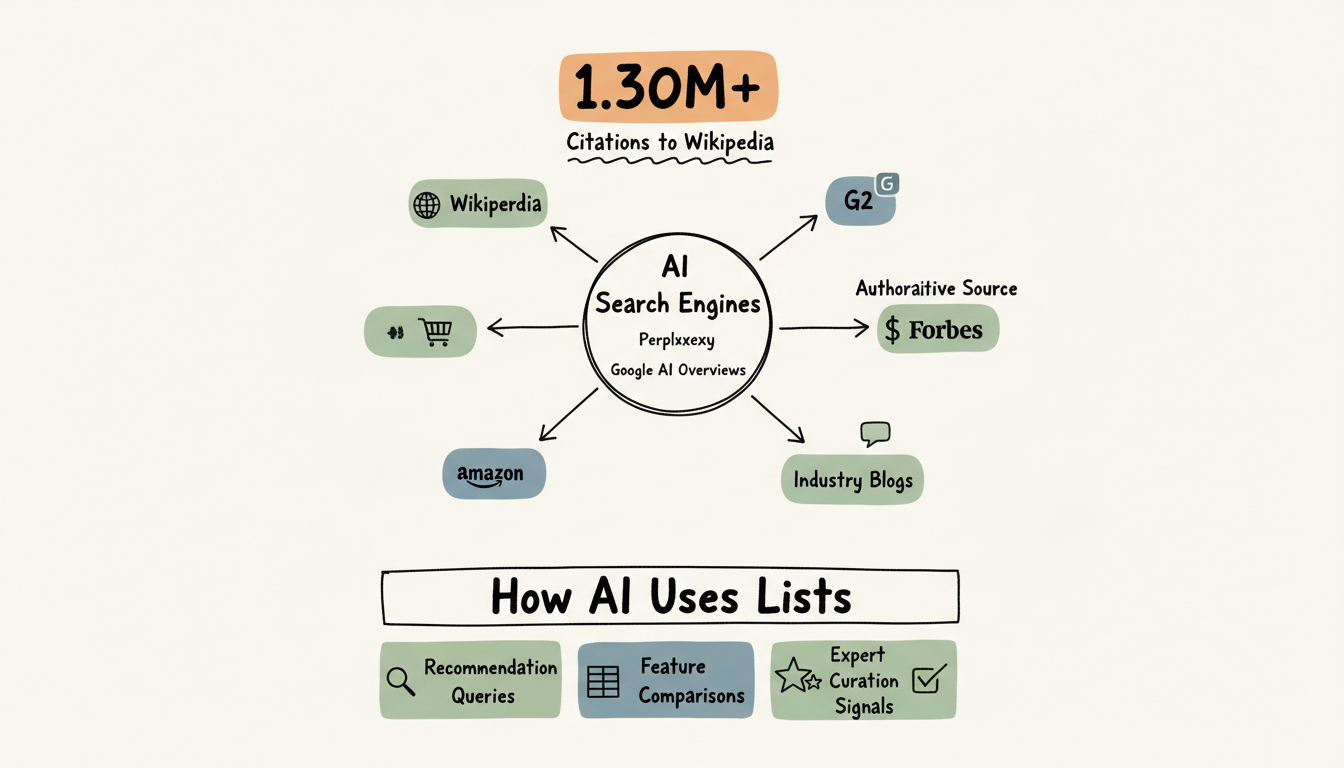
Research shows AI platforms heavily favor established sources. ChatGPT has generated over 1.3 million citations to Wikipedia alone, followed by industry authorities like G2, Forbes, and Amazon. When your brand appears alongside these trusted sources in comparison lists, AI systems infer similar authority.
How AI Engines Use Lists
SearchGPT, Perplexity, and Google AI Overviews draw from comparison content differently than traditional search:
- Recommendation queries: When users ask "What's the best [product] for [use case]?" AI systems pull directly from curated lists
- Feature comparisons: Structured comparison tables provide exactly the format AI needs for synthesis
- Expert curation signals: Lists created by recognized industry voices carry weight beyond raw backlink value
Expert-curated "Best of" lists rank among the most impactful content types for AI visibility because they provide the structured, authoritative recommendations AI systems need to answer user questions confidently.
Finding Target Lists in Your Industry
Strategic list identification determines where your outreach efforts will yield results.
Industry-Specific Publication Lists
Start with publications covering your industry:
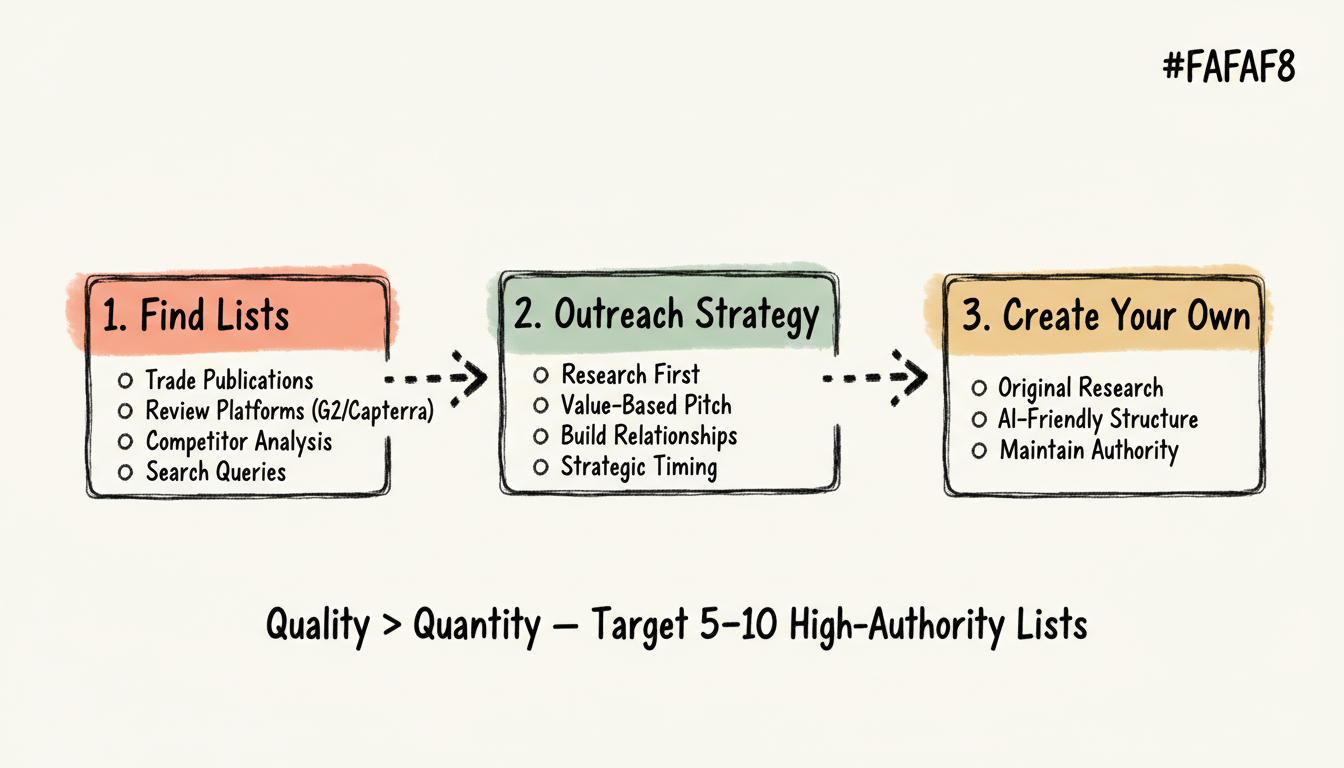
- Trade publications: Industry magazines and websites regularly publish annual "best" lists
- Review platforms: G2, Capterra, TrustRadius for software; Yelp, TripAdvisor for local businesses
- News sites: Forbes, Inc., Business Insider publish category-specific rankings
- Vertical blogs: Influential blogs in your niche often create comparison content
Competitor Analysis for List Discovery
Find where competitors already appear:
- Search "[competitor name] + best + [your category]"
- Check competitor backlink profiles for list-related pages
- Monitor competitor press coverage for list mentions
- Track industry awards and recognition programs
Search-Based List Identification
Use search queries to find relevant lists:
- "Best [your product category] 2026"
- "Top [your service type] compared"
- "[Your industry] comparison guide"
- "Alternative to [competitor name]"
The lists ranking for these queries represent your priority outreach targets.
Outreach Strategies for List Inclusion
Getting listed requires systematic outreach combining relationship building with value demonstration.
Research-First Outreach
Before contacting list publishers, understand their content:
- What criteria do they use for inclusion?
- How often do they update their lists?
- What format do featured companies appear in?
- Who creates and maintains the content?
This research shapes pitches that address publisher needs rather than generic requests.
Value-Based Pitch Framework
Effective outreach demonstrates mutual value:
1. Lead with relevance: Explain specifically why your product/service fits their list criteria
2. Provide comparison data: Offer specific differentiators that make your inclusion valuable to their readers
3. Share proof points: Include customer testimonials, case studies, or metrics that validate your position
4. Make inclusion easy: Provide a brief company description, key features, and imagery they can use
Building Publisher Relationships
Long-term relationship development yields better results than cold outreach:
- Comment thoughtfully on their content
- Share their lists on social media
- Offer expert commentary for future content
- Connect at industry events
Publishers who know your brand are significantly more likely to include you in future lists.
Timing Your Outreach
Strategic timing improves success rates:
- Annual list updates: Reach out 2-3 months before typical publication dates
- New list creation: Monitor publishers for new content initiatives
- Industry events: Lists often publish around major conferences or award seasons
- Product launches: New features provide newsworthy reasons for list consideration
Creating Your Own Authoritative Lists
Publishing your own comparison content positions your brand as the authoritative source AI systems cite.
Original Research Foundation
Lists backed by original data earn more citations:
- Conduct surveys of industry professionals
- Analyze publicly available data in novel ways
- Aggregate customer feedback into quantified insights
- Create proprietary scoring methodologies
AI systems distinguish original research from rehashed information. Content offering genuinely new data points earns "Information Gain"—a critical metric for generative AI search engine optimization.
Structural Requirements for AI Visibility
Format lists for AI extraction:
- Use clear, descriptive headers
- Include comparison tables with specific criteria
- Add numbered rankings where appropriate
- Provide "Quick Answer" summaries at the beginning
- Structure content with FAQ schema markup
Maintaining List Authority
Keep lists authoritative over time:
- Update regularly with new entrants and changes
- Add publication and revision dates
- Cite sources for claims and data
- Respond to feedback and corrections
- Build backlinks through promotion
List Quality Signals
Not all lists provide equal value. Evaluate opportunities based on quality indicators.
Authority Indicators
High-value lists typically feature:
- Domain authority above 50 (for established publications)
- Clear editorial standards and selection criteria
- Regular updates and maintenance
- Active engagement (comments, shares)
- Citations from other authoritative sources
Relevance Factors
Prioritize lists that align with your target audience:
- Geographic relevance (if applicable)
- Industry or vertical focus
- Audience size and engagement
- Search visibility for target queries
Avoiding Low-Quality Lists
Some lists provide minimal value or potential harm:
- Pay-for-placement lists without editorial review
- Outdated lists that haven't been updated in years
- Lists on sites with poor domain health
- Generic lists lacking specific selection criteria
Measuring List Impact
Track the value your list placements generate.
Direct Metrics
Monitor immediate impact:
- Referral traffic from list pages
- Brand mention increases following placement
- Backlink value from list inclusion
- Lead or conversion attribution
AI Visibility Metrics
Measure impact on AI search performance using AEO optimization metrics:
- Track citation frequency in AI platforms
- Monitor brand mention context in AI responses
- Compare AI visibility before and after major list placements
- Analyze competitor citation rates for relative positioning
Attribution Challenges
List impact often appears indirectly:
- Brand search volume increases
- Direct traffic growth
- AI recommendation sentiment improvement
- Customer survey responses citing "research" discovery
Success Metrics for List Strategy
Establish clear goals for your list placement efforts.
Quantity Targets
Set realistic placement goals:
- Number of new list placements per quarter
- Industry coverage (percentage of relevant lists)
- Authority tier distribution (high, medium, emerging)
Quality Benchmarks
Track quality improvements:
- Average domain authority of list placements
- Position within lists (top 3, top 10, mentioned)
- Update frequency of maintained lists
- AI citation rate from list content
Business Outcomes
Connect list strategy to business results:
- Lead quality from list referrals
- Conversion rate comparison vs. other channels
- Brand awareness metrics
- Competitive share of AI recommendations
FAQs
How Long Does List Placement Typically Take?
Timeline varies significantly. Cold outreach to established publications may take 3-6 months. Relationship-based approaches with regular publishers can yield placements within weeks. Creating your own authoritative lists provides immediate control.
Should I Pay for List Placements?
Proceed cautiously with paid placements. Some legitimate "sponsored" features exist on quality sites, but many pay-for-play lists provide minimal value and can signal low quality to AI systems. Editorial-based inclusion generally carries more weight.
How Many Lists Should I Target?
Quality matters more than quantity. Focus on 5-10 high-authority lists in your primary category rather than pursuing dozens of lower-quality placements. Expand coverage after securing positions on priority targets.
Do Review Platform Listings Count as Authoritative Lists?
Yes. Platforms like G2, Capterra, and TrustRadius function as authoritative lists for AI systems. Optimize your profiles on these platforms as part of your overall list strategy.