
Beauty brands win on Meta because the feed rewards visual proof, not claims. The most profitable beauty Meta ads pair founder- or customer-led video with a tight funnel structure, continuous creative testing, and a retargeting layer that recovers abandoned carts. Here is the playbook for building Meta campaigns that scale without torching ROAS.
Key Takeaways
- Meta rewards native, visual proof for beauty, so UGC and before-and-after beat polished brand films.
- Start with one Advantage+ Shopping campaign plus a cart-retargeting layer, not a dozen manual ad sets.
- Test one creative variable at a time and refresh every 2-3 weeks to beat fatigue.
- Read blended and new-customer ROAS, not isolated retargeting ROAS, to judge account health.
- Skincare and fashion CPMs differ; set your CAC ceiling from margin and LTV, not a competitor benchmark.
What Makes Meta Ads Work for Beauty Brands?
Beauty is a sensory, trust-driven category, and Meta is a sensory, social feed. That match is why skincare and cosmetics brands can build eight-figure Meta programs while a less visual product struggles. The platform rewards content that looks native - real skin, real results, real people - over polished studio claims. When a prospect scrolls past ten friends and sees a 15-second before-and-after that looks like a peer, the ad earns the same attention as organic content. The brands that win treat Meta as a storytelling channel first and a direct-response channel second, then bolt measurement on top.
What Campaign Structure Should a Beauty Brand Start With?
For a new beauty brand, simplicity beats complexity. A clean starter structure looks like this:
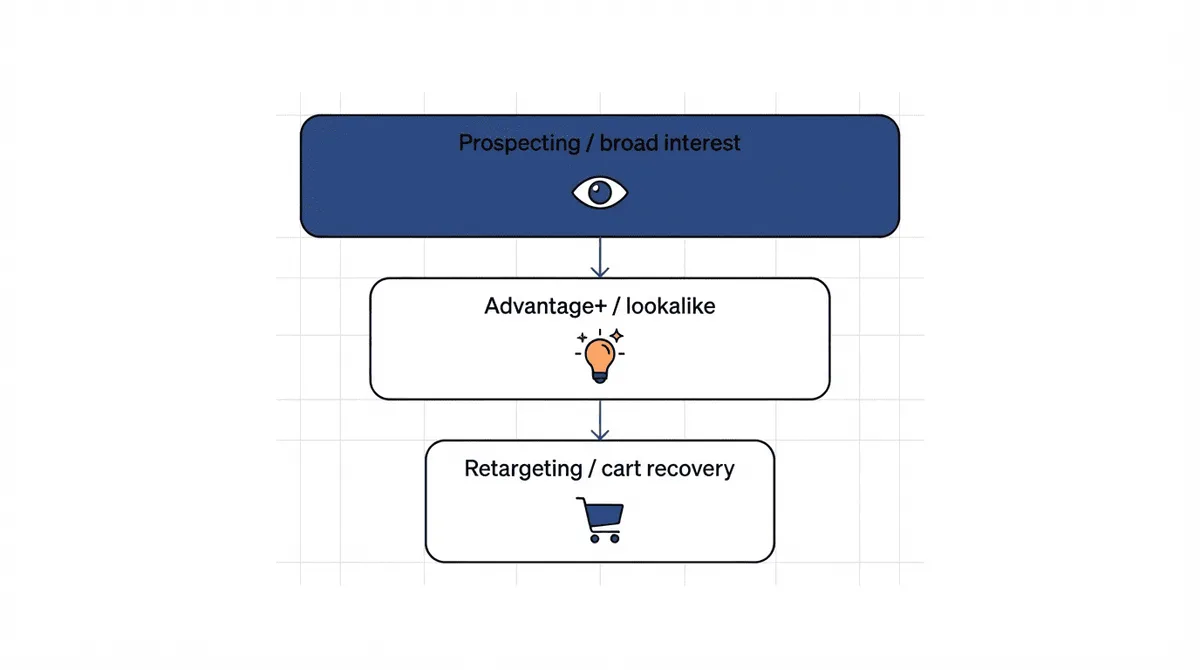
| Layer | Campaign | Goal |
|---|---|---|
| Awareness | Advantage+ with broad targeting | Find new purchasers at scale |
| Consideration | Video views + engagement | Warm the top of funnel |
| Retargeting | Cart and site visitors 1-14 days | Recover abandoners |
| ASC | Advantage+ Shopping | Blend prospecting + retargeting |
Start with one Advantage+ Shopping campaign and one retargeting campaign rather than a dozen manual ad sets. Meta's algorithm needs volume to learn, and fragmented structure starves it. You can graduate to manual structure once you have clear creative winners and a steady daily budget, which is the same discipline behind any Meta ads strategy that actually scales.
Which Creative Formats Convert Best for Beauty?
Beauty is the most creative-sensitive category on Meta, so format choice drives more of your result than targeting does. Ranked by what consistently works:
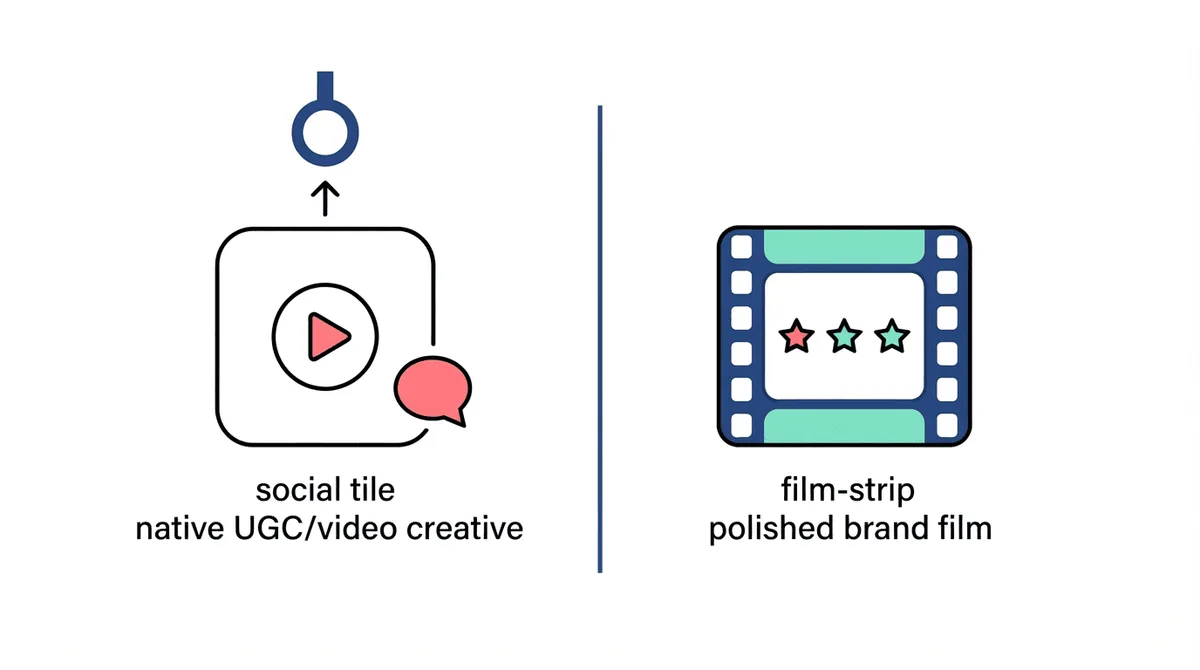
- UGC and founder video - unedited, phone-shot clips of a real person applying the product and showing the result. These outperform polished brand films by a wide margin.
- Before-and-after - the single most persuasive asset in skincare; keep the lighting consistent and the timeline honest.
- Static image ads with a single hero shot - still the cheapest way to test a claim; see static image ads for beauty brands on Meta for what actually works.
- Carousel - best for routine or multi-product stories (cleanse, treat, moisturize).
- Reels and trend audio - highest organic reach when the sound fits the brand voice.
Do not lead with your hero brand film. Lead with the format your customer would actually share, then use the polished assets for retargeting where intent is already high. Creative fatigue hits beauty fast, so plan a refresh every two to three weeks using the framework in ad creative fatigue management.
How Do You Test Beauty Ad Creative Without Wasting Spend?
Test one variable at a time: hook (first three seconds), format (video vs static), or offer (discount vs free shipping). Put 3-5 variants in one ad set, give each a meaningful budget, and let Meta's auction sort them - manual A/B splits waste learning. Kill a creative only after it has ~1,000-2,000 impressions per variant or a clear cost-per-purchase signal; cutting too early keeps you blind to winners. Track the hook separately from the body, because a strong hook with a weak close still teaches you what stopped the scroll. The agencies that win beauty accounts run this like a lab, not a guessing game, which is the core of a real Meta ads creative strategy.
What Retargeting Recovers Abandoned Carts?
Beauty has high cart abandonment, so retargeting is where the profit lives. A practical sequence:
- 0-3 days: show the exact product they viewed, plus a review or UGC clip for it.
- 4-7 days: add a soft incentive (free shipping, sample) rather than a hard discount.
- 8-14 days: shift to bestsellers and social proof if they never engaged.
Exclude purchasers in real time so you stop burning budget on won customers, and cap frequency around 3-4 per week to avoid the creepy feeling that drives people to block your brand. Pair this with a retargeting layer from Meta ads retargeting strategy so the hand-off from prospecting is automatic.
How Should a Beauty Brand Read Meta ROAS?
Blended ROAS matters more than campaign-level ROAS for a young brand, because your retargeting looks great only because prospecting did the hard work. Read the full picture:
- New-customer ROAS - the number that proves the account grows the business.
- Contribution margin - not revenue; a 60% margin product and a 20% margin product need very different CAC ceilings.
- Creative-level CTR and thumb-stop rate - leading indicators of fatigue before ROAS dips.
Set a target CAC from your margin and LTV, not from a competitor's benchmark. If you need help building the dashboard, how to measure Facebook ads ROI walks the model. Skincare CPMs differ sharply from fashion, so pull your own category numbers from Meta ads CPM for beauty and fashion before you set a budget.
What Are the Most Common Beauty Meta Ad Mistakes?
- Leading with over-produced brand films instead of native, peer-style video.
- Over-segmenting into tiny ad sets so the algorithm never learns who converts.
- Discounting too hard too early, which trains customers to wait for sales.
- Letting one winning creative run past fatigue without a refresh pipeline.
- Judging retargeting ROAS in isolation and starving prospecting as a result.
How Should a Beauty Brand Set Budget and Seasonality?
Beauty demand swings hard with launches, holidays, and gifting seasons, so plan creative and spend around those moments instead of running flat. Start a new brand with a daily budget high enough to exit the learning phase, usually $30 to $50 per campaign, and scale only after a stable cost per purchase appears. Hold a 10-15% test budget for fresh creative so your winners pipeline never runs dry, and set your CAC ceiling from margin and LTV rather than a rival's spend. A simple Meta ads strategy keeps the plan disciplined when CPMs move.
Want a full-funnel build? a full Meta ads strategy covers the structure these campaigns slot into, and how to measure Facebook ads ROI shows how to read the numbers.
Frequently Asked Questions
What Is the Best Meta Ad Format for a Beauty Brand?
Founder- or customer-led UGC video and honest before-and-after clips outperform polished brand films because they look native to the feed and read as peer proof rather than an ad. Use static hero images to test claims cheaply and Reels for organic reach.
How Much Should a New Beauty Brand Budget for Meta Ads?
Start with a daily budget high enough to exit the learning phase - typically $30 to $50 per day per campaign - and scale only after a stable cost per purchase emerges. Tie the ceiling to your margin and target CAC, not to a competitor's spend.
How Do You Stop Meta Ad Creative Fatigue in Beauty?
Refresh creative every two to three weeks, test one variable at a time, and watch thumb-stop rate and CTR as leading signals before ROAS dips. Keep a pipeline of UGC and founder clips so you always have a replacement ready when a hero creative burns out.
Should Beauty Brands Use Advantage+ Shopping Campaigns?
Yes for most brands. Advantage+ Shopping blends prospecting and retargeting and lets Meta's algorithm find purchasers at scale, which usually beats manual ad sets when you lack the volume to feed narrower structures. Graduate to manual control only once you have clear creative winners.
Why Does Retargeting ROAS Look Higher Than Prospecting?
Because retargeting only reaches people your prospecting already warmed - it harvests demand that was created upstream. That is why blended and new-customer ROAS matter more than campaign-level numbers when you judge account health.