
Best CMS for AEO: Platforms That Win AI Search
AEO-ready CMS platforms make your content easy for answer engines to crawl, structure, and cite. The best CMS for AEO in 2026 is Webflow for marketing sites, WordPress with schema plugins for content depth, and a headless stack such as Contentful or Sanity when you need engineering control. Choose based on how much structure and automation your team can actually maintain.
TL;DR
- An AEO-ready CMS gives you clean HTML, fast render, structured data, and stable URLs - the four signals answer engines reward.
- Webflow is the best CMS for AEO on marketing sites because it ships semantic HTML, built-in schema, and no plugin rot.
- WordPress wins for content depth when paired with a schema/SEO plugin and a clean theme.
- Headless CMS platforms (Contentful, Sanity) are best when engineering owns the front end and you need automation.
- Shopify and HubSpot CMS are workable but need extra schema work to compete in AI answers.
- Pick the CMS your team will keep structured, not the one with the longest feature list.
What Makes a CMS "AEO-Ready"?
Answer engine optimization (AEO) is the practice of making your content the source an AI search tool quotes. A CMS is AEO-ready when it removes the technical friction between your content and a citation. Four traits matter most:
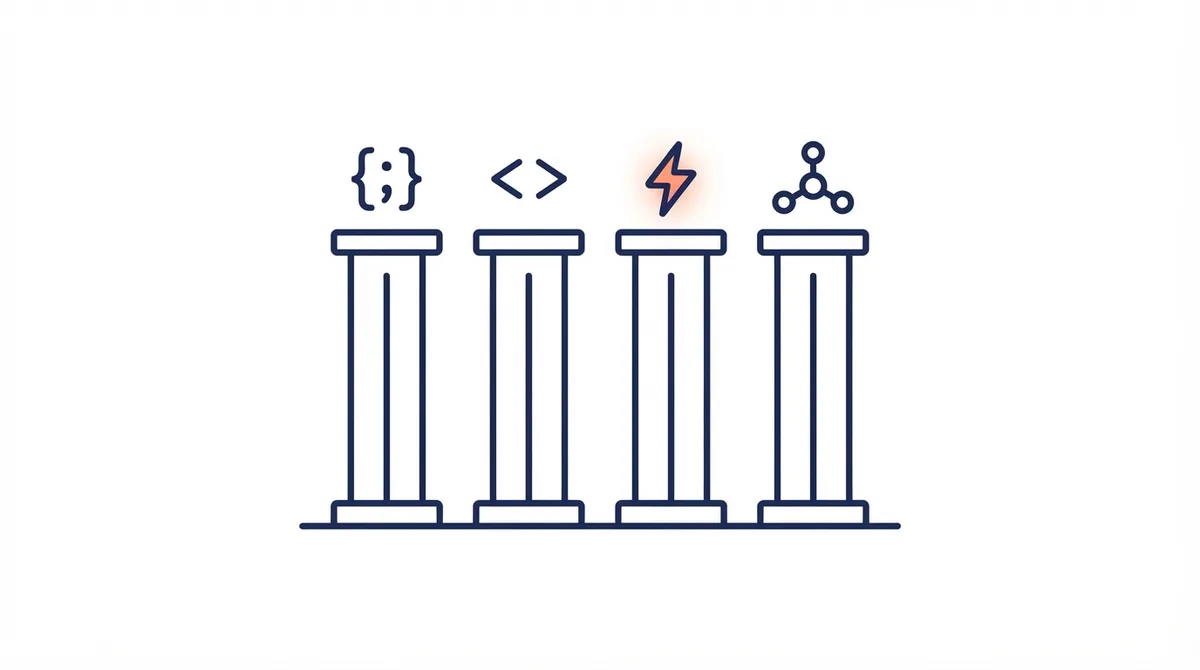
- Clean, semantic HTML. Answer engines parse your rendered DOM, not your JavaScript. A CMS that outputs semantic headings, lists, and tables (instead of div soup) is far easier to cite.
- Fast, indexable render. If a crawler or AI bot must execute heavy JavaScript to see your text, you lose. Server-rendered or static HTML wins.
- Structured data without fights. The CMS should let you emit JSON-LD for Article, FAQ, HowTo, Product, and Breadcrumb without hand-editing every page.
- Stable, logical URLs. Flat, descriptive slugs help both crawlers and citation models map your content to intent.
Notice that "AEO features" rarely means a special AI button. It means the boring fundamentals: structure, speed, and schema. A CMS that does those well is AEO-ready by default.
How We Ranked the Platforms
We rated each CMS on five criteria that map directly to answer-engine citation:
- Out-of-the-box semantic HTML and render speed.
- Ease of emitting valid structured data at scale.
- Editorial workflow that keeps content fresh (freshness is a citation factor).
- Automation hooks (API, webhooks) for programmatic AEO at scale.
- Total effort to keep schema and URLs clean over time.
Weight the last two higher if you publish hundreds of pages. A CMS that is easy on day one but rots by month six will quietly lose you citations.
Best CMS for AEO by Use Case
Webflow - Best for Marketing Sites and AEO-First Builds
Webflow generates clean semantic HTML, serves it fast, and supports custom code and CMS collections with structured data. For a marketing site whose job is to be found and cited, it is the strongest default. You avoid the plugin rot that breaks WordPress schema over time, and designers can ship without engineering bottlenecks. Stackmatix builds marketing sites on Webflow for exactly this reason.
WordPress - Best for Content Depth
WordPress still powers a huge share of the web and, with a solid theme plus a schema/SEO plugin (Rank Math, Yoast, or a dedicated schema tool), it can emit excellent structured data. The risk is maintenance: too many plugins, a slow theme, or conflicting schema markup will undercut AEO. Choose WordPress when your edge is publishing volume and topical authority, and you have the discipline to keep the stack lean.
Contentful and Sanity - Best Headless Option for Engineering Control
A headless CMS stores content as structured data and lets your engineers render it anywhere. Contentful and Sanity make it easy to emit JSON-LD, keep a single source of truth, and automate updates through APIs. The trade-off is that you must build and maintain the front end. Headless is best when AEO is part of a larger technical GTM motion and engineering owns the pipeline.
Shopify - Best for Ecommerce with Extra Schema Work
Shopify is the default for online stores and handles product, variant, and checkout structure well. Its AEO weakness is content: blog and informational pages need deliberate schema and internal linking to compete for answers. Use Shopify when commerce is the core and you are willing to add an app or custom code for FAQ and Article schema on non-product pages.
HubSpot CMS - Best When Marketing and CRM Are One
HubSpot CMS ties content, email, and CRM into one system, which helps with personalization and lead routing. Its AEO fundamentals are solid but less flexible than Webflow or headless for heavy customization. Choose it when your priority is a unified marketing operating system rather than maximum content control.
CMS Comparison for AEO
| Platform | Best for | AEO strength | Maintenance effort |
|---|---|---|---|
| Webflow | Marketing sites | Clean HTML, built-in schema, fast render | Low |
| WordPress | Content depth | Strong with schema plugin | Medium (plugin hygiene) |
| Contentful/Sanity | Engineering-led GTM | Structured data by design, API automation | High (build front end) |
| Shopify | Ecommerce | Good for products, weak for content | Medium (schema apps) |
| HubSpot CMS | Unified marketing | Solid fundamentals, less flexible | Medium |
What to Look for in an AEO-Ready CMS
- Native or easy JSON-LD for Article, FAQ, and Breadcrumb.
- Server-rendered or static HTML by default.
- Fast core web vitals without heavy tuning.
- Stable, readable URLs you control.
- An editorial workflow that keeps content fresh.
- API or automation hooks if you publish at scale.
Common Mistakes When Choosing a CMS for AEO
- Chasing features over fundamentals. Schema and speed beat any "AI optimize" button.
- Ignoring maintenance. A CMS that rots (plugin conflicts, broken schema) loses citations silently.
- Over-engineering. Headless is powerful but pointless if you cannot staff the front end.
- Separating content from structure. If editors cannot set schema fields, AEO will not happen consistently.
How to Audit Your Current CMS for AEO Readiness
Before switching platforms, score what you already run. Render a representative page with JavaScript disabled and confirm the text, headings, and tables are present in the raw HTML. Validate your JSON-LD with a schema tester and confirm that FAQ and Article markup appear on the correct pages. Measure core web vitals on mobile. If your current CMS fails two or more of these checks, it is quietly costing you citations.
How to Migrate to an AEO-Ready CMS Without Losing Rankings
Platform switches break rankings when URLs and structure change. Map every existing URL to its new equivalent and set 301 redirects before launch. Preserve heading hierarchy and re-emit the same structured data on day one. Submit the new sitemap and monitor Search Console for crawl errors for at least two weeks. AEO citations follow the same signals as organic rankings, so a clean migration protects both.
AEO Automation: Where the CMS Meets the Pipeline
An AEO-ready CMS is only half the system. The other half is a publishing pipeline that keeps content fresh, structured, and monitored for citations. Stackmatix connects Webflow or headless CMS content to an automation layer that tracks which pages get cited, flags schema drift, and refreshes stale posts. When engineering owns the CMS through an API, this pipeline runs programmatically across thousands of pages. Choose a CMS you can automate, not only one you can edit by hand.
Related Reading
Frequently Asked Questions
What Is the Best CMS for AEO?
The best CMS for AEO is Webflow for marketing sites because it ships clean semantic HTML, built-in schema, and fast render with low maintenance. WordPress is the best choice when your advantage is content volume, and a headless CMS (Contentful or Sanity) is best when engineering owns the front end and needs automation.
Is WordPress Good for AEO?
Yes, WordPress is good for AEO when paired with a reliable schema or SEO plugin and a lean theme. Its risk is plugin bloat and conflicting markup, so discipline matters. Use it when publishing depth and topical authority are your edge.
Is Webflow Good for AEO?
Webflow is excellent for AEO on marketing sites. It outputs semantic HTML, supports custom code and structured data, and avoids the plugin rot that breaks WordPress schema over time. It is the strongest default for a site whose job is to be found and cited.
Do I Need a Headless CMS for AEO?
No, you do not need a headless CMS for AEO unless engineering control and automation are core to your strategy. Headless platforms like Contentful and Sanity make structured data and API-driven updates easy, but they require you to build and maintain the front end. Webflow or WordPress cover most AEO needs.
Can Shopify Rank in AI Answers?
Shopify can rank in AI answers for product and commercial queries because its product and variant structure is strong, but its blog and informational pages need deliberate FAQ and Article schema plus internal linking to compete for non-product answers. Add a schema app or custom code for content pages.