
Forbes has become a significant voice in the generative engine optimization conversation, with business leaders and marketing experts sharing perspectives on how AI search transforms brand visibility. Understanding these insights helps organizations navigate the strategic shift from traditional SEO to AI-optimized discovery.
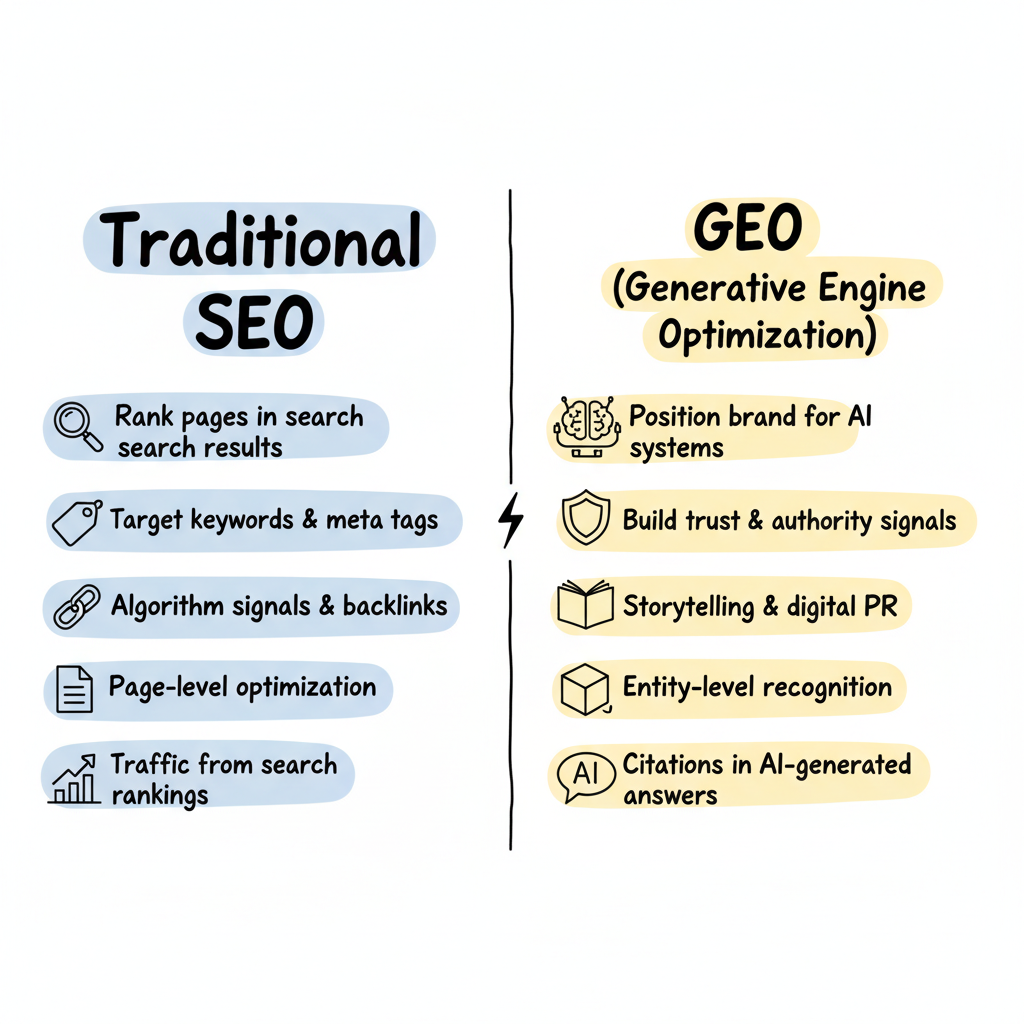
According to Forbes Business Council, in 2026 marketers will finally stop treating Generative Engine Optimization (GEO) as "SEO for ChatGPT" and recognize it for what it actually is: the strategic marriage of positioning, brand and digital PR.
Forbes on GEO as a Strategic Discipline
Industry leaders contributing to Forbes consistently frame GEO as more than a tactical SEO extension - it requires strategic brand positioning.
According to Forbes contributor William Arruda, unlike traditional SEO, which focuses on ranking pages, GEO is about making your expertise easy for AI systems to understand, trust, and recommend. This represents a fundamental shift in how brands approach visibility.
Forbes perspectives on GEO fundamentals:
Insight | Source | Implication |
GEO is positioning, not SEO | Forbes Business Council | Requires brand strategy integration |
AI trust differs from search ranking | Forbes contributors | Authority signals matter more |
Storytelling drives AI citations | Forbes Communications | Narrative quality affects visibility |
Digital PR powers GEO | Multiple contributors | External validation essential |
According to Forbes Communications Council, having a strong content strategy helps drive SEO and GEO initiatives, with the most successful brands treating them as complementary rather than separate disciplines.
The Scale of AI Search Adoption
Forbes coverage highlights the rapid growth of AI-powered search and its impact on brand discovery.
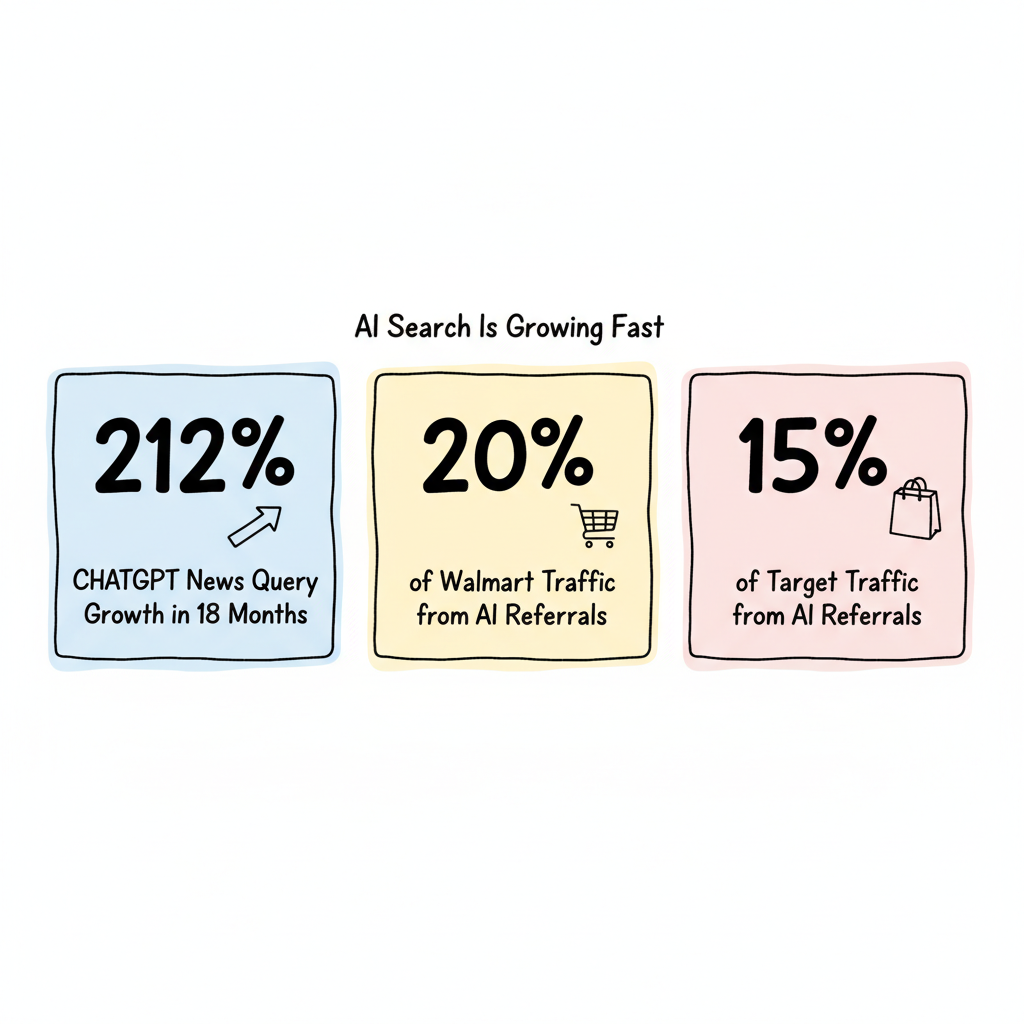
According to Forbes Communications Council analysis, ChatGPT news queries have surged 212% in the past 18 months, indicating dramatic shifts in how users seek information.
AI search growth indicators from Forbes:
- ChatGPT news queries up 212% in 18 months
- Major retailers seeing 15-20% of traffic from AI referrals
- Brands investing specifically in GEO capabilities
- AI search becoming primary discovery channel for many categories
According to Forbes Business Development Council, AI-driven referrals now account for 20% of Walmart's traffic and 15% of Target's, prompting more brands to invest in generative engine optimization (GEO).
Forbes Strategies for GEO Success
Contributors to Forbes have outlined multiple strategic approaches for achieving AI search visibility.
According to Forbes Communications Council, the brands that excel will be those that treat generative search as an extension of their storytelling, integrating AI visibility into broader brand narrative strategy.
GEO strategies highlighted by Forbes:
Strategy | Implementation | Rationale |
Brand positioning clarity | Define unique value proposition | AI needs clear brand identity |
Digital PR investment | Earn authoritative mentions | Third-party validation drives citations |
Content comprehensiveness | Cover topics thoroughly | AI trusts deep expertise |
Cross-platform consistency | Align messaging everywhere | AI cross-references sources |
Thought leadership | Publish expert perspectives | Establishes authority signals |
The Positioning Perspective
Forbes contributors emphasize that GEO success stems from brand positioning rather than technical optimization alone.
According to Forbes Business Council, the organizations winning in AI search are those with clear positioning that AI systems can recognize and recommend - not those with the most optimized meta tags.
Positioning elements that support GEO:
Brand Positioning Foundation
  Unique value proposition
  What makes you distinctly valuable?
  Category definition
  Where do you compete?
  Audience clarity
  Whom do you serve?
  Differentiation
  Why choose you over alternatives?

GEO Implementation
  Consistent messaging across web
  Expert content that demonstrates positioning
  PR that reinforces category leadership
  Third-party validation of claims
Multiple Forbes contributors identify digital PR as critical to generative engine optimization success.
According to Forbes Business Council, GEO represents the strategic marriage of positioning, brand and digital PR - meaning earned media and third-party mentions directly influence AI citations.
Why digital PR powers GEO:
PR Activity | GEO Impact |
Media coverage | Creates citable sources AI trusts |
Expert commentary | Builds authority signals |
Industry awards | Validates category leadership |
Research citations | Establishes expertise |
Partnership announcements | Strengthens entity associations |
Implications for Marketing Strategy
Forbes coverage suggests GEO requires organizational change beyond marketing tactics.
According to Forbes Communications Council, brands must approach AI search as an extension of overall brand strategy, not a separate technical initiative managed by SEO teams alone. Organizations implementing geo optimization techniques often discover that traditional SEO frameworks need significant adaptation to succeed in AI-mediated discovery.
Organizational implications from Forbes:
- Cross-functional collaboration - GEO spans PR, content, brand, and technical SEO
- Brand strategy integration - Positioning decisions affect AI visibility
- Investment reallocation - PR and content may require increased budget
- Measurement evolution - New KPIs beyond traditional SEO metrics
- Agency partnership review - May need GEO-specific capabilities
Forbes on the Future of Brand Discovery
Industry leaders contributing to Forbes project continued evolution in how AI shapes discovery.
According to Forbes Communications Council, traditional search is evolving from a list of links to a curated, conversational experience where brands must earn their place in AI-generated recommendations. This shift has driven demand for specialized answer engine optimization services that help organizations adapt to AI-powered discovery channels.
Future trends highlighted by Forbes:
- Increasing AI mediation of purchase decisions
- Growing importance of entity recognition
- Shift from keyword optimization to brand authority
- Integration of voice and conversational search
- Real-time AI indexing becoming standard
Turning the Positioning Advice into a Working Brief
Forbes contributors repeatedly frame GEO as positioning, which is useful only if it reaches the content team as a brief. We translate it into three questions every page must answer: what is the entity, what claim to authority does it make, and which third-party sources back that claim. That brief travels with the writer so the output carries consistent positioning rather than drifting per author. The discipline is what makes a brand recognizable to a model across hundreds of pages; without it, each post optimizes in isolation and the entity signal stays weak. Positioning is not a slide - it is a set of constraints on what gets published.
Earned Media as a Citation Asset, Not a Vanity Metric
The Forbes coverage ties citations directly to digital PR, which reframes how we value a placement. A Forbes mention or an industry award is not just reputation; it is a citable source an AI engine can pull when answering a question in your category. We therefore track earned coverage by whether it states a verifiable claim about the brand and whether that claim appears in a source the models are known to read. A logo wall does nothing for GEO; a quoted, attributable statement does. We brief PR teams on the phrasing that makes a placement machine-readable, because the citation is the deliverable.
Adapting the Org Structure Forbes Implies
Several contributors note GEO spans PR, content, brand, and technical SEO, which means it fails inside a silo. We map the handoffs: brand sets positioning, PR earns the validation, content publishes the depth, and technical SEO wires the schema that connects them. When one team owns all of it, decisions stay coherent; when four teams touch it with no owner, the message fractures. The practical fix is a named GEO owner with cross-functional authority, even on a small team. Forbes is describing an organizational requirement, and treating it as a tactic is why many programs stall after the first content push.
Key Takeaways
Forbes perspectives on generative engine optimization reveal strategic patterns:
- Beyond SEO tactics - GEO is positioning and brand strategy, not just technical optimization
- Digital PR essential - Third-party validation drives AI trust and citations
- Rapid adoption - AI search traffic growing dramatically across industries
- Storytelling matters - Brands that tell clear stories earn AI recommendations
- Cross-functional requirement - GEO spans PR, content, brand, and SEO teams
- Positioning first - Clear brand positioning enables effective GEO
- Strategic investment - Winning requires dedicated GEO resources and capabilities
According to Forbes Business Council, organizations that recognize GEO as a positioning discipline rather than an SEO extension will capture disproportionate visibility as AI-powered search becomes the primary discovery channel. Companies developing their aeo content strategy should prioritize brand positioning and digital PR alongside technical optimization to maximize impact across both traditional search and generative ai for seo applications.