
Search behavior has fundamentally changed. Users no longer scroll through ten blue links - they ask AI systems for direct answers. Generative AI search optimization is the practice of structuring content so AI engines like ChatGPT, Perplexity, Google AI Overviews, and Microsoft Copilot find, understand, and cite your brand when generating responses.
According to Dataslayer's GEO guide, ChatGPT processes over 800 million weekly user interactions, while Perplexity handles more than 340 million monthly queries. These platforms have become primary research channels for millions - making AI search optimization essential for brand visibility.
What Is Generative AI Search Optimization?
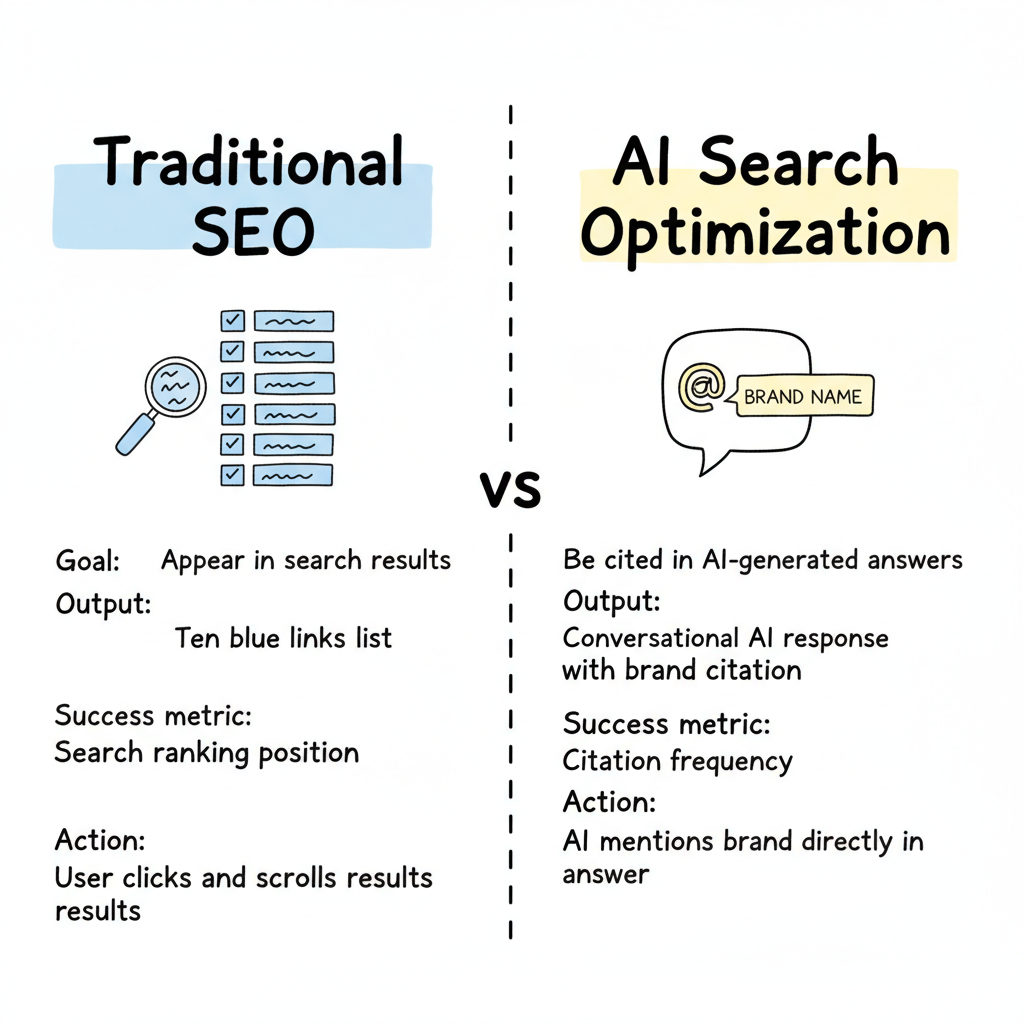
Generative AI search optimization focuses on making your content retrievable, understandable, and citable by large language models (LLMs) and AI-powered search platforms. Unlike traditional SEO, which aims to rank pages in search results, AI search optimization aims to get your content selected as the source AI uses when generating answers.
According to Semrush's AI search optimization guide, AI search optimization involves creating content that AI systems can easily find, interpret, and trust enough to cite. This requires understanding how LLM optimization processes and prioritizes information sources.
Core distinction:
- Traditional SEO: Optimize to appear in search results
- AI Search Optimization: Optimize to be cited in AI-generated answers
Why AI Search Optimization Matters in 2026
According to ALM Corp's guide to ranking in AI search engines, AI search engines now have substantial user bases that rival traditional search. The convergence of conversational interfaces and generative capabilities has created new discovery pathways that bypass traditional SERPs entirely.
The visibility shift:
Platform | User Base | Primary Use Case |
ChatGPT | 800M+ weekly users | Research, recommendations |
Perplexity | 340M+ monthly queries | Information retrieval |
Google AI Overviews | Billions of searches | Quick answers |
Microsoft Copilot | Enterprise users | Business research |
According to Search Engine Land's LLM optimization guide, measuring LLM visibility becomes as essential as tracking traditional search rankings. Brands invisible to AI systems miss growing segments of potential customers.
How AI Search Engines Select Sources
According to SeoProfy's LLM SEO guide, LLM SEO shifts focus from ranking in traditional search engines to helping LLMs understand, select, and surface your content when users ask questions.
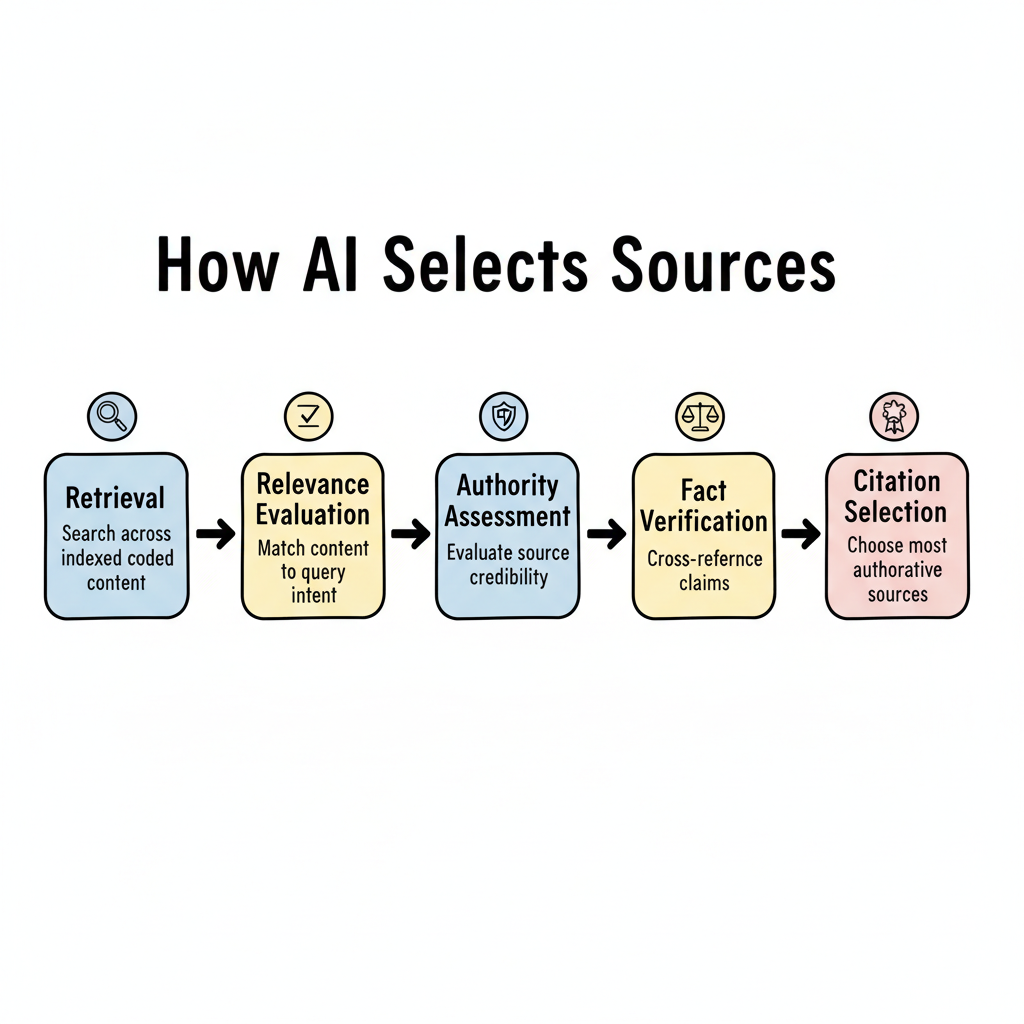
AI source selection process:
- Retrieval - AI systems search across indexed content
- Relevance evaluation - Content matched against query intent
- Authority assessment - Source credibility evaluated
- Fact verification - Claims cross-referenced against trusted sources
- Citation selection - Most authoritative sources chosen for attribution
According to Exploding Topics' AI search optimization guide, AI engines prefer content that demonstrates clear expertise, provides verifiable information, and comes from recognizable authoritative sources. Understanding AI overview source selection helps you position your content for maximum visibility.
Core AI Search Optimization Strategies
According to Microsoft's guidance on AI search optimization, optimizing for AI search answers requires specific content strategies different from traditional SEO approaches.
Strategy 1: Answer-Ready Content Structure
Format content so AI systems can easily extract and cite information:
Structure elements:
- Clear, direct answers in opening paragraphs
- Well-defined sections with descriptive headings
- Bulleted and numbered lists for easy extraction
- Tables summarizing key data points
- FAQ sections addressing common questions
Strategy 2: Entity and Semantic Optimization
According to ALM Corp, entity optimization goes beyond traditional keyword targeting. Focus on specific people, places, brands, products, and concepts that AI models use for context understanding.
Entity optimization tactics:
- Consistent brand naming across all platforms
- Comprehensive Organization schema markup
- Strong sameAs links to authoritative profiles
- Clear topical associations with expertise areas
Strategy 3: Authority Signal Development
According to Gravitate Design's AI optimization guide, AI systems evaluate authority through multiple signals that extend beyond traditional backlinks.
Authority signals AI systems evaluate:
- Third-party mentions in reputable publications
- Wikipedia and Wikidata presence
- Industry directory listings
- Media coverage and citations
- Expert authorship with verifiable credentials
For directory-specific optimization strategies, explore SearchGPT directory optimization techniques that enhance your entity presence.
Strategy 4: Technical Foundation
According to Semrush, technical optimization ensures AI crawlers can access and understand your content effectively.
Technical requirements:
- Allow AI bot access in robots.txt
- Implement comprehensive schema markup
- Ensure fast page load times
- Create clear site architecture
- Maintain consistent internal linking
Content Formats That Perform in AI Search
According to Dataslayer, certain content formats consistently perform better in AI search results.
High-performing formats:
Format | Why It Works | Example |
Definition content | Clear, extractable answers | "What is [concept]" pages |
How-to guides | Step-by-step structure | Tutorial content |
Comparison content | Structured evaluation | "X vs Y" articles |
Data-driven research | Verifiable statistics | Original studies |
FAQ sections | Direct Q&A format | Knowledge base pages |
According to Microsoft, content that directly addresses user questions with clear, factual responses earns more AI citations than vague or promotional material.
Measuring AI Search Visibility
According to Search Engine Land, tracking LLM visibility requires new measurement approaches beyond traditional ranking tools.
Key metrics to track:
Metric | What It Measures | How to Track |
AI citation frequency | How often AI mentions your brand | Manual audits, AI visibility tools |
Citation accuracy | Whether AI represents your brand correctly | Regular response reviews |
Share of voice | Your visibility vs. competitors | Competitive AI analysis |
AI referral traffic | Visitors from AI platforms | Analytics with AI source tracking |
Answer appearance rate | How often content appears in AI answers | Platform-specific monitoring |
According to SeoProfy, specialized tools now exist for tracking AI visibility, though the measurement landscape continues evolving as platforms change. Learn how to leverage free AI content optimization tools for better visibility tracking.
Common AI Search Optimization Mistakes
According to Exploding Topics, several common mistakes undermine AI search optimization efforts.
Mistakes to avoid:
- Thin content - AI systems prefer comprehensive, authoritative coverage
- Missing structured data - Schema helps AI understand content context
- Weak entity signals - Inconsistent brand information confuses AI systems
- No authority validation - Lack of third-party mentions limits trust
- Ignoring technical access - Blocked AI crawlers prevent indexing
- Promotional over informational - AI prioritizes helpful content over sales pitches
Integration with Traditional SEO
According to Semrush, AI search optimization works best when integrated with existing SEO efforts rather than treated as a separate discipline.
Integration approach:
- Use existing SEO content as foundation
- Add answer-ready formatting to ranking pages
- Extend authority building to include AI-relevant signals
- Track both traditional and AI visibility metrics
- Align content strategy for both channels
Why AI Search Optimization Matters
AI search is the new front door. The answer box and the assistant are where the user now starts, so the brand that is absent there is absent from the consideration. The honest program treats the AI surface as a channel, and the discipline of showing up is the edge as the behavior shifts, because the presence is the first step.
Avoid optimizing only for the classic engine. A page that ranks ten on the old results can still lose to the answer that cites a competitor, so cover the new surface. The distributed plan is what protects the reach, and the clarity is what makes the work coherent instead of a bet on a single box, because the spread is the hedge.
How AI Search Engines Select Sources
The selection favors the structured, cited source. A page that is clean and schema'd is the one the model pulls, so lead with the answer and support it. The honest content is the one the system can read, and the discipline of the format is what makes the page citable instead of skipped, because the extraction favors the shape.
Use a consistent hierarchy to help the pick. A logical structure where each heading earns its place reads as one coherent answer, so the order is the signal the engine rewards. The balanced shape beats the wall of tiny headings and the page with none, and the coherence is what earns the placement rather than the skip, because the structure is the lever.
Content Formats That Perform
The formats that perform are the list, the table, and the definition. A scannable shape is what the extraction prefers, so build the answer in the form the system lifts. The honest format is the one the model can quote, and the discipline of the shape is the quiet advantage most teams skip while they write prose walls.
Match the format to the query. A how-to wants the steps; a comparison wants the table, so the form follows the question. The joined view is what makes the content coherent, and the silence on one format is the gap the competitor fills, because the tool serves different moments in the same loop.
Common Mistakes
The common mistake is the thin answer. A page that wins the box but cannot satisfy the click loses the trust it just earned, so the answer must lead and the depth must follow. The honest snippet is the one the page can back up, and the mismatch is what costs the brand the next time, because the substance is the point.
Another mistake is the missing schema. A page without the markup is harder for the engine to cite, so add the structured data as a default. The disciplined markup is what makes the content machine-readable, and the patience to tag it is the quiet edge that compounds across every post the team publishes, because the signal is the asset.
Key Takeaways
Generative AI search optimization is essential for 2026 visibility:
- AI search is growing - ChatGPT, Perplexity, and AI Overviews handle millions of queries
- Different from traditional SEO - Focus on citations, not rankings
- Content structure matters - Answer-ready formatting improves extraction
- Entity optimization is critical - Clear brand identity helps AI recognition
- Authority signals extend beyond links - Third-party mentions and media coverage count
- Technical access required - AI crawlers need to reach your content
- Measurement is evolving - New tools track AI visibility specifically
According to ALM Corp, brands that optimize for AI search engines now will capture visibility that competitors miss. As AI-powered search continues growing, optimization becomes essential rather than optional.