
GEO optimization tactics turn strategy into action. While understanding Generative Engine Optimization principles matters, execution determines results. This guide provides specific, actionable tactics you can implement immediately to improve brand visibility across ChatGPT, Perplexity, Google AI Overviews, and other AI search platforms.
Each tactic includes clear implementation steps and explains why it works for AI citation optimization.
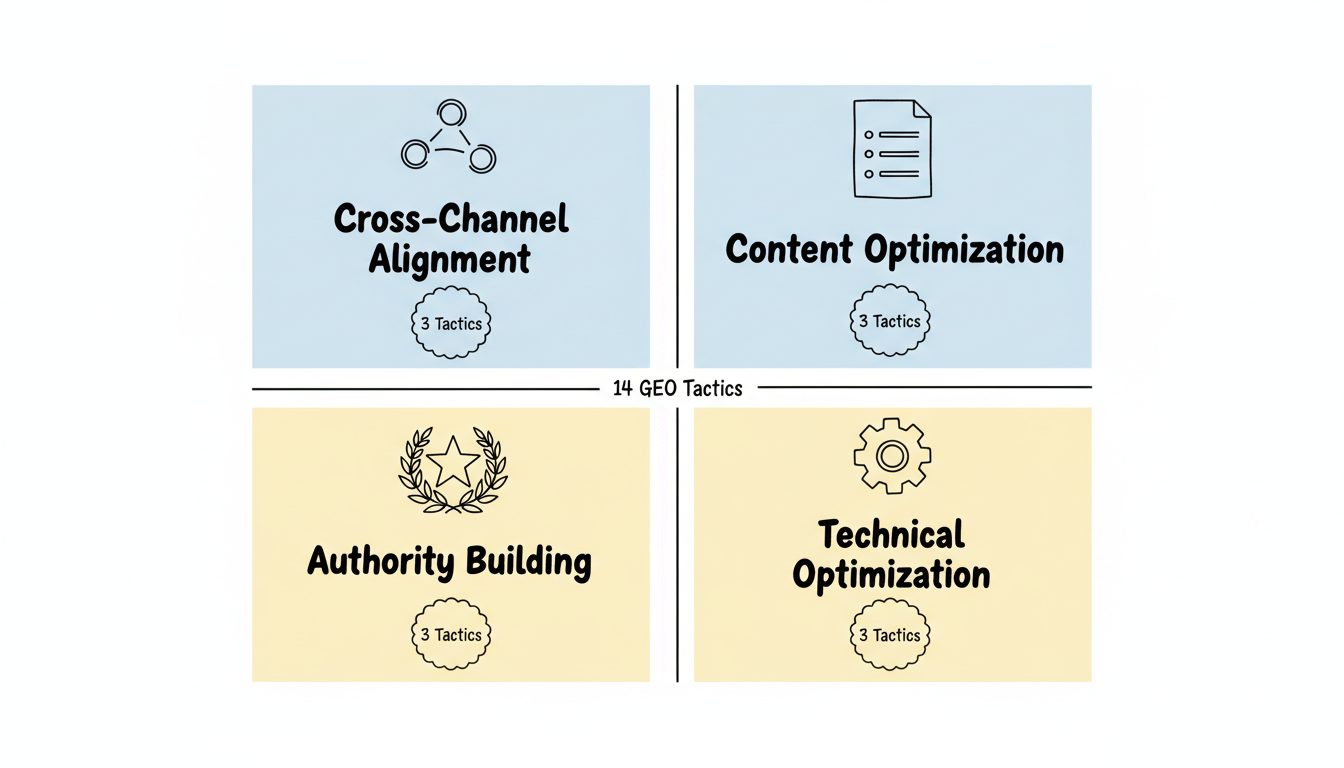
Cross-Channel Alignment Tactics
Effective GEO requires coordinated tactics across multiple channels. AI systems learn about brands by observing patterns across the web.
Tactic 1: Unify Brand Messaging Across Properties
AI systems build brand understanding from multiple sources. Inconsistent messaging creates confusion that reduces citation likelihood.
Implementation steps:
- Audit all digital properties (website, social profiles, directories)
- Document how each describes your brand, offerings, and expertise
- Identify inconsistencies in positioning or claims
- Create unified messaging guidelines
- Update all properties with consistent language
Why it works: AI systems gain confidence citing brands they understand clearly. Consistency reinforces your entity identity.
Tactic 2: Coordinate PR and Content Publishing
Media mentions amplify content authority. When you publish important content, coordinate PR outreach to generate external validation.
Implementation steps:
- Identify upcoming content pieces with PR potential
- Develop story angles for relevant journalists and publications
- Time PR outreach to follow content publication
- Track earned coverage and link acquisition
- Monitor for AI citation increases following coverage
Why it works: External mentions from authoritative sources signal to AI systems that your brand deserves citation.
Tactic 3: Leverage Reddit and Community Presence
Research shows Reddit appears in approximately 40% of AI citations. Strategic community presence influences AI responses.
Implementation steps:
- Identify relevant subreddits for your industry
- Contribute genuinely helpful responses (not promotional spam)
- Reference your authoritative content when relevant
- Build reputation through consistent participation
- Monitor how Reddit discussions influence AI responses about your brand
Why it works: AI systems weight community discussion and user-generated endorsements as authenticity signals.
Content Optimization Tactics
How you structure and present content directly affects extraction and citation likelihood.
Tactic 4: Add Quotable Statement Blocks
AI systems extract specific passages as citations. Intentionally create quotable blocks throughout content.
Implementation steps:
- Identify key points that warrant citation
- Write standalone statements that work when extracted
- Format as distinct paragraphs or callout blocks
- Ensure each quotable block answers a potential query
- Test extractions by asking AI systems related questions
Why it works: Ready-to-cite statements reduce AI effort in synthesizing answers, increasing selection likelihood.
Tactic 5: Create Comparison Tables for Competitive Queries
AI systems frequently cite comparison content when users ask about alternatives or options. When evaluating different AI search platforms, creating structured comparison tables helps both users and AI systems understand key differences.
Implementation steps:
- Research comparison queries in your space
- Create comprehensive comparison tables
- Include clear criteria and honest assessments
- Update regularly as options change
- Position your solution appropriately within comparisons
Why it works: Structured comparisons provide exactly what AI systems need to answer comparison questions.
Tactic 6: Develop FAQ Banks Mirroring User Queries
FAQ content matches conversational AI query patterns directly.
Implementation steps:
- Research actual questions users ask (PAA, query tools, customer data)
- Write questions using natural user language
- Provide direct answers in the first sentence
- Add depth following the initial answer
- Implement FAQPage schema markup
Why it works: Question-answer pairs align with how users query AI systems and how AI systems structure responses.
Authority Building Tactics
AI systems prioritize authoritative sources. These tactics build the signals that earn citation priority.
Tactic 7: Publish Original Research with Citable Data
Original data gives AI systems unique information to cite.
Implementation steps:
- Identify topics where unique research would add value
- Design surveys, studies, or data analysis projects
- Publish findings with clear methodology
- Present data in extractable formats (charts, tables, key statistics)
- Promote research to earn secondary citations
Why it works: AI systems cite original research because it provides information unavailable elsewhere. Learning from AEO success stories and case studies can help you design research that resonates with AI systems.
Tactic 8: Secure Expert Contributions to Authoritative Publications
Being cited by respected publications builds authority AI systems recognize.
Implementation steps:
- Identify authoritative publications in your industry
- Develop expert commentary on relevant topics
- Pitch contributions matching publication interests
- Deliver high-quality contributions when accepted
- Track how contributions affect your AI visibility
Why it works: External expert appearances signal to AI systems that you're a credible source worth citing.
Tactic 9: Build Wikipedia and Knowledge Graph Presence
Wikipedia and Google's Knowledge Graph influence how AI systems understand entities.
Implementation steps:
- Assess whether your brand meets Wikipedia notability standards
- If notable, ensure accurate Wikipedia content (don't self-edit)
- Maintain accurate Google Business Profile
- Ensure consistent NAP (name, address, phone) across directories
- Build structured data supporting Knowledge Panel generation
Why it works: Knowledge base presence helps AI systems confidently identify and cite your brand.
Technical Optimization Tactics
Technical factors determine whether AI systems can access and process your content.
Tactic 10: Configure AI Crawler Access
AI crawlers need explicit access permission. Many sites inadvertently block them.
Implementation steps:
- Review your robots.txt file
- Ensure GPTBot, ClaudeBot, PerplexityBot, and Google-Extended aren't blocked
- If you want selective access, specify allowed crawlers explicitly
- Test crawler access using available tools
- Monitor crawl logs for AI bot activity
Why it works: Blocked crawlers mean zero visibility on those platforms regardless of content quality.
Tactic 11: Implement Comprehensive Schema Markup
Schema helps AI systems understand your content structure and entity relationships. Proper implementation of structured data is essential for AI search content structure optimization.
Implementation steps:
- Audit current schema implementation
- Add Organization, Person, and Product schema where relevant
- Implement Article schema for content pages
- Add FAQPage schema for question content
- Validate markup using Google's testing tools
Why it works: Structured data provides explicit signals reducing AI interpretation effort.
Tactic 12: Create Llms.Txt Files
Some AI systems use llms.txt files (similar to robots.txt) for content guidance.
Implementation steps:
- Research llms.txt specifications and adopting platforms
- Create an llms.txt file for your domain
- Specify preferred content for AI citation
- Include key entity and expertise information
- Keep updated as content changes
Why it works: Direct guidance helps AI systems understand your content organization and priorities.
Measurement and Iteration Tactics
Continuous improvement requires tracking what works.
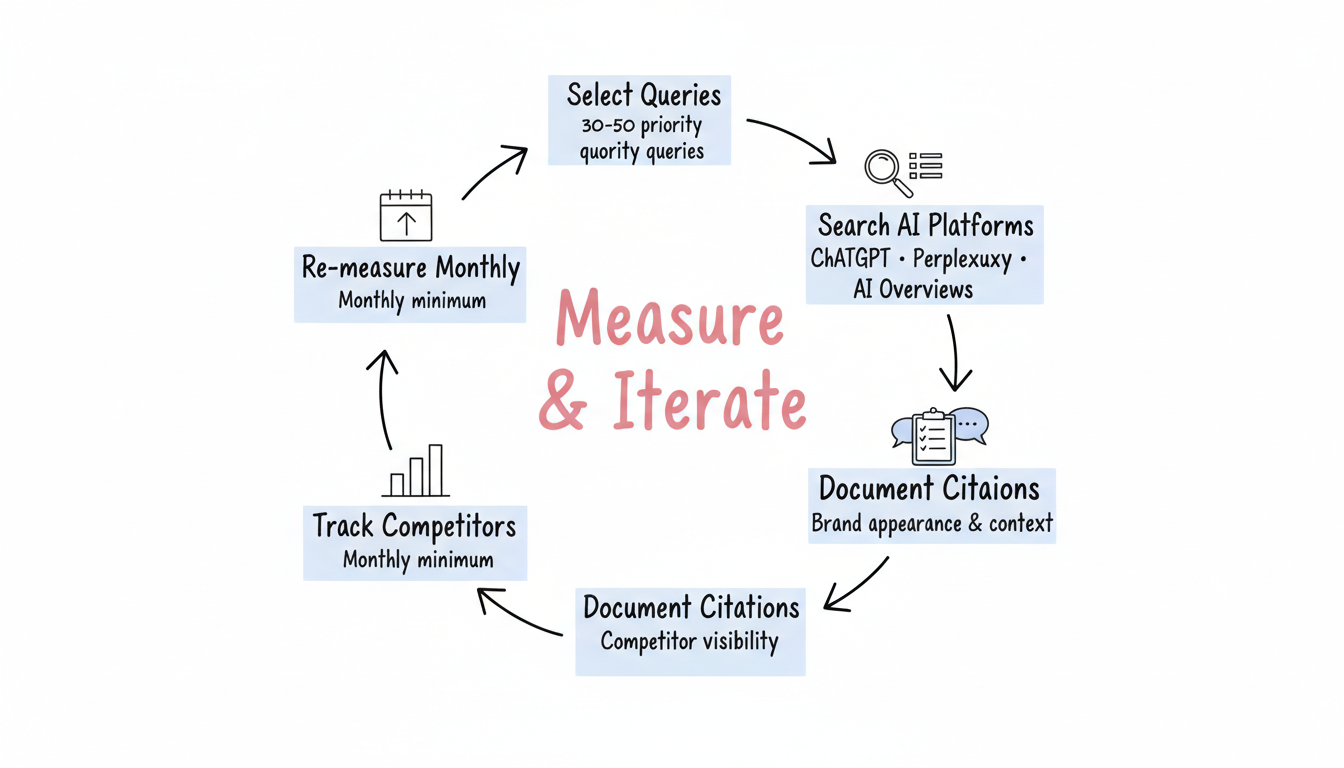
Tactic 13: Establish Baseline Citation Monitoring
You can't improve what you don't measure.
Implementation steps:
- Select 30-50 priority queries relevant to your business
- Search each across ChatGPT, Perplexity, and Google AI Overviews
- Document current brand appearance and citation context
- Record competitor visibility for the same queries
- Schedule regular re-measurement (monthly minimum)
Why it works: Baselines reveal improvement opportunities and enable progress tracking. Understanding trends through GEO optimization trends analysis helps contextualize your performance data.
Tactic 14: Test Tactic Effectiveness
Different tactics work differently for different brands and topics.
Implementation steps:
- Implement tactics individually where possible
- Measure citation changes following each implementation
- Allow sufficient time for AI systems to process changes
- Document which tactics produce results
- Prioritize effective tactics in ongoing efforts
Why it works: Data-driven prioritization focuses resources on tactics that actually move the needle.
FAQs
Which GEO Tactics Produce Fastest Results?
Technical fixes (crawler access, schema markup) and content structure improvements often show results within weeks. Authority building tactics require months for accumulated signals to influence AI citation patterns.
How Many Tactics Should I Implement at Once?
Start with foundational tactics—crawler access, content structure, messaging consistency. Add authority building tactics as capacity allows. Implementing everything simultaneously makes it difficult to identify what produces results.
Do These Tactics Work for All Industries?
Core tactics apply broadly, but emphasis varies by industry. B2B brands benefit more from research and expert positioning. Consumer brands gain more from community presence and comparison content.