
Generative Engine Optimization (GEO) determines whether AI systems cite your brand when answering user queries. Unlike traditional SEO rankings, GEO success depends on becoming a source that AI systems trust and reference. This article examines real-world examples of effective GEO implementation across industries.
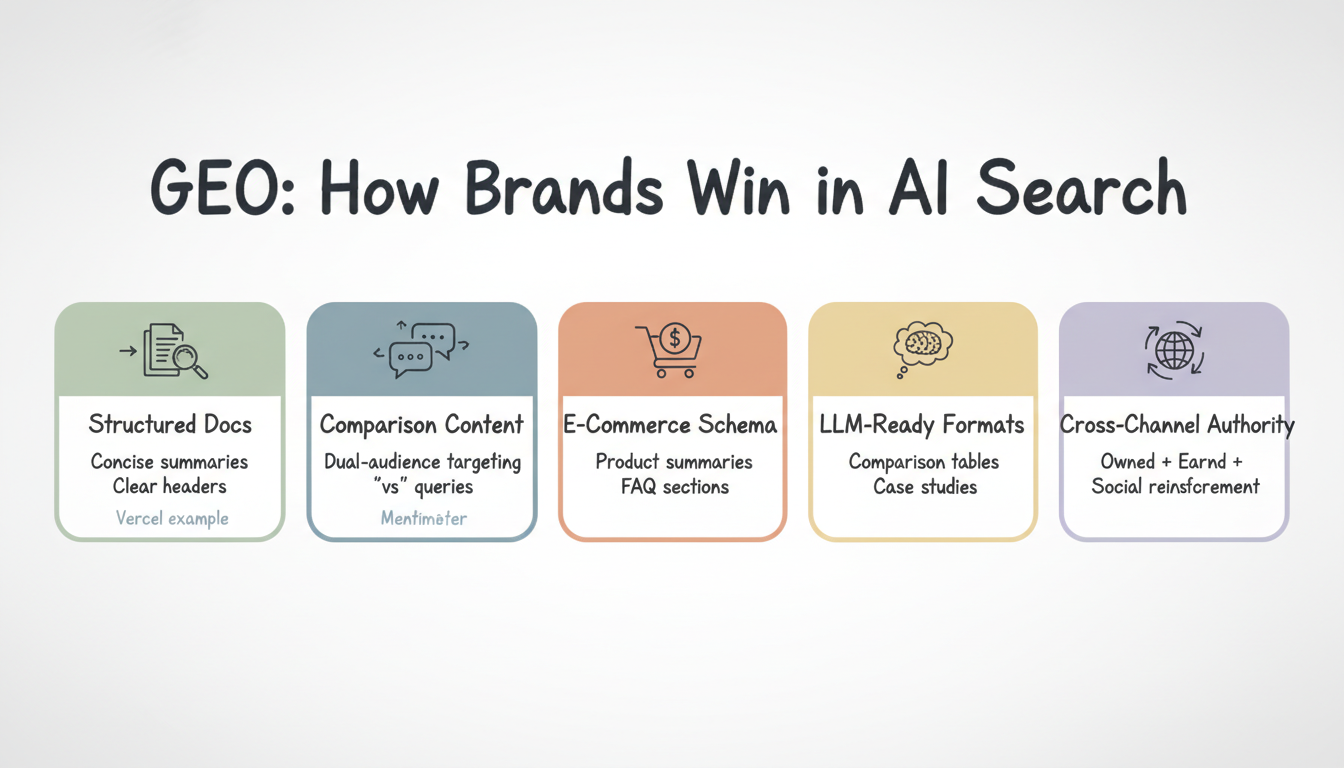
Example 1: Vercel'S Documentation Strategy
The Approach
Vercel, the web infrastructure provider, has become a frequently cited source in AI-generated responses about web development. According to the GEO Industry Report 2025, ChatGPT referrals now drive approximately 10% of Vercel's new user sign-ups.
What They Did Right
Vercel's documentation follows GEO best practices:
- Concise, self-contained answers: Each documentation page opens with a clear summary paragraph
- Structured content architecture: Headers, bullet points, and code blocks make content parseable
- Consistent terminology: Technical terms are defined and used uniformly across all pages
- Evergreen resources: Tutorials and definitions remain accurate without frequent updates
The Result
Every time ChatGPT cites Vercel's documentation, it reinforces Vercel's authority in the AI ecosystem, creating a compounding visibility effect similar to how ChatGPT optimization tactics can compound brand visibility over time.
Example 2: Mentimeter'S Bottom-Funnel Content
The Approach
Siege Media documented their work with Mentimeter, the interactive presentation platform. The strategy focused on software comparison content targeting users actively evaluating solutions.
What They Did Right
- Dual audience targeting: Content addressed both educators seeking classroom tools and business professionals needing presentation solutions
- Comparison-focused structure: Pages directly answered "versus" queries that AI systems commonly receive
- Feature-specific organization: Content was organized around user needs rather than product features
The Result
Mentimeter earned AI citations for queries comparing presentation tools, capturing prospects at the decision stage of their journey.
Example 3: E-Commerce Product Optimization
The Approach
According to BigCommerce's GEO guide, successful e-commerce brands are restructuring product pages for AI discovery.
What Effective E-Commerce GEO Looks Like
Product Page Structure:
- Lead with a 2-3 sentence product summary answering "What is this product?"
- Include structured specifications in table format
- Add FAQ sections addressing common purchase questions
- Implement Product, Review, and Offer schema markup
Example Product Summary:
"The XYZ Running Shoe provides maximum cushioning for long-distance runners, featuring responsive foam technology and a breathable mesh upper. Designed for neutral to mild overpronation, it weighs 9.2 oz and offers 8mm heel-to-toe drop."
This format gives AI systems the specific, citable information they need to answer product comparison queries. Using schema markup validators for AEO ensures your structured data is implemented correctly.
Example 4: LLM-Ready Content Formats
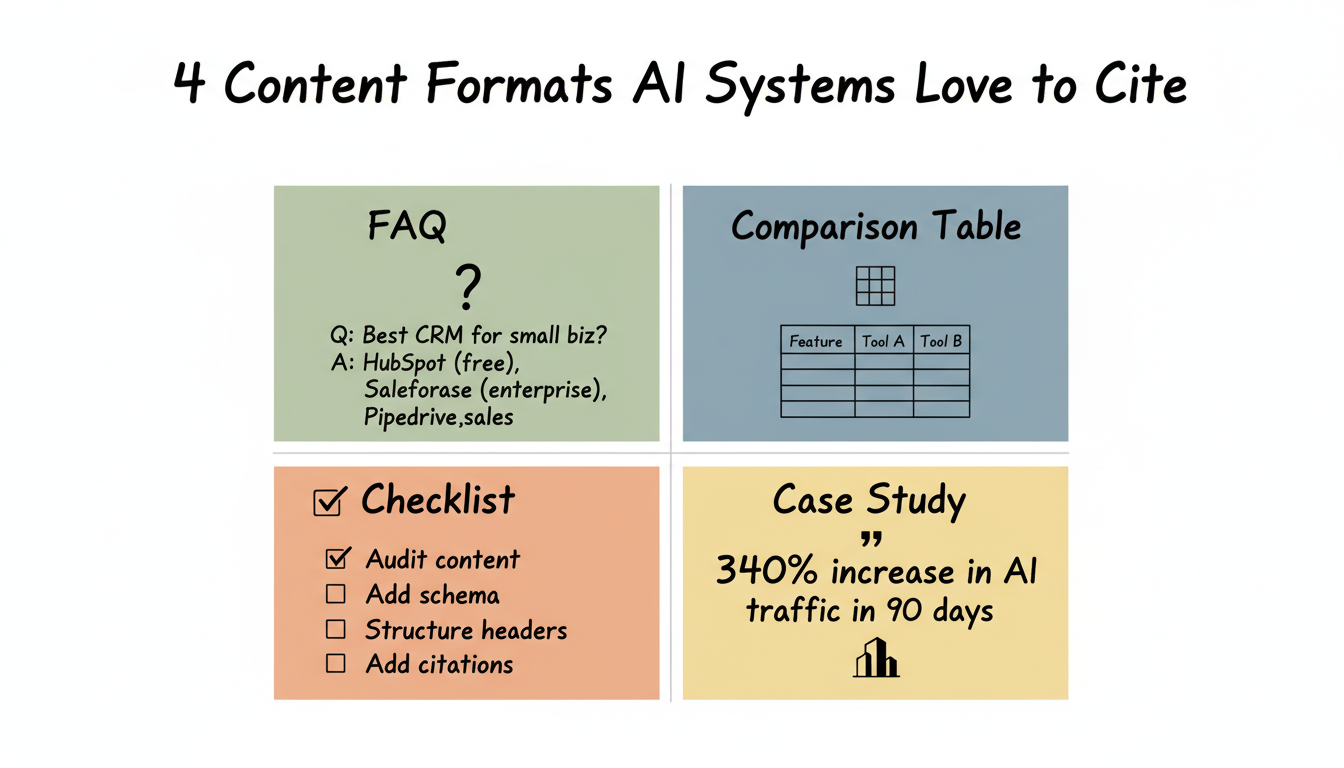
Firebrand Marketing's 2026 GEO best practices identifies content formats that AI systems prefer to cite:
High-Citation Content Types
FAQs: Question-answer pairs map directly to how users query AI systems
Q: What is the best CRM for small businesses?
A: The best CRM for small businesses depends on budget and needs.
HubSpot offers a free tier ideal for startups. Salesforce provides
enterprise features for growing teams. Pipedrive excels for
sales-focused organizations.
Comparison Tables: Structured data AI can easily extract and summarize
Feature | Tool A | Tool B | Tool C |
Price | $29/mo | $49/mo | $19/mo |
Users | 5 | Unlimited | 3 |
Storage | 10GB | 50GB | 5GB |
Checklists: Step-by-step formats that AI can cite directly
- Step 1: Audit current content
- Step 2: Implement schema markup
- Step 3: Structure content with clear headers
- Step 4: Add authoritative citations
Case Studies: Specific metrics and outcomes AI systems can quote
"After implementing GEO strategies, Company X saw a 340% increase in AI-referred traffic within 90 days."
Understanding the history of AEO helps contextualize why these content formats have become essential for AI visibility.
Example 5: Cross-Channel Authority Building
The Approach
According to Firebrand's Multiplier Marketing framework, GEO success requires coordinated presence across channels:
Multi-Channel GEO Strategy
Owned Media:
- Website content optimized with answer-first structure
- Blog posts with expert commentary and original data
- Documentation with comprehensive schema markup
Earned Media:
- PR coverage establishing industry authority
- Guest contributions to relevant publications
- Expert quotes in news articles
Social Reinforcement:
- LinkedIn thought leadership posts
- Twitter/X engagement on industry topics
- Reddit participation in relevant communities
Why This Works
AI systems evaluate authority by looking beyond your website. A brand mentioned consistently across multiple trusted sources appears more authoritative than one with only on-site optimization. This builds the kind of AI Overview authority signals that generative engines prioritize.
Common GEO Mistakes to Avoid
Real-world examples also reveal what doesn't work:
Mistake 1: Keyword Stuffing in AI Content AI systems detect and penalize over-optimized content. Write naturally for human readers.
Mistake 2: Ignoring Schema Markup Without structured data, AI systems struggle to parse content accurately. Schema is non-negotiable for GEO.
Mistake 3: Single-Platform Focus Optimizing only for ChatGPT ignores Perplexity, Google AI Overviews, and other AI search engines. Each requires visibility.
Mistake 4: Vague Claims Without Specifics "Industry-leading solution" tells AI nothing. "Used by 10,000 companies with 4.8/5 average rating" provides citable facts.
Practical Implementation Takeaways
From these examples, implement these GEO techniques:
- Structure every page with answer-first content: Lead with a concise summary that directly answers the primary query
- Use consistent entity definitions: Define your brand, products, and services identically across all content
- Create comparison and FAQ content: Match the question formats users ask AI systems
- Build cross-channel presence: Earn mentions on authoritative third-party platforms
- Implement comprehensive schema: Mark up content so AI systems can parse and cite it accurately
These GEO examples demonstrate that AI search optimization follows learnable patterns. Brands succeeding in generative search combine structured content, consistent authority signals, and multi-platform presence to become the sources AI systems trust and cite. The common thread: create content so clear, authoritative, and well-structured that AI systems cannot provide quality answers without referencing it.
Measuring GEO Success with Real Signals
Unlike traditional SEO, where rank tracking is the default metric, GEO success is best measured by citation frequency and AI-referred traffic. Set up tracking that captures how often your domain appears as a named source inside ChatGPT, Perplexity, and Google AI Overviews for your priority queries, then correlate those appearances with referral sessions in your analytics.
A practical scorecard combines three signals: the share of target queries where you are cited, the authority of the pages doing the citing, and the downstream engagement from AI-referred visitors. Over a quarter, moving even a few high-value queries from uncited to cited compounds, because each citation reinforces your entity as a source the models trust.
GEO for Startups with Limited Resources
Small teams cannot out-produce incumbents, but they can out-structure them. The highest-leverage GEO move for a startup is to publish a small set of answer-first, schema-marked pages on the exact terms it owns, then earn a handful of authoritative mentions. Because generative engines reward clarity and specificity over link volume, a focused resource often out-cites a larger, diffuse one.
Prioritize the pages that already rank or sit close, since they are easiest to lift into citation range. Add FAQ and comparison structure, tighten the opening answer, and validate the schema with a markup validator. The goal is not to be everywhere at once but to be the unavoidable source on the handful of queries that define your category.
How GEO Complements Traditional SEO
GEO is not a replacement for SEO; it is the same content evaluated by a model instead of a crawler. The technical foundations - fast pages, clean schema, logical structure - help both. The difference is emphasis: GEO rewards answer-first writing and explicit entity definitions, while classic SEO leans more on links and raw authority.
The two reinforce each other. Strong SEO earns the crawl and the backlinks that signal trust; strong GEO turns that trust into citations inside generative answers. Teams that treat them as one program, with shared content and shared measurement, avoid the waste of optimizing for rankings that no longer drive the clicks they need.