
The search optimization landscape now includes three distinct but interconnected disciplines: SEO (Search Engine Optimization), GEO (Generative Engine Optimization), and AI optimization broadly. Understanding how these approaches differ - and where they converge - helps marketers allocate resources effectively and capture visibility across all discovery channels.
This guide breaks down each approach and explains how they work together in the current search environment.
The Core Differences
Each optimization discipline addresses different platforms and user behaviors, though they share common foundations.
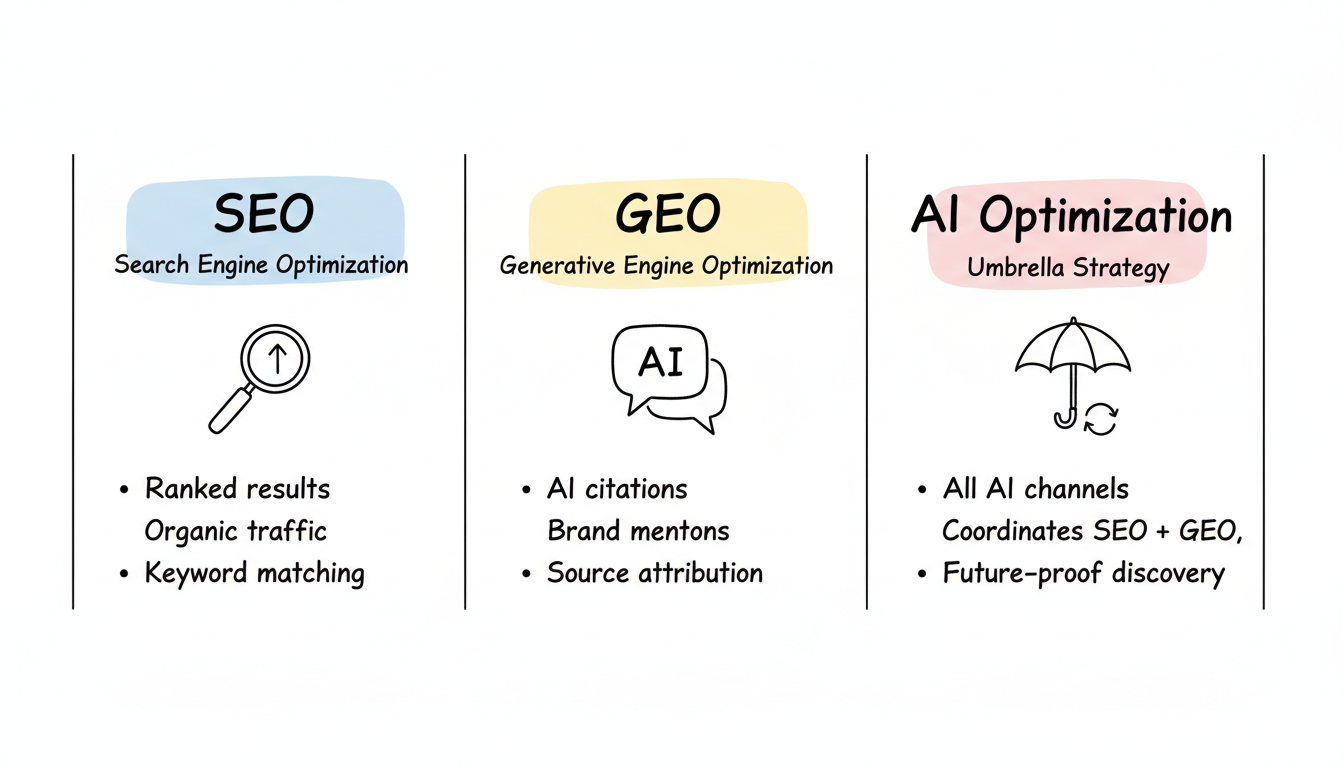
SEO: Optimizing for Ranked Results
SEO focuses on earning positions in traditional search engine results pages. When users search on Google, Bing, or other search engines, they see ranked lists of links. SEO aims to place your content as high as possible in these rankings.
What SEO optimizes for:
- Organic search positions
- Click-through from search results
- Traffic to your website
- Keyword-based query matches
Core SEO tactics:
- Technical site optimization (speed, crawlability, mobile experience)
- Quality content aligned with search intent
- Backlink acquisition from authoritative sources
- On-page elements (titles, headers, meta descriptions)
SEO remains foundational. Despite AI search growth, billions of searches still return traditional ranked results daily.
GEO: Optimizing for AI Citations
GEO emerged as AI platforms began generating synthesized responses rather than returning link lists. ChatGPT, Perplexity, Google AI Overviews, and similar platforms answer questions directly, citing sources within their responses.
What GEO optimizes for:
- Citations in AI-generated responses
- Brand mentions when AI systems answer queries
- Source attribution in conversational AI
- Visibility across ChatGPT, Perplexity, Claude, and other platforms
Core GEO tactics:
- Content structure enabling AI extraction
- Entity clarity so AI understands your brand
- Authority signals AI systems recognize
- Consistent information across digital properties
- Technical access for AI crawlers (GPTBot, ClaudeBot, PerplexityBot)
GEO addresses a different visibility challenge - being quoted rather than ranked. Understanding the perplexity-vs-chatgpt-seo differences helps optimize for each platform's unique citation patterns.
AI Optimization: The Umbrella Strategy
AI optimization encompasses all efforts to appear in AI-mediated discovery, including both answer engines (like Google AI Overviews) and conversational AI (like ChatGPT). It serves as an umbrella covering GEO, AEO (Answer Engine Optimization), and related tactics.
What AI optimization addresses:
- Overall presence in AI-powered search
- Coherent visibility across all AI platforms
- Strategic coordination of GEO and AEO efforts
- Future-proofing for emerging AI discovery channels
AI optimization recognizes that users now discover information through multiple AI interfaces, requiring coordinated strategy rather than platform-by-platform tactics.
How They Work Together
These disciplines complement rather than compete with each other. Success in one typically supports success in the others.
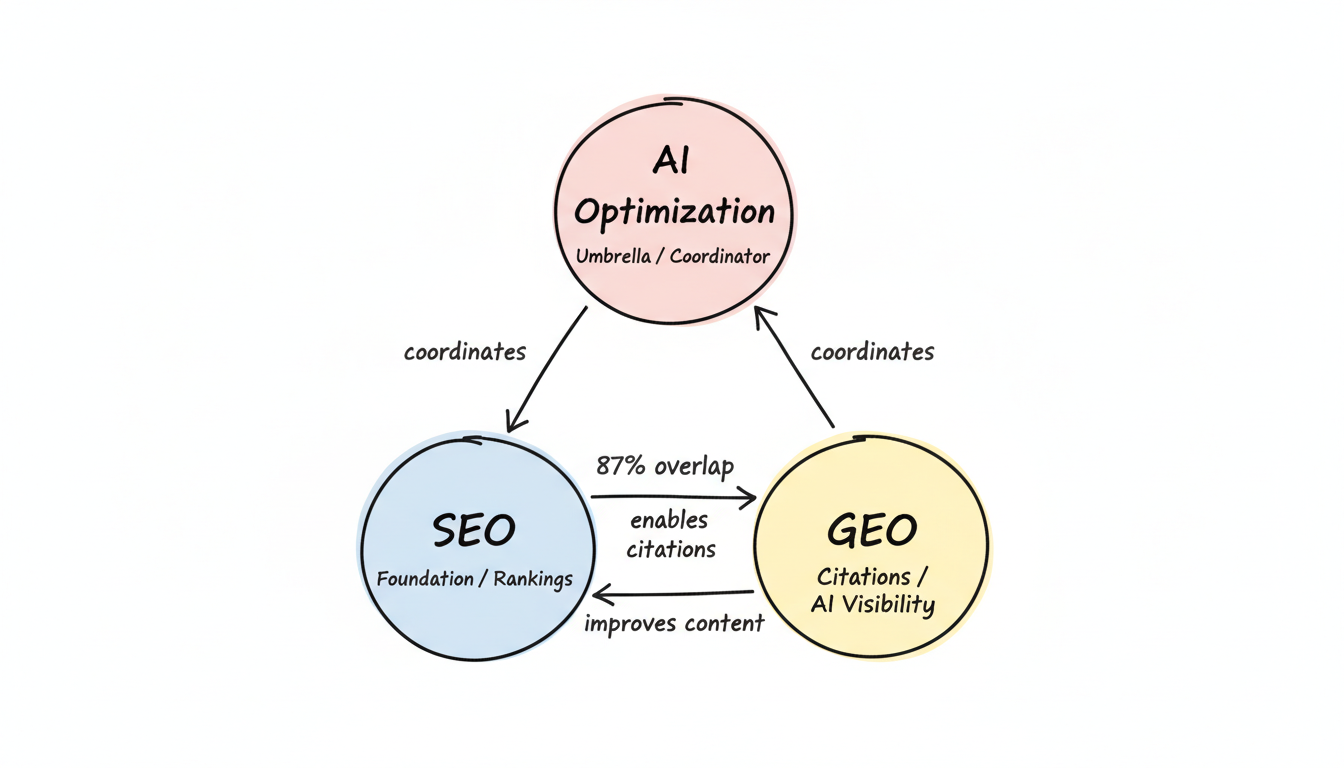
SEO Enables GEO Success
Research consistently shows that traditional SEO performance directly influences AI citation likelihood. Studies find that 87% of Google AI Overview citations come from content ranking in organic positions 1-10. Without strong organic rankings, content rarely earns AI citations regardless of other optimization efforts.
This connection exists because:
- AI systems use similar authority signals as search engines
- Content quality factors matter across all platforms
- Domain reputation influences both rankings and citations
- Technical excellence supports all discovery channels
GEO Tactics Improve SEO
Many GEO optimizations simultaneously benefit traditional SEO. Content structured for AI extraction - clear headings, direct answers, organized information - also helps search engines understand and rank content effectively. For teams looking to implement this dual approach, following a comprehensive llm-optimization-guide ensures both traditional and AI-powered search visibility.
Improvements that benefit both include:
- Comprehensive topic coverage
- Question-based content structure
- FAQ sections targeting queries
- Schema markup implementation
- Entity clarity and consistency
AI Optimization Coordinates Both
Strategic AI optimization ensures SEO and GEO efforts reinforce each other rather than competing for resources. This integration addresses the full user journey - from traditional search discovery through AI-assisted research to final decisions.
Key Differences in Practice
Understanding practical distinctions helps prioritize efforts appropriately.
Content Goals Differ
SEO content aims to rank for specific keywords and earn clicks to your site. Success means appearing in search results and attracting visitors.
GEO content aims to be cited when AI systems generate responses. Success means being quoted as an authoritative source, potentially without generating direct traffic.
AI-optimized content serves both goals - structured for extraction while still compelling enough to earn clicks when users want to learn more.
Measurement Varies
SEO metrics include rankings, organic traffic, click-through rates, and conversion from search visitors.
GEO metrics include citation frequency, mention context, cross-platform visibility, and competitive citation share.
AI optimization metrics combine both dimensions - tracking total visibility across ranked results and AI responses together. When evaluating tools for this measurement, reviewing best-aeo-tools-reviews helps identify platforms that track both traditional and AI search performance.
Timeframes Differ
SEO results often take 3-6 months as search engines discover, index, and evaluate content.
GEO results can appear faster for content structure changes (weeks) but slower for authority building (months).
Integrated AI optimization requires sustained effort across both dimensions for compounding returns.
When to Prioritize Each Approach
Resource constraints require prioritization. Consider these factors when allocating effort.
Prioritize SEO When:
- Your audience primarily uses traditional search
- You need direct website traffic for conversions
- You're building foundational authority
- Your content targets transactional queries
Prioritize GEO When:
- Your audience uses ChatGPT, Perplexity, or similar platforms
- Brand awareness matters more than immediate traffic
- You want to influence purchase recommendations
- Competitors already dominate traditional rankings
Prioritize Integrated AI Optimization When:
- Your audience uses multiple discovery channels
- You need comprehensive market visibility
- You're playing a long-term strategic game
- You have resources for coordinated execution
The 2026 Reality
The boundaries between these disciplines continue blurring. Google's search results increasingly feature AI Overviews alongside traditional rankings. ChatGPT now includes search functionality. Perplexity bridges conversational AI with source citations.
This convergence means:
- Pure SEO without AI consideration leaves visibility gaps
- Pure GEO without SEO foundations struggles to gain traction
- Integrated approaches capture the most opportunity
The most effective strategies treat SEO, GEO, and AI optimization as interconnected layers rather than separate disciplines. Strong SEO foundations enable GEO success. GEO tactics enhance SEO performance. AI optimization coordinates both into coherent strategy.
The Core Differences
The core is the surface. SEO earns the link; the answer engine earns the box; the AI model earns the quote, so the three span the entry points. The honest program names each, and the discipline of the scope is the edge, because the presence on each is the first step and the structure is the asset.
Avoid collapsing them into one. A team that treats the citation as just SEO misses the answer shape, so the distinction drives the build. The clear definition lets the team pick the right tactic, and the clarity makes the work coherent instead of a guess, because the fit is the lever and the data is the guide.
How They Work Together
They share the source. A clean, cited page serves the link, the box, and the quote, so the build does not double. The balanced shape serves all readers, and the coherence earns the placement and the click rather than the skip, because the order is the signal and the structure is the lever that pays.
Measure the trio on one cadence. A fixed query list watched over time shows whether you hold the link, the box, and the quote, because the position is not permanent. The disciplined check catches the loss early, and the patience to monitor is the quiet edge most teams skip while they assume the win holds, because the measurement is the guide and the upkeep is the value.
When to Prioritize Each
Prioritize by the behavior. A query the assistant answers first needs the cited shape; a query that drives the visit needs the rank, so the bet follows the moment. The honest read names the gap, and the clarity makes the program fundable, because the definition of the need is the first deliverable and the structure is the asset.
Use a framework, not a reflex. A simple score of the query intent points to the tactic, so measure and decide. The disciplined score points to the gap, and the clarity lets the team improve the line instead of guessing at the cause, because the data is the guide and the fit is the lever that pays.
FAQs
Is GEO Replacing SEO?
No. GEO extends SEO rather than replacing it. Traditional organic visibility remains essential - both for direct traffic and because SEO success directly influences AI citation likelihood. The 87% correlation between top-10 rankings and AI citations demonstrates that GEO builds on SEO foundations rather than substituting for them.
Which Should I Invest in First?
Start with SEO. Without organic rankings and domain authority, GEO efforts produce limited results. Once you have visibility for important terms, layer in GEO-specific optimizations like content structure for AI extraction and entity clarity across properties.
Do I Need Different Content for Each Approach?
Not necessarily. Well-structured, authoritative content serves both SEO and GEO purposes. The key is ensuring content is organized for AI extraction (clear headings, direct answers, FAQ sections) while maintaining the depth and quality that earns organic rankings.