
Both AI Overviews and featured snippets appear at the top of Google search results - but they work in fundamentally different ways. Understanding these differences determines whether your optimization strategy succeeds in 2026's AI-driven search landscape.
Here's what separates these two SERP features and how to optimize for each.
How Featured Snippets Work
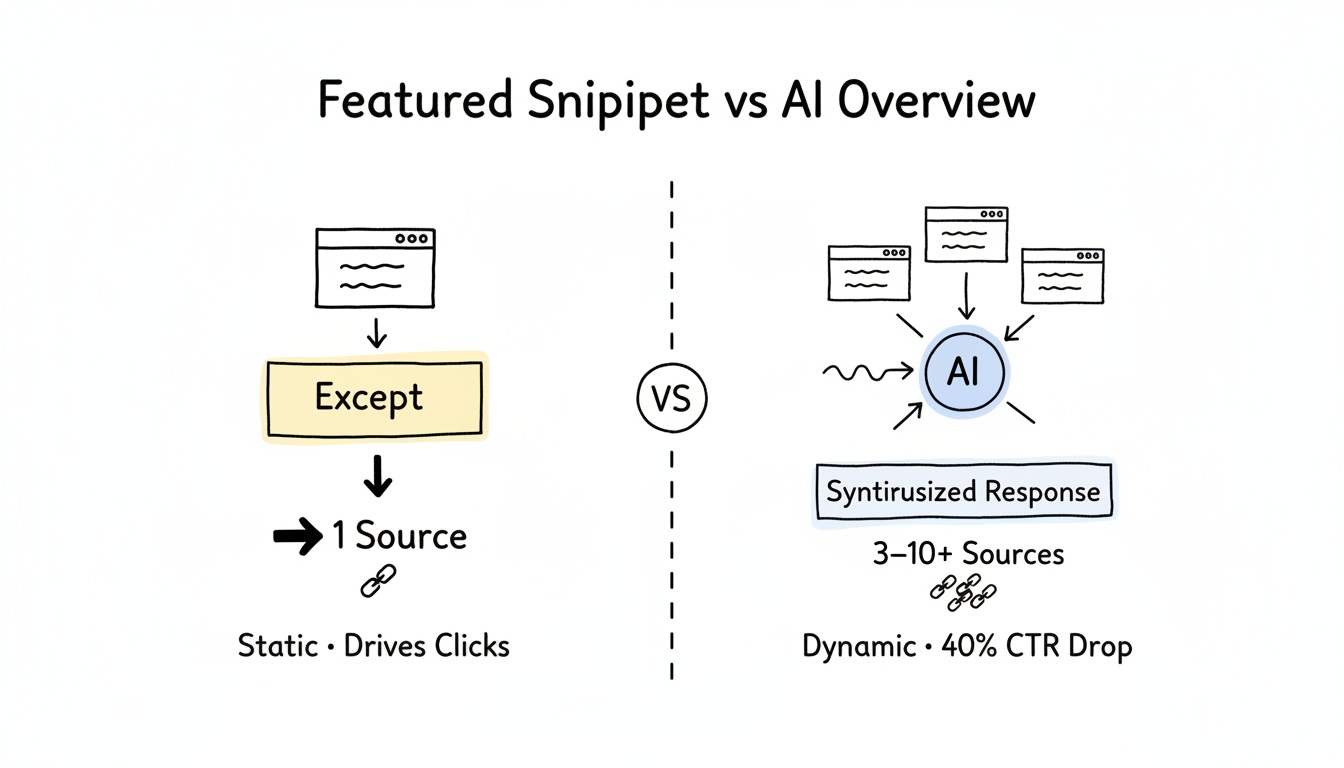
According to SEO Sherpa's analysis of AI Overviews, a featured snippet is a direct excerpt from a single page, usually shown as a paragraph, list, or table. It quotes one source verbatim and includes a link back to that page.
Featured snippet characteristics:
- Extracts exact text from one webpage
- Displays 2-4 sentences or a short list
- Links directly to the single source
- Static content that doesn't change dynamically
- Sits at "Position Zero" above organic results
Featured snippets act as previews. Users see part of the answer, then click through for the full context. The cited page receives significant traffic because the snippet demonstrates authority on the topic.
How AI Overviews Work
According to ALM Corp's Semrush AI Overviews study, AI Overviews are AI-generated summaries that appear at the top of Google search results, providing instant answers by synthesizing information from multiple web sources.
AI Overview characteristics:
- Synthesizes content from 3-10+ sources
- Creates original AI-written text (not copied)
- Displays multiple citation links as expandable cards
- Dynamic content that changes based on query context
- Can include multiple paragraphs, images, and related queries
Unlike featured snippets, AI Overviews don't quote any single source. Google's large language models (Gemini, PaLM2) digest content from numerous authoritative sources and generate a new, comprehensive response.
Key Differences at a Glance
Feature | Featured Snippet | AI Overview |
Content source | Single webpage | 3-10+ websites |
Content type | Direct extraction | AI-synthesized |
Length | 2-4 sentences | Multiple paragraphs |
Citations | One prominent link | Multiple small icons/cards |
Behavior | Static | Dynamic, context-dependent |
Click-through | Often drives clicks | Often satisfies without clicks |
Co-Occurrence Trends: Replacement, Not Complement
According to ALM Corp's research, featured snippets and AI Overviews rarely appear together. Semrush data shows co-occurrence dropped from 34% in March to just 18% by November 2025.
This pattern suggests Google views AI Overviews as a replacement for featured snippets rather than a complementary feature. As AI Overview coverage expands, featured snippet opportunities are declining proportionally.
According to Medium's Serpstat analysis, AI Overviews are already nearly three times larger than featured snippets. By late 2025, Google largely stopped showing them together.
Impact on Click-Through Rates
The two features affect user behavior differently.
Featured snippets drive clicks: According to Search Engine Land's zero-click analysis, when Google pulls an answer verbatim into a featured snippet, the cited source usually experiences a significant increase in clicks. Featured snippets have long been irresistible to searchers - who often click through to read more.
AI Overviews reduce clicks: According to The Egg's research, a meta-study analyzing the impact of AI Overviews revealed an average decline of 40% in click-through rate. Users get comprehensive answers without needing to visit websites. This shift represents a fundamental change in search engine optimization AI strategies, requiring content creators to adapt their approach.
According to NoGood's future of search analysis, 60% of searches now end without a click - between AI Overviews, featured snippets, and LLM responses providing answers directly in the SERP.
The Strategic Connection: Featured Snippets Feed AI Overviews
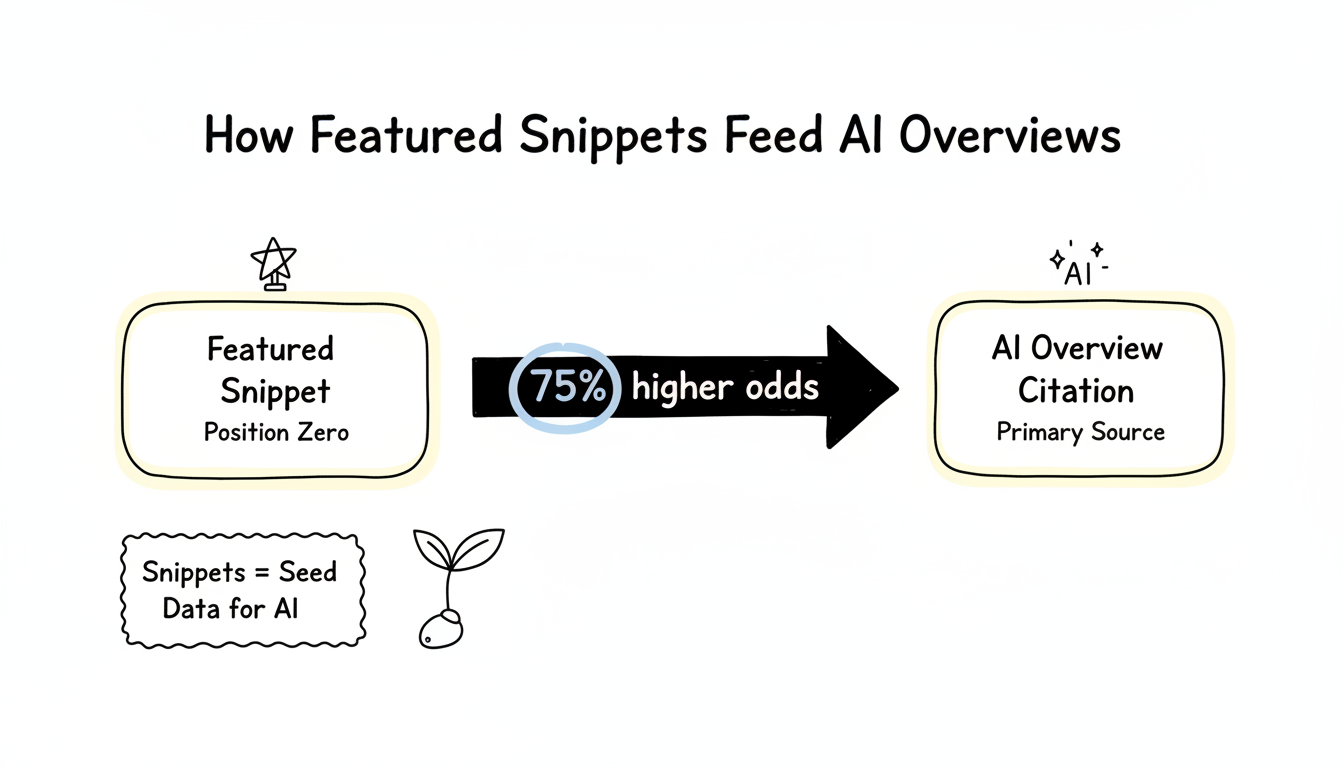
According to ClickRank's featured snippet research, featured snippets are the "seed data" for AI Overviews. If you win the featured snippet, you have a 75% higher chance of being the primary citation in the AI-generated summary.
This makes featured snippet optimization the most reliable path to AI Overview visibility. Content that ranks for position zero provides the foundation Google's AI uses when generating synthesized responses. Understanding table featured snippets optimization can significantly improve your chances of being cited in AI-generated responses.
Optimizing for Featured Snippets
Featured snippet optimization focuses on clear, extractable answers:
- Structure content with question-based H2 headers
- Provide 40-60 word answer blocks immediately after headers
- Use bullet lists and numbered steps for process content
- Include definition-style paragraphs for "what is" queries
- Format tables for comparison and specification content
According to SEO.com's AI search guide, taking the featured snippet approach - providing exact information quickly - increases your likelihood of citation in AI search results.
Optimizing for AI Overviews
AI Overview optimization requires comprehensive, multi-faceted content:
- Cover topics thoroughly with multiple angles
- Include unique insights not found elsewhere
- Maintain high domain authority and backlinks
- Keep content fresh and regularly updated
- Use structured data (FAQPage, HowTo, Article schema)
According to RankHarvest's optimization guide, Google's AI favors unique, helpful content that satisfies user needs. Generic or shallow content will rarely be selected. For comprehensive guidance, review the Google AI Overviews optimization playbook that covers both technical implementation and content strategy.
Which Should You Prioritize?
The answer: both, but differently.
Featured snippets provide a direct path to AI Overview citations. Winning position zero gives you 75% higher odds of primary citation status.
AI Overview optimization requires broader authority signals - backlinks, domain strength, comprehensive coverage, and freshness.
According to Maria Espie Vidal's analysis, featured snippets still rely on the cited page to complete user research, while AI Overviews provide what feels like a complete answer in one go. For businesses considering professional support, explore AEO consulting services to develop a strategy that addresses both optimization approaches.
Tracking Both Features in Your Analytics
Measure each feature separately so you can see what it actually costs and earns. Segment traffic from queries where a featured snippet shows versus queries with an AI Overview, and watch click-through and assisted conversions for each. Tools that report zero-click share help you size the traffic you no longer receive.
Set a monthly readout: featured snippet wins, AI Overview citations, and the ranking movement behind both. When one feature starts absorbing the other's clicks, shift effort toward the format that still drives visits for your pages.
Common Mistakes to Avoid
The biggest error is optimizing only for rankings and ignoring answer extraction. A page can rank yet never get cited if its answer is buried under a long intro. Lead with a 40-60 word direct answer, then add depth below.
Another mistake is treating AI Overviews as a reason to stop writing. Comprehensive, well-structured pages are exactly what the models cite. Keep publishing useful detail, add FAQ schema, and refresh dated stats so your content stays in the source pool.
When to Invest More in Each
If your pages already win position zero for priority questions, lean into AI Overview readiness: tighten entity clarity, add structured data, and keep content fresh. If you have strong authority but few snippets, start with snippet formatting to feed the citation pipeline.
Budget also follows the data. Brands in visual or lifestyle categories may see little AI Overview traffic and should keep spending on classic SEO. Technical and informational sites usually benefit most from the AI Overview work, so weight investment there.
Key Takeaways
AI Overviews and featured snippets serve different purposes in Google's search ecosystem:
- Different sources - Snippets quote one page; AI Overviews synthesize multiple sources
- Different click behavior - Snippets drive clicks; AI Overviews often satisfy without clicks
- Declining co-occurrence - Google shows them together less than 20% of the time now
- Snippets feed AI - Featured snippet content has 75% higher AI Overview citation rates
- Different optimization - Snippets need extractable answers; AI Overviews need comprehensive authority
- Zero-click era - 60% of searches end without clicks across both features
- Optimize for both - Featured snippet success improves AI Overview visibility
Understanding these differences helps you allocate optimization efforts where they'll have the most impact on visibility and traffic.