
Landscaping SEO: How Companies Rank for Local Lawn and Yard Jobs in 2026
Landscaping SEO is search engine optimization built for landscaping and lawn-care companies: ranking your business in the map pack and organic results when nearby homeowners search "landscaping [city]," "lawn care near me," or "hardscape contractor." It combines local SEO, service-page content, review generation, and technical site health so your company shows up first for high-intent yard jobs instead of paying per click forever.
TL;DR
- Landscaping SEO targets homeowners actively searching for lawn care, design, and hardscape help in your service area.
- The map pack and Google Business Profile drive most calls, so local signals matter more than national link building.
- Service pages per service and city, plus steady reviews, are the highest-leverage work.
- Expect 4-9 months to rank for competitive terms; paid ads bridge the gap while organic matures.
- Track booked jobs and revenue, not just rankings, to prove ROI.
What Is Landscaping SEO?
Landscaping SEO is the practice of optimizing a landscaping company's website and local profiles so it appears in search results for landscaping-related queries in its service area. Unlike general SEO, it is hyper-local: a landscaper in Austin competes only with other Austin landscapers, not the entire country. The goal is to capture the homeowner who just typed "landscaping near me" and is ready to hire.
The two surfaces that matter most are the local map pack (the three business listings above the organic results) and the organic results beneath it. A well-optimized landscaping site can hold a top spot in both for years at a fraction of the cost of ongoing pay-per-click ads.
Why Does Landscaping SEO Differ from General Local SEO?
Landscaping has three traits that shape the strategy. First, demand is seasonal and project-based: spring cleanups and fall leaf removal spike searches on a calendar. Second, jobs are visual and local: a patio or lawn install is high-value and the customer is almost always within 30 miles. Third, trust is built on portfolio - homeowners want to see before-and-after yards before they call.
That means landscaping SEO weights local relevance, review velocity, and visual proof (project galleries, designs) above broad content volume. A landscaper does not need a 200-page blog; they need a flawless local footprint and a handful of conversion-ready service pages.
How Long Does It Take a Landscaping Company to Rank?
For a new or unoptimized site, meaningful rankings for competitive terms like "landscaping [city]" usually take 4 to 9 months. Less competitive long-tail queries - "drought-tolerant landscaping [neighborhood]" - can rank in 6 to 12 weeks. Established domains with strong local signals move faster.
Paid search should run in parallel during the build-out so you are capturing calls from day one. As organic rankings climb, you can trim ad spend and keep the leads flowing at a lower blended cost.
Strong service pages are the on-site half of local SEO; the off-site half - citations, reviews, and proximity signals - is covered in our local SEO strategy guide. Together they decide whether your landscaping company appears in the map pack.
What Are the Highest-Impact Landscaping SEO Tactics?
If you only have limited hours, spend them here:
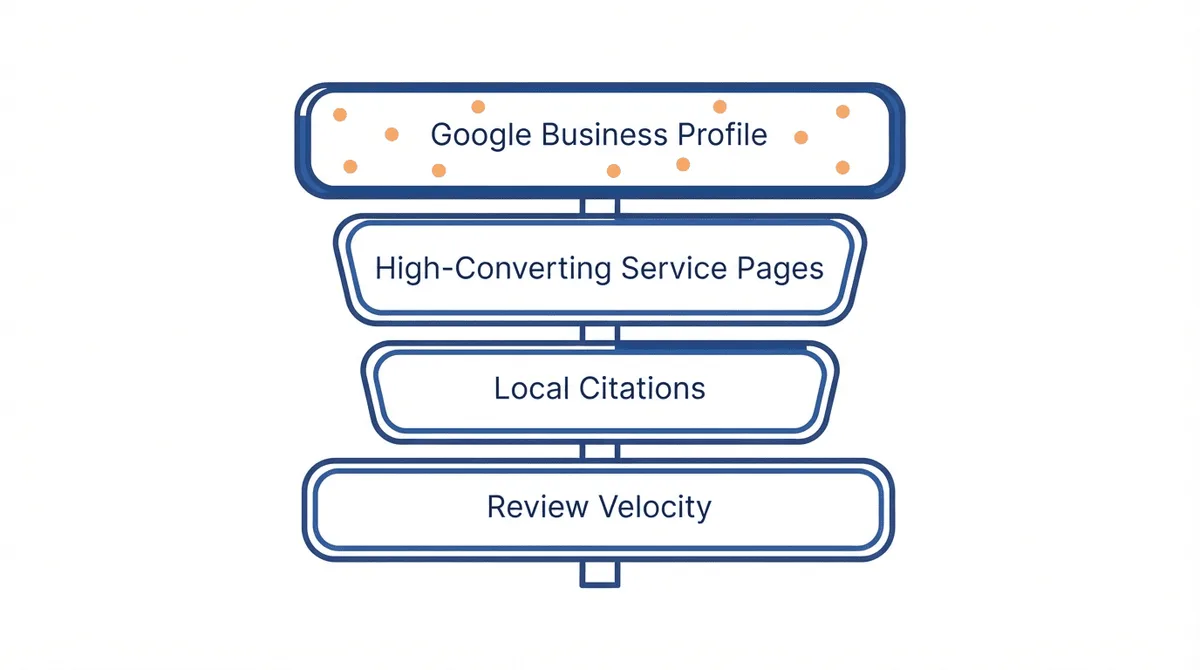
- Google Business Profile optimization - complete categories (Landscaper, Lawn Care Service, Hardscape), services, photos, and weekly posts; this single asset drives most map-pack visibility.
- Service-focused pages - one page per high-demand service (lawn maintenance, design-build, irrigation, hardscape) written for the homeowner.
- Review velocity - a steady stream of fresh reviews that name the service ("great patio install") strongly influences local rankings.
- Local landing pages - dedicated pages for each city or neighborhood you serve, with locally relevant project proof.
- Local schema markup - LandscapeContractor and Service structured data so Google understands your offerings.
How Do You Build High-Converting Landscaping Service Pages?
The page that ranks is rarely the homepage; it is a dedicated, intent-rich service page. A high-converting landscaping page contains:
- A service + location title tag under 60 characters, e.g. "Lawn Care in [City] | [Brand]".
- Above-the-fold trust: license number, insurance, years in business, and a tap-to-call button.
- Specific service copy explaining what, why, and how the work is done - written for the homeowner, not stuffed with keywords.
- Proof: real before-and-after project photos, named-client reviews, and any certifications.
- A single clear CTA: free estimate, booking link, or financing - not three competing buttons.
- FAQ microcontent: 3-5 questions pulled from actual customer asks, marked up for search.
- Internal links to related services and your service-area pages so equity flows.
Google Business Profile for Landscapers: The Non-Negotiables
Your Google Business Profile (GBP) is often the first thing a homeowner sees, and it feeds the map pack directly. Get these right:
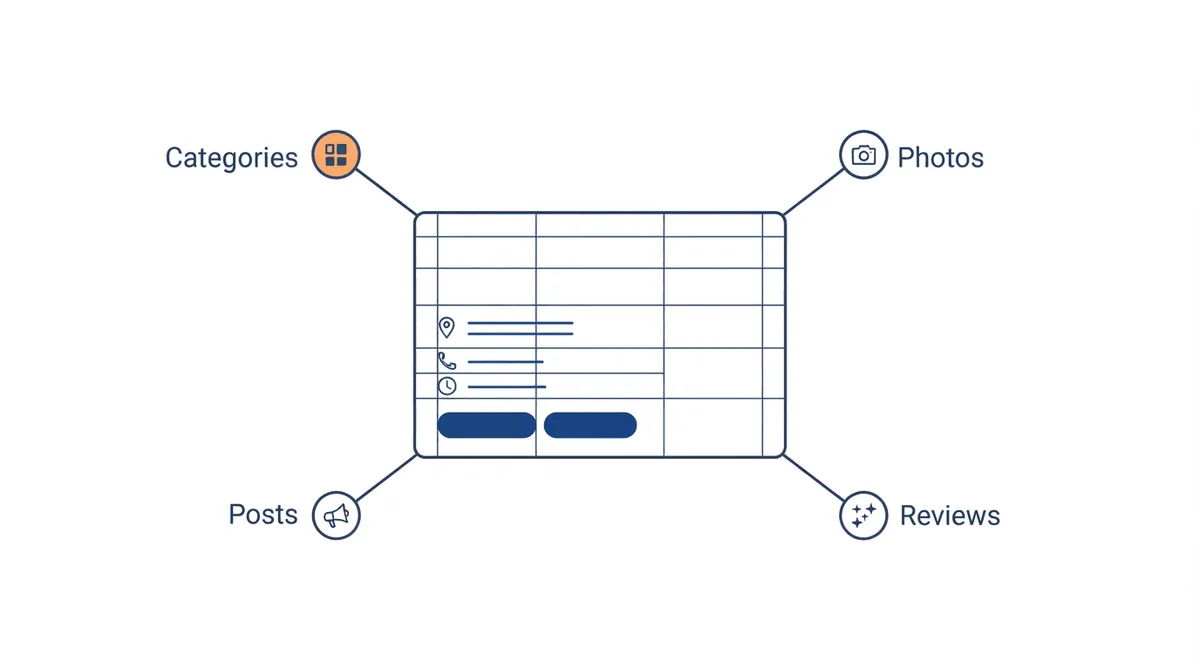
| Element | What to do | Why it matters |
|---|---|---|
| Primary category | Set to "Landscaper"; add "Lawn Care Service" and "Hardscape" as needed. | Drives which queries trigger your listing. |
| Services list | Add every service with descriptions and photos. | Surfaces you for specific service searches. |
| Photos | Post project before/afters and team at work weekly. | Engagement signals and trust at the decision moment. |
| Q&A and posts | Answer common questions; post seasonal tips. | Keeps the profile active and informative. |
| Reviews | Reply to every review within 48 hours. | Response rate and volume influence ranking and trust. |
What Content Actually Moves the Needle for Landscapers?
Skip the generic "what is landscaping" explainer that a thousand sites already rank for. The content that wins is service plus location:
- "Lawn care in [City]" - target the routine-maintenance homeowner.
- "Hardscape design [City]" - a high-value, lower-competition project niche.
- "Drought-tolerant landscaping [Neighborhood]" - captures a specific, motivated need.
- "Fall cleanup [City]" - captures seasonal, high-intent demand.
Each page should answer the homeowner's real questions: what the service includes, how long it takes, whether you offer maintenance plans, and how to get a quote. That depth is what earns the ranking and the click.
Technical SEO Essentials for Landscaping Websites
Before any content pays off, the technical base must be sound. The essentials:
| Element | Why it matters for home services | Baseline to hit |
|---|---|---|
| Mobile speed | Most homeowner searches happen on a phone. | Under 3 seconds LCP on 4G. |
| Local schema | Helps Google connect your business to a place and services. | LocalBusiness + Service schema on every page. |
| Crawl/index health | Broken or noindexed pages waste crawl budget. | 0 critical crawl errors in Search Console. |
| NAP consistency | Conflicting addresses confuse local signals. | Identical Name-Address-Phone everywhere. |
| Secure + clean URLs | Trust and usability. | HTTPS, short, readable slugs per service. |
Landscaping SEO vs Google Ads: Which Should a Company Run?
Run both, but for different reasons. Google Ads delivers instant visibility and lets you target seasonal demand - "spring cleanup [city]" - the moment it appears. SEO compounds: once you rank, the clicks are essentially free and the listing carries more trust than an ad label.
The smart sequence is to use ads for immediate cash flow during peak season while investing in SEO for the long-term, lower-cost pipeline. Many profitable landscapers spend 60-70% of their marketing budget on ads early, then flip that ratio as organic matures.
How to Measure Landscaping SEO ROI
Rankings are a vanity metric unless they create jobs. Track these in order of importance:
- Map-pack position for your top 10 service + city terms - this is where calls come from.
- GBP actions: calls, direction requests, and website clicks from the profile.
- Organic conversions: quote forms, call clicks, and booking requests attributed to organic.
- Booked jobs and revenue: the only number the owner should optimize toward.
- Blended cost per lead: organic + ads together, so you see SEO's true savings.
For a landscaping company, a healthy target is an organic cost per booked job that is 30-60% below the paid-only cost within 6-9 months of consistent work.
Common Landscaping SEO Mistakes That Waste Budget
- Building a single "service area" page instead of individual city and service pages.
- Buying fake or out-of-region reviews that trigger Google penalties.
- Ignoring mobile speed - most landscaping searches happen on a phone in the yard.
- Forgetting project photo proof, which costs trust at the decision moment.
- Chasing national "how to garden" content instead of local, buyer-intent pages.
FAQ
Landscaping SEO FAQ
How Much Does Landscaping SEO Cost?
Most landscaping companies spend between $1,200 and $4,500 per month for ongoing local SEO, with one-time site builds running $3,000 to $9,000. Pricing tracks how many services and cities you need covered and how competitive your metro is.
Do I Need a Website or Is Google Business Profile Enough?
A complete GBP is the foundation, but you still need a fast website with service pages to rank in the organic results and to convert profile visitors who want proof, pricing signals, and a quote form.
Can I Do Landscaping SEO Myself?
You can handle the basics - GBP, reviews, and consistent service pages - but technical fixes, schema, and local link building usually need a specialist. Many owners manage the profile in-house and outsource the rest.
Why Do I Rank for My Brand but Not For "Landscaping [City]"?
Brand searches are easy because only you match. Ranking for the generic service + city term requires on-page service content, local citations, and review velocity that competitors have already built.
How Do I Measure Landscaping SEO Success?
Track map-pack rankings for your core service + city terms, GBP calls and direction requests, organic quote form fills, and ultimately booked jobs and revenue - not just traffic.