
Local Facebook Ads Targeting: Reaching Nearby Customers Without Wasting Budget
You boost a post, set the radius to 25 miles, and watch your budget disappear into likes from people three towns away who will never walk through your door. Broad local Facebook ads targeting is the most common way service businesses waste money on Meta's platform. The tools for precise local targeting exist -- most advertisers just never learn to use them.
This guide shows you how to build Facebook ad campaigns that reach the right people in the right neighborhoods at the right cost.
How to Set Up Effective Local Facebook Ads Targeting
Effective local Facebook ads require layered targeting that combines geography, demographics, and behavior. Each layer narrows your audience to people who are both nearby and likely to need your service.
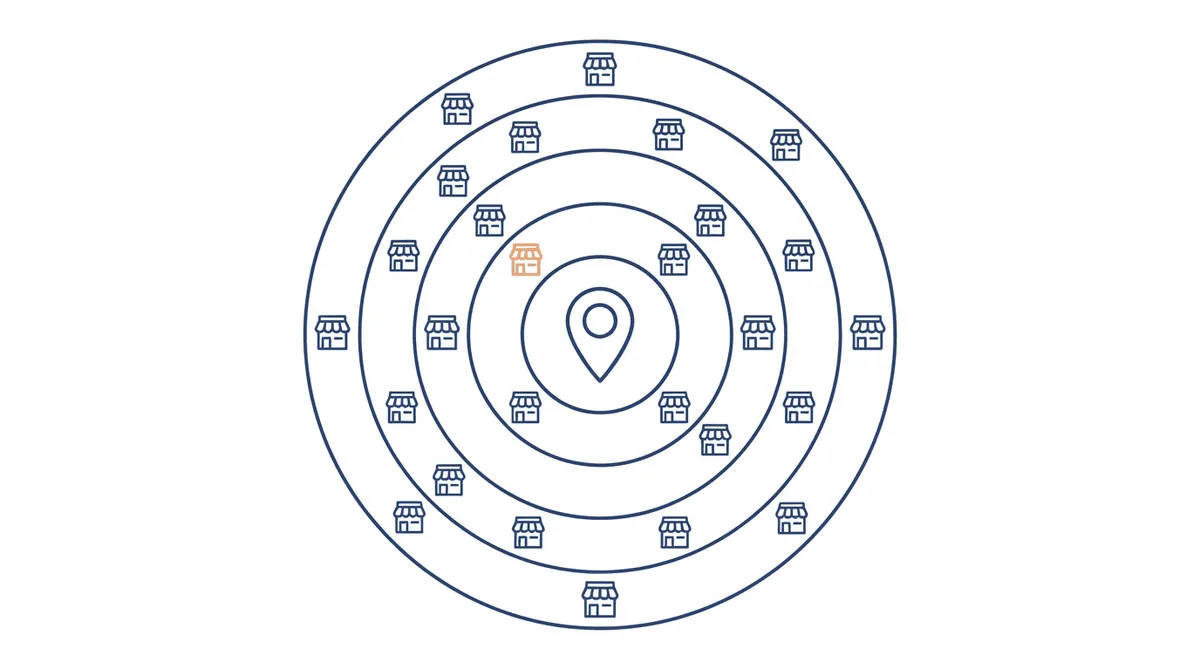
Step 1: Define Your Geographic Targeting Precisely
Facebook offers four geographic targeting options. Most local businesses should use "People living in this location" rather than the default "People living in or recently in this location." The default includes travelers, commuters, and people who briefly passed through your area -- most of whom are not prospects.
Set your targeting radius based on your actual service area:
- Drop a pin on your business location and set a radius (as tight as 1 mile in dense urban areas)
- Target specific zip codes if your service area does not follow a clean radius
- Exclude areas where you do not service or where past campaigns showed poor conversion rates
- Use multiple ad sets with different radiuses and budgets -- allocate more to your highest-performing zones
For businesses covering a tight area, combining this with hyperlocal advertising techniques squeezes maximum value from every dollar.
Step 2: Layer Demographic and Interest Targeting
Geographic targeting alone is not enough. A 5-mile radius around your office still contains thousands of people who will never need your service. Layer additional targeting:
Demographics: - Homeowner status (critical for home service businesses) - Income level (match to your service pricing tier) - Age range (exclude demographics unlikely to be decision-makers) - Life events (recently moved, newly engaged, new parents)
Interests and Behaviors: - Home improvement interests (for contractors, landscapers) - Vehicle ownership (for auto service businesses) - Health and fitness interests (for gyms, wellness providers) - Engagement with competitor pages
Custom Audiences: - Upload your customer email list to create a Custom Audience - Build a Lookalike Audience from your best customers - Retarget website visitors who viewed service pages but did not convert - Target people who engaged with your Facebook or Instagram content
Custom Audiences consistently outperform interest-based targeting for local businesses. A Lookalike Audience built from your highest-value customers finds people in your area who share characteristics with people who already buy from you.
Step 3: Structure Your Campaigns by Objective
Do not run one campaign for everything. Separate your campaigns by objective:
Awareness campaigns (reach objective): Introduce your business to new people in your area. Use video or carousel ads showing your work. Budget: 20-30% of your Facebook spend.
Consideration campaigns (traffic or engagement objective): Drive interested people to your website or encourage them to interact with your content. Use testimonial ads, before/after galleries, or educational content. Budget: 30-40%.
Conversion campaigns (leads or conversions objective): Capture contact information or phone calls from people ready to buy. Use offer ads, lead forms, or click-to-call ads. Budget: 30-50%.
Step 4: Create Locally Relevant Ad Creative
Generic ad creative underperforms localized creative by 20-40% in local campaigns. Reference your specific community:
- Mention neighborhood names in headlines ("Capitol Hill Homeowners: Your Roof Inspection Is Overdue")
- Feature recognizable local landmarks in photos or videos
- Include reviews from named local customers (with permission)
- Reference local weather, events, or seasonal concerns
Step 5: Set Up Proper Conversion Tracking
Install the Meta Pixel on your website and configure conversion events for:
- Phone calls (use a Facebook-specific tracking number)
- Form submissions
- Chat initiations
- Appointment bookings
Without conversion tracking, Facebook optimizes for clicks instead of leads. You get cheap traffic that does not convert instead of qualified prospects who become customers.
Common Local Facebook Ads Mistakes
Several recurring errors account for the majority of wasted budget and missed opportunities in this area. Recognizing them early saves both time and money.
Boosting Posts Instead of Running Ads Manager Campaigns
Boosted posts give you minimal targeting control and limited optimization options. Always create campaigns through Ads Manager where you can set precise audiences, choose optimization objectives, and run A/B tests.
Setting the Radius Too Wide
A 25-mile radius around a suburban business includes hundreds of thousands of people who will never drive that far for your service. Start with the smallest viable radius (3-5 miles for most service businesses) and expand only if you cannot spend your daily budget.
Ignoring Frequency Caps
In a small local audience, your ads can reach the same people dozens of times per week. When frequency exceeds 3-4 impressions per person per week, engagement drops and cost per result increases. Monitor frequency metrics and refresh creative when frequency climbs above 3.
Running One Ad Until It Dies
Ad fatigue hits local campaigns faster because the audience is smaller. Prepare 3-5 ad variations from the start and rotate them. Replace any ad whose click-through rate drops below 1% or whose cost per result increases 20% from its launch baseline.
Not Excluding Current Customers
If you do not exclude your existing customer list, you spend money advertising to people who already buy from you. Upload your customer list and exclude it from prospecting campaigns. Create a separate retention campaign with different messaging for existing customers.
Case Study: Local HVAC Company Cuts Cost per Lead by 58%
A single-location HVAC company in Phoenix was spending $3,200/month on Facebook ads generating 22 leads at $145 per lead. Their campaigns used a 30-mile radius, broad interest targeting, and a single ad creative that had run for four months.
After restructuring their approach:
Targeting changes: - Reduced radius from 30 miles to 8 miles (their actual service area based on customer data) - Added homeowner targeting and income filtering ($75K+ household income) - Created a Lookalike Audience from their top 200 customers - Excluded existing customers and past leads from the last 90 days
Creative changes: - Created 5 ad variations featuring different local neighborhoods - Added before/after project photos from recognizable local areas - Included customer video testimonials mentioning their neighborhood by name
Structural changes: - Separated awareness, consideration, and conversion campaigns - Set frequency caps at 3 per week per person - Enabled conversion optimization using Meta Pixel lead events
Results after 60 days: - Lead volume increased from 22 to 41 per month (86% increase) - Cost per lead dropped from $145 to $61 (58% decrease) - Monthly spend decreased from $3,200 to $2,500
The key driver was eliminating wasted spend on audiences outside their service area and people unlikely to need HVAC service. The localized creative also improved click-through rates by 35%, which lowered costs across the account.
These Facebook campaigns worked alongside their local SEO efforts and Google Business Profile to create a multi-channel local presence. The combination drove a higher volume of leads than any single channel could achieve alone -- an approach detailed in our local digital marketing strategy guide.
Frequently Asked Questions
What Is the Minimum Budget for Local Facebook Ads?
You can run effective local Facebook ads with as little as $500/month, but $1,000-$2,000/month gives you enough data to optimize meaningfully. Below $500/month, the algorithm does not receive enough conversion signals to optimize effectively, and you cannot test multiple ad variations.
Are Facebook Ads or Google Ads Better for Local Businesses?
They serve different purposes. Google Ads captures people actively searching for your service (high intent, higher cost per click). Facebook Ads reach people before they search, building awareness and staying top-of-mind (lower intent, lower cost per click). Most local businesses benefit from running both.
How Often Should I Change My Local Facebook Ad Creative?
Monitor frequency and engagement metrics rather than changing on a fixed schedule. When frequency exceeds 3 per week or click-through rate drops below 1%, refresh your creative. In small local audiences, this typically means new creative every 3-6 weeks.
Key Takeaways
- Use "People living in this location" targeting and set the tightest viable radius to eliminate wasted spend on non-prospects
- Custom Audiences and Lookalike Audiences from your customer list outperform interest-based targeting by a wide margin
- Separate campaigns by objective (awareness, consideration, conversion) and allocate budget accordingly
- Localized ad creative referencing specific neighborhoods outperforms generic messaging by 20-40%
- Monitor frequency closely in small local audiences and refresh creative before fatigue degrades performance