
Meta Ads Funnel Strategy: The Complete Guide (2026)
A well-structured meta ads funnel strategy is the difference between profitable campaigns and wasted ad spend. In 2026, simply clicking "Create Campaign" and hoping for sales no longer works. The market is saturated, and you need a strategic approach that builds customer relationships over time.
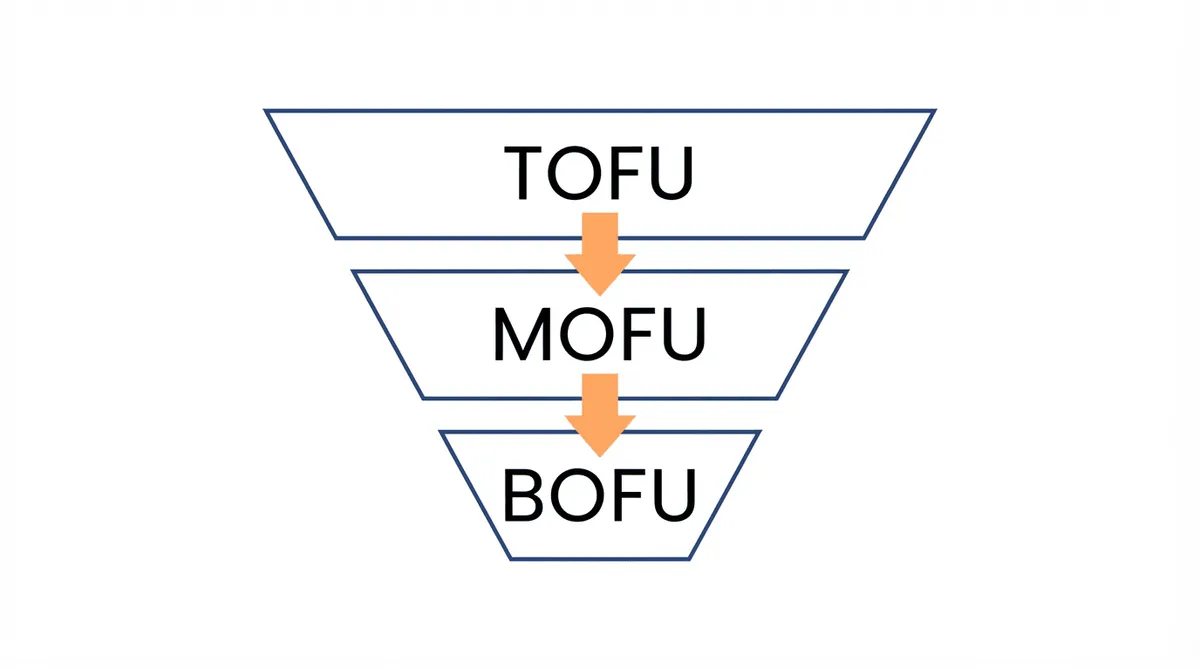
This guide breaks down the full-funnel framework using TOFU (Top of Funnel), MOFU (Middle of Funnel), and BOFU (Bottom of Funnel) campaigns, plus how to set up retargeting that converts cold strangers into loyal buyers.

Building effective funnels requires strong Meta advertising fundamentals -- our free Meta Ads course walks through each stage from awareness to conversion.
Why Full-Funnel Matters in 2026
Most advertisers make the mistake of running only conversion campaigns to cold audiences. They expect immediate sales from people who have never heard of their brand. This approach worked years ago when competition was lower and CPMs were cheaper.
The numbers tell the story: customer acquisition costs have surged over 60% in the past decade, and 75% of performance marketers now report diminishing returns from single-stage conversion campaigns aimed at cold audiences. The era of "boost a post and get sales" is over.
Today, building a customer journey is essential. According to full-funnel strategy experts, the key is understanding that different users are at different stages of buying readiness. Your campaigns need to match their intent level.
The Full-Funnel Advantage:
- Lower overall CPAs by warming audiences before selling
- Higher conversion rates at the bottom of the funnel
- Better ROAS from more efficient audience progression
- Stronger brand recognition and customer lifetime value
Meta'S Algorithm: Signal Density and the GEM Era
Before diving into funnel stages, it helps to understand why full-funnel structure works so well with Meta's current ad delivery system.
Meta's ad engine has evolved significantly with its GEM (GPU-based Execution Module), Andromeda, and Wukong architecture. These systems rely on behavioral signals rather than demographic or interest-based targeting to find your best prospects.
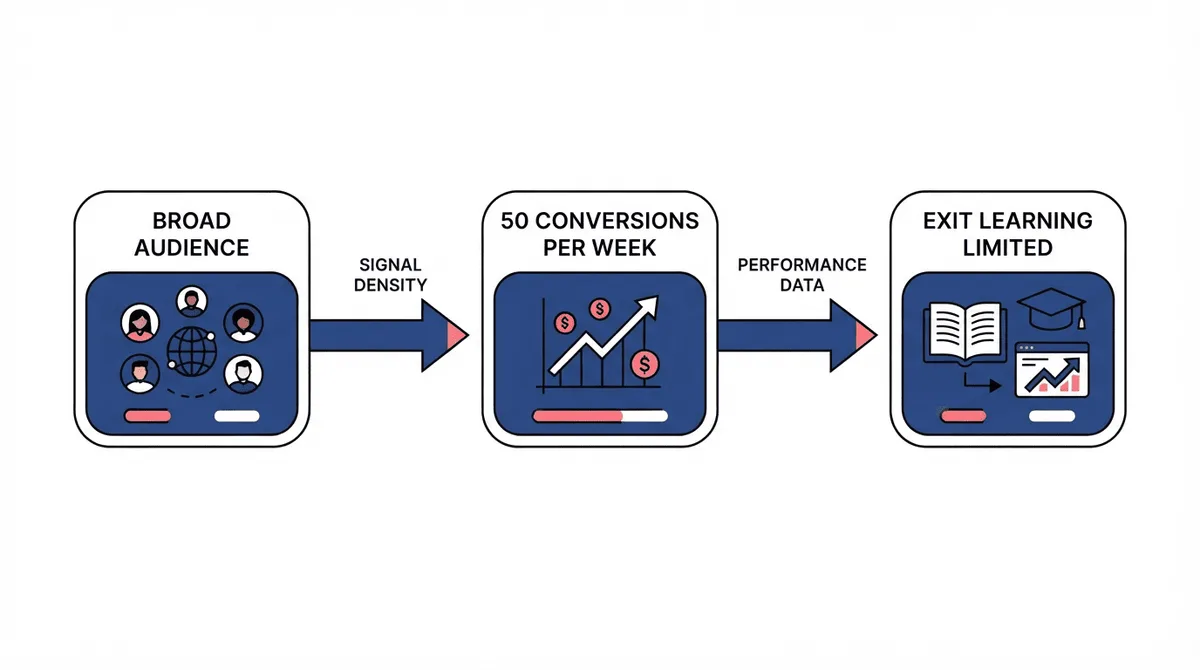
This means broad targeting now consistently outperforms narrow interest stacks. The algorithm needs data to learn, and restricting audiences limits the signals it can collect. The key concept is signal density: each ad set needs roughly 50 conversion events per week (the CPA x 50 rule) to exit the "Learning Limited" phase and optimize delivery effectively.
What this means for your funnel strategy:
- Consolidate campaigns rather than splitting into dozens of small ad sets
- Use fewer, broader audiences so each ad set accumulates enough conversions
- Let Meta's behavioral engine find converters within large audience pools
- Monitor the "Learning" status in Ads Manager and merge underperforming ad sets that cannot hit the 50-event threshold
Understanding signal density is critical because it directly impacts budget allocation and campaign structure decisions throughout TOFU, MOFU, and BOFU, and is essential to any meta ads funnel strategy.
The CPA x 50 rule: each ad set needs roughly 50 conversion events per week to exit Learning Limited and let Meta's algorithm optimize delivery effectively.
TOFU Campaigns
Top of Funnel campaigns focus on reaching new audiences who have never encountered your brand. The goal is not immediate sales but creating awareness and capturing attention.
To prove that top-of-funnel awareness spend actually moved the brand, run a brand lift study alongside your TOFU campaigns.
TOFU Objectives
Use these campaign objectives for top of funnel:
- Awareness: Maximize impressions to the broadest relevant audience
- Video Views: Get your video content in front of new prospects
- Engagement: Build social proof through likes, comments, and shares
TOFU Targeting
At the top of funnel, go broad:
- Advantage+ Audience: Let Meta's AI find your ideal prospects
- Broad demographics: Age, gender, and location only
- Wide interest stacks: Related interests grouped together
- Lookalike audiences: 3-5% lookalikes based on your best customers
Leveraging Facebook ads targeting strategies for 2026, using broad targeting at TOFU allows Meta's AI to find efficient audiences rather than restricting the algorithm with narrow parameters.
TOFU Creative
Your TOFU creative should:
- Introduce your brand and what you offer
- Focus on entertainment or education, not hard selling
- Use video content (performs best for awareness)
- Tell stories that resonate with your target audience
TOFU Creative Types:
- Brand story videos
- Educational content about your industry
- Behind-the-scenes footage
- Problem-awareness content (highlighting pain points)
TOFU Budget
Allocate approximately 20-30% of your total Meta ads budget to TOFU campaigns. This investment builds the audience pool that feeds your lower-funnel campaigns.
CBO vs ABO: Choosing Your Budget Strategy
When setting up budgets across funnel stages, choose between Campaign Budget Optimization (CBO) and Ad Set Budget Optimization (ABO) based on the campaign's role.
CBO is recommended for prospecting campaigns (TOFU and MOFU) because it lets Meta automatically distribute budget to the best-performing ad sets within the campaign. ABO is better for retargeting campaigns (BOFU) where you need precise control over smaller, high-value audience segments and want to guarantee minimum spend on each ad set.
MOFU Campaigns
Middle of Funnel campaigns target people who have engaged with your brand but are not yet ready to buy. These prospects know who you are but need more information or trust-building before committing.
MOFU Audiences
Build MOFU audiences from your TOFU engagement:
- Video viewers: People who watched 50% or more of your TOFU videos
- Page engagers: Users who liked, commented, or shared your content
- Website visitors: People who visited your site but did not convert
- Social engagers: Anyone who interacted with your Instagram or Facebook profile
MOFU Objectives
Use these objectives for middle of funnel:
- Traffic: Drive visitors to your website or landing pages
- Engagement: Deepen the relationship with more content
- Lead Generation: Capture email addresses or phone numbers
MOFU Creative
Your MOFU creative should:
- Provide more detail about your products or services
- Address common objections and questions
- Show social proof (testimonials, reviews, case studies)
- Offer value in exchange for engagement (guides, tools, demos)
User-generated content (UGC) is particularly effective at the MOFU stage. Authentic customer videos, unboxing content, and real-world use cases drive up to 29% higher conversion rates compared to brand-produced creative. Encourage customers to create content and repurpose it as ad creative with their permission.
MOFU Creative Types:
- Testimonial videos from real customers
- Product demonstration videos
- Comparison content (why choose you)
- Lead magnets: go beyond a simple PDF download. Offer gated resources that deliver immediate value such as interactive calculators, detailed industry reports, recorded webinars, or free tools. The key is making the gated content valuable enough that prospects willingly exchange their contact information.
- UGC compilations and customer story highlights
MOFU Budget
Allocate approximately 20-30% of your total Meta ads budget to MOFU campaigns. These campaigns move engaged prospects closer to purchase.
BOFU Campaigns
Bottom of Funnel campaigns target your warmest audiences who are ready to buy. These people know your brand, understand your offer, and just need the final push.
BOFU Audiences
Build BOFU audiences from high-intent actions:
- Add to cart abandoners: Visited product pages or added items to cart
- Email subscribers: Your existing contact list
- Past purchasers: For upsells, cross-sells, or repeat purchases
- High-value page visitors: Visited pricing page, contact page, or spent significant time on site
BOFU Objectives
Use the Sales or Leads objective optimized for:
- Purchase (ecommerce)
- Lead (service businesses)
- Complete Registration (SaaS or subscription)
For lead generation campaigns, enable Meta's Conversion Leads Performance Goal. This optimization feature uses your CRM data fed back through the Conversions API to optimize for leads that actually convert into customers, not just form submissions. It requires a working CAPI integration with offline event uploads.
BOFU Creative
Your BOFU creative should:
- Make direct offers with clear calls to action
- Include urgency or scarcity when genuine
- Feature specific products or services
- Highlight promotions, discounts, or limited-time offers
BOFU Creative Types:
- Dynamic Product Ads (showing items users viewed)
- Promotional offers with deadlines
- Direct response ads with clear CTAs
- Cart abandonment reminders
BOFU Budget
Allocate approximately 40-50% of your total Meta ads budget to BOFU campaigns. This is where conversions happen, but only because TOFU and MOFU campaigns warmed these audiences first.
The mechanics of budget pacing and placement selection live in our Meta media buying strategy guide.
Advantage+ Shopping Campaigns (ASC)
Advantage+ Shopping Campaigns (ASC) represent Meta's AI-driven approach to automating the entire funnel within a single campaign. ASC automatically finds audiences across prospecting and retargeting segments, optimizes creative combinations, and allocates budget dynamically without manual ad set segmentation.
ASC works best for ecommerce businesses with broad product catalogs and sufficient conversion volume. If you are running lead generation or have a complex sales cycle, a manual funnel structure typically gives you more control over messaging at each stage. Many advertisers run ASC alongside their manual funnel, dedicating 20-30% of total budget to ASC as a complement rather than a replacement.
Retargeting Setup
Effective retargeting is the engine that powers your meta ads funnel strategy. Without proper retargeting setup, prospects fall out of your funnel before converting.
Setting Up Custom Audiences
Create these custom audiences in Meta Ads Manager:
Website-based audiences:
- All website visitors (180 days)
- Product page viewers (30 days)
- Add to cart (14 days)
- Initiate checkout (7 days)
Engagement-based audiences:
- Video viewers (25%, 50%, 75%, 95%)
- Page/profile engagers (90 days)
- Ad engagers (90 days)
- Lead form openers who did not submit
Customer list audiences:
- Email subscribers
- Past customers
- High-value customers
Retargeting delivers an average 4.2x ROAS — making it the highest-ROAS campaign type in a full-funnel Meta ads strategy. Prioritize retargeting setup before scaling cold acquisition.
Exclusion Audiences
Equally important as targeting is excluding. Always set up exclusion audiences to prevent ads from showing to users who have already taken your desired action.
Essential exclusions:
- Exclude purchasers from acquisition campaigns
- Exclude email subscribers from lead generation campaigns
- Exclude recent converters from retargeting (7-14 day window)
Retargeting Windows
Match your retargeting window to your buying cycle:
Audience | Window | Purpose |
Video viewers | 30-90 days | Move to MOFU |
Page visitors | 30-60 days | Move to BOFU |
Product viewers | 14-30 days | Show specific products |
Add to cart | 7-14 days | Urgency-focused offers |
Checkout started | 3-7 days | Strong incentive to complete |
Server-Side Tracking
Modern retargeting requires server-side tracking via Meta's Conversions API (CAPI). According to current tracking best practices, server-side tracking transmits data directly from your servers rather than relying on browser cookies, which improves data accuracy and attribution.
Set up both:
- Meta Pixel (client-side)
- Conversions API (server-side)
This dual setup provides redundancy and captures events that cookies might miss.
Event Match Quality (EMQ)
After implementing CAPI, monitor your Event Match Quality score in Events Manager. EMQ is a score out of 10 that measures how well your server-side event data matches Meta's user records. The higher the score, the better Meta can attribute conversions and optimize delivery.
Improving EMQ from 8.6 to 9.3 has been shown to reduce CPA by approximately 18%. To improve your EMQ, pass as many customer information parameters as possible with each event: email, phone, first name, last name, city, state, zip code, and external ID.
Offline Conversions Integration
For businesses with offline touchpoints, integrate offline conversion events into your Meta reporting. Upload phone call outcomes, in-person visit data, and CRM pipeline events through the Conversions API or offline event uploads.
This gives Meta's algorithm a complete picture of which ad clicks lead to real business outcomes, not just online form fills. Offline conversion data is especially valuable for high-value B2B and local service businesses where the final conversion happens off-platform.
Creative Testing and Refresh Strategy
Even the best meta ads funnel strategy will underperform with stale creatives. A systematic creative testing and refresh process keeps your campaigns competitive and prevents ad fatigue from eroding performance.
Run 4 to 5 ads per ad set to give Meta's algorithm enough options to optimize delivery. With fewer ads, the system cannot effectively test and learn. With too many, budget gets spread too thin for any single ad to gather meaningful data.
Refresh your creatives every 2 to 4 weeks. Monitor frequency metrics closely. When frequency exceeds 3 to 4 in a 7-day window and performance declines, it is time to introduce new creative variants.
Diversify ad formats across placements:
- 1:1 aspect ratio for feed placements
- 4:5 aspect ratio for mobile feed (takes up more screen real estate)
- 9:16 vertical format for Stories and Reels
When testing, change one variable at a time to isolate what works: test a new hook against your control, then a new CTA, then a new visual style. Running structured tests produces actionable insights rather than guesswork about what drove a performance change.
Post-Purchase: Retention and Loyalty Campaigns
The funnel does not end at conversion. A true meta ads funnel strategy extends into post-purchase retention, where the goal shifts from acquiring new customers to maximizing the lifetime value of existing ones.
Retention campaigns target buyers within a 30 to 90 day window after their last purchase. These campaigns are significantly cheaper than acquisition because you are reaching people who already trust your brand. Common retention campaign types include:
- Repeat purchase reminders for consumable products (timed to typical reorder cycles)
- Cross-sell and upsell Dynamic Product Ads showing complementary items to past purchases
- Loyalty program enrollment campaigns offering exclusive perks for returning customers
- Referral program promotions incentivizing existing customers to bring in new buyers
Retention campaigns typically run at 5 to 10% of your total Meta ads budget but deliver the highest ROAS of any funnel stage because conversion rates among existing customers are substantially higher than cold or warm audiences.
Measuring Full-Funnel Meta Ads Performance
Tracking the right KPIs at each funnel stage reveals where budget is working and where prospects are dropping off. A consistent measurement framework is the foundation of ongoing meta ads funnel strategy optimization.
TOFU Performance Metrics
Top-of-funnel success is measured by reach efficiency and creative engagement quality.
| Metric | Target Range | What It Measures |
|---|---|---|
| CPM (Cost Per Thousand Impressions) | $5 - $15 | Awareness cost efficiency |
| Video View Rate (3 seconds) | 15% - 30% | Creative hook effectiveness |
| Engagement Rate | 1% - 5% | Audience resonance |
| Reach | Growing weekly | New audience exposure |
| Frequency | Below 3 per 7 days | Ad fatigue risk indicator |
MOFU Performance Metrics
Mid-funnel metrics assess how well you are moving engaged prospects toward purchase intent.
| Metric | Target Range | What It Measures |
|---|---|---|
| Click-Through Rate (CTR) | 1% - 3% | Ad relevance to warm audiences |
| Cost Per Lead (CPL) | Industry-dependent | Lead acquisition efficiency |
| Lead Quality Score | CRM-defined | Downstream conversion readiness |
| Landing Page Conversion Rate | 2% - 10% | Offer and page performance |
BOFU Performance Metrics
Bottom-of-funnel metrics measure direct revenue impact and overall campaign efficiency.
| Metric | Target | What It Measures |
|---|---|---|
| Return on Ad Spend (ROAS) | 2x - 5x (margin-dependent) | Revenue per ad dollar |
| Cost Per Acquisition (CPA) | Below target LTV/3 | Customer acquisition cost |
| Purchase Conversion Rate | 1% - 5% | Landing page and offer performance |
| Event Match Quality (EMQ) | 8.0+ out of 10 | Attribution and signal accuracy |
| Checkout Abandonment Rate | Below 70% | BOFU funnel friction |
Review these metrics weekly. When TOFU CPMs spike above your target, test new creative angles or broaden your audience. When BOFU ROAS falls, check EMQ scores and ensure retargeting audiences are refreshing correctly.
Five Pillars of a High-Performing Meta Ads Funnel Strategy
Beyond TOFU, MOFU, and BOFU mechanics, the best-performing meta ads funnel strategy accounts are built on five structural principles that separate efficient growth from wasted spend. Our paid social services apply these principles across TOFU, MOFU, and BOFU campaigns.
1. Simplify, Segment, and Scale Your Account Structure
The most efficient accounts follow a clear mandate: Simplify, Segment, and Scale. Consolidate ad sets to hit the 50-event threshold, segment by funnel intent rather than demographics, and scale only what has proven to work.
2. Segment Thoughtfully and Exclude Strategically
Precision targeting means you segment thoughtfully and exclude strategically. Build audience layers based on real intent signals and exclude recent converters, email subscribers, and existing customers from cold acquisition campaigns to prevent budget waste.
3. Win with Creativity and Format Variety
Sustaining performance requires balancing creativity and format variety. Rotate static images, short-form video, carousels, and Reels regularly. Refresh creatives every 2 to 4 weeks when frequency exceeds 3 in a 7-day window.
4. Set Measurement Up Right from the Start
Attribution accuracy underpins every optimization decision. Set it up right from the start: implement Meta Pixel and Conversions API before launch, validate events in Events Manager, and configure your attribution window to match your buying cycle.
5. Adapt Messaging Across the Funnel
Tailor messaging across the funnel rather than running identical creative everywhere. Cold audiences need awareness and education. Warm audiences need social proof. Hot audiences need urgency and a direct offer aligned with their readiness to buy.
Key Takeaways
The most important principles from this meta ads funnel strategy guide, distilled for quick reference.
- Signal density first: Each ad set needs 50+ conversion events per week to exit Learning Limited. Consolidate campaigns so each ad set can hit this threshold.
- Budget split: Allocate 20-30% to TOFU, 20-30% to MOFU, and 40-50% to BOFU. Adjust the split based on audience pool size and how established your brand is.
- Retargeting wins: Retargeting delivers the highest ROAS of any campaign type. Build and warm audiences before scaling cold prospecting spend.
- Creative refresh cadence: Replace creative every 2-4 weeks when frequency exceeds 3 in a 7-day window to prevent ad fatigue from eroding results.
- Measurement foundation: Implement Meta Pixel and Conversions API before launch. Pass maximum customer parameters to maximize Event Match Quality.
- Advantage+ as complement: Run ASC with 20-30% of total budget alongside your manual funnel campaigns rather than replacing them entirely.
These principles compound over time. Advertisers who consistently apply full-funnel discipline outperform those running ad hoc campaigns within 60-90 days of implementation.
Common Mistakes That Kill Meta Ads Funnel Performance
Even well-funded campaigns fail when foundational errors go unaddressed. These are the most common pitfalls that sabotage funnel performance.
Running Without Full Pixel and CAPI Coverage
The single biggest performance killer is incomplete measurement. Without the Pixel and CAPI firing correctly on all key conversion events, Meta's algorithm optimizes blind — serving ads to users unlikely to convert.
Audit your Event Match Quality in Events Manager weekly. Any event with EMQ below 6.0 needs immediate attention — check for parameter mismatches, missing emails/phone numbers in payload, or duplicate events.
Fragmenting Budget Across Too Many Ad Sets
Running 10 ad sets with $5/day each starves every ad set of signal needed to exit the Learning Phase. Consolidate to 2–3 ad sets per campaign stage, each with enough daily budget for 7+ conversions per week.
Ignoring Creative Fatigue Signals
Most advertisers kill profitable campaigns too early or let fatigued creatives run too long. Monitor frequency and CTR weekly. When CTR drops 30%+ from its peak for the same audience, refresh the creative — don't pause the entire campaign.
Bidding Strategies for Every Funnel Stage
Choosing the right bid strategy is one of the highest-leverage decisions in Meta campaign setup. Different bid strategies align with different funnel objectives and Pixel maturity levels.
Lowest Cost Bidding (Default)
Lowest Cost tells Meta to get the maximum results within your budget at the lowest possible CPR. This is the right default for most campaigns because it gives the algorithm full flexibility to find efficient opportunities.
Cost Cap Bidding
Cost Cap sets a ceiling on CPR — Meta won't exceed it, even if delivery drops. Use this for BOFU campaigns where CPA discipline is critical. Start at 20–30% above your natural Lowest Cost CPR and tighten gradually.
Bid Cap Bidding
Bid Cap controls the maximum bid in each auction, not the average CPR. Use this for advanced advertisers who understand auction dynamics and want precise bid control — typically not recommended for new accounts or small budgets.
Seasonal Campaigns and Peak Period Strategy
Seasonal peaks — Black Friday, Q4 holiday season, back-to-school, Valentine's Day — represent the highest CPM periods on Meta but also the highest consumer purchase intent. Prepare your funnel 6–8 weeks before the peak.
Pre-Peak Audience Building
In the 6 weeks before a seasonal peak, shift budget aggressively toward TOFU and MOFU campaigns. Your goal is to build large, warm Custom Audiences — video viewers, page engagers, site visitors — so when peak arrives, you have warm audiences ready to retarget with your seasonal offer.
Peak Creative and Offer Strategy
During the peak, pause brand awareness and concentrate budget on BOFU conversion campaigns. Use time-limited offers (countdown timers, limited-stock messaging) and bold, high-contrast creative. Refresh creative every 3–4 days to fight accelerated frequency fatigue in crowded feeds.
Post-Peak Recovery
After the peak, CPMs drop sharply. Use this window to rebuild TOFU audiences cheaply for the next cycle. Retarget peak non-converters with a post-event offer and analyze which creatives and audiences drove the best ROAS to inform your next seasonal campaign.
International Expansion: Running Meta Ads in New Markets
Expanding your meta ads funnel strategy to new international markets requires adapting creative, messaging, and audience approach for each locale — not just duplicating existing campaigns with a different country selected.
Research Before You Launch
Before expanding, research the market's dominant social platform (is Facebook even strong there?), consumer purchase behavior, average order values, and competitor presence. In some markets, WhatsApp or Instagram dominate over Facebook Feed — adjust your placement mix accordingly.
Localizing Creative and Copy
Always localize ad copy — do not rely on auto-translation. Hire native speakers for copy review. Use local imagery, cultural references, and currencies. For markets with right-to-left reading (Arabic, Hebrew), ensure your ad creative layout reads correctly.
Scaling Your Meta Ads Funnel
When your meta ads funnel strategy is delivering profitable results, systematic scaling maximizes return without sacrificing efficiency. Horizontal scaling — duplicating winning ad sets with new audience segments — and vertical scaling — increasing budget by 20–30% every 3–5 days — are the two primary approaches.
Before scaling, confirm your cost per result is stable and the learning phase is complete. Premature scaling resets the optimization algorithm and can spike costs. A good signal: 50+ conversions per ad set per week with a consistent ROAS above your break-even threshold.
Accounts that scale budgets in 20–30% increments outperform those that double overnight — gradual increases preserve learning while expanding reach.
Use Advantage Campaign Budget when scaling horizontally across multiple ad sets. Meta dynamically allocates budget toward the highest-performing ad set in real time, reducing the manual oversight required as your account grows.
A/B Testing Your Meta Ads Funnel
Structured A/B testing accelerates funnel optimization by isolating variables and generating statistically significant insights. Meta offers a built-in Experiments tool that runs split tests with controlled holdout groups, eliminating bias caused by audience overlap.
Test one variable at a time: creative format (video vs. static), audience segment (interest vs. Lookalike), landing page, or bid strategy. Running multiple concurrent tests dilutes the sample and produces inconclusive results.
The fastest-improving advertisers run at least two A/B tests per month — systematic testing compounds into a permanent competitive advantage over time.
Monitor tests for 90% statistical confidence before declaring a winner. Meta's Experiments tool shows estimated completion time based on traffic volume — a test requiring 4+ weeks signals insufficient budget or audience size.
Conversion Rate Optimization for Meta Ad Landing Pages
A high-performing landing page is essential to your meta ads funnel strategy — even the best ad creative can't overcome a slow, cluttered, or mismatched landing page. Page speed is particularly critical: a 1-second delay in load time can reduce conversions by up to 7%.
Align your landing page headline and hero image with the specific ad that drove the click. Continuity in messaging and visuals (known as message match) reduces bounce rates by reinforcing the promise made in the ad.
Test landing page variants using CRO tools. Key elements to test: headline, CTA button color and copy, social proof placement, form field count, and above-the-fold layout.
Use Meta's Landing Page View event (rather than Link Clicks) as your optimization event at TOFU. This filters for users whose devices successfully load your page, improving the quality of traffic sent by the algorithm.
Email Retargeting and Meta Ads Integration
Connecting your email marketing to your meta ads funnel strategy creates powerful cross-channel retargeting opportunities. Upload subscriber lists to Meta as customer list Custom Audiences, then serve your email sequences and paid ads simultaneously — reinforcing key messages across touchpoints.
Segment your email list by engagement level before uploading: active subscribers (opened in last 30 days), lapsed subscribers (31–90 days), and inactive subscribers (90+ days). Each segment deserves different ad messaging — re-engagement offers for lapsed, upsell content for active subscribers.
Advertisers who connect email and Meta ads data typically see 25–35% higher ROAS by eliminating wasted spend on customers already engaging organically.
Use email conversion data to seed high-quality Lookalike Audiences. Purchase-based subscribers are your highest-value Lookalike seed — they produce better CPAs than Lookalikes built from all website visitors.
Building Trust Signals in Your Meta Ads Funnel
Trust signals — testimonials, reviews, case study results, and media mentions — are the most persuasive creative elements across all funnel stages. At TOFU, a customer logo or bold social proof statistic in the first 3 seconds stops the scroll more effectively than product features alone.
At MOFU, run dedicated testimonial video ads featuring real customers describing specific outcomes: time saved, revenue earned, or problems solved. Specificity converts — "reduced churn by 34%" outperforms "improved retention" in both click-through and conversion rates.
Ads featuring authentic customer testimonials generate 89% higher engagement rates than brand-produced content — making social proof your highest-ROI creative investment.
At BOFU, combine retargeting with social proof by showing abandoners review-heavy carousel ads or star ratings from G2, Trustpilot, or Google Reviews. Third-party validation at the moment of decision removes final objections and accelerates conversion.
Meta Ads Audience Overlap and Exclusion Strategy
Audience overlap — when multiple ad sets target the same user — causes internal auction competition, inflating CPMs and reducing campaign efficiency. Meta shows a warning when ad sets have significant overlap, but proactively building exclusion structures before launching is best practice.
Segment campaigns by funnel stage with exclusions: TOFU excludes website visitors and email subscribers; MOFU excludes purchasers; BOFU targets only the highest intent signals. This prevents wasted spend on users already in a more advanced funnel stage.
Use Meta's Audience Overlap tool (Business Manager > Audiences) to quantify overlap before campaign launch. Overlap above 30% between two ad sets is a signal to consolidate or add exclusions.
Meta Ads Compliance and Policy Best Practices
Meta's advertising policies govern what can and cannot be advertised on its platforms — from prohibited content (weapons, tobacco, adult content) to restricted categories requiring prior approval (alcohol, gambling, financial products). Violations result in ad rejection, account restriction, or permanent bans.
Build a compliance checklist before launching: verify landing page claims match ad claims, avoid unsubstantiated superlatives, and include required disclaimers for financial, health, or legal products. Use Meta's Ad Review tool to check policy status before submitting.
If an ad is rejected, appeal through Meta's support portal with documentation explaining your compliance. Maintain a clean account by keeping rejection rates below 10% — high rejection rates trigger account-level reviews that can pause your entire ad account.
Preventing and Fixing Creative Fatigue in Meta Ads
Creative fatigue occurs when your target audience has seen the same ad too many times, leading to declining CTR and rising CPMs. Meta shows a "Creative fatigue" warning in Ads Manager when frequency rises above 2.5 for cold audiences within a 7-day window.
Monitor your frequency metric weekly. When frequency exceeds 2.5 for TOFU campaigns or 4–6 for BOFU retargeting, it's time to refresh your creative. Introduce new hooks, swap static images for video, or test carousel formats to reset audience attention.
Use Dynamic Creative Optimization (DCO) to let Meta automatically test combinations of headlines, images, and CTAs. DCO works best with 3–5 headline variants, 3–5 image variants, and 2–3 body copy variants — Meta's algorithm identifies the top-performing combination within 48–72 hours of launch.
- Frequency above 2.5 on cold audiences signals early fatigue
- CTR declining 20%+ week-over-week requires immediate creative refresh
- CPM rising 15%+ without targeting changes indicates audience saturation
- Rotating creatives every 2–3 weeks prevents frequency buildup proactively
Meta Ads Pixel vs Conversions API: Setting Up Conversion Tracking
The Meta pixel and Conversions API (CAPI) are essential components of any meta ads funnel strategy, tracking user actions across the purchase journey. The pixel fires from the browser but is limited by iOS 14 changes, while CAPI sends events server-side and bypasses browser restrictions.
Use both in tandem — this is called event deduplication. Meta uses the event_id parameter to match browser and server events and count them only once. With redundant CAPI coverage, advertisers typically recover 15–25% of lost conversion signal from iOS-related cookie blocking.
Prioritize your eight Aggregated Event Measurement (AEM) events in Events Manager by business impact — typically Purchase, Lead, Initiate Checkout, Add to Cart, View Content, Search, Complete Registration, and Subscribe. Higher-priority events receive optimization preference when Meta allocates delivery budget.
Meta Ads Funnel Strategy for E-Commerce vs Lead Generation
The meta ads funnel strategy differs significantly between e-commerce and lead generation campaigns. E-commerce funnels optimize for purchases using pixel events, product catalogs, and dynamic ads. Lead generation funnels optimize for form fills, calls, or meeting bookings using lead gen objectives and CRM integration.
For e-commerce, structure your funnel as: TOFU (video and image prospecting with interest targeting) → MOFU (website visitor retargeting with carousel and collection ads) → BOFU (dynamic product ads to cart abandoners and past buyers for cross-sell). Typical full-funnel ROAS ranges from 3–6x for established brands.
For lead generation, use the Lead Ads objective at TOFU, retarget video viewers with testimonial content at MOFU, and serve time-limited offers or free trials at BOFU. B2B lead gen funnels typically need 45–90 day attribution windows to capture the full sales cycle length.
Meta Ads Reporting: Key Metrics to Track at Each Funnel Stage
Different funnel stages require different performance metrics in Ads Manager. Measuring TOFU campaigns by CPA or ROAS is premature — these stages build awareness, not conversions. Track the metrics that match each campaign's objective in your meta ads funnel strategy to make meaningful optimization decisions.
For TOFU awareness campaigns, track: Reach, Frequency, CPM, CTR, Video 3-Second View Rate, and Thumb-Stop Ratio (3-second views divided by impressions). A strong TOFU thumb-stop ratio is 25%+ — meaning 1 in 4 people who see the ad pause to watch or engage.
For BOFU conversion campaigns, focus on Cost per Result (CPA), ROAS, Purchase Conversion Value, and Conversion Rate. If your BOFU CPA exceeds target, audit your landing page conversion rate before adjusting bids — a 1% improvement in landing page CVR often has more impact than any bid change.
Using Meta Ads Library for Competitive Intelligence
The Meta Ads Library is a free public database of all active ads running across Meta platforms. Use it to research competitor ad creatives, messaging angles, offer structures, and funnel entry points — without any paid access or special tools required.
Search by competitor brand name and filter by platform, ad format, and date range. Pay attention to which ads have been running longest — ads active for 30+ days are almost always profitable, revealing which hooks and offers are working in your niche.
Look for patterns across multiple competitors' libraries: consistent messaging themes, landing page structures, and common offer types. When three or more competitors use the same angle, that angle likely resonates with your shared target audience in your meta ads funnel strategy.
How to Fix a Declining Meta Ads Campaign
When your meta ads funnel strategy shows declining performance, the cause is usually one of three issues: audience fatigue (frequency above 3), creative fatigue (same ad running 30+ days), or algorithm disruption from recent budget or targeting changes that reset the campaign learning phase.
For audience fatigue, expand your targeting: add new interest groups, increase the lookalike audience percentage from 1% to 2–5%, or activate Advantage+ Audience to access broader segments. Simultaneously refresh creative by testing new hooks, formats, or angles to reset attention from saturated audiences.
For learning phase disruption, avoid making changes to campaigns with fewer than 50 conversions per week. Each significant edit resets the algorithm's optimization model. If you must make changes, do so gradually — budget changes of no more than 20% every 5 days minimize disruption to campaign performance.
Meta Ads Policy: What You Can and Cannot Advertise
Understanding Meta's advertising policies is essential to maintaining a functional meta ads funnel strategy — an account suspension halts all campaigns across TOFU, MOFU, and BOFU simultaneously. Prohibited categories include tobacco, weapons, recreational drugs, adult content, and payday loans, regardless of local legality.
Ad disapprovals are common in financial services, supplements, and beauty industries. Monitor disapprovals in Ads Manager's Account Quality section. When an ad is rejected, edit and resubmit or request human review. Restricted categories like alcohol, gambling, and healthcare require prior authorization or enhanced account verification before campaigns can run.
Three or more policy violations within a rolling 90-day window can result in ad account suspension. Regularly audit ad copy for prohibited claims — vague promises ("lose weight fast"), before-and-after imagery, and implied personal attributes (health status, creditworthiness) are the most common disapproval triggers.
Measuring and Proving Meta Ads ROI to Stakeholders
Proving ROI from your meta ads funnel strategy requires connecting ad spend to business outcomes beyond platform metrics. Revenue attribution models, blended ROAS calculations, and incrementality testing provide the evidence stakeholders need to justify continued investment in paid social advertising.
Calculate blended ROAS by dividing total revenue (including offline and view-through) by total Meta ad spend — not just the platform-reported ROAS, which excludes iOS-impacted conversions. Compare your Meta spend period against a control period to isolate the incremental revenue contribution from ads.
Use Meta's Conversion Lift studies to measure the true incremental impact of your ads — they compare exposed users against a holdout group to determine how many conversions were driven by ads versus organic behavior. Lift studies typically take 4–6 weeks to achieve statistical significance.
Advanced Meta Ads Audience Targeting Strategies
Advanced audience targeting is what separates a high-performing meta ads funnel strategy from one that wastes budget on the wrong users. Meta offers three core targeting signals: Interest-based (users who engage with relevant topics), Behavior-based (users who take specific actions), and Custom/Lookalike (users matching your existing audience data).
Use Interest targeting for TOFU when you lack customer data — target users who follow industry publications, competitor-adjacent topics, or job-function-related pages. Layer multiple interests using Narrow Audience (AND logic) rather than stacking with OR logic to reach a more precisely qualified subset of your audience.
Behavior targeting reaches users based on Meta-tracked actions: recent purchase activity, device usage, travel patterns, or engagement with specific content types. Use Behavior-based audiences for MOFU campaigns targeting purchase-adjacent signals — for example, "Engaged Shoppers" (users who click Buy Now buttons) for DTC product promotion campaigns.
Meta Ads for B2B: Reaching Professional Decision-Makers on Facebook and Instagram
A B2B meta ads funnel strategy requires different audience targeting, messaging, and conversion objectives than DTC campaigns. Facebook and Instagram reach business decision-makers during their personal social time — making Meta ads effective for brand awareness and lead generation when LinkedIn CPCs are prohibitively expensive.
Target B2B audiences on Meta using job title behaviors (available via employer data partnerships), interest-based targeting around business software and industry publications, or LinkedIn-synced audiences via third-party data providers. Combine with lookalike audiences built from your CRM's closed-won customer list for the best qualified reach.
For B2B lead generation, use Lead Ads with a value-first offer (industry report, benchmark study, ROI calculator, or free assessment). Gate it behind a short form and route qualified leads to sales via CRM integration. B2B Meta leads typically achieve 5–15% lower cost-per-lead than LinkedIn for mid-market companies.
Meta Ads Dayparting and Ad Scheduling: When to Run Your Campaigns
Meta ads dayparting—scheduling campaigns to run only during specific hours or days—allows advertisers to concentrate budget during peak conversion windows. Most Meta campaigns run 24/7 by default, but scheduling adjustments can lower CPA by 10–20% when purchase patterns are time-sensitive.
To enable dayparting in Meta Ads Manager, switch your campaign budget from lifetime to daily and select "Run ads on a schedule." Map your ad schedule to your audience's highest-activity windows using Audience Insights or your own analytics data. E-commerce advertisers often find peak windows between 7–10 p.m. on weekdays, while B2B lead gen campaigns convert best during business hours on Tuesday through Thursday.
A complete meta ads funnel strategy incorporates dayparting differently at each stage: TOFU awareness campaigns run broadly without scheduling to maximize reach, while BOFU retargeting ads benefit from evening and weekend scheduling when purchase intent peaks. Test dayparting in a controlled A/B setup before committing—Meta's algorithm may underperform when its delivery window is too narrow.
Meta Ads for E-Commerce: Product Catalog Ads and Dynamic Retargeting
Meta's product catalog ads—powered by a connected Facebook Product Catalog and Dynamic Ads—automatically show each user the most relevant products from your inventory based on their browsing and purchase behavior. This automation is the single most high-ROI Meta feature available to e-commerce advertisers.
To launch Dynamic Ads, upload your product catalog via Commerce Manager (or sync via Shopify, WooCommerce, or BigCommerce plugins), install the Meta Pixel with AddToCart, ViewContent, and Purchase events, and enable catalog sales as your campaign objective. Meta automatically generates personalized carousels or collection ads for each viewer. Advertisers typically see ROAS 3–5x higher from dynamic retargeting of cart abandoners versus static prospecting ads targeting cold audiences.
Integrate dynamic product ads into your meta ads funnel strategy by segmenting catalog audiences: product viewers receive standard carousels, cart abandoners see urgency messaging with the specific abandoned item, and past purchasers see cross-sell and upsell offers from complementary categories. This segmentation typically lifts overall catalog campaign ROAS by 20–35%.
Meta Ads Attribution Models: Understanding How Conversion Credit Is Assigned
Meta's attribution model determines which ad interaction receives credit for a conversion—click, view, or both—across a defined lookback window. The default 7-day click, 1-day view window means Meta counts a conversion if a user clicked within 7 days or viewed your ad within 1 day before converting.
Meta offers four attribution window options: 1-day click, 7-day click, 1-day click + 1-day view, and 7-day click + 1-day view. Shorter windows reduce over-reporting but may undercount lower-funnel conversions. Compare Meta's reported conversions against your CRM or analytics data to identify discrepancies. A typical gap between Meta-reported and CRM-confirmed conversions ranges from 15–40% due to cross-device journeys, ad blockers, and view-through attribution overlap.
Your meta ads funnel strategy should account for attribution model differences between Meta and other channels — Meta tends to over-report at BOFU because view-through attribution overlaps with organic search and email conversions. Use data-driven attribution or run holdout tests (geographic lift studies) to measure true incrementality. Optimizing against revenue — not just pixel events — produces the most accurate budget allocation decisions.
Meta Ads Bid Strategies: Choosing Between Manual and Automatic Bidding
Meta's bid strategies control how the algorithm spends your budget to achieve campaign objectives. The default Lowest Cost (automatic) strategy lets Meta optimize bids freely, while Cost Cap, Bid Cap, and Minimum ROAS strategies impose constraints to hit specific performance targets at the expense of delivery volume.
Use Lowest Cost for campaigns in the learning phase or when volume is the priority. Switch to Cost Cap once you have an established target CPA — set the cap at 10–20% above your actual average CPA to maintain consistent delivery. Bid Cap is most appropriate for paid media managers who deeply understand auction dynamics; inexperienced use leads to severely restricted delivery and near-zero impressions.
Aligning bid strategy to your meta ads funnel strategy stage is critical: use Lowest Cost at TOFU to maximize awareness reach, Cost Cap at MOFU to control engagement costs, and Minimum ROAS at BOFU to protect conversion profitability. Avoid switching bid strategies mid-flight — each change restarts the learning phase, adding 1–2 weeks of sub-optimal delivery. Make bid strategy changes only when campaign data shows persistent CPA overage for 7+ days.
Meta Ads Lead Generation: Lead Ads vs Landing Page Campaigns
Meta ads lead generation campaigns either send traffic to an external landing page or capture leads directly via Lead Ads (instant forms within Meta). Lead Ads eliminate the website visit entirely, trading form friction for lower cost-per-lead, while landing page campaigns allow deeper qualification and conversion rate optimization.
Lead Ads work best for high-volume, low-friction offers: free content downloads, newsletter signups, webinar registrations, and real estate inquiries. CPLs via instant forms typically run 30–50% lower than equivalent landing page campaigns. However, lead quality tends to be lower — add 1–2 qualifying custom questions to your instant form to improve quality without significantly increasing CPL.
A well-structured meta ads funnel strategy uses both formats in sequence: Lead Ads at TOFU to build an email list cost-efficiently, and landing page campaigns at BOFU where lead quality and CRM data richness matter more than volume. Integrate Lead Ads forms with your CRM to ensure instant follow-up — lead response time within 5 minutes increases qualification rates by up to 400%.
Meta Ads Account Structure: Campaigns, Ad Sets, and Ads Best Practices
A well-organized Meta ads account structure separates campaigns by objective, ad sets by audience segment or budget, and ads by creative variation. Clean structure reduces audience overlap, makes performance analysis clearer, and prevents the algorithm from competing against itself within the same account.
The recommended structure follows Funnel Architecture: one campaign per funnel stage (TOFU, MOFU, BOFU), with ad sets targeting specific audience segments within each. Use Campaign Budget Optimization (CBO) for mature campaigns where Meta has sufficient data to allocate budget automatically. Use Ad Set Budget Optimization (ABO) during testing when you need precise budget control per segment to gather statistically valid performance data.
Scale your meta ads funnel strategy by keeping TOFU, MOFU, and BOFU campaigns structurally isolated: never combine prospecting and retargeting in the same ad set, as the algorithm will favor cheaper retargeting clicks over prospecting impressions. Run 3–5 ad variations per ad set simultaneously for creative testing. Deactivate ad sets with persistently high CPAs rather than lowering budgets — reduced budgets force the algorithm back into the learning phase.
Meta Ads for Video Marketing: Reels, Stories, and in-Stream Ads
Video ads on Meta outperform static image ads for awareness, engagement, and storytelling objectives. Reels ads—appearing between organic Reels on Facebook and Instagram—achieve the highest organic-like engagement of any Meta placement, while in-stream video ads run as pre-roll or mid-roll within longer Facebook video content.
Optimize video creative for sound-off viewing since 85% of Facebook videos are watched without audio — add captions or text overlays to convey your message silently. Front-load the hook in the first 3 seconds, then deliver the core value proposition within 15 seconds. Use vertical 9:16 format for Reels with trending audio. Keep Reels ads under 30 seconds for highest completion rates.
Video content strengthens your meta ads funnel strategy at every stage: 15-second hooks at TOFU for awareness, 30–60 second product demonstrations at MOFU, and customer testimonial videos at BOFU for conversion. Advertisers using video across all stages see 30–50% lower CPCs than image-only campaigns. Repurpose top-performing organic Reels as paid ads — they often outperform custom-produced ad creative.
Meta Ads for Coaches and Consultants: Selling High-Ticket Services
Meta ads for high-ticket coaches and consultants require longer nurture sequences than product-based campaigns because prospects need to trust and understand the offer before committing to ,000+ investments. The funnel typically runs 2–6 weeks from cold awareness to consultation booking, compared to days for low-ticket e-commerce.
Use a content-led TOFU strategy: run video ad campaigns delivering free value through tutorials, framework reveals, or case studies to build trust before asking for a consultation. Gate premium content (webinars, masterclasses, case study PDFs) with Lead Ads forms as MOFU touchpoints. Only BOFU retargeting should pitch consultation calls or program enrollment directly — this content ladder approach reduces cold-audience resistance and qualifies prospects before sales calls.
A robust meta ads funnel strategy for consultants takes 4–8 weeks of TOFU spend before BOFU metrics stabilize — patience and lead nurturing outside Meta (email sequences, organic content) are essential. Track application quality, call show-rate, and client close rate — not just CPL — since high-quality leads at CPL outperform low-quality leads at CPL when high-ticket close rates are factored in.
Meta Ads for Service Businesses: Generating Consultation and Quote Leads
Service businesses—contractors, home services, legal practices, financial advisors, and agencies—use Meta ads primarily to generate consultation requests, quote inquiries, or phone calls. The primary conversion event is a lead form submission, phone call initiation, or appointment booking, not a purchase.
Use Lead Ads with pre-filled instant forms to minimize friction — ask only essential qualifying questions (service type, project scope, timeline, location) to balance lead volume with quality. A 'Get a Free Quote' or 'Book a Free Consultation' CTA consistently increases CTR by 15–30% versus generic 'Contact Us'. Set up real-time lead routing so sales staff can call within 5 minutes of submission.
Align your meta ads funnel strategy for service businesses around seasonal demand peaks — home services campaigns should intensify before spring and fall maintenance seasons, while financial advisory ads perform best in Q1 (tax season) and Q4. Build trust-focused retargeting with case studies, before/after project photos, and team credential content to convert fence-sitting leads who viewed your website but didn't submit inquiry forms initially.
Meta Ads and Email Marketing Integration: Building a Combined Funnel
Meta ads and email marketing are most powerful when integrated — email lists become Custom Audiences for targeted ads, while Meta drives new email subscribers into nurture sequences. This integration closes the loop between paid acquisition and owned channel retention, reducing dependence on any single conversion path.
Integrate Meta ads with your email platform (Klaviyo, Mailchimp, HubSpot) by syncing subscriber segments as Custom Audiences. Target email openers with Meta ads reinforcing your campaign messaging for a cross-channel nurture effect. Target email non-openers with Meta ads showing the same offer — users who see offers on both email and social media are 2–3x more likely to convert than single-channel exposures.
A well-designed meta ads funnel strategy pairs paid prospecting with email capture at every stage: Meta drives cold traffic into lead magnet opt-ins, email warms leads over 5–14 days, and Meta retargeting reaches email subscribers who haven't converted yet. This omnichannel flywheel lowers blended CAC by 20–40% compared to purely paid-or-email-only strategies.
Meta Ads for Travel and Tourism Businesses
Travel businesses on Meta benefit from Facebook's detailed travel behavior targeting — frequent flyers, luxury hotel guests, and adventure travelers can all be reached via interest and behavioral segments. Seasonality dramatically impacts performance, with destination campaigns needing 8–12 week lead times before peak booking periods.
Use video and immersive collection ads to showcase destination experiences — drone footage, local food highlights, and cultural moments outperform standard hotel room photography for awareness campaigns. Dynamic Travel Ads automatically show itinerary-relevant content to users who searched for specific destinations or dates on your booking platform, achieving retargeting conversion rates 2–4x higher than standard website retargeting.
Structure your meta ads funnel strategy for travel by aligning ad spend with booking windows: TOFU inspiration content targets destination researchers 6–12 months out, MOFU comparison ads reach active planners 1–3 months before travel, and BOFU retargeting captures cart-abandoners. Use urgency messaging with availability indicators and price-drop alerts to maximize booking completions from retargeted audiences.
Frequently Asked Questions
Common questions about Meta ads funnel strategy, budget allocation, audience setup, and campaign optimization.
What Is Funnel Marketing in Meta Ads?
Funnel marketing in Meta ads is the practice of running campaigns tailored to each stage of the buyer journey. TOFU builds awareness, MOFU builds consideration, and BOFU drives conversions. This staged approach improves ROAS by matching ad creative and messaging to user intent.
How Much Budget Should I Allocate to Each Funnel Stage?
A common split is 20-30% TOFU, 20-30% MOFU, and 40-50% BOFU. However, this varies by business model. New brands need more TOFU investment to build audiences. Established brands with large retargeting pools can weight more heavily toward BOFU.
Understanding how to calculate ROI Facebook ads helps you determine optimal budget allocation across funnel stages.
How Long Should I Run TOFU Campaigns Before Moving to Conversions?
Run TOFU campaigns until you have built retargeting audiences of at least 1,000 people per audience segment. This typically takes 2-4 weeks depending on budget. Do not rush to BOFU without warming your audiences first.
Can I Skip TOFU and MOFU and Just Run Conversion Campaigns?
You can, but performance will suffer. Cold audiences convert at much lower rates and higher CPAs. The full-funnel approach warms prospects first, leading to higher conversion rates and lower overall costs at the bottom of the funnel.
If you're comparing platforms, check out Facebook ads vs Google ads cost to understand how each platform's pricing works with different funnel strategies.
Should I Use a Meta Ad Agency Account for Better Performance?
Working with a meta ad agency account can provide access to advanced features and beta tools, though successful full-funnel strategies are achievable with standard Business Manager accounts when properly structured.
What Is the 20% Rule for Meta Ads?
The 20% rule originally referred to Meta's now-retired policy that ad images could contain no more than 20% text. While the strict rejection is gone, ads with less text in the image still tend to receive better delivery and lower CPMs.
Keep text overlays minimal and let your visuals do the heavy lifting.
What Is the 3-2-2 Method for Facebook Ads?
The 3-2-2 method is a creative testing framework: run 3 different audience segments, 2 creative variations, and 2 copy variations per campaign. This gives you 12 unique combinations to test, helping you quickly identify which audience-creative-copy mix delivers the best results without overspending on testing.
How Is a Meta Ads Account Structured (Campaign, Ad Set, Ad)?
Meta ads follow a three-level hierarchy: campaigns, ad sets, and ads.
The campaign level sets your objective (Awareness, Traffic, Leads, Sales). The ad set level controls your audience, placements, budget, and schedule. The ad level contains your creative — the image, video, copy, and call to action. For a full-funnel strategy, create separate campaigns for each funnel stage (TOFU, MOFU, BOFU) and use ad sets within each to test different audience segments or targeting approaches.
What Is a Good ROAS for Meta Ads?
A good ROAS for Meta ads depends on your product margins, but 3x - 5x is a common benchmark for profitable campaigns.
For high-margin products (60%+ gross margin), a 2x ROAS can still be profitable. For low-margin products (20-30%), you may need 5x - 8x ROAS to maintain profitability. Always calculate your break-even ROAS first: 1 divided by your gross margin percentage. Use this as your floor, not your target. Blended full-funnel ROAS is typically higher than any single campaign in isolation because TOFU and MOFU campaigns improve the efficiency of BOFU conversions.
What Is the Difference Between Advantage+ and Manual Meta Campaigns?
Advantage+ campaigns automate audience targeting, creative combinations, and budget allocation across all placements using Meta's AI.
Manual campaigns give you explicit control over audience segments, ad placements, and budget splits. Advantage+ is ideal for ecommerce advertisers with broad catalogs and high conversion volume where Meta's automation can optimize across a large signal pool. Manual campaigns are better when you need precise control over messaging by funnel stage, such as showing different creative to TOFU vs BOFU audiences.
What Is the Minimum Budget for a Full-Funnel Meta Ads Strategy?
A practical minimum for a basic full-funnel setup is $1,500 to $3,000 per month.
Below this threshold, it is difficult to simultaneously run TOFU awareness campaigns, build retargeting audiences of 1,000+ people, and maintain enough conversion volume for BOFU campaigns to exit the learning phase. Smaller budgets should prioritize a simplified MOFU-BOFU approach until audience pools are large enough to justify true top-funnel investment.
How Long Does a Full-Funnel Meta Ads Strategy Take to Show Results?
Most advertisers see meaningful improvements within 4 to 8 weeks of implementing a structured full-funnel approach.
The learning phase for each new campaign typically takes 1 to 2 weeks. TOFU audiences need 2 to 4 weeks to build sufficient volume for MOFU retargeting. BOFU campaigns typically reach optimal performance once retargeting pools exceed 1,000 people per segment. Budget, niche competitiveness, and creative quality all influence how quickly the funnel compounds.
Should I Use Manual or Automated Bidding for Meta Ads?
Automated bidding (Lowest Cost) is recommended for most advertisers.
Meta's algorithm optimizes delivery more effectively when given full bidding flexibility. Manual cost caps or bid caps are useful when you have a firm CPA target and sufficient conversion volume, but they can restrict delivery and slow the learning phase. Start with Lowest Cost, then introduce cost controls only after your campaigns have sufficient data.
What Is the Meta Pixel and How Does It Support Full-Funnel Tracking?
The Meta Pixel is a JavaScript snippet that fires when visitors take actions on your site, sending event data back to Meta's ad platform.
Without the Pixel, Meta can only optimize for link clicks. With standard events configured — ViewContent, AddToCart, InitiateCheckout, Purchase — Meta tracks users through every funnel stage and optimizes for real outcomes.
For a full-funnel strategy, fire the right event at each stage: ViewContent for TOFU blog readers, Lead for MOFU demo signups, Purchase for BOFU buyers. This data also seeds Custom Audiences and Lookalike Audiences for prospecting.
What Is Advantage+ Audience Targeting and When Should I Use It?
Advantage+ Audience is Meta's AI-driven targeting mode that removes manual audience constraints and lets the algorithm find your best converters across all eligible users.
Unlike Detailed Targeting or Custom Audiences, Advantage+ Audience uses your conversion history, Pixel signals, and creative performance to discover buyers you wouldn't have found manually.
Use Advantage+ Audience for TOFU and BOFU campaigns with strong Pixel signal (50+ conversions/week). For MOFU retargeting, stick to Custom Audiences to stay precise with warm traffic.
How Do I Manage Ad Frequency and Avoid Creative Fatigue in Meta Ads?
Frequency is the average number of times each person sees your ad within a given time window. High frequency causes ad fatigue, which tanks click-through rates and drives up CPM.
For TOFU cold audiences, cap frequency at 2–3 per week. For MOFU retargeting, 4–6 per week is acceptable since these users already know your brand. BOFU audiences can tolerate up to 7–10 if your offer is compelling.
Monitor frequency in Ads Manager alongside CTR and CPM. When CTR drops more than 30% from baseline, refresh your creative or expand your audience to reset frequency.
What Is Dynamic Creative Optimization (DCO) and How Does It Work with Meta Ads?
Dynamic Creative Optimization (DCO) automatically combines multiple creative assets — up to 10 images/videos, 5 primary texts, 5 headlines, and 5 descriptions — and tests combinations to find the top performers.
DCO is ideal for TOFU prospecting campaigns where you want to discover which messages resonate with cold audiences. Meta's algorithm learns which asset combinations drive the lowest CPM and highest CTR for each user segment.
To set up DCO, enable "Dynamic Creative" at the ad set level, then upload all asset variants at the ad level. Review asset-level reporting after 7–14 days to identify winning combinations for future static ads.
How Do I Create and Use Lookalike Audiences in Meta Ads?
Lookalike Audiences let you reach new users who share behavioral and demographic traits with your best existing customers.
To create one, go to Audiences in Business Manager, select a source audience (Custom Audience of purchasers, LTV list, or high-value email segment), choose a country, and set the similarity percentage.
A 1% Lookalike is the most similar to your source — best for TOFU prospecting when budget is limited. A 2–5% Lookalike casts a wider net for scale. Seed with at least 1,000 people for reliable results.
How Do I Scale a Successful Meta Ads Funnel Strategy?
Scaling a meta ads funnel strategy requires expanding reach without sacrificing efficiency.
Start by duplicating your best-performing ad sets and increasing budget by no more than 20% every 3–4 days to avoid triggering the Learning Phase. Use Campaign Budget Optimization to let Meta distribute spend to winning ad sets automatically.
As you scale, broaden your audience — add 2–3% Lookalikes, open new geographic markets, or test new interest segments. Keep creative fresh by launching new variations every 2–3 weeks to fight frequency fatigue.
What Are Meta Lead Ads and When Should I Use Them in a Funnel Strategy?
Lead Ads (now called Instant Forms) let users submit contact details without leaving Facebook or Instagram — the form pre-fills with their profile data, reducing friction dramatically.
Lead Ads are ideal for MOFU and BOFU campaigns targeting demo requests, free trials, or consultation bookings. Conversion rates are typically 2–3x higher than sending traffic to an external landing page.
Connect your Lead Ad form to your CRM via a native integration or Zapier to trigger immediate follow-up. Speed-to-lead matters: responding within 5 minutes increases conversion rates by up to 9x compared to a 30-minute delay.
How Should I Use Carousel Ads in a Full-Funnel Meta Strategy?
Carousel ads show 2–10 cards in a swipeable format, each with its own image, headline, description, and URL — one of the highest-performing formats for cross-funnel storytelling.
At TOFU, use carousel cards to showcase different product benefits or use cases. At MOFU, walk users through a step-by-step process or comparison. At BOFU, feature testimonials, social proof, or a product lineup with direct add-to-cart links.
Carousels also benefit from automatic optimization: Meta automatically puts the best-performing card first (unless you pin a card), improving CTR over time without manual intervention.
What Retargeting Window Should I Use for Meta Ads?
Retargeting windows define how long a user stays in your Custom Audience after visiting your site or engaging with your content.
Standard windows: 30 days for general site visitors (MOFU), 14 days for add-to-cart abandoners (BOFU), and 7 days for checkout abandoners (hot BOFU). Shorter windows mean higher purchase intent but smaller audience sizes.
For B2B or high-consideration purchases, extend windows to 60–90 days since the sales cycle is longer. Segment by recency and show different creative to users who visited 1–7 days ago versus 30–60 days ago.
What Video Ad Specs and Formats Should I Use for Meta Ads?
Video ads consistently outperform static images for TOFU awareness and MOFU engagement, but the right format depends on placement and goal.
For Facebook and Instagram Feeds, use 15–30 second horizontal or square videos with captions — 85% of videos are watched without sound. For Stories and Reels, use 9:16 vertical video with full-bleed visuals and a hook in the first 3 seconds.
For BOFU, short 6–15 second testimonial or product demo videos with a strong call-to-action outperform longer brand films. Keep file size under 4GB and resolution at 1080p for best delivery.
How Do I Run a/B Tests in Meta Ads Manager?
A/B testing (split testing) in Meta Ads Manager lets you run controlled experiments comparing one variable at a time — audience, placement, creative, or optimization goal.
To run a split test, create a campaign, enable "A/B Test", and define your variable. Meta divides budget evenly and prevents audience overlap. Tests need at least 500 conversion events per variant for statistical significance.
Focus A/B tests on high-impact variables first: creative format, primary text angle, and audience type. Run tests for 7–14 days minimum and use the winning variant to inform all future campaigns before testing the next variable.
What Attribution Window Should I Use for Meta Ads?
Attribution settings determine which ad touchpoints get credit for a conversion. Meta defaults to a 7-day click / 1-day view attribution window.
For most e-commerce campaigns, 7-day click / 1-day view is sufficient. For longer B2B sales cycles, consider the 28-day click window to capture delayed conversions. Note: iOS 14.5+ privacy changes limit view-through attribution data for off-platform conversions.
To compare results accurately, set a consistent attribution window across all campaigns. Use the Compare Attribution Windows feature in Ads Manager to understand how window choice affects your reported ROAS.
What Is the Conversions API (CAPI) and Why Do I Need It for Meta Ads?
The Conversions API (CAPI) sends conversion events directly from your server to Meta, bypassing browser-based limitations like iOS 14 ad tracking restrictions and ad blockers.
Unlike the browser Pixel, CAPI captures events that the Pixel misses — including purchases completed in private browsing, on devices with tracking blocked, or after long sessions with expired cookies.
Implement CAPI alongside the Pixel (not instead of it) for maximum event match quality. EMQ scores above 7.0 indicate strong server-browser data matching, which lowers your CPR and improves algorithm optimization.
What Is the Best Meta Ads Funnel Strategy for B2B Companies?
A B2B meta ads funnel strategy requires longer nurture sequences and more educational content, reflecting longer sales cycles and committee-based buying decisions.
At TOFU, target job titles and company sizes using Detailed Targeting or LinkedIn audience imports. Use thought leadership content — whitepapers, webinars, and case studies — rather than direct-response creative.
At MOFU, retarget content engagers with demo and free trial offers. BOFU campaigns should target decision-makers who visited your pricing or product comparison pages with direct CTA ads.
What Are the Average CPM and Cost per Result Benchmarks for Meta Ads?
Cost per result varies significantly by objective, industry, and audience temperature. There is no universal benchmark — your costs depend on your vertical, creative quality, and funnel stage.
As general guidelines: CPM for cold audiences typically ranges from $8–$20 for B2C and $20–$60 for B2B. Cost per lead (CPL) ranges from $10–$50 for B2C and $50–$200 for B2B SaaS. Cost per purchase depends heavily on product price point and margin.
Focus on cost-per-result trends over time, not absolute benchmarks. If your CPR is improving week-over-week, your funnel is healthy regardless of how it compares to industry averages.
How Do I Use Instagram Reels Ads Effectively in a Meta Funnel?
Instagram Reels ads are Meta's highest-reach placement in 2026, offering massive organic-level distribution for paid content that achieves strong early engagement signals.
Reels require 9:16 vertical video (1080x1920px), should be 15–60 seconds, and must hook the viewer in the first 3 seconds. Avoid placing text or UI elements in the bottom 20% of the frame — this area is covered by the Reels UI.
Use Reels for TOFU awareness — the algorithm rewards content that drives replays and shares. Keep creative native-looking and include on-screen text since most viewers watch without audio.
How Do I Use Engagement Custom Audiences in Meta Ads?
Engagement Custom Audiences let you retarget users who have previously interacted with your Facebook Page, Instagram profile, videos, Lead Ads forms, or Events.
Go to Audiences in Meta Business Manager, select "Engagement" as the source, and choose the interaction type. For video views, you can include users who watched 25%, 50%, 75%, or 95% of a video — higher percentages indicate stronger purchase intent.
Use video view audiences to bridge TOFU to MOFU: users who watched 75%+ of your awareness video likely recognized a problem your product solves, making them ideal for a consideration retargeting campaign.
What Is Broad Targeting in Meta Ads and When Should I Use It?
Broad targeting means running ads with no Detailed Targeting, no Custom Audiences, and no Lookalikes — just age, gender, and location constraints. Meta's AI finds the right people entirely on its own.
With strong Pixel signal (100+ weekly conversions), broad targeting often outperforms tightly defined audiences because the algorithm has more users to learn from and can optimize more aggressively.
Start with broad targeting once your Pixel is mature. Use it for TOFU campaigns and scale the winning ad sets. Reserve audience-defined targeting for MOFU retargeting, where precision matters.
What Is LTV (Lifetime Value) Bidding in Meta Ads and How Do I Use It?
LTV bidding lets Meta optimize delivery toward users likely to generate the highest long-term revenue, not just the cheapest first purchase.
To use LTV bidding, upload a customer list with LTV values (purchase history, predicted CLV, or subscription ARR) as a Custom Audience seed. Meta uses these values to find and prioritize similar high-value users.
LTV bidding is most effective for subscription businesses, SaaS, or e-commerce with clear repeat purchase patterns. Pair it with a BOFU campaign targeting Lookalike Audiences seeded from your top-spending customers.
How Does Advantage+ Shopping Campaign Differ from Standard Meta Campaigns?
Advantage+ Shopping Campaigns (ASC) are Meta's fully automated campaign type for e-commerce, combining prospecting and retargeting in a single campaign managed by AI.
ASC uses your product catalog, Pixel events, and creative assets to find buyers across the entire funnel automatically. You set a budget and a ROAS target, and Meta handles audience selection, bidding, and placement.
ASC outperforms manual campaigns for mature e-commerce stores (500+ monthly purchases) because it fluidly shifts budget between cold and warm audiences based on real-time demand signals.
What Makes a Meta Ads Funnel Strategy Effective for E-Commerce?
An effective meta ads funnel strategy for e-commerce is built on product catalog integration, dynamic retargeting, and strong Pixel signal.
Connect your product catalog to Meta so you can run Dynamic Product Ads (DPA) — these automatically show users the exact products they viewed on your site. DPA retargeting typically delivers 3–5x higher ROAS than standard image ads because the creative is hyper-relevant.
For TOFU, use catalog-based Advantage+ Shopping to reach new buyers. For MOFU and BOFU, combine DPA with add-to-cart and checkout abandonment audiences for maximum funnel coverage.
How Do I Use User-Generated Content (UGC) Ads in a Meta Funnel?
User-generated content (UGC) ads — creative made by real customers — consistently outperform studio-produced ads because they generate higher thumb-stop rates and more authentic engagement.
For a full-funnel strategy, use UGC for TOFU awareness (unboxing videos, honest reviews, before/after transformations) and MOFU social proof (testimonials, use-case demos). BOFU can pair UGC with a direct discount or offer overlay.
Source UGC by partnering with micro-influencers (1K–50K followers), running a brand ambassador program, or simply asking satisfied customers to submit short video testimonials in exchange for a product discount.
How Do I Set Up Dynamic Product Ads (Catalog Ads) on Meta?
Catalog ads (Dynamic Product Ads) pull product images, names, prices, and URLs directly from your Meta product catalog and serve them dynamically based on each user's browsing behavior.
To set up catalog ads, connect your product feed (via Shopify, WooCommerce, or a direct XML/CSV feed), verify your catalog in Business Manager, and enable the catalog at the ad set level.
Use the Catalog Sales objective and select "Retarget products to people who interacted with them" for BOFU, or "Broad audience" to let Meta's AI use your catalog data for TOFU prospecting.
How Do Messenger Ads Fit into a Full-Funnel Meta Strategy?
Messenger ads appear in the Facebook Messenger inbox as sponsored messages or as click-to-Messenger ads that open a chat conversation with your business when clicked.
Click-to-Messenger ads work best for MOFU and BOFU campaigns targeting warm audiences who already know your brand. They open a conversation that routes to a chatbot for instant qualification or a live agent for high-intent leads.
Sponsored Messages (sent directly to existing Messenger contacts) are ideal for re-engaging customers who previously messaged your business — use them to share exclusive offers or time-sensitive promotions.
What Are Special Ad Categories in Meta Ads and How Do They Affect Targeting?
Meta's Special Ad Categories apply to ads in the housing, employment, and credit verticals. These categories have restricted targeting options — you cannot use age, gender, ZIP code, or many behavioral signals.
If your business offers financial products, job listings, or housing rentals, you must declare the Special Ad Category when creating your campaign or Meta will reject your ads.
For restricted advertisers, Lookalike Audiences are replaced by Special Ad Audiences with a minimum similarity threshold. Focus on broad targeting and strong creative to compensate for reduced audience precision.
How Do I Build a Meta Ads Funnel Strategy from Scratch?
Building a meta ads funnel strategy from scratch requires setting up your technical foundation before launching campaigns.
Step 1: Install the Meta Pixel and Conversions API. Step 2: Define funnel stages (TOFU, MOFU, BOFU) and map content types to each. Step 3: Create Custom Audiences for each stage (all visitors, engaged visitors, cart abandoners, purchasers). Step 4: Launch TOFU campaigns first to build audience pools. Step 5: Activate retargeting once MOFU/BOFU audiences exceed 1,000 users.
Start with a modest daily budget ($20–$50 for small businesses) to generate initial signal before scaling. Use the first 2–4 weeks to learn, not to optimize for ROAS.
How Do Click-To-Whatsapp Ads Work in a Meta Funnel?
WhatsApp ads (Click-to-WhatsApp) are a rapidly growing placement, especially effective in markets where WhatsApp is dominant — Brazil, India, MENA, and Europe.
These ads appear in Facebook and Instagram feeds but open a WhatsApp conversation when clicked, enabling direct dialogue between a prospect and your business or sales bot.
Use Click-to-WhatsApp for BOFU campaigns where direct communication closes deals — high-ticket products, consultation bookings, and custom order inquiries all benefit from the immediacy of WhatsApp.
What Is the Learning Phase in Meta Ads and How Do I Manage It?
The Learning Phase is the period when Meta's algorithm collects conversion data to optimize delivery for a new ad set. It ends after approximately 50 conversion events.
During Learning Phase, CPR is typically 20–40% higher than steady-state performance. Avoid significant edits (budget changes over 20%, audience swaps, creative replacements) — these reset the learning clock.
To exit Learning Phase faster: consolidate ad sets so budget concentrates signal, use broad audiences with Pixel data, and choose an optimization event you expect to generate at least 7 conversions per day.
How Should I Manage Ad Placements in Meta Ads Manager?
Placement optimization controls where your ads appear across Meta's properties: Facebook Feed, Instagram Feed, Stories, Reels, Audience Network, Marketplace, and more.
Meta recommends Advantage+ Placements (formerly Automatic Placements) for most campaigns — it gives the algorithm maximum flexibility to find the cheapest impressions. Manual placements are worth testing only when you have placement-specific creative or need to exclude underperforming surfaces.
Common exclusions: Audience Network (lower quality for B2B), Marketplace (low purchase intent), and in-stream videos (high skip rates). Review the placement breakdown in Ads Manager after 2+ weeks to see where your budget is actually going.
What ROI Can I Expect from a Meta Ads Funnel Strategy?
The ROI of a meta ads funnel strategy depends on your vertical, offer, and execution, but well-optimized funnels routinely outperform single-stage conversion campaigns.
Businesses running full-funnel campaigns see 15–30% lower CPA than those running only BOFU conversion campaigns, because warm TOFU and MOFU retargeting audiences convert at dramatically higher rates.
Track blended ROAS across all funnel stages rather than isolating BOFU. Include view-through and click-through attribution from TOFU and MOFU to get a true picture of how each stage contributes to revenue.
What Is Cost Cap Bidding and When Should I Use It in Meta Ads?
Cost Cap bidding sets a maximum cost per result, preventing Meta from spending above your target CPA even if it means lower delivery volume.
Use Cost Cap for BOFU campaigns where profitability is non-negotiable — set it at your target CPA or CPL. Expect lower reach initially; the algorithm needs time to find users convertible within your cap.
Don't set Cost Cap far below Lowest Cost CPR — the ad set may underspend or stop delivery. Start 20–30% above your target CPA and tighten the cap gradually as signal accumulates.
How Do Instagram Shopping Ads Work in a Meta Funnel?
Instagram Shopping ads connect your product catalog directly to Instagram, allowing users to tap products in feed posts, Stories, Reels, and the Shop tab without leaving the app.
To enable Instagram Shopping, connect your catalog to your Instagram Business account and get approved for Instagram Shopping. Once approved, tag products in organic posts and run Shopping-specific ad formats.
Instagram Shopping ads are most effective for visually rich products — fashion, home decor, beauty, and food. Use them for TOFU discovery and BOFU campaigns targeting users who have visited your product pages.
What Is the Difference Between Meta Business Suite and Ads Manager?
Meta Business Suite is the unified dashboard for managing your Facebook Page, Instagram account, and ads from a single interface, while Ads Manager is the dedicated campaign management tool.
Use Business Suite for organic content scheduling, inbox management, and basic performance monitoring. Use Ads Manager for creating and managing paid campaigns, detailed analytics, A/B tests, and audience tools.
For agencies and teams, Business Manager (now Meta Business Suite) also handles asset permissions — connecting ad accounts, Pixels, catalogs, and pages across multiple clients under one organization.
What Are Collaborative Ads (CPAS) and How Do They Fit into a Meta Funnel?
Collaborative Ads (CPAS) allow brands to run dynamic ads that link directly to a retail partner's product listing — used with marketplace partners like Shopee, Lazada, Zalando, and Flipkart.
Instead of directing users to your own site, CPAS ads send traffic to your product page on the retailer's platform. The retailer shares a catalog segment with you to power retargeting and prospecting campaigns.
CPAS is particularly powerful in Southeast and South Asia, where marketplace shopping is the dominant consumer behavior. It enables full-funnel advertising without requiring your own e-commerce infrastructure.
What Metrics Should I Review Weekly for a Meta Ads Funnel Strategy?
A successful meta ads funnel strategy requires consistent weekly reporting to catch performance drift before it becomes expensive.
Review weekly: CPM by stage (TOFU should be lowest), CTR by ad, CPL and CPA trends, ROAS by campaign, and frequency by audience. Set up automated rules in Ads Manager to pause ads when CPA exceeds your threshold.
Monthly, audit audience overlap, creative fatigue rates, and attribution windows. Quarterly, reassess your funnel architecture — test new stages, add MOFU content formats, and refresh Lookalike seed audiences with new purchaser data.
How Do Threads Ads Work in a Meta Advertising Strategy?
Threads ads are now available in Meta's ad ecosystem, allowing advertisers to extend campaigns to Meta's text-based social platform that reached 300 million monthly users in 2025.
To run Threads ads, select Threads as a placement within Advantage+ Placements. Currently, Threads ads support image and text formats and appear natively in users' feeds.
Threads ads are best suited for TOFU brand awareness campaigns. As engagement data from Threads matures, expect improved targeting signal and retargeting capabilities similar to Facebook and Instagram.
How Do I Manage Audience Overlap in Meta Ads?
Audience overlap occurs when the same users qualify for multiple ad sets, causing them to compete against each other in auction — inflating CPM and reducing overall efficiency.
Use the Audience Overlap tool in Meta Audiences to check overlap percentages before launching. Audiences with more than 15–20% overlap should be consolidated into one ad set or given explicit exclusions.
The most common overlap: running Lookalike Audiences without excluding Custom Audiences (customers, recent visitors). Always exclude purchasers from prospecting and site visitors from cold-audience campaigns.
How Do I Use the Meta Ad Library for Competitor Research?
The Meta Ad Library is a publicly searchable database of all active ads across Meta's platforms — Facebook, Instagram, Messenger, and Audience Network.
Filter by advertiser name, keyword, or country to find ads in your niche. Note the ads that have been running the longest — longevity signals strong performance. Analyze messaging angles, creative formats, and offer structures to identify patterns.
Ads running for 30+ days in competitive verticals are almost certainly profitable — these are the creatives worth studying and testing variations against in your own campaigns.
How Do I Use Automated Rules in Meta Ads Manager?
Meta's Automated Rules let you set conditions that trigger automatic actions — pausing ads, adjusting budgets, sending notifications — when performance metrics meet thresholds you define.
Useful automated rules: pause any ad with CPR more than 2x your target CPA after 200 impressions; increase budget by 20% for ad sets achieving ROAS above target for 3 consecutive days; send email alert when frequency exceeds 3 per week.
Automated rules reduce manual monitoring burden and prevent expensive underperformers from running unattended over weekends or holidays when you can't actively manage campaigns.
What Are Collection Ads and How Do They Work in a Meta Funnel?
Collection ads are a mobile-first format that pairs a hero video or image with a grid of product images below it, creating an immersive storefront experience without users leaving the app.
When a user taps a Collection ad, they enter a full-screen Instant Experience — a fast-loading microsite within the Meta app showcasing your product catalog, lookbooks, or feature highlights.
Collection ads work best for TOFU product discovery and MOFU consideration — particularly powerful for fashion, home decor, and multi-product brands where visual browsing drives purchase intent.
How Do I Use Customer Lists (Customer Match) in Meta Ads?
Customer Match (also called customer list Custom Audiences) lets you upload hashed email addresses, phone numbers, or mobile advertising IDs to Meta so you can target or exclude your own customer base.
Upload your customer list in Business Manager, select 'Customer List' as the source, and let Meta match hashed identifiers to active Facebook and Instagram accounts. Match rates typically range from 50–80% depending on data quality.
Use customer lists for three key scenarios: suppressing existing customers from prospecting campaigns (avoid wasting budget), creating Lookalike Audiences seeded from high-LTV customers, and running win-back campaigns to lapsed customers.
What Is Meta Advantage+ Audience and Should I Use It?
Meta Advantage+ Audience is a machine-learning targeting mode that lets Meta's algorithm automatically find your best customers, rather than manually defining interest, behavioral, or demographic segments.
It works by providing Meta with a seed audience (past purchasers, website visitors, or existing customers), then expanding delivery to users most likely to convert based on real-time signals — including browsing behavior, purchase intent, and in-app activity.
Use Advantage+ Audience for scaling campaigns once you have conversion data, and manual targeting for new markets or niche audiences where Meta lacks sufficient signal.
How Does Meta'S Delivery Optimization Work?
When you create an ad set, Meta's delivery system uses machine learning to find people most likely to take your chosen optimization event — whether a purchase, lead, link click, or video view.
Meta collects real-time signals (page visits, app events, engagement history) and allocates impressions toward users who match the behavior pattern of previous converters.
Give the algorithm a learning phase of at least 50 optimization events per week. Avoid editing the ad set during learning, as each change resets the optimization cycle.
How Do I Use Meta Ads Manager Reporting to Track Funnel Performance?
Meta Ads Manager reporting provides campaign, ad set, and ad-level breakdowns for the metrics that matter most across your funnel — reach, impressions, CPM, link clicks, and conversion events.
Use the Breakdown feature to segment results by age, gender, placement, or device type. This reveals which audience segments are converting most efficiently at each funnel stage, allowing targeted creative and budget optimization.
Save custom column sets for TOFU (reach, CPM, video watch-through rate), MOFU (landing page views, leads), and BOFU (purchases, ROAS) to monitor full-funnel performance at a glance without reconfiguring each report.
What Is the Meta Ads Attribution Window and How Does It Affect Reporting?
Meta's attribution window determines how long after an ad interaction (click or view) a conversion can be credited to that ad. The default window is a 7-day click and 1-day view attribution, but you can customize it per campaign.
Longer windows (7-day view) can inflate ROAS by attributing organic purchases to ads. For e-commerce, a 7-day click / 1-day view window is standard, while for high-consideration purchases a 28-day click window may better reflect true attribution.
Compare attribution windows in Ads Manager using the Attribution Setting column. Aligning your reporting window to your sales cycle — not Meta's default — gives a more accurate picture of campaign ROI.
How Do I Prevent Ad Fatigue in My Meta Funnel?
Ad fatigue occurs when your target audience sees the same creative too frequently, causing click-through rates to fall and CPMs to rise. Frequency reports in Ads Manager show average impressions per user — a frequency above 3–4 per week in a small audience is a strong fatigue signal.
Rotate new creative variations every 2–4 weeks for cold audiences and weekly for warm retargeting pools. Use the 3–2–1 creative testing method: 3 hooks, 2 bodies, 1 call-to-action per ad set to maintain freshness without rebuilding from scratch.
Exclude audiences who have seen your ads 5+ times using Reach & Frequency buying or negative audience overlays to preserve engagement rates and protect your brand reputation.
How Do I Build a Meta Ads Funnel Strategy for Lead Generation?
A meta ads funnel strategy for lead generation follows the same TOFU-MOFU-BOFU structure but uses lead capture events (form submissions, landing page sign-ups, or Instant Experience forms) instead of purchases as the primary conversion goal.
At the top of funnel, use video ads or carousel formats to educate prospects on your value proposition. At mid-funnel, deploy Lead Gen Ads with pre-filled forms to reduce friction. At bottom funnel, retarget form abandoners with testimonials or limited-time offers.
Track cost-per-lead (CPL) and lead quality (downstream conversion to customer) separately. A low CPL with poor lead-to-close rate signals audience mismatch — tighten targeting or add qualification questions to your lead form.
What Is the Difference Between Meta Ads and Google Ads for Funnel Marketing?
Meta ads excel at demand generation — introducing your product to users who aren't actively searching, through visual storytelling and social proof in their news feed or Stories. Google ads excel at demand capture — intercepting high-intent searchers at the exact moment they're looking for solutions.
In a full-funnel strategy, the two platforms complement each other. Use Meta to build brand awareness and retargeting audiences at TOFU and MOFU, then use Google Search to convert high-intent prospects actively searching for your product at BOFU.
Budget allocation typically follows audience temperature: cold audiences on Meta for discovery, Google for branded and competitor keywords, and Meta Dynamic Ads for cart abandoners who've already demonstrated purchase intent.
How Do I Set Up Meta Pixel for Conversion Tracking?
The Meta Pixel is a JavaScript snippet installed in your website's header that fires events when users take actions — page views, add-to-cart, and purchases — sending this behavioral data back to Meta for optimization and audience building.
Install the Pixel via Meta Events Manager: copy the base code, paste it into your header tags on every page, then add standard events (Purchase, Lead, AddToCart) on relevant pages using event code or a tag manager like Google Tag Manager.
Verify installation with the Meta Pixel Helper Chrome extension, which shows which events are firing, any errors, and whether your Pixel ID is active. Correct Pixel setup is the foundation of all conversion tracking in your funnel.
What Ad Formats Work Best at Each Stage of the Meta Funnel?
At TOFU, video ads (especially Reels and Stories) drive the highest reach and lowest CPMs. Short-form video (6–15 seconds) works best for cold audiences unfamiliar with your brand — lead with a strong visual hook in the first 3 seconds.
At MOFU, carousel ads showcase multiple products or features and generate higher engagement from warm audiences already aware of your brand. Collection ads (a cover image and product catalog grid) work well for e-commerce retargeting.
At BOFU, single image or video ads with direct offers — discounts, free trials, or urgency messaging — convert best. Dynamic Ads automatically pull product images from your catalog to show users the exact items they viewed.
How Do I Use Conversions API (CAPI) Alongside Meta Pixel?
The Conversions API (CAPI) sends conversion events directly from your server to Meta, bypassing browser-based tracking limitations caused by ad blockers, iOS privacy changes, and cookie restrictions. CAPI complements the Pixel to improve signal quality and attributed conversions.
Set up CAPI via direct integration (using Meta's developer documentation) or via a third-party partner like Shopify, Klaviyo, or a server-side tag manager. Always deduplicate events using an event_id parameter to prevent double-counting when both Pixel and CAPI fire the same event.
With CAPI and Pixel running together, advertisers typically see 15–30% more attributed conversions in Ads Manager — particularly for purchase events that fire after page close or in-app environments.
How Do I Target Competitors' Audiences with Meta Ads?
While Meta doesn't allow direct targeting of competitor brand names as interest keywords, you can indirectly reach competitor audiences using interest targeting (related industry topics, job titles, relevant publications), behavioral targeting, and Lookalike Audiences.
A more direct approach is to build website custom audiences from users who visited competitor comparison pages, then layer in Detailed Targeting (job titles, industries) that correlates with your competitors' customer base.
Another tactic: target engagement on Facebook Pages in your niche. Build a Lookalike Audience from your best customers — it will naturally overlap with competitor audiences without requiring direct brand targeting.
How Do I Use Video Ads in My Meta Funnel for Maximum Engagement?
Video ads consistently outperform static images at TOFU and MOFU stages because they hold attention longer and enable storytelling. Facebook Reels and Instagram Stories offer the lowest CPMs on the platform — prioritizing these placements reduces cost per impression.
Structure video ads using the hook-problem-solution framework: open with a 3-second visual that stops the scroll, present a problem your audience faces, then introduce your product as the solution. Include captions — 85% of Facebook videos are watched without sound.
At BOFU, video testimonials and product demos convert better than branded ads. Short UGC-style clips (30–90 seconds) shot on mobile feel authentic and tend to outperform polished studio productions with warm retargeting audiences.
How Do I Handle iOS 14+ Privacy Changes in My Meta Ads Funnel?
Apple's iOS 14+ App Tracking Transparency (ATT) framework requires users to opt in to tracking, reducing the volume of identifiable conversion data Meta receives. This limits audience targeting accuracy and attribution reporting, particularly for mobile app advertisers.
To mitigate impact, complete Meta's Aggregated Event Measurement (AEM) setup: verify your domain in Business Manager and prioritize up to 8 conversion events per domain in order of importance. Only the top-priority event fires for users who opted out of tracking.
Combine CAPI with your Pixel to maximize server-side signals not affected by ATT. Meta's modeled conversions use machine learning to estimate unattributed conversions — reducing the apparent reporting gap caused by iOS privacy restrictions.
How Do I Use Meta'S Catalog Sales Objective for E-Commerce?
Meta's Catalog Sales (formerly Dynamic Product Ads) objective automatically pulls products from your catalog and shows each user items most relevant to their browsing and purchase behavior — eliminating manual ad creation for large product catalogs.
Set up your catalog in Commerce Manager by uploading a product feed (CSV, XML, or API). Each product requires id, title, description, availability, price, link, and image_link. Sync daily or via real-time API to keep inventory and pricing accurate.
Use Catalog Sales at BOFU to retarget users who viewed or carted products without purchasing. At MOFU, run broad catalog ads optimized for view content to introduce your range to warm audiences — a combination that can reduce cart abandonment costs by 30–50%.
How Do I Use Meta Ads for B2B Lead Generation?
While Meta is often associated with B2C brands, it's highly effective for B2B lead generation when targeting is precise. Use Detailed Targeting to layer job titles, industries, company size, and seniority — for example: IT Managers in the Technology industry at companies with 500+ employees.
Meta Lead Gen Ads are particularly effective for B2B: they allow prospects to submit their name, email, company, and job title without leaving Facebook, reducing friction compared to external landing pages.
LinkedIn is often the default for B2B, but Meta's lower CPCs and larger audience scale make it a cost-effective complement — especially for top-of-funnel awareness campaigns targeting decision-makers in specific industries.
What Is the Meta Ads Funnel Strategy for SaaS Companies?
A meta ads funnel strategy for SaaS companies centers on lead generation and trial/demo conversions rather than direct purchases. At TOFU, use educational content ads (explainer videos, thought leadership articles) to attract decision-makers and build brand awareness.
At MOFU, run webinar or demo registration ads targeting prospects who engaged with TOFU content. Use Lead Gen Ads with pre-filled forms to maximize sign-up completion, then trigger nurture email sequences via CRM integration.
BOFU for SaaS focuses on trial-to-paid conversions. Retarget free trial users who haven't upgraded with benefit-focused ads, social proof (testimonials, case studies), and time-limited discounts.
How Do I Use Meta Advantage+ Shopping Campaigns?
Meta Advantage+ Shopping (ASC) is a fully automated campaign type for e-commerce advertisers. It uses machine learning to find the optimal combination of audiences, creatives, and placements — minimizing manual ad management while maximizing purchase conversions.
ASC combines prospecting and retargeting in a single campaign, automatically allocating budget between cold and warm audiences based on real-time performance signals. You can set a budget cap for existing customers to prevent over-spending on audiences who would convert organically.
Best suited for brands with established Pixel data (at least 1,000 purchase events) and multiple creative assets. Launch ASC alongside manual campaigns initially — Meta recommends a 70/30 budget split between ASC and manual campaigns to maintain control while scaling.
How Do I Optimize Meta Ads for Mobile-First Audiences?
Over 98% of Facebook users access the platform via mobile, making mobile-first creative the default — not the exception. Vertical formats (9:16 aspect ratio) fill the full screen on Stories and Reels, eliminating wasted space and increasing immersive engagement.
Optimize landing pages for mobile with single-column layouts, large tap targets, and page load times under 3 seconds. Use Meta's Lead Gen Ads or Instant Experience to keep users within the Meta ecosystem, eliminating mobile load-time friction entirely.
Mobile-specific best practices: use large, legible text overlays visible without sound, limit text to 20% of the frame for feed placements, and feature close-up product shots that communicate value within 3 seconds.
How Do I Structure Meta Ads Campaigns for a Product Launch?
A product launch meta ads funnel strategy requires building awareness before conversion-focused ads can be effective. Start 4–6 weeks before launch with TOFU video campaigns targeting broad interest audiences — seeding the algorithm with engagement data before you need conversions.
In weeks 3–4, shift to MOFU content: teaser announcements, waitlist sign-up ads, and behind-the-scenes previews. Build a warm audience of video viewers and page engagers who already know your brand, creating a retargeting pool ready for launch day.
On launch day, hit your warm audiences simultaneously with direct purchase CTAs, email ads using customer list Custom Audiences, and Lookalike campaigns for scale. Cap frequency at 3× per person in the first week to avoid fatigue.
How Do I Set Up Meta Ads for a Local Business?
Meta's location targeting options make it highly effective for local businesses. Use radius targeting (typically 5–20 miles around your address) combined with behavioral targeting to ensure ads only reach people in your service area.
Use the Store Traffic objective to optimize for in-store visits and map engagement. Show your store address, hours, and a 'Get Directions' CTA button to reduce friction between ad view and physical visit.
For service-area businesses, layer Local Awareness with Custom Audiences of past customers and Lookalikes to prioritize the most likely converters — target a 10-mile radius around your highest-density customer zip codes.
How Does Meta'S Advantage+ Creative Work?
Meta's Advantage+ Creative is an automated feature that generates and tests multiple creative variations from a single uploaded asset — applying aspect ratio adjustments, image enhancements, text overlays, and background variations to serve the best version for each user.
Opt into Advantage+ Creative at the ad level. Meta may add music to video ads, adjust brightness on images, or crop to different aspect ratios for different placements. You can review active enhancements and disable any that don't align with your brand guidelines.
Best for advertisers with limited creative resources — Advantage+ Creative multiplies one asset into many variants without design effort. For brands with strict guidelines, use standard ads and rely on manual A/B testing for creative optimization instead.
What Is the Meta Ads Funnel Strategy for Affiliate Marketers?
A meta ads funnel strategy for affiliate marketers must navigate Meta's strict promotional content policies, which restrict certain categories (financial products, health supplements, adult content). Always review Meta's Advertising Policies before launching affiliate campaigns.
For compliant affiliates, use a bridge page (a pre-sell landing page) between the ad and the affiliate offer. Bridge pages warm up prospects with educational content or testimonials and improve conversion rates compared to direct-to-merchant traffic.
Focus TOFU ads on value-driven content (comparison articles, how-to guides, review summaries) that pre-qualifies prospects before the click. At BOFU, retarget bridge page visitors who didn't convert with stronger CTAs or limited-time bonus offers.
How Do I Use Meta Ads for App Installs and in-App Events?
For mobile app advertisers, Meta offers the App Installs objective with the Mobile App Install (MAI) campaign type. Link your app's SDK (Facebook SDK or a measurement partner like Appsflyer or Adjust) to Meta to track post-install events like registrations and purchases.
Optimize for downstream in-app events rather than raw installs to attract higher-quality users. An ROAS-optimized campaign targeting Purchase events will acquire more monetizable users than an install-volume campaign, even at a higher CPI.
Seed Lookalike Audiences from your top 10–20% of users by lifetime value to scale acquisition while maintaining quality. Segment Lookalikes by region to prevent over-delivery in oversaturated markets.
How Do I Use Instagram-Specific Placements in My Meta Funnel?
Instagram offers distinct ad placements — Feed, Stories, Reels, Explore, and Shopping — each with different audience intent and creative requirements. Stories and Reels work best for video with cold audiences; Feed for catalog-style ads; Shopping for product discovery mode.
Customize creative for each placement rather than using the same asset across all. Instagram audiences expect high-quality imagery, minimal text, and on-brand aesthetics that feel native to the platform rather than promotional.
Test Instagram-only campaigns alongside Facebook-only campaigns to compare CPA and audience quality by platform. Some advertisers find Instagram generates better awareness metrics (reach, video views) while Facebook drives higher conversion volume at lower cost.
How Do I Optimize Meta Ads for Maximum ROAS?
ROAS optimization in Meta requires aligning your campaign objective, bid strategy, and optimization event. Use the Maximize ROAS bid strategy when you have at least 50+ purchases per ad set per week — giving the algorithm enough signal to optimize toward value.
Improve ROAS by optimizing every component: better creative raises CTR, better landing page relevance raises conversion rate, and better audience segmentation reduces wasted impressions. ROAS is a compound metric — each element contributes to the overall return.
Set a minimum ROAS bid if you have strict efficiency requirements. This tells Meta not to bid on impressions projected to return less than your threshold — reducing volume but maintaining profitability on every conversion.
What Is Meta Ads Cost and How Do I Calculate a Budget?
Meta ads costs vary by industry, objective, competition, and ad quality. CPM typically ranges from – for broad audiences but can reach –+ in competitive verticals like insurance and finance, particularly during peak seasons like Q4.
Budget calculation starts with your target CPA and desired monthly volume. If your target CPA is and you want 100 leads per month, your minimum budget is ,000/month. Add a 20–30% testing buffer on top for creative experimentation.
Start with a minimum daily budget of – per ad set to exit the learning phase within 1–2 weeks. Campaigns with daily budgets below /ad set often stall in the learning phase indefinitely, producing inconsistent results.
How Do I Use Messenger Ads in My Meta Funnel?
Messenger ads appear in the Messenger inbox as Sponsored Messages or as Click-to-Messenger (CTM) ads in the News Feed that open a conversation when clicked. CTM ads work best for high-consideration products that benefit from 1:1 conversations before purchase.
Use Click-to-Messenger ads at MOFU to qualify leads before passing them to sales. Set up an automated chatbot (via Manychat or a custom API) to gather qualification data, answer FAQs, and route qualified leads to human follow-up.
For re-engagement, use Sponsored Messages to send offers directly to past Messenger contacts. This channel typically achieves open rates of 60–80% — significantly higher than email — making it one of the highest-ROI re-engagement tools available.
What Attribution Model Should I Use for Meta Ads Funnel Tracking?
Meta ads supports multiple attribution windows: 1-day click, 7-day click, 1-day click + 1-day view, and 7-day click + 1-day view (the platform default). The 7-day click, 1-day view window best aligns with most purchase cycles and is recommended for general campaigns.
For TOFU awareness campaigns where view-through conversions matter, enable the 1-day view window. For BOFU retargeting where intent is high, restrict to 1-day click only to avoid inflating attribution from organic conversions that would have happened anyway.
After iOS 14, use the Conversions API alongside the Meta pixel to restore data accuracy. Set your attribution window to match your ad set reporting window to ensure you optimize and measure on the same basis.
What Bid Strategy Should I Use for Each Stage of My Meta Ads Funnel?
Meta offers four main bid strategies: Lowest Cost (automatic), Cost Cap, Bid Cap, and Minimum ROAS. Lowest Cost is recommended for most campaigns and all funnel stages — Meta optimizes delivery to get the most results within your budget automatically.
Use Cost Cap when you have a target CPA and enough conversion data (50+ events per week). Cost Cap tells Meta not to spend if it cannot hit your target cost per result. Expect slower delivery but more predictable unit economics across the funnel.
For BOFU retargeting with proven ROAS, switch to Minimum ROAS bid strategy once you have 25+ purchase events per week at the ad set level. This prevents Meta from spending on conversions that do not meet your return threshold.
What Is Advantage+ Audience and How Does It Affect Funnel Targeting?
Advantage+ Audience is Meta's AI-driven targeting system that replaces manual audience selection. Instead of specifying interests and demographics, you set audience suggestions and Meta's algorithm finds the best converters for your meta ads funnel strategy across its entire network.
For TOFU prospecting, Advantage+ Audience typically outperforms manual interest targeting by 20–30% on cost-per-result once campaigns gather enough signal (1–2 weeks, 50+ conversions). Use your custom audiences as Audience Controls to exclude existing customers from cold traffic campaigns.
Advantage+ Audience is most effective when combined with Advantage Campaign Budget (formerly CBO). Together they give Meta full control over budget allocation and audience targeting, producing the lowest cost-per-result at scale when conversion volume is sufficient.
What Video Ad Formats Work Best at Each Stage of the Meta Ads Funnel?
Short-form video (under 15 seconds) performs best at TOFU for awareness, while longer-form video (30–60 seconds) works at MOFU for consideration. At BOFU retargeting, dynamic product ads with video thumbnails typically drive the highest conversion rates for e-commerce brands.
For Reels placements, use 9:16 vertical video under 60 seconds with captions — 85% of Reels are watched without sound. Hook viewers in the first 3 seconds with a bold statement, question, or unexpected visual to prevent scroll-past behavior.
At MOFU, use testimonial or case-study videos (30–90 seconds) to build trust with warm audiences. Structure these as problem-solution-result narratives. Include a direct CTA at the end pointing to a landing page or lead magnet rather than your homepage.
How Do I Use Meta Lead Gen Ads to Capture Leads Without a Landing Page?
Meta Lead Ads (Instant Forms) let users submit contact information directly within the Facebook or Instagram app, without visiting an external landing page. The form pre-fills with profile data, reducing friction — typically achieving 30–50% lower cost-per-lead compared to website landing pages.
Use the Higher Intent form type to add a review step — prospects must confirm their details before submitting. This reduces volume slightly but dramatically improves lead quality, particularly for service businesses with longer sales cycles that need qualified leads.
Integrate Lead Ads with your CRM via native integrations (HubSpot, Salesforce, Mailchimp) or Zapier. Speed-to-lead is critical — leads contacted within 5 minutes of form submission convert at 9x higher rates than those reached after 30 minutes.
How Do I Build Engagement-Based Custom Audiences for Meta Ads Retargeting?
Engagement Custom Audiences let you retarget users who interacted with your Facebook page, Instagram account, or ads — even if they never visited your website. Meta tracks video views, post interactions, page visits, and lead form opens to build these audiences automatically.
The most valuable engagement audiences are video viewers (3-second, ThruPlay, or 95% completion segments) and Instagram profile visitors. Use 95% video viewers as your highest-intent warm audience — they have spent the most time with your brand and are primed for BOFU conversion offers.
Layer engagement audiences into your MOFU and BOFU campaigns to stay in front of prospects without requiring website pixel data. This is especially valuable for new accounts — engagement retargeting can generate results with as few as 1,000 engaged users in the audience pool.
What Is Meta Advantage+ Shopping Campaign and When Should I Use It?
Meta Advantage+ Shopping Campaign (ASC) is a fully automated ad type that combines prospecting and retargeting into a single campaign. Meta's AI controls creative selection, audience targeting, placement, and bidding to maximize purchases across your entire customer journey.
ASC performs best for DTC brands with a product catalog and established pixel data (1,000+ monthly purchase events). Best practice is to allocate 10–20% of your Meta ads budget to ASC alongside manual prospecting and retargeting campaigns to benchmark performance.
Upload up to 150 creative assets (images and videos) to ASC and let Meta determine the best combination for each user. ASC uses its knowledge graph to serve different creatives to cold audiences versus past purchasers automatically, reducing manual funnel management overhead.
What Are Meta Collection Ads and Instant Experience, and When Should I Use Them?
Collection Ads combine a hero image or video with a product grid below, opening into a full-screen Instant Experience (formerly Canvas) when clicked. They are designed exclusively for mobile and work best for TOFU product discovery and MOFU consideration for e-commerce brands.
Use the Storefront template within Instant Experience to feature up to 50 products from your catalog. Users can browse, tap individual products, and be taken directly to the product page — reducing the number of clicks between ad exposure and purchase decision.
Collection Ads typically achieve 3–4x longer engagement time versus standard ads because users explore the Instant Experience before clicking through. Use them for product launches, seasonal campaigns, or to showcase a curated product collection to warm audiences.
How Does the Meta Ads Auction Work and What Factors Determine Which Ads Are Shown?
Meta's ad auction runs for every available ad slot and selects ads using a Total Value formula: Advertiser Bid × Estimated Action Rate + User Value. The advertiser with the highest total value wins the impression — not necessarily the advertiser with the highest bid.
Estimated Action Rate is Meta's prediction of how likely a specific user is to complete your desired action after seeing the ad. High ad relevance and strong historical CTR improve your action rate estimate, letting you win more auctions at lower effective CPMs.
User Value factors in post-click experience, ad quality, and whether the ad adds genuine value rather than being overly promotional. Ads penalized for clickbait, misleading claims, or disruptive formats receive a lower auction position despite higher bids.
When Should I Use Carousel Ads in My Meta Ads Funnel and How Do I Optimize Them?
Carousel ads display 2–10 images or videos in a scrollable format, each with its own headline, description, and destination URL. They perform best at MOFU for showcasing multiple products, features, or use cases to audiences already familiar with your brand.
Put your strongest creative first — most users do not scroll past card one. Enable the Optimize Card Order option to let Meta automatically rearrange cards based on individual performance. For product catalogs, use Dynamic Carousel to pull products automatically from your feed.
At BOFU, carousel ads showing recently viewed or abandoned products achieve 3–5x higher CTR than static single-image retargeting ads. Use benefit-led card copy (free shipping, guarantees, social proof) rather than feature-led copy to drive the final conversion decision.
How Should I Allocate My Meta Ads Budget Across TOFU, MOFU, and BOFU?
A common Meta ads budget split for established brands is 60% TOFU prospecting, 20% MOFU consideration, and 20% BOFU retargeting. New accounts with limited pixel data should start with 70% TOFU to build audiences before shifting spend toward retargeting as custom audience pools grow.
Adjust allocation based on business stage and seasonality. During peak sales periods (Q4, product launches), shift more budget to BOFU where purchase intent is highest. During slow periods, invest more in TOFU to build audience pools for future retargeting campaigns.
Monitor your BOFU audience size regularly — retargeting audiences below 1,000 active users lead to rapid frequency buildup and audience saturation. When BOFU audiences shrink below this threshold, reallocate budget to TOFU prospecting to refill the funnel before resuming heavy retargeting spend.
How Do I Set Up UTM Parameters for Meta Ads to Track Performance in Google Analytics?
UTM parameters let you track Meta ads traffic in Google Analytics (GA4) independently of Meta's native attribution. Append URL parameters to each ad destination URL — including source, medium, campaign name, and ad name — to identify exactly which ads drive website visits and conversions.
Use Meta's URL Parameters field in Ads Manager (at the ad level) to apply UTMs dynamically using macros like campaign name, adset name, and ad name variables. This eliminates manual parameter management and ensures all ads within a campaign are tracked automatically.
When comparing UTM data in GA4 with Meta Ads Manager data, expect discrepancies of 15–30% due to differences in attribution windows and cross-device tracking. Meta counts view-through and click-through conversions; GA4 counts last-click sessions only — both views are needed for accurate funnel measurement.
What Is the Best Retargeting Window Duration for Meta Ads BOFU Campaigns?
Meta allows custom audience retargeting windows from 1 to 180 days. The optimal duration depends on your average sales cycle: use 7–14 days for impulse purchases (fashion, food), 30 days for considered purchases (software, electronics), and 60–90 days for high-ticket or B2B products.
Break retargeting into time-segmented windows to deliver more relevant messaging by recency. For example: 0–3 days (abandoned cart, high urgency copy), 4–14 days (benefits and testimonials), 15–30 days (social proof and guarantee messaging). Each segment receives tailored creative and offer messaging.
Audiences beyond 30 days show significantly lower purchase intent and respond better to MOFU-style content. Serving bottom-funnel conversion ads to the 31–180 day window wastes budget — reengaging them with consideration-stage content reduces wasted BOFU spend by 40–60% while keeping prospects warm.
How Do I Set Up a Proper Creative Testing Framework for Meta Ads?
A proper Meta ads creative test isolates one variable at a time — headline, image, CTA, or audience — with a dedicated testing budget separate from evergreen campaigns. Run tests for 7–14 days with a minimum spend of $50–100 per creative variant to gather statistically meaningful data.
Use Meta's built-in A/B Test feature (in Experiments) rather than running competing ads in the same ad set. The A/B Test feature ensures clean audience splitting, preventing the same user from seeing both variants — which would corrupt your test results and mislead optimization decisions.
Declare a winner only when Meta's confidence score reaches 95%+ or when you have at least 20–30 conversion events per variant. Avoid ending tests early — the leading variant at day 3 is often not the winner at day 14 due to Meta's learning phase dynamics.
Should I Include the Audience Network Placement in My Meta Ads Campaigns?
Audience Network extends Meta ads beyond Facebook and Instagram to third-party apps and mobile websites. It typically delivers the lowest CPMs of any Meta placement but also the lowest intent — clicks from Audience Network convert at significantly lower rates than feed or Stories placements.
For BOFU conversion campaigns, exclude Audience Network using Manual Placements and selecting only high-intent surfaces (Facebook Feed, Instagram Feed, Instagram Stories, Reels). This concentrates budget on placements where users are more likely to complete a purchase rather than accidentally clicking an interstitial ad.
Audience Network is acceptable for TOFU brand awareness and video view campaigns where cost efficiency matters more than conversion intent. Use placement breakdowns in Ads Manager to monitor each placement's cost-per-result and exclude any that raise your average CPA above target.
How Do I Create a Remarketing Sequence to Tell a Story Across My Meta Ads Funnel?
A remarketing sequence is a planned series of ads delivered to the same audience in a specific order over time. In a meta ads funnel strategy, sequences allow you to move prospects through the consideration stage with progressive messaging rather than showing the same conversion offer repeatedly.
Structure a 3-ad sequence: Ad 1 introduces the problem your product solves (video, awareness-style), Ad 2 presents your solution with social proof (carousel, consideration-style), Ad 3 delivers the time-limited conversion offer with urgency. Each subsequent ad builds on the previous message.
Use frequency caps and audience exclusions to control sequencing — exclude users who engaged with Ad 1 from seeing Ad 1 again and add them to the Ad 2 audience. This ensures prospects receive the right message at the right funnel stage rather than random ad exposure.
How Do I Use Meta Ads Retargeting to Cross-Sell and Upsell to Existing Customers?
Existing customers are your highest-value audience on Meta — they already trust your brand and are 5–7x more likely to purchase than cold prospects. Use Customer List custom audiences to target them with dedicated cross-sell and upsell ad sets, excluding them from cold prospecting campaigns.
For e-commerce, use product catalog ads to automatically show complementary products to recent purchasers. Segment by product category purchased — for example, target buyers of a skincare cleanser with a matching moisturizer. Set a 30-day post-purchase suppression window to avoid targeting brand-new buyers with upsell messaging.
For SaaS and subscriptions, promote plan upgrades 60–90 days after initial purchase, when customers have experienced value but have not yet hit plan limits. Upsell ad messaging should lead with the specific feature or capacity the upgrade unlocks rather than the price difference.
How Do I Track Offline Conversions in My Meta Ads Funnel?
Offline conversions let you connect in-store purchases, phone calls, and offline events back to the Meta ads that drove them. Upload offline event data (customer name, email, phone) to Meta's Offline Conversions API in Events Manager, and Meta matches it against users who saw or clicked your ads.
For B2B, connect your CRM to upload lead qualification and deal closure data. When Meta can see which leads became customers, it optimizes delivery toward users more likely to convert to closed-won deals — not just form fills — which dramatically improves lead quality over time.
Match rates of 40–60% are typical with good data quality. Use multiple identifiers (email + phone + name + zip code) to maximize your match rate. Upload offline event data within 28 days of the event occurring for optimal attribution within your Meta ads campaign window.
How Do I Scale My Meta Ads Campaign Budget Without Losing Performance?
Scaling Meta ads requires a different approach than simply increasing budget. Rapid budget increases reset the learning phase and cause performance volatility. The safe scaling rule is to increase budget by no more than 20–30% every 3–5 days, allowing the algorithm time to recalibrate delivery.
Horizontal scaling (duplicating winning ad sets to new audiences) is often more stable than vertical scaling (increasing budget on existing ad sets). Launch duplicates targeting new lookalike tiers, geographic markets, or untested interest segments to expand volume without disrupting existing campaign optimization.
Before scaling, confirm your cost-per-result consistently hits target for at least 7 days with 50+ conversion events per week. Scaling underperforming campaigns amplifies losses — optimize to target CPA first, then scale budget to multiply a working campaign rather than a struggling one.
How Do I Run Meta Ads Campaigns Targeting Multiple Countries or Languages?
Meta supports multi-country targeting in a single campaign by selecting multiple countries in the Location targeting section. For maximum efficiency, group countries with similar purchasing power, cultural contexts, and languages into the same ad set — rather than targeting all countries in one undifferentiated campaign.
For multilingual campaigns, Meta's Dynamic Language Optimization (DLO) automatically delivers the right language version to each user. Create multiple language variations within a single ad — Meta selects the language most likely to resonate based on user profile settings and prior engagement history.
Separate campaigns by country when CPMs and conversion rates differ significantly. A single budget split between the US ($25–40 CPM) and Southeast Asia ($1–3 CPM) concentrates spend in the lower-CPM market. Country-level campaign segmentation gives you granular budget control and performance optimization per market.
How Do I Run Influencer and Branded Content Ads Through Meta?
Branded content ads (called Partnership Ads) allow advertisers to promote influencer or creator posts as paid ads using the influencer's handle as the ad identity. The creator grants permission in Meta's Branded Content tool, and the brand then targets those posts to custom audiences beyond the creator's organic following.
Partnership Ads outperform standard brand ads because they carry the influencer's authentic voice and social proof. Use them at TOFU and MOFU to leverage the creator's established trust with their audience. Allowlist the creator's account in Ads Manager to gain access to their posts for paid promotion.
To maximize influencer ad performance, test the same content from both the brand account and creator account side by side. Creator-sourced ads typically achieve 30–50% higher engagement rates than brand-sourced ads, making them particularly effective for reaching cold TOFU audiences skeptical of traditional advertising.
How Do I Target Competitor Audiences in Meta Ads?
Meta removed direct competitor Interest targeting in 2022, making it impossible to target audiences who follow specific competitor brands by name. Instead, reach competitor audiences indirectly by targeting industry publications, events, trade shows, or professional associations that competitor customers commonly follow.
Upload a list of competitor customers (obtained through public data or third-party providers) as a Customer List Custom Audience. Meta will match and target those users directly, and you can build a Lookalike Audience from that list to reach similar users at greater scale.
Use competitor comparison messaging at MOFU to capture users evaluating alternatives. Messaging like "Switching from [category tool]? Here's why brands choose us" — without naming the competitor — is policy-compliant and converts at 2–3x higher rates than general benefit-focused ads for undecided buyers.
What Is the Minimum Budget to Start Meta Ads, and How Do I Set Up an Account?
Meta requires a minimum daily budget of $1 per ad set, but meaningful optimization data requires $20–50 per day at minimum. Below that threshold, the algorithm lacks sufficient impressions to optimize delivery. For testing, allocate at least $300–500 total per campaign before drawing any conclusions about performance.
To set up a Meta ads account, create a Business Manager at business.facebook.com, add your Facebook Page and payment method, then create an Ad Account. Link your website's Meta pixel through Events Manager and verify your domain before running conversion campaigns to ensure proper tracking.
New accounts should start with Traffic or Engagement objectives for the first 30 days to gather pixel data. Once you have 50+ events per week on your target conversion event, switch to Conversion campaigns — this gives Meta's algorithm sufficient signal to optimize delivery effectively.
How Do I Promote a Facebook Event with Meta Ads to Drive Registrations?
Facebook Event ads promote events directly within the platform, showing users an "Interested" or "Going" call-to-action. When users click Interested, the event appears in their calendar and they receive Meta reminders — creating organic follow-through without requiring external landing page traffic.
Use Facebook Event ads as part of your meta ads funnel strategy for TOFU awareness campaigns targeting interest-based audiences relevant to your event topic. Retarget people who marked Interested but did not register — this warm audience converts to actual attendees at 3–5x higher rates than cold audiences.
For paid events and webinars, use the Leads objective with a landing page rather than the Events response objective — this captures registrant contact information and allows CRM follow-up. Integrate with your ticketing system (Eventbrite, Luma) to pass registration data back to Meta automatically.
What Are Meta Ads Relevance Diagnostics and How Do I Use Them to Improve Performance?
Meta's relevance diagnostics consist of three rankings: Quality Ranking (ad quality vs. comparable ads), Engagement Rate Ranking (expected engagement vs. comparable ads), and Conversion Rate Ranking (expected conversion rate vs. comparable ads targeting the same audience and optimization event).
Below-average Quality Ranking indicates lower creative quality signals — improve ad quality, eliminate misleading copy, and ensure the landing page experience matches the ad promise. Below-average Engagement Rate Ranking means the creative is not resonating with the target audience — test new formats, hooks, or visual styles.
Below-average Conversion Rate Ranking — the most impactful diagnostic — means your offer or landing page underperforms relative to competitors. Audit your page conversion rate, strengthen your offer, and verify your pixel fires on the confirmation page. Fixing this diagnostic often reduces CPA by 20–40%.
What Is Marketing Efficiency Ratio (MER) and How Does It Relate to Meta Ads ROAS?
Marketing Efficiency Ratio (MER) — also called blended ROAS — divides total revenue by total marketing spend across all channels. Unlike platform-reported ROAS (which only attributes conversions Meta can track), MER captures the full business impact including view-through conversions, offline sales, and cross-channel influence.
For DTC brands, a healthy MER is typically 3.0–5.0x. Track MER weekly — a declining MER while platform ROAS holds steady indicates that Meta is cannibalizing organic or other channel revenue rather than generating genuinely incremental sales, signaling a need for spend reduction or channel rebalancing.
Set a target MER for each growth stage: early-stage brands often accept 2.0–2.5x MER to prioritize customer acquisition, while mature brands target 4.0x+ for profitability. Use MER alongside Conversion Lift studies to confirm your Meta ads generate net new revenue rather than simply attributing existing demand.
How Do I Structure a Meta Ads Campaign for a New Product Launch?
A new product launch Meta ads campaign should run in three phases: Pre-launch (30 days before) to build awareness and email capture, Launch Week to drive initial sales with urgency-based offers, and Post-launch (ongoing) to scale using social proof from early purchasers while retargeting interested visitors.
During pre-launch, use traffic and video view campaigns to build a warm audience of product-aware visitors. Drive them to a waitlist or pre-launch landing page. On launch day, retarget this warm list with a first-mover offer — launch discount, limited bundle, or exclusive bonus for early buyers.
Post-launch, collect user-generated content (reviews, unboxing videos, testimonials) and deploy it as TOFU creative for the next prospecting phase. Social proof from real customers typically outperforms brand creative by 25–40% for cold audiences encountering your product for the first time.
How Do I Set Frequency Caps in Meta Ads to Prevent Audience Fatigue?
Meta allows manual frequency caps only for Reach objective campaigns (1–2 impressions per person per period) and the Reach & Frequency buying type. For Auction-based campaigns, frequency is controlled indirectly through audience size, budget, and bidding — Meta manages delivery to avoid serving the same ad repeatedly.
For BOFU retargeting in your meta ads funnel strategy where audience pools are small (under 50,000 users), monitor 7-day frequency weekly. When frequency exceeds 4–6 for retargeting or 2–3 for cold audiences, expand the audience size or refresh your creative to prevent diminishing returns.
The Reach & Frequency (R&F) buying type lets you pre-purchase impressions and lock in your CPM — ideal for brand awareness campaigns with guaranteed delivery targets. R&F campaigns require a minimum audience of 200,000+ users and work best for TOFU product launches or seasonal brand campaigns.
What Should I Do When a Meta Ad Is Disapproved, and How Do I Appeal?
When Meta disapproves an ad, you receive a notification citing the specific policy violated. First, review that policy in the Business Support Center and determine if the ad genuinely violates it — automated review systems have a high false-positive rate for borderline or nuanced content in regulated industries.
To appeal, go to Account Quality in Business Manager, find the disapproved ad, and click Request Review. A human reviewer evaluates the ad within 1–3 business days. If overturned, the ad goes live automatically. If denied again, edit the ad to remove the violating element and resubmit.
Common edits that resolve disapprovals: replace before-and-after images with product-only shots, remove health or weight loss claims, add age-gating disclaimers for alcohol content, or reword financial guarantees as examples rather than promises. Most borderline ads can be approved with minor copy adjustments.
How Do I Ensure My Meta Ads Comply with GDPR and CCPA Data Privacy Laws?
GDPR and CCPA require user consent before tracking personal data with the Meta pixel. Implement a Consent Management Platform (CMP) — such as Cookiebot, OneTrust, or Termly — to collect consent before the pixel fires. Meta's Consent Mode integration respects user choices while still collecting aggregated, anonymized signals.
For CCPA compliance, add a "Do Not Sell My Personal Information" link to your website and configure Meta's data use settings to limit data sharing with US users who opt out. Meta's Limited Data Use (LDU) flag in the pixel restricts how Meta uses event data for ad targeting and optimization.
Custom audiences built from customer email lists must comply with applicable privacy laws — only upload data collected with explicit consent. Meta requires you to confirm data use rights when creating custom audiences. Non-compliant data use can result in ad account suspension and legal liability.
How Do I Prepare My Meta Ads Strategy for Q4 and the Holiday Season?
Q4 Meta ads performance is shaped by two competing forces: higher consumer purchase intent and significantly higher CPMs from increased advertiser competition. Average CPMs typically rise 30–60% during November and December, requiring larger budgets to maintain the same impression volume and conversion pace as earlier quarters.
Prepare your Q4 campaign structure by September: finalize holiday offers, create seasonal creative variations, and expand your BOFU audience with TOFU prospecting in August–September so retargeting pools are large heading into the peak period. Pre-build all campaigns in draft mode to launch instantly on key sale dates.
During Black Friday and Cyber Monday, use countdown timers in creative and copy to amplify urgency. Increase daily budgets by 2–3x for the peak week and monitor CPA hourly. After Q4 peaks, expect a January ROAS dip of 20–40% as purchase intent normalizes — reduce spend accordingly.
How Do I Use Meta Ads for Event Promotion and Ticket Sales?
Meta ads for event promotion combine date-based urgency with precise interest and behavioral targeting to sell tickets and drive registrations. Events with a hard deadline—concerts, webinars, conferences—benefit significantly from Meta countdown creative and urgency-driven copy since purchase motivation intensifies as the date approaches.
Use a three-phase campaign structure: 4–6 weeks out, run TOFU awareness ads targeting interest-based audiences in the event's geographic radius; 2–3 weeks out, shift to MOFU engagement retargeting of video viewers and page visitors; final 7 days, run BOFU conversion ads with strong urgency messaging and limited-availability copy. Increase daily budgets by 50–100% in the final 72 hours to capitalize on peak purchase urgency.
For online events like webinars, use Lead Ads with instant form fill to reduce friction — conversion rates for webinar registrations via Lead Ads typically run 3–5x higher than landing page redirect campaigns. After the event, retarget non-attendees with on-demand recording offers using a 30-day Custom Audience of registrants who did not convert to paid attendees or follow-on offers.
How Do I Set Up Meta Pixel Events for Accurate Conversion Tracking?
The Meta Pixel tracks user actions on your website—purchases, leads, page views, and custom events—and sends that data to Meta to optimize ad delivery toward users most likely to convert. Without pixel events, Meta's algorithm cannot learn from conversion data, limiting campaign performance and ROAS significantly.
Set up standard events in priority order: ViewContent, AddToCart, InitiateCheckout, and Purchase for e-commerce; Lead or CompleteRegistration for lead gen. Use Meta's Event Setup Tool (no code required) or add the pixel base code to your site header and fire event snippets on key action pages. Verify event firing using the Meta Pixel Helper Chrome extension before launching campaigns—mismatched event names will prevent algorithm learning.
With iOS 14+ privacy changes, configure Aggregated Event Measurement (AEM) in Events Manager: verify your domain, prioritize up to 8 conversion events per domain, and enable server-side Conversions API (CAPI) to supplement browser-based pixel signals. Advertisers using both Meta Pixel and CAPI typically recover 15–25% of conversions lost to iOS tracking restrictions, improving algorithm training data and campaign ROAS.
How Do I Use Meta Ads for B2B Lead Generation?
Meta ads generate B2B leads primarily through Lead Ads with instant forms, directing prospects into your CRM without requiring a landing page visit. Despite Meta's reputation as a B2C platform, its detailed interest and behavioral targeting can reach B2B decision-makers at significantly lower CPLs than LinkedIn Ads.
Target B2B decision-makers by layering business interest categories (entrepreneurs, business owners, specific industries) with behavioral signals like frequent travelers and users of business software. Use Lookalike Audiences built from your existing customer list to expand reach. For service businesses, video ads explaining ROI and case study content outperform image ads in B2B contexts — allocate 60–70% of B2B Meta budget to video formats.
B2B Meta ad funnels require longer nurture windows than B2C — typical sales cycles span weeks to months, so retargeting sequences should run 60–90 days rather than 7–14. Use a value ladder approach: free content downloads at TOFU, case study webinars at MOFU, and demo request offers at BOFU. Track quality-adjusted lead cost, not just CPL, by connecting Meta leads to CRM pipeline data.
How Do I Run Meta Ads for Mobile App Installs?
Meta's App Install campaigns use the App Ads objective to drive downloads from iOS and Android audiences, targeting users based on app category interests, behavioral signals, and Lookalike Audiences from existing installers. App Install ads appear across Facebook, Instagram, and Audience Network placements.
Connect your app through App Dashboard, install the Meta SDK or a Mobile Measurement Partner (AppsFlyer, Adjust, or Branch), and configure app events like first_open, tutorial_complete, and purchase. Meta uses these in-app events for Value Optimization — choosing installs most likely to become paying users rather than just cheapest installs. Cost per install typically ranges from –5 for mobile games to –20 for SaaS tools.
For app re-engagement, use App Event Ads to reach existing installers who have not opened the app recently. Create Custom Audiences of lapsed users (no app open in 30+ days) and serve deep-link ads that return them directly to relevant in-app features or promotions. Re-engagement costs are typically 60–80% lower than new install costs, making lapsed user activation a high-ROI component of any mobile app growth strategy.
How Do I Use Meta Ads for Local Business Advertising?
Meta ads for local businesses prioritize store visits, phone calls, and local awareness using radius targeting centered on your physical location. The Store Traffic campaign objective, paired with the Maps card ad format, drives foot traffic by showing ads to users within a defined distance of your business address.
Set a radius of 5–15 miles for suburban businesses or 1–3 miles for urban locations. Layer demographic targeting relevant to your customer base over the geo-radius and use creatives that reference your local area by name with your address, hours, and a click-to-call CTA. Local Awareness ads typically achieve cost-per-store-visit of /bin/zsh.50–3.00 for high-traffic retail and restaurant businesses.
Multi-location businesses should create separate ad sets for each location with location-specific creative. Use Meta's Business Locations feature to manage ads across locations centrally while allowing local managers to boost posts. Connect offline store sales to Meta through the Offline Conversions API to measure how your meta ads funnel strategy drives in-store revenue — this data improves algorithm optimization significantly.
How Do I Optimize Instagram-Specific Placements in My Meta Ads Strategy?
Instagram placements within Meta Ads Manager include Feed, Stories, Reels, Explore, and Shopping — each with distinct aspect ratios, caption lengths, and engagement patterns. Instagram generally outperforms Facebook Feed for visual product categories and younger demographics, but costs per click are typically 20–40% higher.
Create Instagram-native creative by designing for vertical formats (9:16 for Stories and Reels, 4:5 for Feed), keeping text minimal and on-brand, and opening with visual motion in the first 1–3 seconds to stop the scroll. Stories require 15-second or shorter video while Reels can run up to 60 seconds. Use Instagram-specific CTA overlays — sticker links for Reels, swipe-up links for Stories — rather than generic button CTAs.
Test placement performance by breaking Instagram and Facebook into separate ad sets rather than using automatic placements — the default may concentrate budget on cheaper placements that drive less qualified traffic. Instagram Shopping ads, which tag products directly in feed posts, can achieve add-to-cart rates 2–3x higher than standard link ads for e-commerce advertisers.
How Do Meta Advantage+ Campaigns Work and When Should I Use Them?
Advantage+ campaigns use Meta's machine learning to streamline ad setup — Advantage+ Shopping replaces manual audience targeting with AI-driven prospect selection, while Advantage+ Creative automatically tests creative variations. These tools reduce the manual workload of A/B testing while allowing Meta's algorithm to find optimal combinations at scale.
Advantage+ Shopping Campaigns (ASC) work best for e-commerce advertisers with established pixel history — no manual audience segmentation needed, as the campaign uses historical conversion data to self-optimize bidding and delivery. Meta benchmarks show ASC achieves 12% higher ROAS versus standard Shopping campaigns. Run ASC alongside manual campaigns at an 80/20 budget split during testing before committing fully.
Advantage+ Creative automates element variations: brightness, aspect ratio, text overlays, and music tracks. While it reduces production time, monitor creative performance weekly to ensure brand guidelines are respected — automated variations can drift from intended visual identity. For brand-sensitive categories, use Advantage+ Creative in 'enhancements only' mode and review all active variations weekly to catch off-brand outputs before they scale.
How Do I Use Meta Ads Effectively for SaaS Businesses?
Meta ads for SaaS businesses target decision-maker personas — founders, operations managers, or department heads — using job-title-adjacent behavioral targeting, interest stacks around business tools, and Lookalike Audiences from trial or paying customer lists. SaaS campaigns typically optimize for free trial signups or demo requests rather than direct purchases.
Lead Ads with instant forms work well for SaaS top-of-funnel: offer a free guide, checklist, or benchmark report in exchange for name and email, then follow up with email nurture sequences before asking for a trial or demo. For product-led growth SaaS, use Advantage+ audience targeting with a direct trial CTA — CPLs typically range –40 for SMB tools versus –120 for enterprise software.
For SaaS retargeting, use website Custom Audiences segmented by trial or pricing page visits to serve high-intent ads — these audiences convert at 5–10x the rate of cold audiences. Use video testimonials and case study ads with specific ROI metrics to address value skepticism common in B2B SaaS buying. Pair Meta retargeting with email sequences to shorten the sales cycle.
How Do I Use Meta Audience Network Placements Effectively?
Meta Audience Network extends your ads beyond Facebook and Instagram to third-party apps and mobile websites. While it increases reach at lower CPMs, traffic quality varies by app category — mobile gaming apps often generate high click volume with low conversion intent, requiring careful exclusion filtering.
To maximize Audience Network quality, use the publisher blocklist to exclude low-quality apps and sites — download the full publisher list from Ads Manager, analyze performance by publisher, and block any with CPAs above your target threshold. Enable native, banner, and interstitial formats selectively: interstitial ads see high accidental click rates on mobile, so test native formats first for conversion objectives.
Audience Network performs best for awareness and video view objectives where impression volume matters more than traffic quality. For conversion campaigns, consider disabling Audience Network entirely until you have at least 500 conversion events per publisher to evaluate quality. Retargeting campaigns on Audience Network typically underperform Facebook and Instagram Feed retargeting due to lower user intent at ad delivery time.
How Do I Generate Real Estate Leads with Meta Ads?
Meta ads are highly effective for real estate lead generation because Facebook's demographic and behavioral targeting identifies in-market home buyers and sellers through signals like moving company searches, home improvement interests, and life events such as engagement or new job starts.
Use Lead Ads with a short instant form (name, phone, email, zip code) to capture buyer and seller leads without a website visit — conversion rates for real estate Lead Ads typically run 2–4x higher than landing page forms. Use dynamic creative with property photos or neighborhood highlight videos. Geo-target by city, zip code, or radius around target listings rather than broad metro area campaigns.
Retarget website visitors and video viewers with listing-specific ads and market update content to stay top-of-mind during the long consideration period — typical home-buying journeys span 3–12 months. Build separate campaigns for buyers versus sellers. Create seller lead campaigns around home valuation offers (free CMA) since homeowners respond strongly to personalized property value data.
How Do I Prevent Creative Fatigue in Meta Ads Campaigns?
Creative fatigue occurs when a Meta ad is shown so often that engagement drops and costs rise. The primary signal is declining CTR paired with rising CPM on the same audience — when CTR drops more than 25% from baseline, creative refresh is overdue.
Prevent fatigue by maintaining a rotation of at least 3–5 ad variations per ad set and refreshing assets every 2–4 weeks for audiences smaller than 1 million. Monitor the frequency metric in Ads Manager — a frequency above 3.0 on cold audiences signals heavy saturation. Rotate creative elements individually (headline, image, CTA) rather than replacing the entire ad to avoid learning phase resets.
Diversify across creative formats to extend the fatigue timeline: a cold audience saturated by image ads for 3 weeks may still respond well to a new video creative even with similar messaging. Build a creative library with multiple hooks (emotional, social proof, educational, problem/solution) and cycle through them systematically. High-performing evergreen hooks should be reworked quarterly with fresh visual treatments rather than replaced entirely.
What Is the Difference Between Meta Ads Campaign Objectives?
Meta ads campaign objectives define the optimization goal that Meta's algorithm targets when delivering your ads. Choosing the right objective is foundational — it tells Meta whether to optimize for reach, engagement, traffic, leads, or purchases, directly affecting which users see your ads and at what cost.
The six Meta campaign objectives (AWARENESS, TRAFFIC, ENGAGEMENT, LEADS, APP PROMOTION, SALES) map to the purchase funnel. AWARENESS optimizes for reach and brand recall at the lowest CPM; TRAFFIC sends clicks to your website; LEADS captures contact information; SALES optimizes for conversion events like purchases. A common mistake is running TRAFFIC campaigns for conversion goals — always match objective to your actual business outcome.
Your meta ads funnel strategy should use different objectives at each stage: AWARENESS at TOFU, ENGAGEMENT or TRAFFIC at MOFU, and SALES or LEADS at BOFU. The SALES objective requires at least 50 conversions per week per ad set for Meta's algorithm to exit the learning phase. Below that threshold, use LEADS or TRAFFIC until you build adequate pixel conversion history.
How Do I Use Meta Messenger Ads for Lead Generation and Re-Engagement?
Meta Messenger ads appear as sponsored messages in the Facebook Messenger inbox, enabling direct one-to-one conversations with prospects. Messenger ads work best as a response channel for users who have previously contacted your business — Click-to-Messenger audiences are typically warmer and higher-intent than cold feed audiences.
Use Click-to-Messenger (CTM) ads as a BOFU conversion tool: the ad appears in feed, and clicking opens a Messenger conversation rather than a landing page. CTM ads with automated welcome messages and qualification chatbot flows achieve completion rates of 40–60% for high-intent audiences. Connect Messenger to your CRM via Meta's lead generation API to capture contact information from completed conversation flows automatically.
Sponsored Messages send promotional content directly into the Messenger inboxes of users with an existing thread with your page — open rates typically run 50–80%, far above email averages. Note: Sponsored Messages can only reach users with existing Messenger history with your business, making them a MOFU and BOFU retention tool rather than a prospecting channel.
How Do I Set a Realistic Budget for Meta Ads Campaigns?
Meta ads budgets should be set at 5–10x your target CPA as a monthly minimum per ad set — this gives Meta enough conversion data to exit the learning phase. Below this threshold, the algorithm stays in perpetual learning mode and delivery remains inefficient.
A practical starting budget formula: daily budget = target CPA × 2. This ensures you hit the 50 conversions/week threshold at CPA target. For lead generation, start at –30/day per ad set and scale by 15–20% every 3–5 days once CPA stabilizes. Avoid budget jumps over 30% — they trigger a new learning phase that disrupts performance for 5–7 days.
Allocate budget across funnel stages: 50–60% to TOFU awareness and prospecting (builds pipeline), 20–30% to MOFU retargeting (nurtures consideration), and 15–20% to BOFU conversion ads (closes purchase). New brands need more TOFU investment; established brands with large retargeting pools can shift proportionally more to MOFU and BOFU where ROAS is highest.
How Do I Handle the Meta Ads Learning Phase?
The Meta ads learning phase is a period of optimization instability that occurs when a new campaign, ad set, or creative launches. During this phase, Meta's algorithm experiments with delivery to find the best users, placements, and times — performance is often inefficient and CPAs may spike before stabilizing.
The learning phase ends once an ad set reaches 50 optimization events within a 7-day window. Until that threshold, Ads Manager shows a 'Learning' badge. To exit faster: consolidate small ad sets into fewer, larger ones; increase daily budget to accelerate conversion velocity; and avoid editing campaigns mid-phase — each significant edit resets the counter and restarts the full learning period.
If an ad set enters 'Learning Limited' status — meaning it cannot reach 50 events per week — your meta ads funnel strategy requires structural adjustment: widen the audience, increase budget, or switch to a higher-volume optimization event. A persistently learning-limited account wastes budget on sub-optimal delivery. Consolidating 10 learning-limited ad sets into 3 well-funded ones typically improves account ROAS by 20–35%.
How Do I Use Meta Ads for Subscription Box Businesses?
Meta ads for subscription box businesses focus on demonstrating product variety and unboxing surprise to drive first-subscription conversions. Recurring revenue means higher customer LTV, which justifies higher initial CPA compared to one-time purchase businesses — target LTV:CPA ratios of 3:1 or higher.
Unboxing video ads consistently outperform static product images — video reveals the discovery experience subscribers value. Run a creative testing matrix with 3 unboxing videos (quick reveal, detailed walkthrough, customer reaction), 2 lifestyle images, and 2 testimonial overlays. Use free trial or first-box-discounted offers as TOFU CTAs to reduce initial conversion friction and grow subscribers rapidly.
For churn reduction, build a retention retargeting campaign targeting subscribers inactive for 30+ days. Serve them behind-the-scenes sourcing videos, upcoming box teasers, and community content to reinforce subscription value. For winback campaigns, target canceled subscribers within 90 days — reactivation rates for recent churners (under 60 days) typically run 15–25% with a strong discount incentive.
How Do I Use Meta Ads for Restaurant and Food Businesses?
Meta ads for restaurants prioritize local radius targeting, compelling food photography, and time-sensitive promotions like happy hour specials and weekend events. Facebook's food delivery behavior and dining interest targeting lets you reach active food enthusiasts within your delivery zone or a defined restaurant radius.
Use video ads showing food preparation (kitchen reveals, plating process, chef features) to generate shareability — food preparation videos typically achieve 2–3x the save and share rate of static menu photos. Target food delivery behavioral interests with a tight 3–5 mile radius for fast-casual restaurants. Schedule ads to run 1–2 hours before typical meal times to catch users during the ordering decision window.
For catering and event dining, use Lead Ads with instant forms to capture inquiry leads for large party reservations, corporate events, and wedding catering. Retarget visitors who viewed your catering page with follow-up ads including menu previews and social proof. Facebook Event ads tied to specific dining experiences generate bookings at 30–60% lower CPL than cold traffic campaigns.
How Do I Structure Meta Ads for a New Product Launch?
A new product launch on Meta uses a three-phase structure: pre-launch builds audience and anticipation through teaser creative; launch concentrates budget on conversion campaigns during the highest-intent window; post-launch shifts to social proof retargeting with reviews and testimonials to sustain momentum.
In the pre-launch phase (4–6 weeks before), run a waitlist or early access campaign using Lead Ads to capture email signups and build a retargeting seed audience. Spend 20–30% of total launch budget on pre-launch email capture — a warm email list combined with Custom Audience retargeting on day one dramatically accelerates conversion velocity and reduces the cost of early sales needed to generate social proof.
During launch week, run 3–5 creatives targeting your warm pre-launch audience and Lookalike Audiences from early purchasers. Use urgency messaging with launch pricing or limited availability. Post-launch, pivot to social proof ads featuring real customer reviews, UGC unboxings, and before/after results. First-30-day purchasers seed a Lookalike Audience that continuously improves cold audience quality over time.
How Do I Use Influencer Content and UGC with Meta Ads?
Influencer content used as paid Meta ads—known as Creator Ads or branded content ads—combines the authenticity of organic creator posts with the targeting precision of paid media. Allowlisting an influencer's handle lets you run their organic posts as ads from your business account.
Creator Ads consistently outperform brand-made ad content — creator-originated ads typically achieve 20–40% lower CPC and 2–3x higher engagement rates because audiences perceive them as more authentic. To enable allowlisting, the creator grants your business account advertising permissions through Meta's Branded Content tool. Use their existing top-performing organic posts rather than commissioning new paid-only content for maximum authenticity signals.
For UGC scale without influencer fees, run a UGC collection campaign asking customers to submit short video reviews in exchange for discount codes, then license top submissions as paid Meta ads. UGC video ads frequently outperform professionally produced creative — a catalog of 20–30 authentic customer testimonial videos creates a sustainable creative rotation that resists fatigue longer than polished brand ads.
How Do I Optimize Meta Ads for Black Friday and Cyber Monday?
Black Friday and Cyber Monday represent the highest-CPM period in the Meta ads auction — advertiser competition during BFCM drives CPM increases of 40–80% above baseline, requiring larger budgets to maintain the same impression volume and conversion pace as regular weeks.
Prepare BFCM campaigns by October: finalize all creatives, build warm audiences through September TOFU campaigns, and pre-load campaigns in draft mode to launch instantly on Black Friday. Build a 4-stage BFCM sequence: Early Access (Mon–Wed), Black Friday launch, Cyber Monday extension, and post-BFCM clearance. Increase daily budgets by 2–3x for the peak window and raise Cost Cap values to account for elevated CPMs without restricting delivery.
Your meta ads funnel strategy during BFCM shifts heavily toward BOFU: 70–80% of budget should run conversion campaigns against warm audiences, with only 20–30% on prospecting since retargeting ROI peaks. Post-BFCM, expect a January ROAS slump of 20–35% as purchase intent normalizes — reduce budgets proactively and shift creative back to brand awareness and retention messaging through Q1.
How Do I Use Meta Ads for Fitness and Wellness Businesses?
Meta ads for fitness and wellness businesses leverage Facebook's extensive health and fitness interest targeting — gym memberships, workout equipment, healthy eating, yoga, and marathon training — alongside behavioral signals like recent fitness app downloads and sporting goods purchases to reach high-intent wellness audiences.
Transformation content — progress tracking posts and client success stories — consistently outperforms product-focused ads for fitness. Include specific, quantified results in ad copy to maximize believability. Note: Meta's policies restrict explicit before/after imagery for weight loss ads — use progress-neutral language like "stronger," "more energy," and "healthier routine" to stay compliant while maintaining impact.
For fitness studios and personal trainers, use geo-radius targeting (3–10 miles) with seasonal promotion cycles: New Year, pre-summer (April–May), and back-to-school (September). First-session-free or 7-day trial offers outperform hard-sell membership pitches as TOFU CTAs — trials convert to paid membership at 30–50% when the trial experience is strong. Retarget trial non-converters at 7, 14, and 30 days with urgency-based renewal offers.
How Do I Use Meta Ads for a Fashion or Apparel Brand?
Meta ads for fashion and apparel brands rely on visually compelling creative showcasing product styling, fit context, and aspirational lifestyle imagery. Fashion performs exceptionally well on Instagram Feed and Reels where visual-first content consumption aligns with how users browse and discover style inspiration.
Connect your product catalog to use Dynamic Ads showing users the specific styles and colorways they viewed on your website. Segment catalog audiences by product category (dresses, footwear, outerwear) rather than one broad catalog campaign — category-specific retargeting lets you tailor creative to each segment's purchase motivators. Add review overlays and "As Seen In" press mentions to increase purchase confidence for higher-priced items.
For new season launches, seed the collection aesthetic with a TOFU editorial video campaign 4–6 weeks before launch. Use scarcity messaging for popular items via inventory-level Dynamic Ads overlays. User-generated styling content — real customers wearing your pieces — consistently outperforms studio photography for conversion campaigns at comparable production cost.
How Do I Handle Meta Ads Account Bans and Ad Disapprovals?
Meta ads account bans and ad disapprovals are common obstacles that can disrupt campaigns unexpectedly. Ads are typically disapproved for policy violations including prohibited content (weapons, drugs, adult content), personal attribute targeting (implying knowledge of race, health, or financial status), or prohibited business models like MLM or certain supplements.
To appeal a disapproved ad, request review in Ads Manager within 30 days — automated policy enforcement makes mistakes, and manual review overturns up to 30% of initial disapprovals. For account bans, submit an appeal through the Meta Business Help Center with business verification documents. Keep a backup ad account under a different Business Manager as a continuity safeguard for established campaigns.
To minimize ban risk proactively: ensure landing pages match ad claims exactly, avoid ad copy personalizing sensitive attributes, don't use distress stock photography, and maintain a consistent admin identity. Accounts with long track records of policy-compliant ads face lower ban risk because Meta's trust scoring is cumulative — consistent compliance compounds over time into reduced enforcement risk.
How Do I Use Meta Ads for a Nonprofit Organization?
Nonprofits can run Meta ads at reduced costs by accessing Meta's Ad Grants program, which provides $2,000 in monthly ad credits to qualifying 501(c)(3) organizations. Beyond credits, nonprofits benefit from Facebook's Fundraising Tools — donate buttons, fundraisers linked directly to the business page, and peer-to-peer fundraising integrations.
For donation campaigns, use Lead Ads or website conversion objectives targeting users with cause affinity and donation behavioral interests. Facebook's proven-donor targeting (users who have donated online before) runs 40–60% lower CPD (cost per donation) versus cold audiences. Use impact-focused creative with specific beneficiaries and outcome statistics to maximize emotional resonance and donation intent.
For volunteer recruitment and event promotion, use Event Response objectives and target Lookalike Audiences built from existing volunteer or donor lists. Peer-to-peer fundraiser campaigns amplify reach organically since each personal fundraiser generates social posts that extend the campaign beyond paid placements. Retarget donation page visitors who didn't complete donations with follow-up ads featuring donor testimonials and impact statistics.
How Do I Use Meta Ads for a Personal Brand or Solopreneur Business?
Meta ads for personal brands focus on audience building, thought leadership positioning, and converting followers into customers through a trust-based funnel. Unlike product brands, personal brand campaigns lead with the person — face-to-camera video consistently outperforms faceless branded creative for awareness campaigns.
Use a content amplification strategy: boost your 3–5 best-performing organic posts as ads each week to grow reach without creating separate ad-specific creative. This approach keeps creative costs low while leveraging content with proven organic engagement. Target Custom Audiences of video viewers, website visitors, and email subscribers with MOFU content pushing email opt-ins or consultation offer retargeting sequences.
For monetization, run a TOFU-to-BOFU sequence ending with a high-ticket offer or digital product. Keep TOFU spend at 50–70% of budget to continuously feed new followers — personal brand audiences deplete faster than product brand audiences because the same audience tires of the same personality more quickly than of product variety.
How Do I Improve My Meta Ads Quality Ranking?
Meta's ad Quality Ranking measures your ad's perceived quality relative to competing ads for the same audience. A Below Average Quality Ranking increases auction cost and reduces delivery — improving creative quality, relevance, and CTR brings your ranking to Average or Above Average, lowering effective CPM.
Improve Quality Ranking by narrowing your audience to increase relevance — an ad shown to a highly targeted audience earns a higher quality signal than the same ad shown broadly to a mixed interest audience. Ensure ad creative matches landing page content (consistent headline, offer, and visual language) since Meta factors post-click behavior into Quality Ranking signals over time.
Improving your ad relevance diagnostics matters significantly in a complete meta ads funnel strategy — poor Quality Ranking indicates creative-audience mismatch, poor Engagement Rate Ranking suggests content isn't resonating, and poor Conversion Rate Ranking points to a landing page problem. Using all three diagnostics quickly pinpoints whether to fix the ad, landing page, or audience before investing more budget.
What Are Meta Collaborative Ads and How Do I Use Them?
Meta Collaborative Ads (CPAS) let brand manufacturers run retargeting campaigns using retail partner catalog data without direct access to the retailer's pixel. A fashion brand selling through department stores can retarget users who browsed their products on a retailer website directly from the brand's own ad account.
To set up CPAS, your retail partner opts in to Collaborative Ads in their Commerce Manager and grants your business permission to use their catalog segment. Once approved, you create a catalog sales campaign using the shared catalog — ads automatically retarget users with specific products they viewed or added to cart on the retailer's site. CPAS campaigns typically achieve ROAS 3–6x higher than standard prospecting campaigns.
CPAS is particularly powerful for consumer goods brands with broad retail distribution — combined retargeting reach across multiple retail partners creates a large, high-intent audience without your own e-commerce infrastructure. Negotiate CPAS access with your top 3–5 retail accounts and allocate 15–25% of your Meta budget to CPAS campaigns since they consistently deliver the highest ROAS of any Meta campaign type for product manufacturers.
What Are the 5 Stages of a Sales Funnel?
The 5 stages of a sales funnel follow the AIDAR model: Awareness (prospects discover your brand), Interest (they engage with your content), Desire (they evaluate your offer), Action (they convert), and Retention (they become repeat buyers).
This guide uses a simplified TOFU/MOFU/BOFU framework that maps to these stages, with the addition of a dedicated post-purchase retention section.
Building a TOFU-to-BOFU funnel takes patience, but the payoff is a predictable customer acquisition engine. Start with a single awareness campaign and one retargeting sequence -- measure the drop-off between stages, then add middle-funnel content to plug the biggest leak. For more on the ad formats that power each funnel stage, see our guides on Meta Advantage+ creative and bidding strategies.