
Optimizing FAQ Schema for Google AI Overviews (2026)
FAQ schema has evolved from a rich results enhancement into a critical pathway for AI citation visibility. When Google AI Overviews generate responses to user queries, they preferentially extract information from well-structured FAQ content. Pages with properly implemented FAQPage schema provide AI systems with pre-formatted question-answer pairs ready for direct citation—making FAQ optimization one of the highest-impact structured data strategies for AI search in 2026.
According to ALM Corp's schema markup guide, schema markup has evolved from a "nice-to-have" SEO tactic into an absolute necessity for search visibility. AI-powered search systems like Google's AI Overviews, ChatGPT, and Perplexity rely heavily on structured data to comprehend, verify, and cite information. Without schema markup, your content is significantly less likely to appear in AI-generated responses.
Why FAQ Schema Matters for AI Visibility
AI systems process content differently than traditional search algorithms, favoring structured formats.
According to IDX's Authority Flywheel guide, FAQ sections feed AI models directly and have higher citation rates. Implementing FAQPage schema alongside machine-readable content with clear headings, lists, and Q&A formats improves citation odds in AI Overviews significantly.
FAQ schema benefits for AI search:
Benefit | How It Works | AI Impact |
Direct extraction | Pre-formatted Q&A pairs | AI quotes content verbatim |
Intent matching | Questions match user queries | Higher relevance scores |
Citation likelihood | Clear answer attribution | More frequent citations |
Rich results bonus | Traditional SERP enhancement | Dual optimization benefit |
Faqpage Schema Structure
Understanding schema anatomy enables proper implementation.
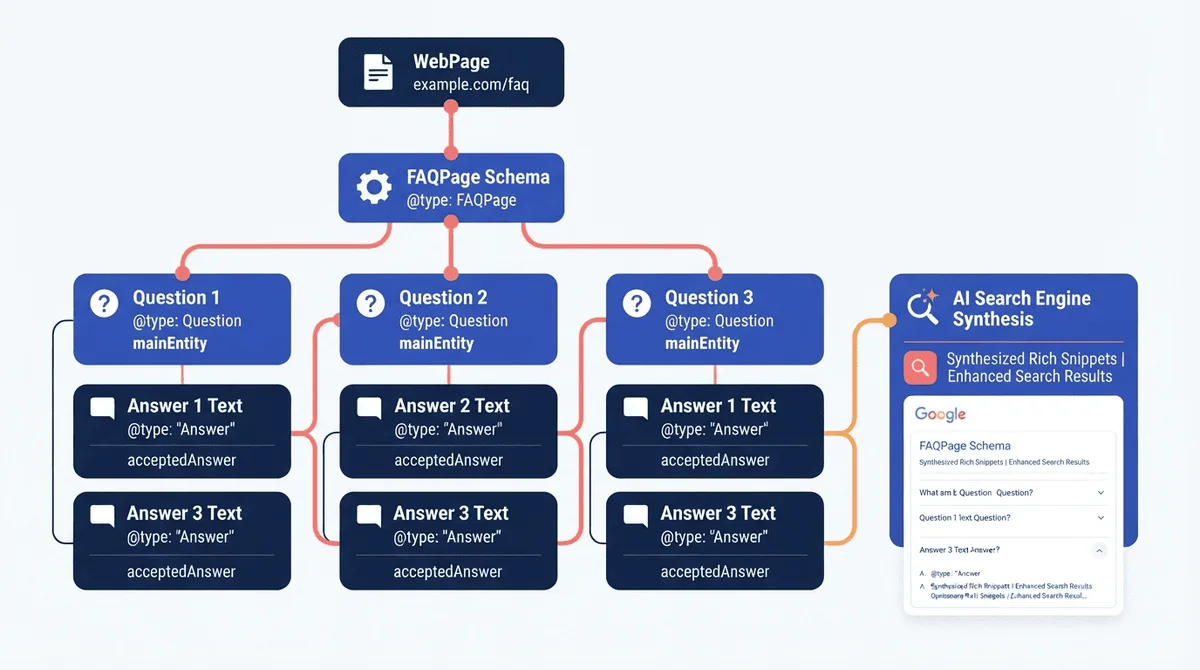
According to SEOProfy's LLM SEO guide, pick the right schema type for the user's need—FAQPage for common questions, HowTo for step lists, Product for offers. Add JSON-LD in the <head> instead of scattered microdata so the full markup loads even if scripts fail.
FAQPage schema template:
{
"@context": "https://schema.org",
"@type": "FAQPage",
"mainEntity": [
{
"@type": "Question",
"name": "What is your first question?",
"acceptedAnswer": {
"@type": "Answer",
"text": "Your comprehensive answer to the question. Include relevant details, facts, and actionable information."
}
},
{
"@type": "Question",
"name": "What is your second question?",
"acceptedAnswer": {
"@type": "Answer",
"text": "Answer the question directly and completely. AI systems prefer concise, accurate responses."
}
}
]
}
Content Requirements for FAQ Optimization
Schema markup alone isn't enough—content quality determines citation success.
According to Backlinko's schema markup guide, if a machine can't understand your content, it can't rank it—and it certainly won't cite it. Schema delivers structured information that eliminates ambiguity, giving search engines and AI the answers directly instead of forcing them to guess meaning through natural language processing.
FAQ content best practices:
FAQ Content Optimization
├── Question Formulation
│ ├── Use natural language queries
│ ├── Match how users actually ask
│ ├── Include target keywords naturally
│ └── Cover complete topic breadth
│
├── Answer Structure
│ ├── Lead with direct answer
│ ├── Provide supporting context
│ ├── Include specific details
│ └── Keep concise (100-300 words)
│
├── Topic Coverage
│ ├── Answer common questions first
│ ├── Include edge cases
│ ├── Address objections
│ └── Cover related queries
│
└── Quality Signals
├── Factual accuracy
├── Source citations
├── Current information
└── Expert perspective
Implementation Best Practices
Technical implementation affects schema performance and AI recognition.
According to Wellows' schema best practices guide, JSON-LD is the preferred format for adding structured data. It's easy to manage, flexible, and less likely to cause technical issues. Using specific and accurate schema types helps AI systems match your content to the right search intent.
Implementation checklist:
Step | Action | Why It Matters |
1 | Write FAQ content first | Schema must match visible content |
2 | Format as JSON-LD | Google's preferred format |
3 | Place in <head> section | Loads before page content |
4 | Validate with Rich Results Test | Catches errors before deployment |
5 | Test with Schema.org validator | Ensures syntax correctness |
6 | Match schema to page content | Prevents spam penalties |
Optimizing Questions for AI Extraction
The questions you choose determine citation opportunities.
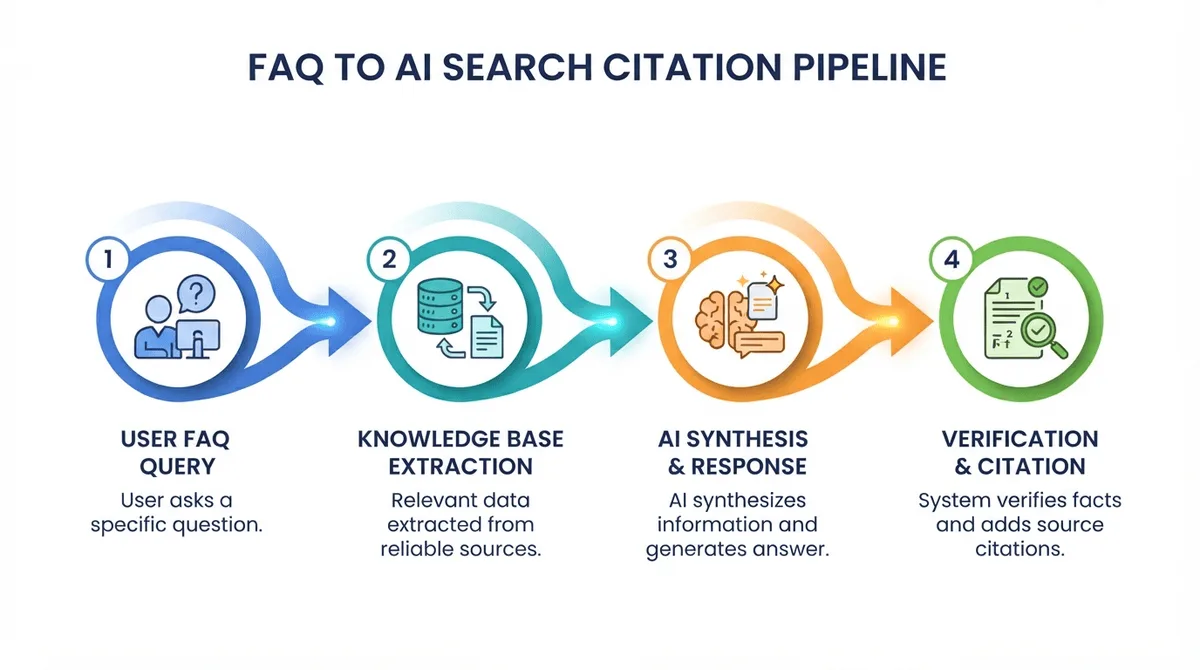
According to Omnius' GEO Industry Report, design content so it's easy for AI to understand, summarize, and cite. Prioritize clarity and structure, writing concise, self-contained answers at the top of pages with clear headings and lists so AI models can quote them directly.
Question optimization strategies:
- Use "What is" questions - Highest AI Overview trigger rate
- Include "How to" variants - Process queries favor FAQ format
- Target comparison queries - "X vs Y" questions get citations
- Address pricing/cost questions - High commercial intent queries
- Cover troubleshooting queries - Problem-solution format works well
Common FAQ Schema Mistakes
Avoid errors that prevent AI recognition and citation.
According to Pansofic's Google Search Console guide, unclean structured data makes pages suspicious to AI systems and harder to reuse in AI-generated answers. Validation through Search Console identifies mistakes and displays enhancement performance.
Mistakes to avoid:
Mistake | Problem | Solution |
Schema-content mismatch | Trust penalty, no citation | Match exactly |
Missing required fields | Invalid markup ignored | Complete all properties |
Too many FAQs | Diminishing returns | Focus on 5-10 high-value questions |
Thin answers | Low citation value | Provide comprehensive responses |
Outdated information | Accuracy issues | Update regularly |
Measuring FAQ Schema Performance
Track effectiveness to optimize your FAQ strategy through comprehensive metrics that capture both traditional search performance and emerging AEO marketing opportunities across multiple AI platforms.
Measurement framework:
FAQ Schema Performance Metrics
├── Traditional Metrics
│ ├── Rich result appearances (GSC)
│ ├── Click-through rate changes
│ ├── Impressions for FAQ pages
│ └── Position tracking
│
├── AI Visibility Metrics
│ ├── AI Overview citations
│ ├── ChatGPT mentions
│ ├── Perplexity citations
│ └── Share of AI voice
│
└── Business Metrics
├── Traffic from FAQ pages
├── Conversion rates
├── Time on page
└── Bounce rate
FAQ Schema and Entity Authority
FAQ implementation contributes to broader entity recognition.
According to AccountabilityNow's SEO guide, schema markup is table stakes in 2026. Not only does it help Google understand your content, but it's also essential for AI and LLMs referencing your brand. AI engines skip pages that don't implement structured data.
Building entity authority through FAQs:
- Include author credentials in related Person schema
- Link FAQs to Organization schema
- Reference authoritative sources in answers
- Maintain consistent entity-based SEO topical authority signals across platforms
- Update FAQs to reflect current expertise
Key Takeaways
FAQ schema optimization provides a direct pathway to AI search visibility:
- FAQ feeds AI directly - Pre-formatted Q&A pairs have higher citation rates than unstructured content
- JSON-LD is essential - Place schema in <head> section for reliable loading
- Content quality determines success - Schema marks content, but answer quality earns citations
- Question selection matters - Target query types that trigger AI Overviews
- Validation prevents failure - Test with Rich Results Test and Schema.org validator
- Dual benefit optimization - FAQ schema improves both traditional rich results and AI citations
According to IDX's Authority Flywheel, structured data wins—implementing schema markup like FAQPage improves citation odds in AI Overviews while building the technical foundation for long-term AI search visibility. Pages with comprehensive, validated FAQ schema gain competitive advantage across all AI-powered discovery platforms, including Perplexity AI powered search engine results and other emerging answer engines.
Practical Next Steps
- Audit your current approach to optimizing and identify the three biggest gaps against the framework described above.
- Prioritize changes by impact: which single adjustment would produce the largest measurable improvement within 30 days. Start there.
- Document your baseline metrics before making changes so you can attribute results accurately. Without a baseline, you cannot prove the work moved the needle.
- Revisit your approach quarterly. Platforms, algorithms, and best practices change fast - what worked six months ago may now underperform.