
Understanding what makes search engine marketing campaigns successful is easier when you can see real examples with actual results. While many guides discuss theory, this article showcases concrete SEM examples with specific metrics, strategies, and takeaways you can apply to your own campaigns.
From local service businesses achieving $31 CPAs to e-commerce brands hitting 15 ROAS through strategic segmentation, these examples demonstrate what successful search marketing looks like in 2026.
What Makes a Good SEM Campaign
Before examining specific examples, understanding the elements that distinguish successful campaigns helps you evaluate and replicate their success.
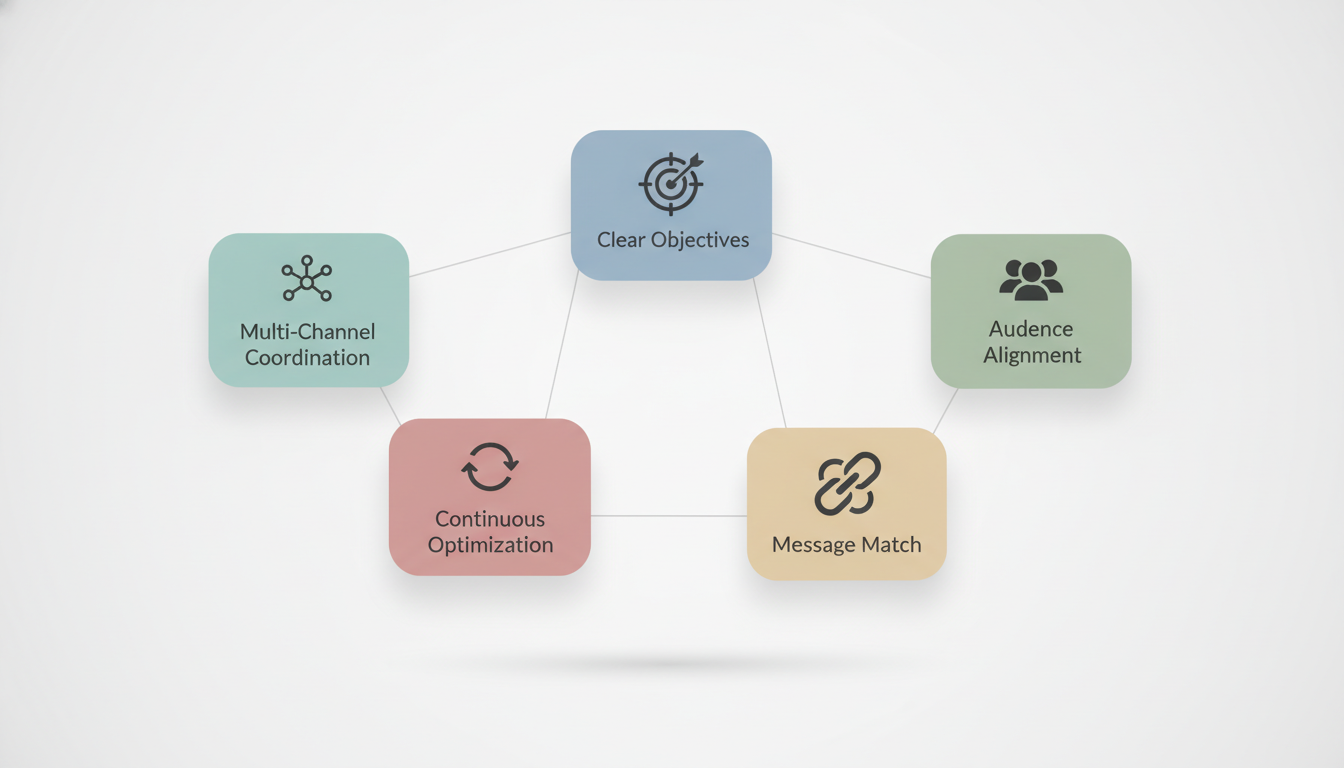
Core elements of effective SEM campaigns:
Element | Description | Why It Matters |
Clear objectives | Specific, measurable goals tied to business outcomes | Guides optimization decisions |
Audience alignment | Targeting matches search intent | Improves quality score and conversion |
Message-to-landing page match | Ad promises fulfilled on landing page | Reduces bounce rate, improves CVR |
Continuous optimization | Regular testing and refinement | Compounds improvements over time |
Multi-channel coordination | Integrated approach across platforms | 19% higher engagement than single-channel |
According to 2026 SEM research, the most successful campaigns now optimize for discovery across multiple search surfaces—not just traditional Google rankings. This means showing up in AI Overviews, YouTube, social search, and traditional paid search simultaneously.
Example 1: Home Services Lead Generation
Campaign type: Local service business targeting homeowners
A home services company running multiple service-line campaigns achieved impressive results through focused targeting and clear service differentiation.
Campaign Results
Service Campaign | Reach | Leads | Cost Per Lead | Total Spend |
Duct Cleaning | 11,478 | 16 | $57.10 | $913.64 |
Spray Foam Insulation | 11,655 | 16 | $84.55 | $1,352.82 |
Attic Blown Insulation | 25,233 | 32+ | ~$42 | $1,350 |
Source: Aimsetwin PPC case study
What Worked
- Service segmentation: Running separate campaigns for each service line allowed precise messaging and budget control
- Messaging resonance: The attic insulation campaign achieved the highest ROI because messaging around comfort resonated with homeowners
- Local targeting: Geographic targeting focused spend on serviceable areas only
Key Takeaway
For multi-service businesses, creating distinct campaigns for each service allows you to identify which offerings generate the best ROI and allocate budget accordingly. The attic insulation campaign delivered nearly double the leads at a lower cost per lead simply because the messaging better matched what customers were searching for.
Example 2: Local Contractor PPC Success
Campaign type: Local contractor scaling lead generation
A home services contractor partnered with an agency to scale their Google Ads while maintaining cost efficiency. Many businesses struggle with this balance, which is why working with specialists who understand dental PPC advertising and similar local service campaigns can make a significant difference.
Campaign Results
According to case study data:
Metric | June | July | August | Improvement |
Conversions | 74 | 94 | 85 | +27% peak |
Cost Per Acquisition | $40 | $31 | $33 | 22% reduction |
Clicks | 1,220 | 1,650 | 2,030 | +66% |
What Worked
- CPA optimization: Reduced cost per acquisition from $40 to $31 while increasing volume
- Seasonal adjustment: Maintained strong conversion rates despite seasonal fluctuations
- Click volume growth: Nearly doubled click volume over three months while improving efficiency
Key Takeaway
The most impressive aspect of this campaign was achieving simultaneous improvements across multiple metrics. Typically, scaling click volume increases CPA, but tight optimization allowed this campaign to grow traffic 66% while cutting acquisition costs by 22%. This demonstrates the compounding benefits of consistent optimization.
Example 3: E-Commerce ROAS Optimization
Campaign type: Product-based e-commerce scaling
A cocktail mix brand restructured their Google Ads campaigns after the holiday slowdown to achieve sustainable profitability.
What They Changed
According to Clutch case study research, the strategy involved:
- Clean data foundation: Fixed tracking to ensure accurate attribution
- Smart segmentation: Divided products by margin and performance
- Target ROAS by margin: Assigned ROAS targets based on actual product margins
- Daily monitoring: Quick scaling of winners, pulling back underperformers
Results
- Achieved 15 ROAS: $15 return for every $1 spent on ads
- Sustained profitability: Built a system for ongoing optimization
- Scalable framework: Created a repeatable process for future growth
Key Takeaway
The breakthrough came from assigning target ROAS based on real margins—ads only ran when they made financial sense. This seems obvious, but many advertisers use blanket ROAS targets across all products regardless of margin differences. Understanding unit economics at the product level transforms PPC from a cost center to a profit engine, similar to how Google PPC advertising succeeds when aligned with business fundamentals.
Example 4: Multi-Channel SEM Strategy
Campaign type: B2B brand visibility across search surfaces
In 2026, search marketing extends far beyond Google Ads. According to marketing researchers, successful brands now coordinate presence across multiple search surfaces.
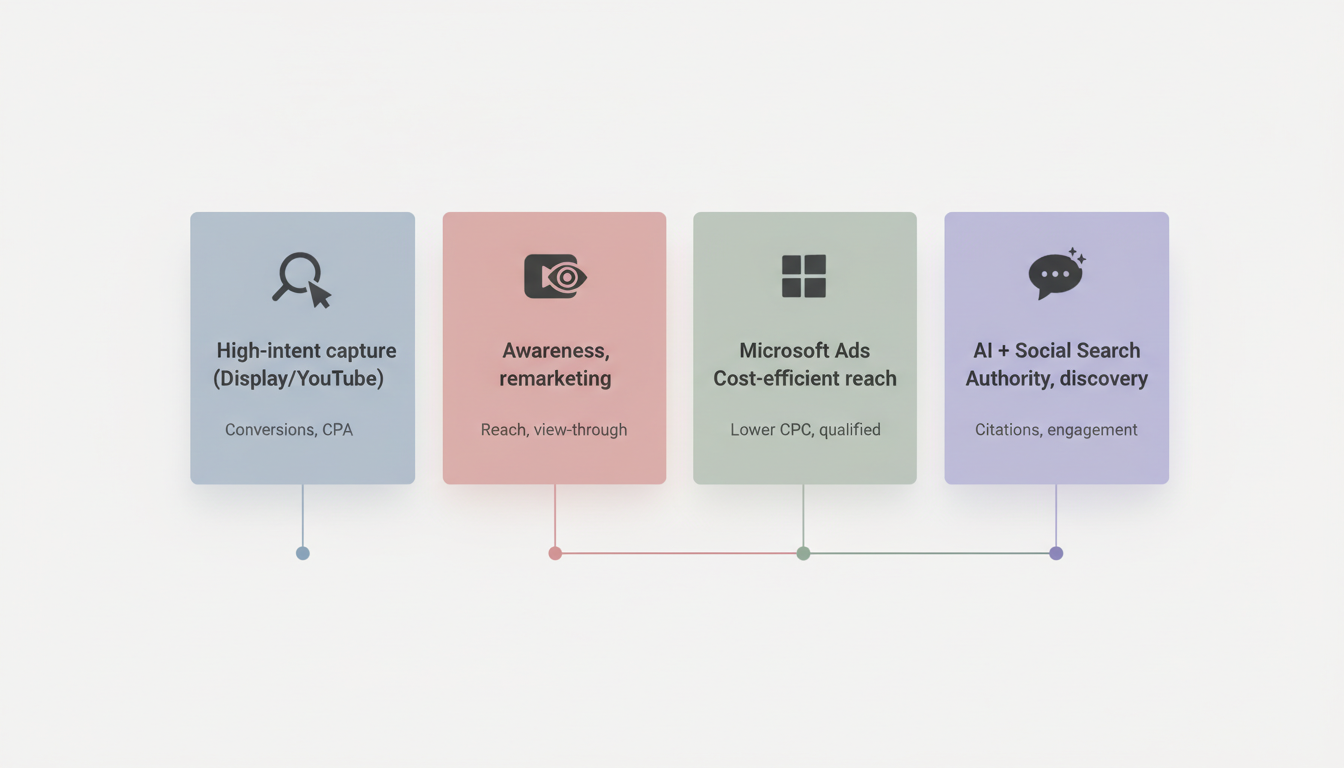
Modern Multi-Surface Approach
Search Surface | Purpose | Key Metric |
Google Ads (Search) | High-intent capture | Conversions, CPA |
Google Ads (Display/YouTube) | Awareness, remarketing | Reach, view-through |
Microsoft Ads | Cost-efficient reach | Lower CPC, qualified traffic |
AI Overviews/ChatGPT | Authority positioning | Brand citations |
Social Search (TikTok, YouTube) | Discovery | Engagement, traffic |
What This Looks Like in Practice
According to industry analysis:
- Traditional search captures people actively searching for solutions
- AI platforms surface brands referenced across trusted sources
- Social search reaches users discovering products through content
The key insight: Clicks are down, but conversion quality is up. People now arrive at websites more qualified and ready to act because they've already done research through AI and social channels. Understanding the differences between display advertising vs paid search helps brands allocate budget effectively across these channels.
Key Takeaway
Single-channel search marketing is increasingly insufficient. The brands winning in 2026 optimize for presence across Google, Microsoft, AI platforms, and social search simultaneously. This doesn't mean spreading budget thin—it means understanding where your audience searches and showing up there with consistent messaging.
Applying These Examples to Your Campaigns
Each example demonstrates principles you can implement immediately:
From Example 1 (Home Services)
- Segment by service/product line to identify top performers
- Test different messaging angles to find resonant value propositions
- Track ROI by segment to inform budget allocation
From Example 2 (Local Contractor)
- Set CPA targets based on customer lifetime value
- Monitor month-over-month trends not just daily metrics
- Scale proven campaigns rather than spreading budget thin
From Example 3 (E-Commerce)
- Assign ROAS targets by margin not blanket goals
- Invest in tracking accuracy before scaling spend
- Create daily review processes for quick optimization
From Example 4 (Multi-Channel)
- Audit your search presence across all platforms
- Coordinate messaging across channels
- Measure success holistically beyond just Google metrics
Frequently Asked Questions
What ROAS Should I Target for SEM Campaigns?
Target ROAS depends on your margins. According to industry benchmarks, paid search delivers average ROI of 2:1 to 4:1, with many businesses reporting 200% returns. E-commerce brands with strong margins can achieve 10:1 or higher with proper optimization. Calculate your break-even ROAS first: if your margin is 50%, you need 2:1 ROAS just to break even.
How Long Do SEM Campaigns Take to Show Results?
You'll see clicks immediately, but meaningful conversion data typically requires 2-4 weeks. AI-driven bidding strategies need at least 3 weeks of data before making major changes. Full campaign optimization usually takes 2-3 months as you accumulate data to inform decisions. For platform-specific timelines, our Microsoft Advertising for beginners guide offers detailed benchmarks.
Is Microsoft Ads Worth Including in My SEM Strategy?
Yes. Microsoft Ads typically delivers 30-70% lower CPCs than Google while reaching a higher-income demographic. Including Microsoft Ads extends your reach without proportionally increasing costs, making it a valuable addition to any SEM strategy. The Microsoft Ads vs Google Ads comparison breaks down when each platform makes sense for different business types.