
Last Updated: January 2026
Artificial intelligence has fundamentally changed search engine optimization. From how search engines interpret queries to how marketers optimize content, AI now drives nearly every aspect of modern SEO. Understanding this transformation helps businesses adapt their strategies for the AI-powered search landscape.
This guide explains how AI has reshaped SEO and what it means for your optimization efforts in 2026.
How AI Changed Search Engines
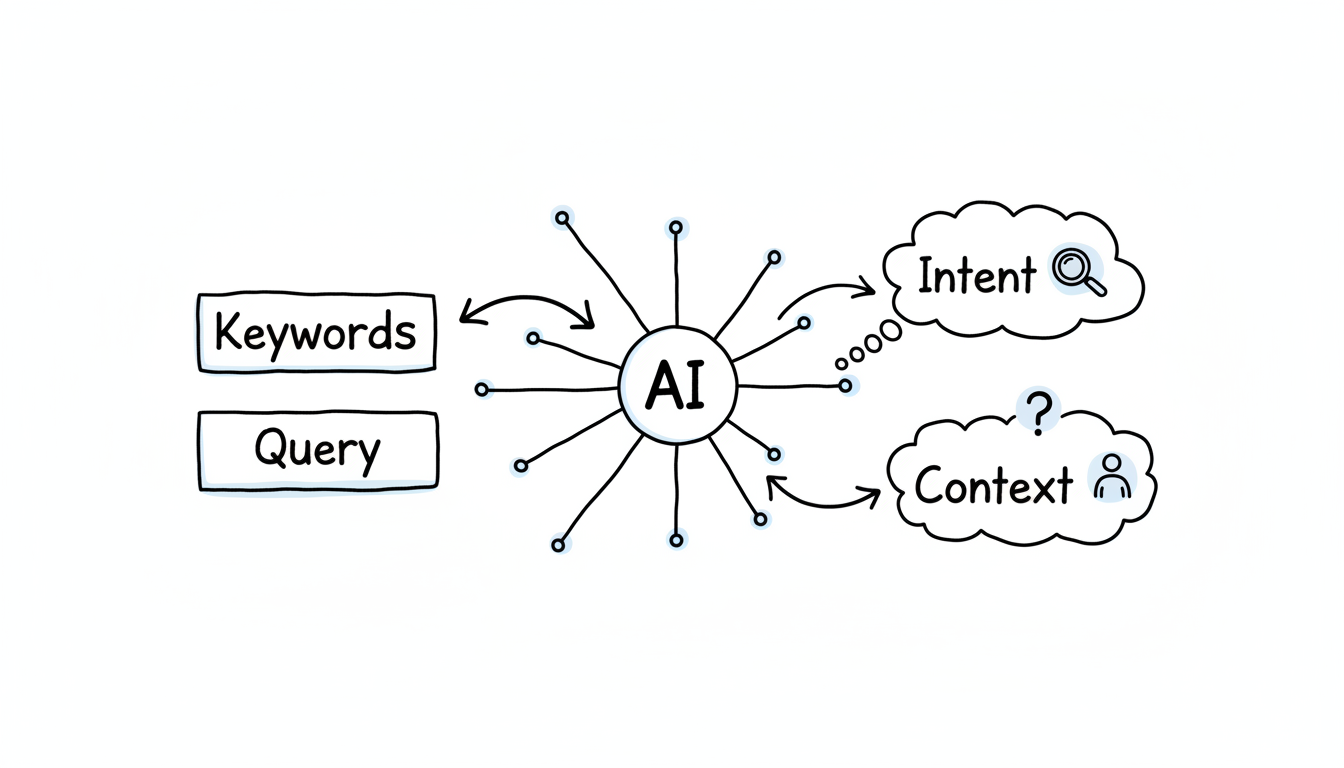
Search engines no longer simply match keywords to documents. Modern AI-powered search systems understand context, intent, and relationships between concepts.
From Keywords to Intent
Traditional search algorithms matched search queries to pages containing those exact terms. AI-driven search understands what users actually want, even when their queries are ambiguous or conversational.
When someone searches "best way to learn guitar," AI systems recognize they want instructional content, not product pages - even though "product pages" never appeared in the query.
Semantic Understanding
AI enables search engines to understand the meaning behind content, not just the words it contains. Google's systems can now:
- Recognize synonyms and related concepts
- Understand entity relationships (people, places, organizations)
- Evaluate topical authority across entire websites
- Assess content quality through multiple linguistic signals
This evolution requires a different approach than traditional SEO for generative AI, where optimization strategies must account for how AI systems interpret semantic relationships.
AI-Generated Responses
The most significant shift: search engines now generate answers directly. Google AI Overviews, powered by Gemini, synthesize information from multiple sources into comprehensive responses. ChatGPT Search and Perplexity operate similarly, citing sources as they answer questions.
This changes SEO's goal from "rank higher" to "get cited."
AI in SEO Practice
Beyond changing search engines, AI has transformed how SEO professionals work.
AI-Powered Research
Modern SEO tools use machine learning to process billions of data points, identifying:
- Keyword opportunities based on intent patterns
- Competitive gaps through semantic analysis
- Content optimization requirements via NLP
- Technical issues through automated auditing
Tools like SE Ranking, Clearscope, and Semrush now incorporate AI modules that go beyond data retrieval to provide strategic recommendations.
Predictive Analytics
AI SEO tools can now forecast ranking potential before content is published. By analyzing patterns across thousands of SERPs, these systems calculate probability scores for ranking success, helping teams prioritize efforts on winnable opportunities.
Content Optimization
AI writing assistants and optimization tools analyze top-ranking content to identify:
- Semantic topics to cover
- Questions to answer
- Entities to mention
- Structure patterns that perform well
This doesn't replace human creativity - it ensures content meets the technical requirements AI systems use to evaluate relevance. Implementing proper AI content optimization techniques helps bridge the gap between human-created content and machine comprehension.
Automated Workflows
AI agents can now execute multi-step SEO tasks autonomously:
- Conducting competitive analysis across dozens of competitors
- Identifying and categorizing technical issues
- Generating optimization recommendations
- Monitoring ranking changes and alerting to problems
The shift from tools that assist to agents that execute represents the next evolution in AI-powered SEO.
Optimizing for AI-Driven Search
Success in AI-powered search requires adapting traditional SEO practices.
Structure for AI Comprehension
AI systems favor content they can easily parse and validate:
- Clear headings that signal topic organization
- Direct answers near the top of each section
- Structured data (schema markup) that explicitly defines content
- Logical flow from concept to concept
Content structured for AI comprehension performs better both for traditional rankings and AI citation. Understanding the AI overview content requirements ensures your content meets the technical standards these systems expect.
Build Topical Authority
AI systems assess expertise at the site level, not just page level. Building comprehensive coverage of your core topics signals authority that influences all related content.
Research indicates top performers in AI search traffic have developed content clusters covering topics thoroughly rather than targeting individual keywords. This approach aligns with entity-based SEO topical authority strategies that signal expertise to AI systems.
E-E-A-T Signals
Experience, Expertise, Authoritativeness, and Trustworthiness matter more than ever. AI systems evaluate:
- Author credentials and demonstrated expertise
- Site reputation and external validation
- Content accuracy and citation quality
- Transparent sourcing and methodology
These signals influence both traditional rankings and AI citation decisions.
Optimize for Citation
When AI systems generate responses, they cite sources they consider trustworthy and relevant. Earning citations requires:
- Creating unique, valuable information AI can reference
- Maintaining factual accuracy that AI can verify
- Providing comprehensive answers AI can extract
- Keeping content current and properly dated
The New SEO Metrics
AI-driven search requires new measurement approaches.
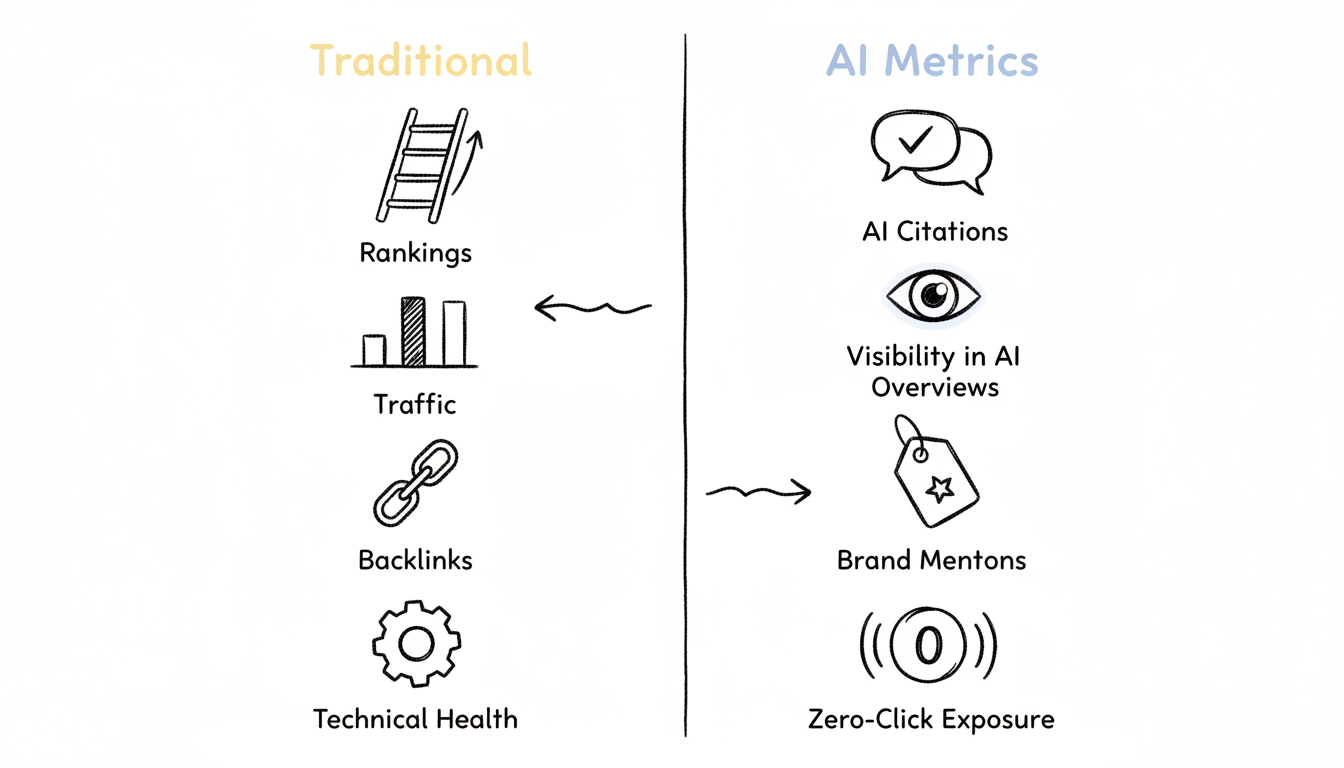
Traditional Metrics (Still Matter)
- Rankings and position tracking
- Organic traffic and click-through rates
- Technical health scores
- Backlink profiles
Emerging AI Metrics
- AI visibility share: How often your brand appears in AI responses
- Citation frequency: How many AI-generated answers reference your content
- Brand mention tracking: Monitoring mentions across AI platforms
- Zero-click exposure: Impressions in AI Overviews even without clicks
Early adopters of AI visibility measurement report up to 527% year-over-year growth in AI-driven search traffic, demonstrating the opportunity for brands that adapt.
Practical Next Steps
Audit Your AI Visibility
Search your brand and key topics in ChatGPT, Perplexity, and Google AI Overviews. Document what appears and identify gaps.
Review Content Structure
Evaluate whether your content is organized for AI comprehension. Add clear headings, direct answers, and schema markup where missing.
Invest in Topical Depth
Rather than chasing keywords, build comprehensive coverage of topics where you have genuine expertise.
Monitor and Adapt
Track both traditional SEO metrics and emerging AI visibility signals. Adjust strategy based on what earns citations.
Common AI SEO Mistakes to Avoid
The biggest error is chasing AI visibility by dropping the SEO fundamentals that earned it. Sites that neglect crawlability, speed, and authority rarely get cited, because the models draw from content they can already find and trust. Keep the foundation intact while you add AI-specific structure.
Another trap is publishing thin pages stuffed with schema but no real expertise. AI systems and human readers both reject filler. Depth, accuracy, and genuine author credentials outperform keyword gaming every time, and they are what survive algorithm updates.
Tools and Team Setup
You do not need a separate AI SEO team on day one. Train existing SEO and content staff in citation tracking, schema, and extractable formatting, then add a monthly AI-visibility review to the current workflow. Specialized tooling can wait until volume justifies it.
Build a small stack: a traditional rank tracker, a schema validator, and a manual prompt-test routine across ChatGPT, Perplexity, and Google AI Overviews. The combination catches both ranking drops and citation gaps early, which is what actually moves AI-search traffic.
90-Day Starter Plan
Weeks one to four: audit current AI visibility, fix technical SEO, and add FAQ and Article schema to your top twenty pages. Weeks five to eight: rewrite priority pages with front-loaded answers and quotable paragraphs, then re-test citations.
Weeks nine to twelve: track both rankings and AI referral traffic, expand the pattern to the next cluster, and report a simple before-and-after to leadership. The loop compounds; most teams see AI-search traction only after the second quarter of consistent work.
The Bottom Line
AI has transformed search engine optimization from a technical discipline focused on rankings to a strategic practice focused on being the trusted source AI systems cite. The fundamentals haven't changed - quality content, genuine expertise, and user value remain essential. But the tactics for demonstrating those qualities to AI systems require adaptation.
The businesses that understand this shift and adapt their SEO strategies accordingly gain significant competitive advantage as AI-powered search becomes the norm.