
Search engine optimization with AI represents a fundamental shift in how businesses approach digital visibility. Artificial intelligence now powers both sides of the equation-search engines use AI to understand and serve results, while marketers use AI tools to optimize content more effectively.
This guide explains how AI has changed SEO and what strategies work in the current landscape.
How AI Has Changed Search Engines
Modern search algorithms have moved far beyond simple keyword matching. AI-powered systems now evaluate content based on multiple sophisticated factors.
From Keywords to Intent
Search engines in 2026 primarily analyze user intent rather than exact keyword matches. When someone searches, AI algorithms assess:
- Why the user is searching-the underlying problem they want solved
- What type of answer would satisfy them-quick facts, detailed guides, or comparisons
- Whether content genuinely addresses that intent-not just contains related words
This shift means optimization must focus on comprehensively answering user questions rather than repeating keywords throughout content.
Real-Time Content Analysis
AI engines now analyze content in real time, evaluating freshness, accuracy, and authenticity. Outdated information gets deprioritized. Content that demonstrates genuine expertise signals quality to AI systems.
Multimodal Search Integration
Users can now search using text, images, voice, and video. AI systems interpret queries across these formats, meaning content optimization must account for how information appears across different media types.
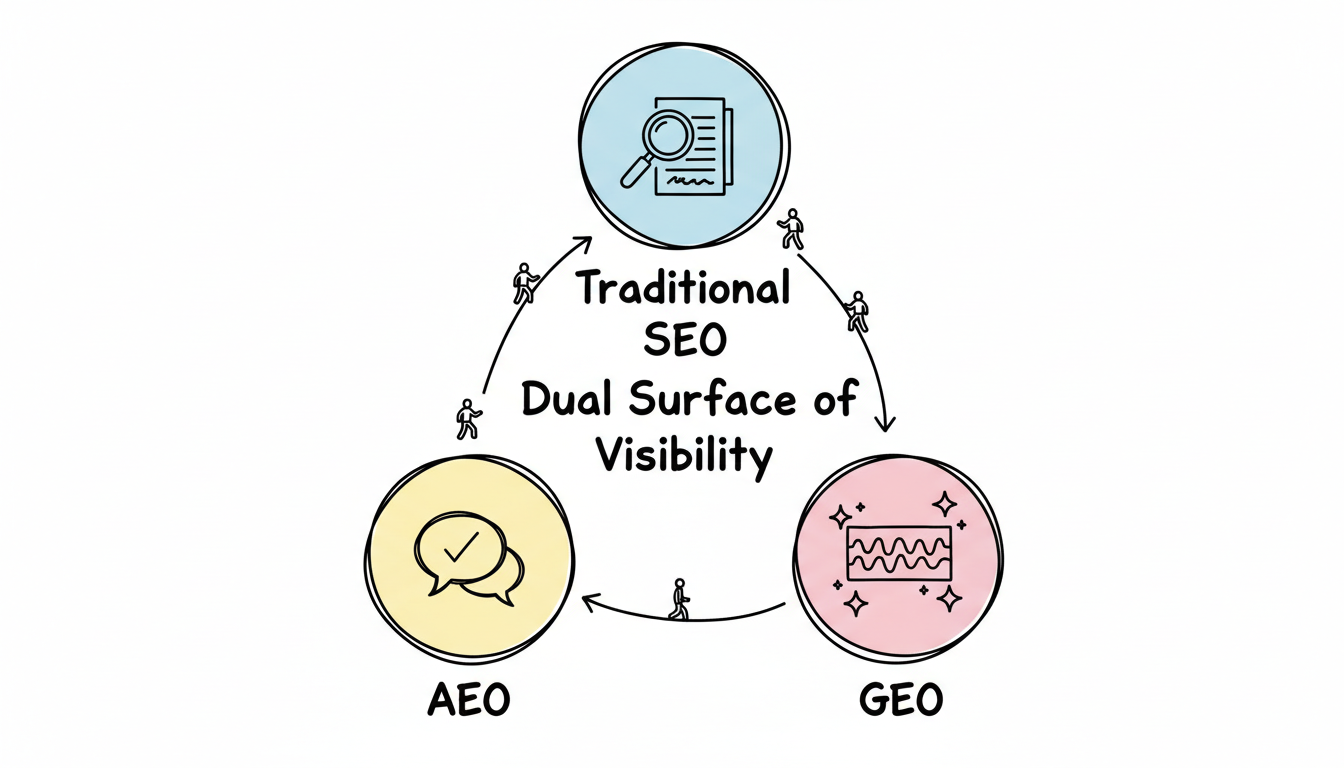
The Dual Surface of Visibility
Search behavior has fundamentally changed. While Google maintains dominant market share for traditional search, AI discovery engines like ChatGPT and Perplexity have created what industry experts call a "parallel surface of visibility."
Today's search marketing includes:
- Traditional SEO for rankings, impressions, and clicks
- AEO (Answer Engine Optimization) for AI citations and answer engines
- GEO (Generative Engine Optimization) for visibility in AI-generated responses
Users now move between traditional search and AI assistants throughout their research journeys. Understanding answer engine optimization vs generative engine optimization helps brands achieve visibility across both surfaces.
Core SEO Strategies for AI-Powered Search
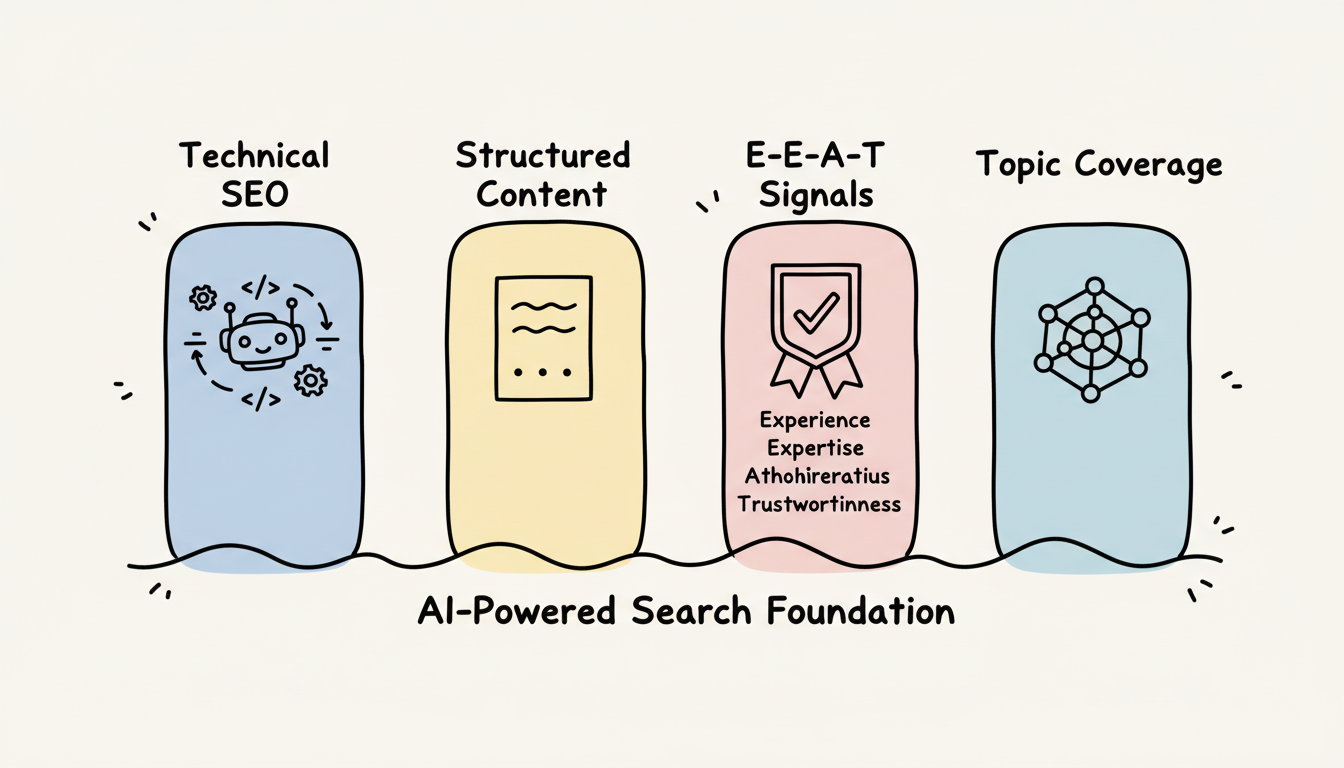
Optimizing for AI-driven search requires building on traditional SEO foundations while adding new approaches.
Maintain Technical SEO Excellence
Technical SEO remains essential for AI visibility. Without clean technical foundations, AI systems cannot effectively crawl, understand, or cite your content.
Key technical requirements:
- Crawlability and proper indexation
- Strong information architecture
- Structured data implementation
- Core Web Vitals performance
- Mobile optimization
These elements make content machine-readable for both traditional search crawlers and AI systems. Tools like schema markup validators can ensure your structured data is properly implemented.
Structure Content for Extraction
AI systems extract information at the paragraph and statement level. Content structure matters more than ever:
- Lead sections with direct answers
- Keep paragraphs concise and standalone
- Use headers that match how users phrase questions
- Include specific data points and citations
Content optimized this way performs better in both traditional featured snippets and AI-generated responses.
Build E-E-A-T Signals
Experience, Expertise, Authoritativeness, and Trustworthiness (E-E-A-T) signals influence both traditional rankings and AI citations. AI systems evaluate these signals when deciding which sources to cite.
Strengthen E-E-A-T through:
- Expert author attribution with verifiable credentials
- Consistent, accurate information across platforms
- Citations to authoritative sources
- Regular content updates maintaining accuracy
Create Comprehensive Topic Coverage
AI systems prefer sources that demonstrate deep expertise on topics. Rather than creating thin pages targeting individual keywords, build comprehensive content ecosystems around core subjects.
Topic authority signals include:
- Multiple related articles covering different aspects
- Internal linking connecting related content
- Updated content reflecting current information
- Original insights beyond basic information
Using AI Tools for SEO
AI also transforms how marketers approach optimization work. AI tools now assist with:
Research and Analysis
- Keyword research and intent analysis
- Competitor content analysis
- Content gap identification
- SERP analysis at scale
Content Creation Support
- Content briefs and outlines
- Draft generation and editing assistance
- Schema markup generation
- Meta description optimization
Performance Monitoring
- Ranking tracking across platforms
- AI citation monitoring
- Content freshness alerts
- Technical issue detection
The most effective approaches use AI as a tool while maintaining human expertise for strategy, quality control, and brand voice. When selecting platforms, reviewing an AI search platform comparison helps identify which tools best fit your needs.
What Success Looks Like in 2026
Traditional SEO metrics remain relevant but require supplementation:
Traditional Metrics
- Organic rankings and visibility
- Traffic and engagement
- Click-through rates
- Conversions from search
AI-Era Metrics
- AI referral traffic from platforms like Perplexity and ChatGPT
- Citation frequency in AI responses
- Share of voice across AI platforms
- Brand mention accuracy in AI answers
Organizations succeeding in 2026 track both sets of metrics, recognizing that visibility now spans multiple surfaces. Implementing proper AEO measurement and tracking ensures you monitor performance across all relevant channels.
Key Takeaways
Search engine optimization with AI requires adapting to fundamental changes in how search works while maintaining proven SEO foundations.
The essential insight: AI hasn't replaced SEO-it has expanded it. Traditional optimization remains the foundation; AI optimization layers on top.
Where to focus: Build excellent technical SEO, structure content for extraction, strengthen authority signals, and monitor performance across both traditional search and AI platforms.
The ongoing evolution: AI search continues developing rapidly. Strategies that work today will require continuous adaptation as AI capabilities advance.
Organizations that embrace AI-driven search optimization position themselves for visibility wherever users look for information-whether clicking through traditional results or receiving AI-generated answers.
Frequently Asked Questions
Does AI Replace Traditional SEO?
No. AI-powered search builds on traditional SEO foundations. Without proper technical optimization, quality content, and authority signals, AI systems have nothing reliable to cite. Think of AI optimization as an evolution layered on top of traditional SEO, not a replacement.
How Do I Know If My Content Appears in AI Responses?
Manual testing remains essential. Search your target queries in ChatGPT, Perplexity, and Google AI Overviews to see if your brand gets cited. Analytics can show referral traffic from AI platform domains. Specialized tools like Conductor track citations across AI systems.
Should Small Businesses Invest in AI SEO?
Yes. The fundamentals-quality content, clear structure, technical excellence-benefit businesses of any size. Start by ensuring existing content is well-structured and answers user questions directly. These improvements help both traditional rankings and AI visibility.
What'S the Biggest Mistake Businesses Make with AI SEO?
Ignoring AI search entirely. By the time AI search becomes fully mainstream, brands that haven't invested in optimization will be catching up to competitors who spent years building citation authority. Start building AI visibility now, even with modest efforts.
Practical First Steps for AI-Era SEO
You do not need to rebuild your site to benefit from AI search. Start with changes that compound: audit your top pages, add direct answers near the top, and implement basic schema. These moves help both traditional crawlers and AI systems without a full redesign.
- Add FAQ schema to pages that already answer common questions in visible text.
- Rewrite intros to lead with the answer, then expand with context.
- Fix technical basics: crawl errors, slow pages, and broken internal links.
- Claim and complete your entity profiles so AI systems can verify your brand.
Common Pitfalls to Avoid
The biggest mistake is treating AI SEO as a separate project from organic SEO. The two share the same foundation: clean technical health, strong content, and real authority. Another pitfall is publishing AI-drafted content without editing - thin, inaccurate pages get deprioritized by both Google and answer engines. A third is chasing citations at the expense of usefulness; format helps extraction, but substance earns the mention. Finally, avoid ignoring measurement. If you never test whether your pages appear in AI answers, you cannot tell which effort works. Run a monthly query test across ChatGPT, Perplexity, and Google AI Overviews, log the results, and double down on the formats and topics that earn citations.