
Traditional SEO focused on ranking in search results. SEO for generative AI focuses on earning citations in AI-generated answers. As ChatGPT, Perplexity, and Google AI Overviews become primary information discovery channels, optimizing content for AI interpretation has become essential for maintaining digital visibility.
According to Laura Jawad Marketing, generative engine optimization requires adapting traditional SEO practices to help AI systems understand, trust, and cite your content. The fundamentals haven't changed-quality still matters-but how AI evaluates quality differs from traditional search algorithms.
Why Traditional SEO Isn'T Enough
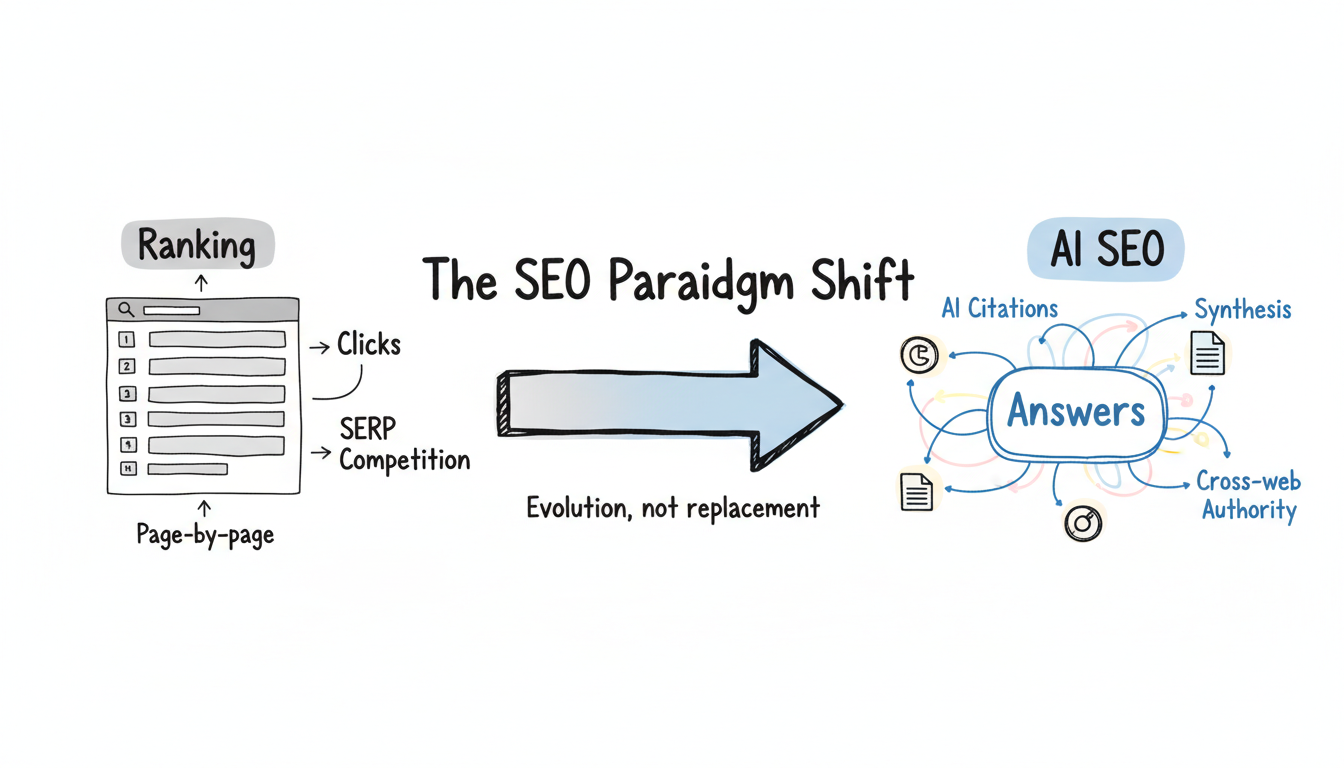
Search engines ranked pages. Generative AI synthesizes answers from multiple sources, citing those it trusts most. This fundamental difference requires new optimization approaches.
According to SEOProfy's LLM visibility guide, LLM SEO is the practice of optimizing content so large language models like ChatGPT, Perplexity AI, and Google AI Overviews can accurately interpret, retrieve, and cite it in their generated responses.
The shift in discovery:
Traditional SEO | SEO for Generative AI |
Win ranking positions | Earn AI citations |
Optimize for algorithms | Optimize for AI interpretation |
Drive clicks to pages | Get included in answers |
Compete on SERPs | Compete for AI recommendations |
Page-by-page evaluation | Cross-web authority assessment |
According to Search Engine Land's AI visibility playbook, the 90-day timeline for building AI visibility starts with foundational SEO work-because AI systems still rely on traditional signals to evaluate source authority.
Core SEO Principles That Support AI Visibility
Strong SEO foundations improve AI citation probability. The basics haven't become obsolete-they've become prerequisites.
According to StubGroup's AI citation guide, the first step to getting cited by AI search engines is ensuring your site is technically sound and content is high quality-the same fundamentals that drive traditional SEO success.
Foundation requirements:
Element | Traditional Benefit | AI Benefit |
Site speed | Better rankings | Faster AI crawling |
Mobile optimization | Mobile rankings | Cross-platform accessibility |
Clean architecture | Improved crawling | Clearer content structure |
Quality backlinks | Domain authority | Trust signals for AI |
Fresh content | Recency signals | Current information preference |
Structuring Content for AI Extraction
AI systems extract and synthesize information differently than search crawlers index pages. Structure must facilitate extraction.
According to ALM Corp's ChatGPT ranking guide, content structure significantly impacts whether AI systems can accurately extract and cite information. Clear hierarchies, definitive answers, and logical organization improve citation probability.
AI-friendly structure elements:
Effective Structure for AI
 Clear H1 establishing topic
 H2 sections for main subtopics
    Direct answer in first paragraph
    Supporting evidence and data
    Examples and applications
 Tables for comparisons
 Bulleted lists for scannable info
 Statistics with sources
 Definitive conclusions
According to SEO Sherpa's optimization guide, AI systems prefer content that provides clear, direct answers followed by supporting context-the opposite of traditional SEO's keyword-stuffed introductions. This structural approach aligns with broader trends in answer engine optimization, where content must satisfy both traditional search algorithms and AI-powered discovery systems.
Building Authority Signals AI Trusts
AI systems evaluate authority differently than PageRank. Cross-web consensus, expert signals, and verifiable claims matter more than backlink volume alone.
According to Nick Lafferty's Perplexity ranking tactics, ranking in AI search requires demonstrating expertise through verifiable claims, authoritative sources, and consistent information across the web.
Authority signals for AI:
Signal | How to Build | Why AI Values It |
Expert authorship | Named authors with credentials | Validates E-E-A-T |
Citation density | Reference authoritative sources | Demonstrates research depth |
Cross-web mentions | PR, guest posts, directory listings | Builds consensus |
Verifiable claims | Include statistics with sources | Enables fact-checking |
Topic depth | Comprehensive coverage | Shows expertise breadth |
According to Search Engine Journal's enterprise SEO analysis, enterprise SEO teams are increasingly focusing on entity development and cross-platform authority signals rather than traditional link building alone.
Platform-Specific Optimization
Different AI platforms have different preferences. Effective SEO for generative AI considers platform variations.
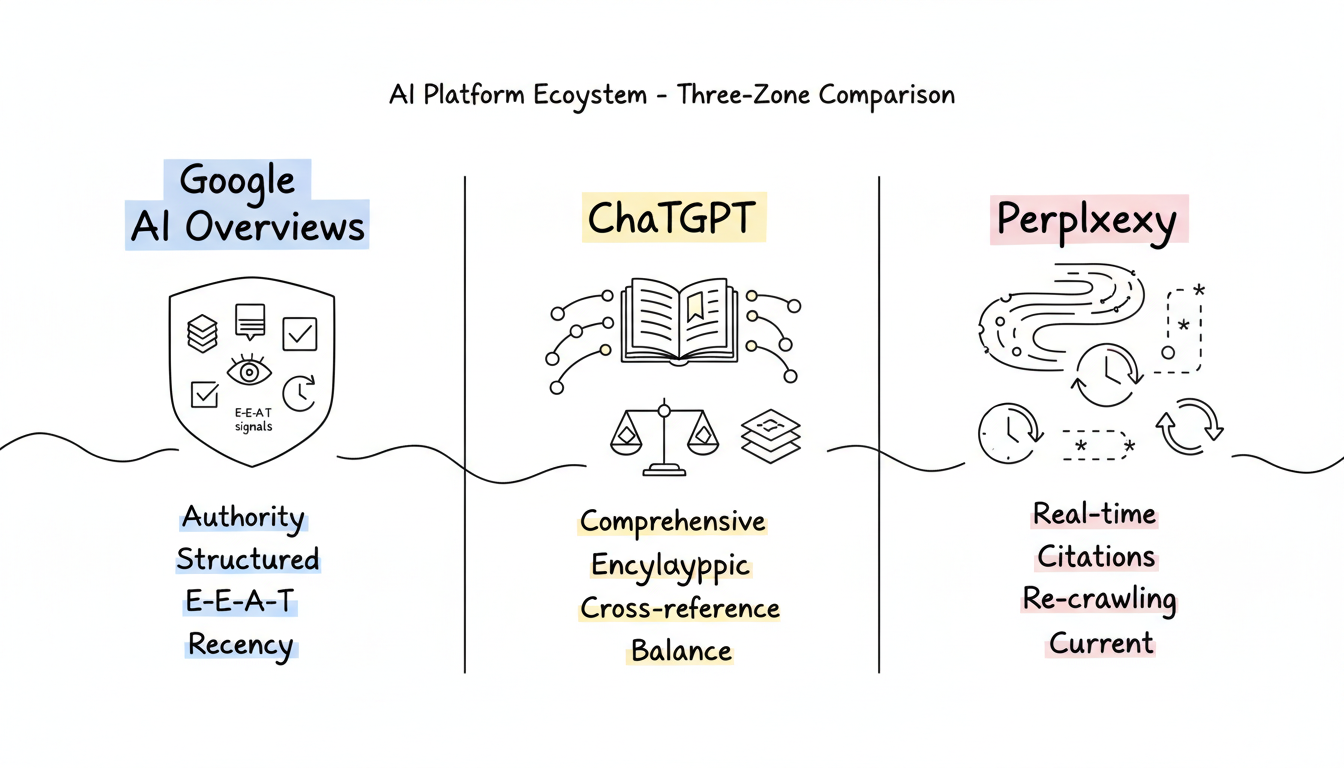
Platform characteristics:
Google AI Overviews
 Heavy weight on existing SERP authority
 Structured data significantly impacts selection
 Prefers sources with high E-E-A-T signals
 Values recency for time-sensitive queries

ChatGPT
 Training data plus real-time search (with plugins)
 Prefers comprehensive, balanced perspectives
 Values encyclopedic depth
 Cross-references multiple sources

Perplexity
 Real-time web search integration
 Strong preference for recent content
 Citations prominently displayed
 Frequent re-crawling of sources
According to Marketer Milk's AI monitoring guide, tracking visibility across multiple AI platforms reveals which optimization tactics work for each, enabling platform-specific strategy refinement. For businesses evaluating whether to handle this internally or externally, understanding how to choose an AI SEO agency becomes critical when resources are limited.
Technical Implementation for AI
Technical SEO for generative AI extends beyond traditional requirements to include AI-specific configurations.
According to LSEO's State of SEO report, the technical foundation for AI visibility includes traditional SEO elements plus emerging standards like LLMS.txt that help AI systems understand content purpose and permissions.
Technical priorities:
Implementation | Purpose | Priority |
Comprehensive schema markup | Machine-readable content structure | High |
LLMS.txt file | AI crawling instructions | Medium |
robots.txt AI allowances | Enable AI indexing | Medium |
Semantic HTML | Clear content structure | High |
Fast load times | Efficient AI crawling | High |
Implementing generative AI for structured data accelerates the markup process while ensuring consistency across your entire content library, a critical factor when optimizing at scale.
Content Strategy for AI Visibility
Content strategy must evolve to prioritize AI citation potential alongside traditional ranking factors.
According to Laura Jawad Marketing, successful AI visibility requires five key strategies: creating comprehensive content that covers topics thoroughly, maintaining consistent brand messaging across the web, building authoritative external mentions, implementing proper schema markup, and monitoring AI visibility metrics.
Content strategy elements:
- Topic comprehensiveness - Cover subjects thoroughly, not superficially
- Answer-first structure - Lead with direct answers, then elaborate
- Data-driven claims - Include statistics and cite sources
- Regular updates - Maintain freshness for current topics
- Cross-platform consistency - Ensure messaging aligns everywhere
Using question-based headers for AEO directly addresses how AI systems parse content, making it easier for language models to extract and cite relevant information.
Measuring SEO for Generative AI
New metrics complement traditional SEO KPIs when measuring AI optimization success.
According to Search Engine Journal, enterprise teams must measure AI visibility metrics alongside traditional SEO-tracking citations, brand mentions in AI responses, and AI-referred traffic as core KPIs.
Measurement framework:
Metric | What It Shows | How to Track |
Citation frequency | How often AI cites you | AI monitoring tools |
Citation context | How AI describes you | Sentiment analysis |
AI referral traffic | Visitors from AI platforms | Analytics segmentation |
Share of voice | Your visibility vs competitors | Competitive tracking |
Platform coverage | Presence across AI engines | Cross-platform monitoring |
Key Takeaways
SEO for generative AI requires extending traditional optimization for AI-powered discovery:
- Foundations matter - Traditional SEO quality signals support AI citation probability
- Structure for extraction - Clear hierarchies help AI systems parse and cite content
- Authority differs - Cross-web consensus matters more than backlink volume alone
- Platform variations exist - Different AI engines have different preferences
- Technical expansion - Schema, LLMS.txt, and semantic HTML support AI interpretation
- Content strategy evolves - Comprehensiveness and answer-first structure improve citations
- New metrics required - Track citations alongside traditional rankings
According to StubGroup, the brands earning consistent AI citations are those treating AI visibility as an extension of SEO strategy rather than a separate discipline-building on traditional foundations while adapting to AI-specific requirements.
Practical Next Steps to Begin
The frameworks above are only valuable when applied. Start with a focused pilot rather than attempting to optimize your entire site at once. Even a two-week pilot produces enough citation data to show whether your structure helps or hurts.
- Select 5 high-value pages and audit whether AI systems currently cite them for relevant queries.
- Add Organization and Article schema, validate it, and confirm entity consistency across your linked profiles.
- Rewrite the opening paragraph of each pilot page to state the answer directly before supporting detail.
- Set a monthly reminder to check citations in ChatGPT, Perplexity, and Google AI Overviews for your priority terms.
Treating generative AI visibility as an extension of established SEO-removing friction, strengthening authority signals, and structuring content for extraction-lets small teams make steady, measurable progress without rebuilding their entire content operation.