
Paid Social Agency for Startups: How to Choose the Right One
A paid social agency for startups runs paid campaigns across Meta, TikTok, Reddit, and LinkedIn on a fixed budget, picking the channel that fits your buyer. The right partner builds creative and measurement around an early-stage stage and spend. This guide covers what to look for and when to hire one.
Key Takeaways
- A paid social agency manages multiple channels, so its core value is channel choice and creative, not just campaign setup.
- Paid social fits startups with a visual or social proof-driven product and a buyer who lives in feeds.
- Hire when you can fund a test budget and need one accountable partner instead of several channel freelancers.
- Expect pricing tied to spend and scope, with creative production often billed separately from management.
- Watch for agencies that spray budget across every channel, chase vanity metrics, or cannot tie social to pipeline.
What Does a Paid Social Agency for Startups Do?
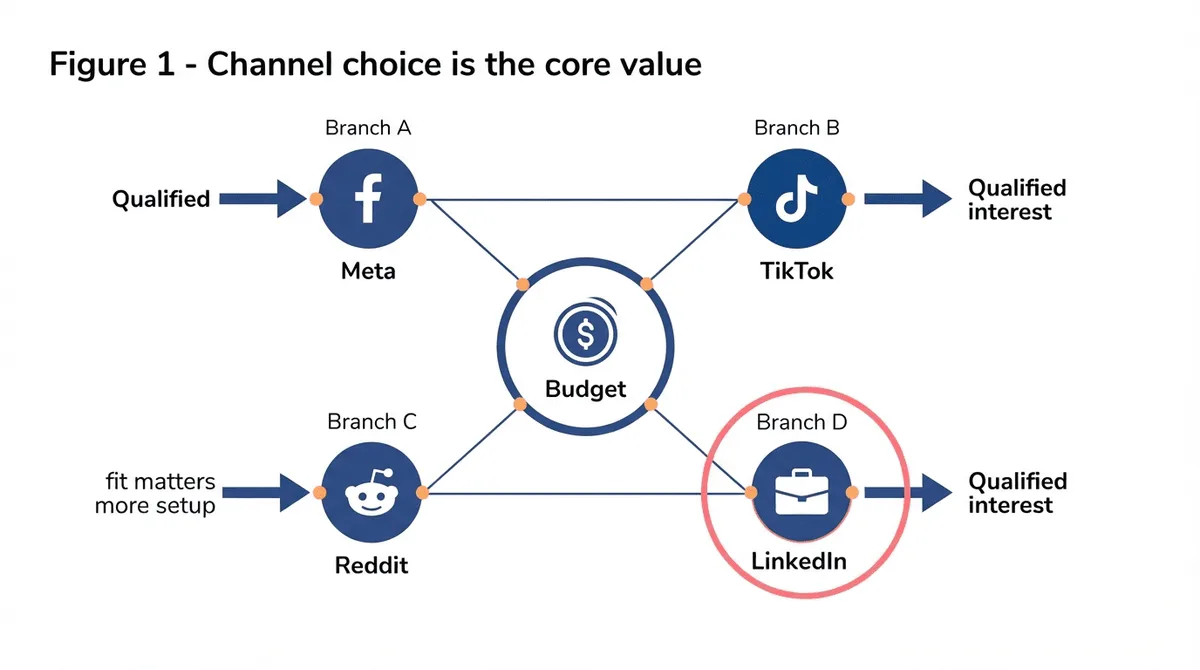
A paid social agency for startups plans, launches, and optimizes paid campaigns across social platforms. The work starts with channel selection: matching your buyer to where they spend time, whether that is Meta for broad B2C, LinkedIn for B2B, Reddit for niche communities, or TikTok for short video. From there the agency builds campaign structure, produces creative per channel, sets up pixels and server-side tracking, and iterates on performance.
Unlike a single-channel agency, a paid social partner decides where to put each dollar and shifts it as the data arrives. A good engagement connects social results to your wider funnel, so you can see how paid social contributes to signups and pipeline rather than only to impressions. That cross-channel view is the main reason to hire one partner instead of three.
When Should a Startup Hire a Paid Social Agency?
Hire a paid social agency when you have a message that resonates and a budget to test, but your team cannot run multiple channels well at once. Common triggers include a founder who needs one accountable owner for paid, a category where buyers split across two or three social platforms, or a paid plan that stalls because creative and tracking eat all the time.
The strongest time is after some traction, often around seed or Series A, when you can fund paid tests and a creative rhythm. Before product-market fit, paid social usually burns cash because the offer is still moving. Use agency help to scale what already works rather than to discover it, and keep founder voice as the credibility layer on top of the paid spend.
How Much Does a Paid Social Agency Cost for Startups?
Costs usually split between a management fee and ad spend, with creative production billed as a separate line. Early-stage startups should expect engagements sized to a modest test budget rather than a large minimum, because the goal at this stage is learning, not volume. Judge the engagement by the quality of its channel reasoning and measurement plan, not by a low headline rate.
The table below shows a simple way to think about startup paid social spend tiers.
| Stage | Monthly test budget | What the agency focuses on |
|---|---|---|
| Pre-seed | $3k to $8k | One channel, one message, proof of concept |
| Seed | $8k to $25k | Two channels, creative testing, retargeting |
| Series A | $25k to $60k plus | Full funnel, cross-channel mix, incrementality checks |
Paid Social vs Organic Social: Which Should a Startup Use?
Organic social, where a founder or team posts genuinely useful content, is nearly free and builds trust and creative insight. Paid social scales a message you have already validated. Most startups should post first, then add paid once they know which content and offer the audience rewards.
An agency adds the most value on the paid side: campaign setup, creative production, and measurement. It should not replace founder presence, because the credibility that drives social conversions still comes from real participation. Treat paid as the amplifier on top of organic proof, and brief the agency on the posts and hooks that already perform well for you.
How Should Startups Choose Paid Social Channels?
A simple rule protects the budget. Pick the one channel where your buyer most clearly lives, prove it with a small test, then add a second only after the first shows a repeatable cost per result. A general sequence for many early-stage startups is Meta or LinkedIn first for intent, then TikTok or Reddit to expand reach once the message is set.
An agency earns its fee by making this call with data instead of habit, and by bringing creative and tracking discipline a busy founder cannot sustain alone. The worst outcome is spreading a small budget across four channels so thinly that none can exit the learning phase.
What Makes a Paid Social Agency Good for Early-Stage Startups?
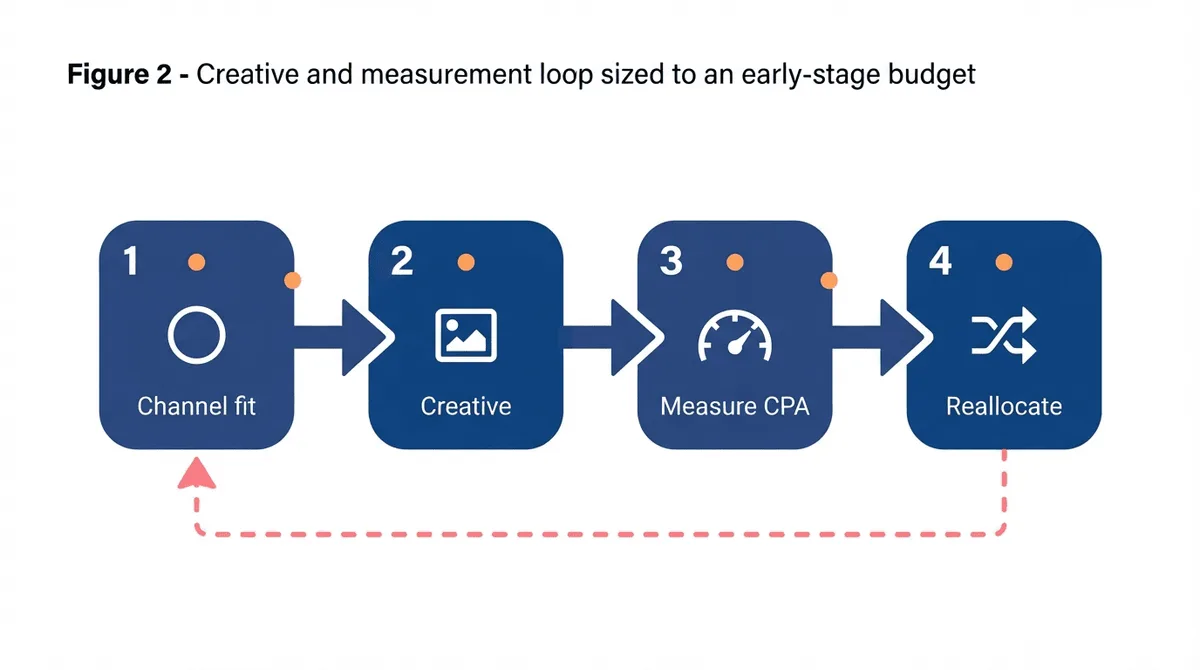
Look for three things: channel discipline, a creative system, and a measurement story. Ask for examples of startups they have run and what the creative looked like. A strong agency will talk about cost per qualified result and channel fit, not just impressions, and will show how it connects social events to your CRM.
Red flags include promising fixed rankings or guaranteed signups, proposing the same creative across every channel, and being unable to explain how they track conversions. Also avoid any partner that wants to run every platform at once for a tiny budget; early-stage startups need focus, not a channel menu.
How Do You Brief a Paid Social Agency for Startups?
A tight brief protects your budget and speeds learning. Cover these steps before the first campaign goes live.
- Define the goal in business terms, such as cost per qualified signup or demos booked, not just clicks.
- Share the organic proof you already have, including posts and hooks where your buyers engage.
- Set a test budget and a stop rule, so both sides agree when to pause a losing campaign.
- Agree on the metrics and reporting cadence, with social data tied to your analytics and CRM.
- Review creative together weekly, keeping the tone native and the claims specific and honest.
What Mistakes Do Startups Make with a Paid Social Agency?
Most wasted paid social budgets share the same patterns. Avoid these so your spend compounds instead of draining.
- Skipping organic first, then blaming paid when the message was never validated with the audience.
- Reusing one creative across channels that reward different formats and tones.
- Chasing cheap clicks instead of the qualified interest that actually moves your funnel.
- Handing the agency no context about your buyers, so it guesses at channels and language.
- Expecting overnight results from a small budget instead of running a proper test window.
Which Paid Social Channels Should Startups Test First?
The right first channel depends on your buyer. Start narrow, then expand once you see what converts.
- Meta suits most B2C and many B2B startups with a visual or social proof-driven product.
- LinkedIn suits B2B startups selling to titles that map to a clear ICP.
- Reddit suits startups whose buyers gather in specific communities and discuss the category.
- TikTok suits startups with a demo-able product and a buyer who scrolls short video.
For most early-stage startups, one well-matched channel with a winning message is the cheapest way to learn. Save the multi-channel mix for after you have a proven cost per result and a reason to scale.
How Do Paid Social Ads Fit a Startup'S Wider Paid Plan?
A paid social agency should not work in isolation. The best results come when social paid feeds the same funnel as your search and AI-search channels, with shared tracking and a shared definition of a qualified result. Early-stage startups often test social alongside one or two other paid sources, then shift budget toward whichever earns the cheapest qualified interest. Agencies that refuse to compare social against your other spend make it hard to know whether the channel is truly pulling its weight.
How Does a Paid Social Agency Measure Results for Startups?
Measurement starts with correct tracking: pixels plus server-side or Conversions API feeding your CRM and analytics. From there the agency should report on cost per result that matters to you, such as cost per qualified signup or cost per demo, not only click-through rate or impressions. For startups with small budgets, ask for simple before-and-after comparisons and a holdout where possible. Good agencies treat early campaigns as experiments with a clear decision rule, and they tell you plainly when a channel or creative is not working.
Related Reading
- Paid Media Agency for Startups: How to Choose
- Meta Ads Agency for Startups
- Startup Paid Media: Where to Invest Your First Ad Dollars
- How to Choose a Marketing Agency for Startups
Frequently Asked Questions
Is Paid Social Worth It for a Startup?
Paid social is worth it when your buyers live in feeds and you have a message that fits the channel. It is not worth it as a first channel before you understand your customer, because the spend wastes. Validate with organic social first, then scale with paid.
Can a Startup Run Paid Social Without an Agency?
Yes. Every major platform is self-serve and a founder can launch a small test alone. An agency helps when you need channel choice, faster creative, or hands-off management, and when you want social tied into a broader paid plan.
How Long Before Paid Social Shows Results for a Startup?
Expect a learning period of a few weeks as the algorithm finds the right audience and creative. A startup should plan for a test window, not a single day, and judge results on qualified interest rather than immediate conversions.
What Creative Works Best for Paid Social?
Creative that reads like a real post, with a clear benefit and no hard sell, tends to work best. The strongest social ads use plain language, specific proof, and a message matched to the channel's tone. Polished corporate creative usually underperforms.
Do Paid Social Ads Support Retargeting for Startups?
Yes. Retargeting on social uses pixels or Conversions API to re-serve ads to people who visited your site or engaged with a previous ad. It works best as a second step after a broad campaign has built awareness.