
TikTok has become a proven performance channel for e-commerce brands, with documented case studies showing exceptional results across industries. Understanding what works—and how successful brands execute—provides a roadmap for replicating similar outcomes.
This case study analysis examines real TikTok advertising successes, the strategies behind them, and key takeaways for e-commerce marketers.
Client Background
E-commerce brands across beauty, fashion, home goods, and consumer electronics are finding significant success on TikTok. The platform's unique combination of discovery-driven content, engaged audiences, and integrated commerce features creates opportunities that traditional advertising channels can't match.
The E-Commerce Opportunity on TikTok
The scale of TikTok commerce is substantial:
- TikTok Shop sales forecast to exceed $20 billion in 2026
- 59% of weekly users have engaged in e-commerce behaviors on the platform
- 50% of U.S. social shoppers will make purchases on TikTok in 2026
- 79.3% of purchases come from health and beauty products
Typical Brand Profile
The brands seeing the best TikTok results share common characteristics:
- DTC or e-commerce native business model
- Products that demonstrate well visually
- Willingness to embrace platform-native content
- Margins that support customer acquisition investment
- Commitment to testing and iteration
Challenge
E-commerce brands entering TikTok face several common challenges that successful case studies had to overcome.
The Attribution Problem
TikTok operates at the top of the funnel—creating awareness and interest that may convert days or weeks later through other channels. Last-click attribution systematically under-credits TikTok's contribution, making ROI measurement complex. Understanding how to run TikTok ads effectively requires proper attribution frameworks from the start.
Creative Fatigue
Unlike search advertising where text ads can run indefinitely, TikTok requires fresh creative constantly. Users scroll past anything that looks like an ad, and even winning creative fatigues quickly.
Scaling Profitably
Many brands achieve initial success with small budgets but struggle to scale while maintaining efficiency. TikTok's ad costs rose by 12.28% year-over-year in 2026, driven by increased advertiser competition.
Platform-Specific Execution
Success requires understanding TikTok's unique dynamics: the algorithm, content formats, creator ecosystem, and commerce features all differ from other platforms. Mastering the TikTok Business Center is essential for managing campaigns efficiently.
Strategy
Successful TikTok e-commerce campaigns share strategic elements that drive results.
The Four Pillars Approach
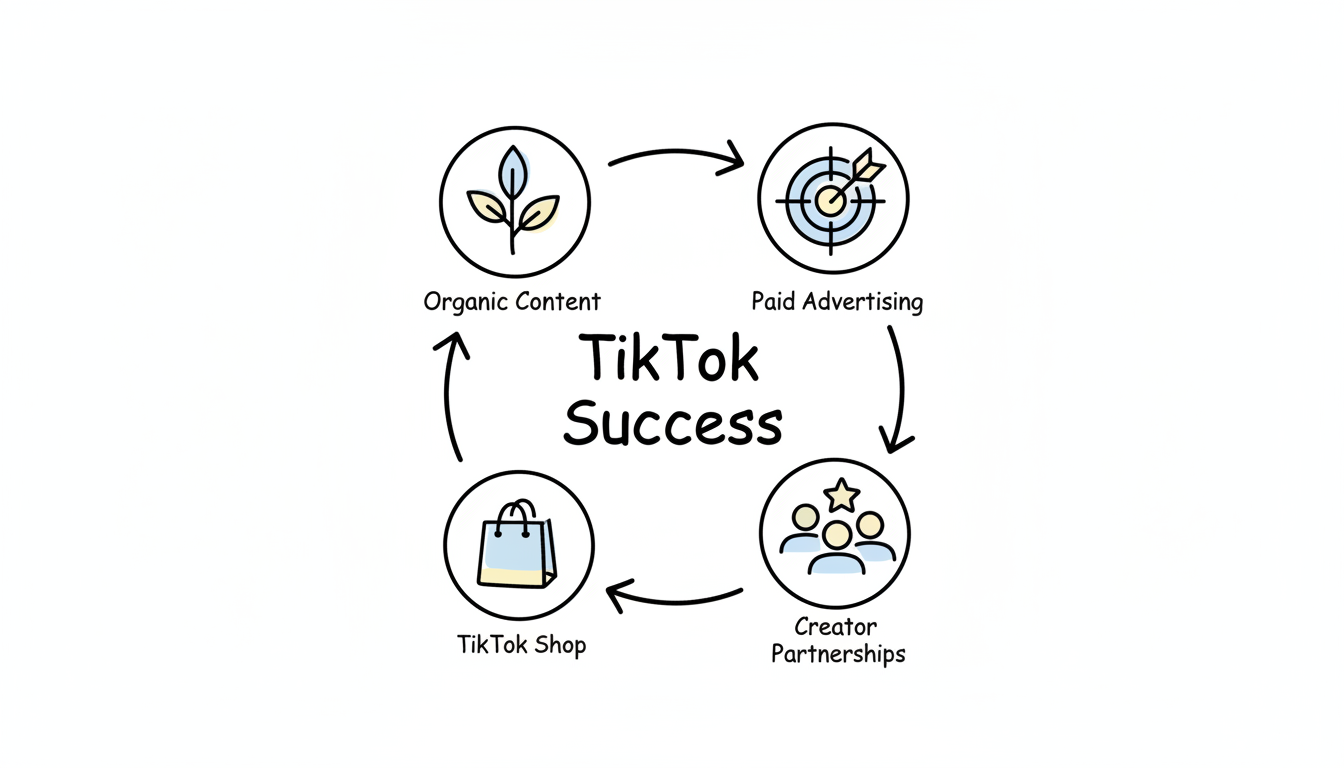
Top-performing brands execute across all four pillars for TikTok success simultaneously:
- Organic content: Consistent brand presence building awareness
- Paid advertising: Targeted campaigns driving measurable results
- Creator/affiliate partnerships: Leveraging trusted voices for credibility
- TikTok Shop operations: Enabling in-app purchases with seamless experience
Brands that try a "crawl, walk, run" approach typically fail—TikTok rewards comprehensive execution over gradual testing.
UGC-First Creative Strategy
User-generated content outperforms branded creative consistently:
- UGC-style video ads generated 217% more leads than influencer alternatives
- Cost-per-lead decreased by 45% with UGC approach
- Top-performing TikToks run as Spark Ads see CPCs fall and ROAS rise compared to branded campaigns
Creator Partnership Model
Rather than one large influencer, successful brands partner with multiple smaller creators:
- 67.15% of TikTok creators are nano influencers (1K-10K followers)
- Higher engagement rates than larger accounts
- More authentic content that resonates with audiences
- Diverse creative output for testing variations
Execution
How successful brands implement their TikTok strategies in practice.
Creative Production at Scale
High-performing campaigns require significant creative volume:
Content velocity:
- 10-20 new creative pieces per week minimum
- Multiple hooks tested per concept
- Continuous iteration based on performance data
- Balance of organic-style and polished production
Creative specifications:
- 9:16 vertical format optimized for mobile
- Strong hooks in first 2-3 seconds
- Text overlays for sound-off viewing
- Clear call-to-action integration
Following proper TikTok ad specs and requirements ensures technical compliance and maximum performance.
Campaign Structure
Successful account structures follow proven patterns:
Campaign types deployed:
- Top-of-funnel awareness campaigns
- Video view campaigns for engagement building
- Conversion campaigns targeting purchases
- Retargeting campaigns for warm audiences
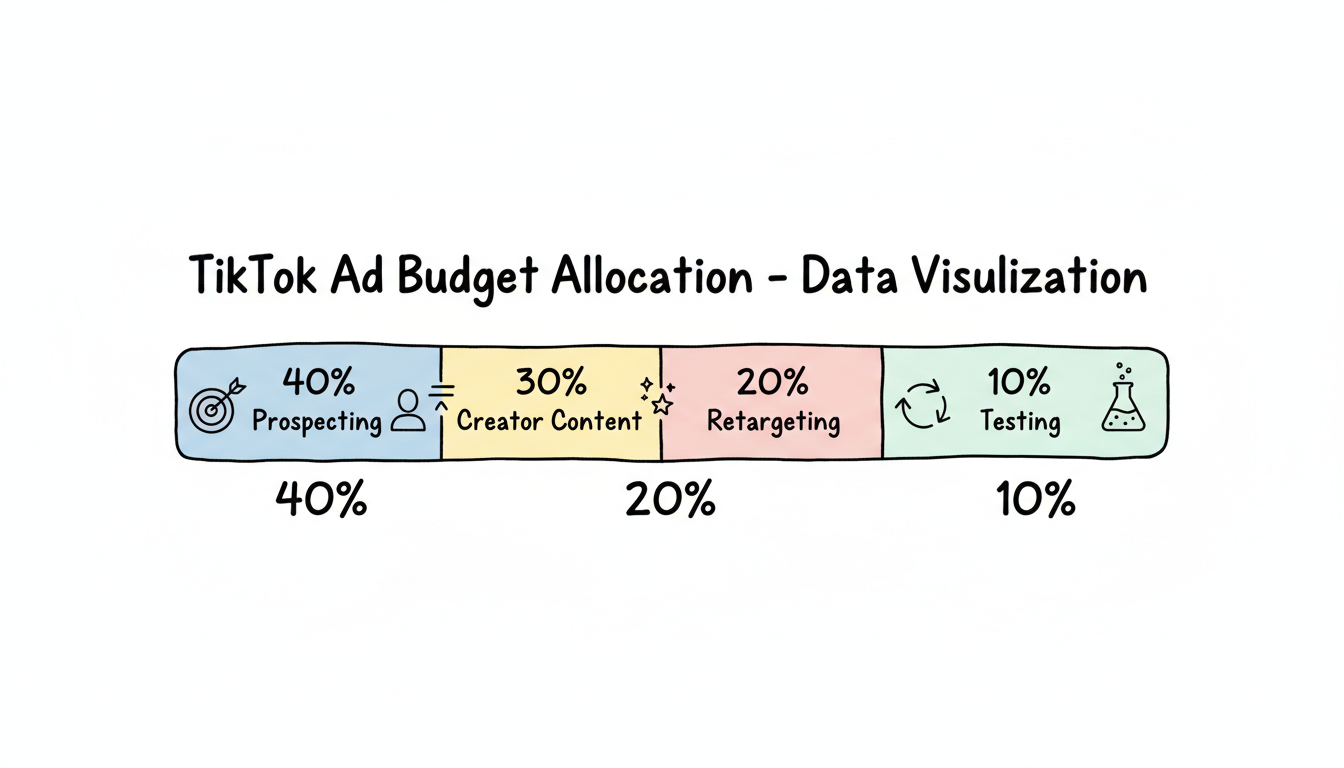
Budget allocation example:
- 40% prospecting (new customer acquisition)
- 30% creator content amplification (Spark Ads)
- 20% retargeting (engaged users)
- 10% testing (new audiences and creative)
TikTok Shop Integration
Brands with TikTok Shop see compounding benefits:
Shop operations:
- Product catalog synced and optimized
- Competitive pricing (TikTok users expect deals)
- Fast shipping and good customer service
- Live shopping events for engagement spikes
GMV Max campaigns: GMV Max can accelerate growth, but requires leadership alignment on attribution and clear incrementality planning.
Measurement Framework
Sophisticated measurement beyond last-click attribution:
Metrics tracked:
- ROAS by campaign and creative
- CPA by funnel stage
- Conversion rate by traffic source
- Customer lifetime value by acquisition channel
- Incrementality testing results
Comprehensive TikTok ads reporting and analytics helps identify what's working and what needs adjustment.
Results
Real performance data from TikTok e-commerce campaigns demonstrates the platform's potential.
Industry Benchmark Results
Benchmark ROAS by industry:
Industry | Average ROAS |
Beauty/Cosmetics | 4:1-7:1 |
Fashion/Apparel | 4:1-6:1 |
E-commerce/DTC | 3:1-5:1 |
Home/Lifestyle | 2.5:1-4:1 |
Electronics | 2:1-3:1 |
DTC Beauty Brand Example
From documented case study data:
- Monthly ad spend: $50,000
- ROAS achieved: 4.5:1
- Revenue generated: $225,000
- Profit (40% margins): $90,000
- Net profit after ad spend: $40,000
E-Commerce Fashion Example
Real performance metrics:
- Monthly ad spend: $100,000
- ROAS achieved: 3.2:1
- Revenue generated: $320,000
- Profit (35% margins): $112,000
- Net profit after ad spend: $12,000
Documented Brand Results
From TikTok's case study library:
- Sephora Czechia: Improved ROAS using Video Shopping Ads
- Toyota: 38% reduction in CPA compared to standard lead gen
- eBag.bg: Scaled grocery sales with dynamic Catalog Ads
- REBAG: Drove luxury purchases with efficient CPAs through Smart+ campaigns
- The Body Shop: 15% uplift in sales in Middle East campaign
- Tefal: Sold out product lines through creator collaborations
Social Commerce Conversion Data
TikTok shoppable videos achieve conversion rates of 2-8%, with top performers in beauty and fashion exceeding 10%. Compare to Instagram Shopping's 1.5-3.5% average conversion rate.
Key Takeaways
Successful TikTok e-commerce campaigns share common elements worth replicating.
What Made These Campaigns Work
1. Full-funnel commitment Brands that execute across all four pillars—organic, paid, creators, and shop—outperform those who test incrementally. TikTok success requires comprehensive execution.
2. UGC-first creative approach Platform-native content that looks authentic consistently beats polished brand advertising. The informal feel of UGC makes ads more effective, not less.
3. Creator partnerships at scale Multiple smaller creators provide diverse content and reach different micro-communities. Volume of partnerships matters more than individual creator size.
4. Proper attribution modeling Brands that understood TikTok's top-of-funnel role and measured accordingly saw the full picture. Last-click attribution under-credits performance.
5. Operational excellence TikTok Shop success requires strong fundamentals: fast shipping, good customer service, competitive pricing, and seamless user experience.
Replicable Elements
Creative strategy:
- Test 10+ hooks per concept
- Refresh creative every 2-3 weeks
- Let data guide which approaches scale
Budget approach:
- Start with conservative budgets and strict monitoring
- Scale only when contribution margin holds
- Watch returns and support metrics alongside sales
Partnership model:
- Build a bench of 20-50 nano creators
- Provide creative freedom within brand guidelines
- Secure usage rights for paid amplification
Investment Requirements
Reality check: TikTok shop success means investing tens of thousands of dollars upfront before seeing ROI. This isn't a channel for minimal testing—it rewards committed execution.
Minimum viable investment:
- Creative production budget
- Initial ad spend for testing
- Creator partnership funds
- Shop operations setup
Frequently Asked Questions
What ROAS Can I Expect from TikTok Ads for E-Commerce?
ROAS varies by industry. Beauty and fashion brands typically see 4:1-7:1, while general e-commerce achieves 3:1-5:1. Home goods average 2.5:1-4:1, and electronics 2:1-3:1. Acceptable ROAS depends on your profit margins—a 60% margin product can profit at 2:1 ROAS, while 30% margins need 4:1+.
How Much Should I Spend to Test TikTok Ads?
Meaningful TikTok testing requires significant investment. Plan for $5,000-10,000 minimum in initial ad spend, plus creative production and potential creator partnerships. Brands executing the full four-pillar approach (organic, paid, creators, shop) should budget tens of thousands for proper testing before expecting ROI.
Why Do Some TikTok Campaigns Fail for E-Commerce Brands?
Common failure modes include: attempting incremental "crawl, walk, run" approaches instead of comprehensive execution; using branded creative instead of UGC-style content; relying solely on paid ads without organic and creator content; measuring with last-click attribution that under-credits TikTok; and neglecting Shop operations like shipping speed and customer service.