
TikTok Advertising for Fashion Brands: Style Guide 2026
Fashion brands have found their runway on TikTok. With 58% of TikTok users shopping directly on the app and fashion content dominating the For You Page, TikTok advertising fashion brands 2026 represents one of the strongest opportunities in digital marketing today.
Whether you sell streetwear, luxury apparel, or sustainable fashion, this guide—and our TikTok advertising services—covers everything you need to know about fashion TikTok marketing in 2026—from In-Feed Ads and TopView campaigns to Branded Hashtag Challenges and TikTok Shop.
Fashion on TikTok
TikTok has fundamentally changed how people discover and purchase clothing. The platform's visual, entertainment-first format perfectly suits fashion content, making it the ideal place for apparel tiktok ads.
Why Fashion Thrives on TikTok
Fashion performs exceptionally well on TikTok for several reasons:
- Visual discovery: Users scroll through outfit inspiration naturally in their feeds
- Trend velocity: Fashion trends spread faster on TikTok than any other platform
- Creator ecosystem: Fashion influencers drive authentic product discovery
- Shoppable content: TikTok Shop hosts over 15 million merchants worldwide, with fashion as a leading category
Popular Fashion Content Formats
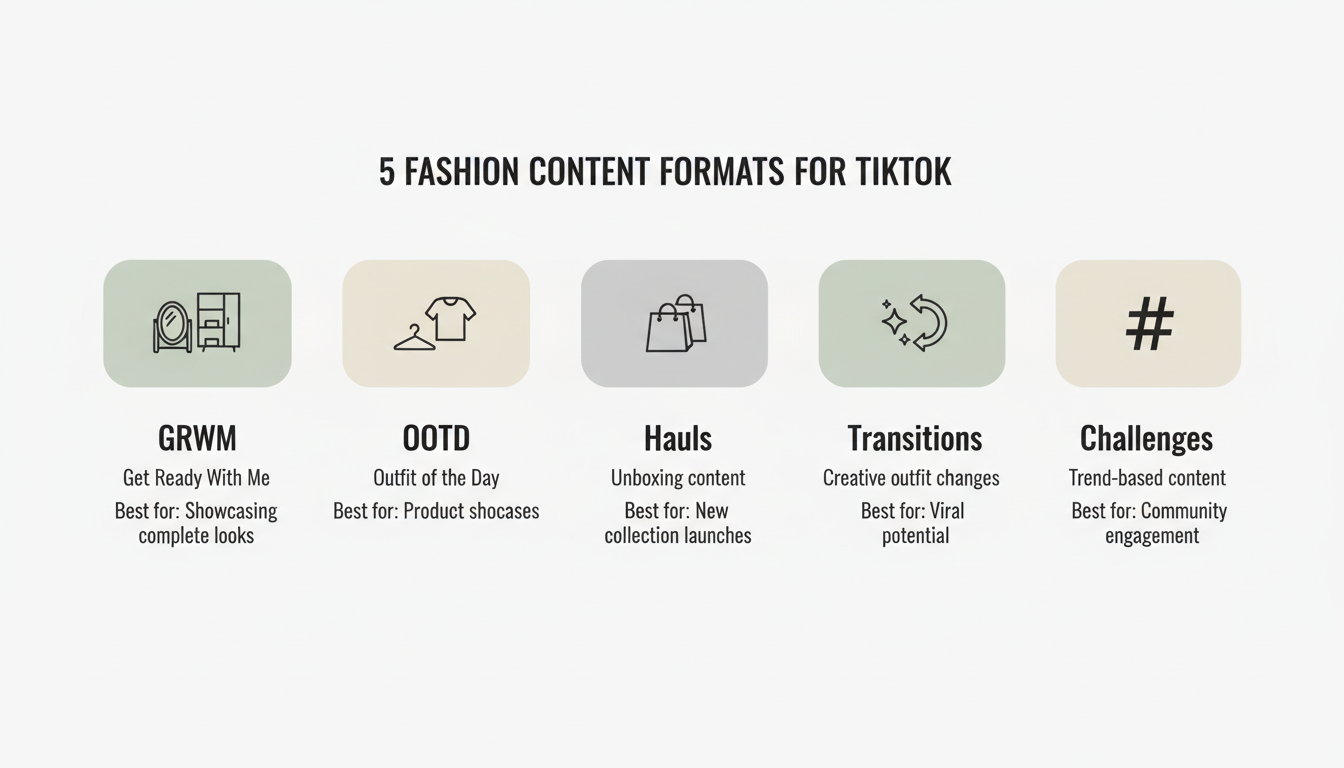
The most engaging fashion content on TikTok includes:
Format | Description | Best For |
GRWM (Get Ready With Me) | Creators style outfits in real-time | Showcasing complete looks |
OOTD (Outfit of the Day) | Quick outfit reveals with styling tips | Product showcases |
Hauls | Unboxing and trying on multiple pieces | New collection launches |
Transition videos | Creative outfit changes with effects | Viral potential |
Styling challenges | Trend-based content with branded hashtags | Community engagement |
Sustainable Fashion and Thrift Culture
Sustainable fashion has become a dominant force on TikTok, with #ThriftTok accumulating billions of views. Younger audiences increasingly favor brands that align with eco-conscious values, and thrift hauls regularly outperform traditional retail content in engagement.
Fashion brands can tap into this trend by highlighting sustainable materials, ethical production processes, or capsule wardrobe styling. Partnering with creators in the thrift and slow-fashion space builds credibility with environmentally aware shoppers. Brands like Patagonia and Reformation have leaned into this angle on TikTok, earning organic reach by leading with values rather than discounts.
Content Strategies
Successful TikTok advertising fashion brands 2026 requires content that entertains first and sells second. According to industry experts, brands must consistently create engaging content rather than simply pushing ads at their audience, similar to how effective TikTok UGC ads prioritize authenticity over polish.
Make Ads Look Native
The golden rule for apparel TikTok ads: don't look like an ad. Content that blends with organic fashion content performs significantly better.
Effective approaches include:
- Using trending sounds synced to outfit reveals
- Showing real people wearing your clothes in everyday settings
- Featuring behind-the-scenes content from photoshoots
- Creating relatable styling challenges
Leverage User-Generated Content (UGC)
UGC remains essential for fashion brands in 2026. Brands are increasingly leaning on real customers and everyday creators for content that feels genuine and affordable.
UGC strategies for fashion:
- Encourage customers to post OOTD content with your hashtag
- Repurpose customer content as Spark Ads
- Partner with UGC creators for authentic styling videos
- Feature diverse body types and styling approaches
Trend Integration
Fashion brands must stay agile with TikTok trends. As WGSN forecasters note, successful brands remix existing content with trending sounds and collaborate with trending stylists. Understanding the TikTok algorithm helps fashion marketers align their content strategy with what drives visibility on the platform.
Build a weekly content calendar that includes 2-3 trend-responsive posts reacting to current sounds and challenges.
Targeting Gen Z and Gen Alpha
TikTok's core fashion audience skews young. Gen Z (ages 18–26) is TikTok's largest fashion spending cohort, gravitating toward streetwear, vintage, and creator-endorsed brands. Gen Alpha (ages 13–17) is emerging next, driven by trending sounds and peer-led styling content.
When targeting these demographics, prioritize authenticity and community over polished branding. Gen Z responds to behind-the-scenes content and brand transparency, while Gen Alpha favors fast-moving visual trends and interactive formats like polls and duets. Tailor your ad creative and messaging to match the tone each generation expects—corporate-sounding copy will underperform on both fronts.
TikTok Ad Formats for Fashion Brands
Beyond organic content, TikTok advertising fashion brands 2026 includes several paid ad formats to integrate into your media mix. Choosing the right format depends on your campaign goal—whether that is awareness for a new collection, engagement around a seasonal launch, or direct conversions through TikTok Shop.
In-Feed Ads
In-Feed Ads appear natively in the For You feed, making them the most versatile ad format for fashion brands. These sound-on video ads support CTAs like "Shop Now" or "Learn More" that drive traffic directly to product pages or TikTok Shop listings.
For fashion creatives, the first three seconds are decisive. Lead with a strong visual hook—an outfit transformation, a bold color reveal, or a styling tip—before the viewer scrolls past. In-Feed Ads perform best when they mirror organic content rather than traditional commercial aesthetics. Brands running Spark Ads (boosted organic posts) within In-Feed placements often see higher engagement rates because the content already proved itself organically.
Topview Ads
TopView Ads are the first thing users see when they open TikTok—a full-screen, sound-on video up to 60 seconds long. This premium placement delivers maximum visibility and is ideal for major collection launches, seasonal campaigns, or brand moments that demand undivided attention.
Fashion brands using TopView have reported strong return on ad spend, with some campaigns achieving ROAS figures as high as 14.9x according to TikTok's own case studies.
The format works particularly well for lookbook-style creative that showcases multiple pieces in a single narrative video. Because TopView guarantees the first impression of the session, it pairs well with retargeting campaigns that serve In-Feed Ads to the same audience later in their scroll.
Branded Hashtag Challenges
Branded Hashtag Challenges invite users to create content around a brand-sponsored theme, combining paid media with organic UGC at scale. The challenge appears on TikTok's Discover page with a dedicated banner, driving mass participation.
Fashion brands have used this format to generate millions of user-created videos. Guess pioneered the approach with #InMyDenim, encouraging users to show off denim transformations. More recently, brands like Boohoo have run seasonal challenges tied to outfit styling. The format works because it turns customers into creators—every participant produces authentic content that functions as a peer endorsement. Pair your hashtag challenge with a curated group of influencers to seed initial momentum before the broader audience picks it up.
AR Branded Effects
AR Branded Effects let fashion brands create custom augmented reality filters that users apply to their own videos. Virtual try-on effects—where users can see how sunglasses, hats, or accessories look on them through the camera—have proven especially effective for fashion advertisers.
These effects drive engagement by making the brand experience interactive. Users spend more time with branded AR content than passive video ads, and the share rate is significantly higher. Fashion brands can integrate AR effects with TikTok Shopping so that users trying on a virtual product can tap through to purchase the real one. As AR technology continues to improve, expect virtual try-on to become a standard part of the fashion advertising toolkit on TikTok.
Working with Fashion Influencers
Creator partnerships drive measurable results for fashion brands on TikTok, from nano-influencer reviews to mega-influencer campaign launches.
Influencer partnerships drive significant results: 86% of consumers make an influencer-inspired purchase at least once a year, with fashion hauls and styling content among the most effective formats.
Influencer Tier Strategy
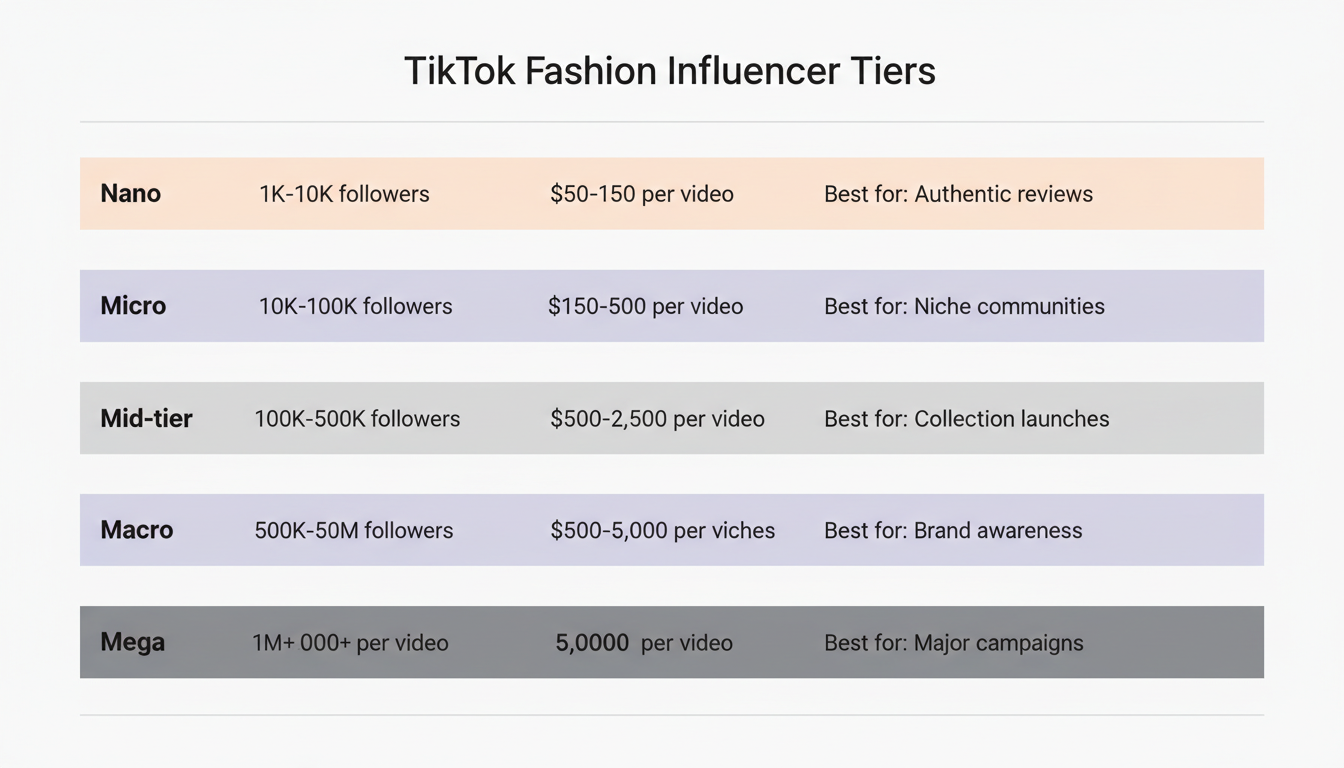
Choose your influencer tier based on campaign goals and budget. Nano and micro influencers offer authenticity; macro and mega creators deliver reach.
Tier | Followers | Avg. Rate per Video | Best Use Case |
Nano | 1K-10K | $50-$150 | Authentic reviews, UGC |
Micro | 10K-100K | $150-$500 | Niche fashion communities |
Mid-tier | 100K-500K | $500-$2,500 | Collection launches |
Macro | 500K-1M | $2,500-$5,000 | Brand awareness |
Mega | 1M+ | $5,000+ | Major campaigns |
Rates based on industry reports from Insense and vary by engagement and niche. When evaluating influencers, look beyond follower count to engagement rate, content niche alignment, and audience demographics. A micro-influencer with a 5%-8% engagement rate in sustainable fashion often outperforms a mega-influencer with 1% engagement in a broad lifestyle niche.
TikTok Creator Marketplace provides engagement analytics and audience data to help brands make informed partnership decisions. Prioritize creators who have posted fashion content consistently over the past 90 days.
Use these benchmarks to guide your influencer selection and budget planning for each campaign phase.
Long-Term Creator Partnerships
In 2026, winning fashion brands build long-term creator relationships rather than one-off posts. Brands treat influencers as true partners—with regular content, feedback sessions, and product co-creation—for consistent, authentic output. Many work with agencies specializing in creator partnerships, similar to those listed in our TikTok influencer marketing agencies guide.
Partnership best practices:
- Build a core group of 5-10 micro-influencers for consistent content
- Involve creators in product development or collection naming
- Create ambassador programs with exclusive benefits
- Negotiate package deals for quarterly content commitments
Finding Fashion Creators
Use these resources to identify the right fashion influencers:
- TikTok Creator Marketplace: Official platform for brand-creator connections
- Hashtag research: Search #fashiontiktok, #OOTD, #GRWM for active creators
- Competitor analysis: See who creates content for similar brands
- Agency partnerships: Work with TikTok marketing agencies that maintain creator networks
TikTok Shop for Fashion
TikTok advertising fashion brands 2026 increasingly centers on TikTok Shop, where active sellers grew by over 60% in late 2025, with fashion representing a significant portion of this growth.
Setting Up Your Fashion Shop
To sell apparel on TikTok Shop:
- Apply for a TikTok Shop seller account
- Upload your product catalog with high-quality images
- Enable shoppable videos and live shopping
- Set up your affiliate program for creator partnerships
- Integrate with your existing e-commerce platform
Shoppable Video Best Practices
Fashion shoppable videos convert best when they:
- Feature products in the first 3 seconds
- Show multiple styling options for the same piece
- Include clear product tags throughout the video
- End with a direct call-to-action
Live Shopping for Fashion
Live shopping events drive immediate sales for fashion brands. Effective live shopping tactics include:
- Scheduling regular shopping events (weekly "New Arrivals" shows)
- Offering live-exclusive discounts and bundles
- Featuring influencers as guest hosts
- Responding to viewer questions about sizing and styling in real-time
Case Studies
These brands show how fashion labels at every tier have turned TikTok into a measurable growth channel through smart creative and community strategy.
Gymshark: Community-First Marketing
Gymshark's TikTok strategy focuses on community over direct selling. Instead of product shots, they collaborate with fitness influencers to post workout routines, gym mishaps, and transformation stories. By encouraging creators to use their branded hashtag, Gymshark generated massive organic content that they later amplified with paid ads.
Key takeaway: Build a movement, not just a marketing campaign.
Reserved: Smart+ Creative Optimization
Polish fashion brand Reserved, part of LPP S.A., achieved improved results by optimizing their creative for TikTok's Smart+ campaigns. A single creative upgrade unlocked significantly more value from their ad spend, with the brand reporting improved ROAS after iterating on creative hooks and first-frame visuals.
Key takeaway: Test creative variations systematically—small changes drive big results.
Gucci: The #Guccimodelchallenge
Gucci inspired the viral #GucciModelChallenge, where users recreated high-fashion editorial poses using everyday clothing. Millions of organic videos were generated without a formal paid campaign, showing how luxury brands spark UGC by embracing TikTok's playful energy instead of polished ads.
Key takeaway: Luxury brands can generate massive organic reach by creating moments that invite participation rather than passive viewing.
Luxury Brands: Unboxing Success
Heritage brands like Burberry and Ralph Lauren have found success through TikTok unboxing content, partnering with creators to showcase the premium packaging experience. This low-cost approach builds brand prestige while driving engagement.
Key takeaway: Even luxury fashion can succeed on TikTok with the right creator partnerships.
Fashion brands advertising on TikTok should stay informed about evolving data privacy regulations and platform-specific policies. Ongoing legislative discussions around data handling practices mean that advertisers need contingency plans—including diversified ad spend across platforms and first-party data strategies—to mitigate potential disruptions. Staying current on compliance requirements ensures your campaigns remain uninterrupted regardless of regulatory outcomes.
Key Takeaways
TikTok advertising for fashion brands in 2026 rewards brands that lead with entertainment, authenticity, and native-looking creative. Use In-Feed Ads and Spark Ads as your foundation, scale into TopView for major launches, and leverage TikTok Shop for direct conversions.
Frequently Asked Questions
Common questions about TikTok advertising for fashion brands, from content strategy and ad formats to budgets and Gen Z targeting.
What Type of Fashion Content Performs Best on TikTok?
GRWM (Get Ready With Me) and OOTD (Outfit of the Day) videos consistently perform well, along with hauls and styling challenges. The key is entertainment value—content should feel authentic and engaging rather than like a traditional advertisement.
How Much Should Fashion Brands Spend on TikTok Ads?
Fashion brands can start testing with minimum budgets of $500 at the campaign level and $50 daily for ad groups. Scale based on performance, with established brands typically spending $5,000-$50,000 monthly on TikTok advertising.
Is TikTok Shop Worth It for Fashion Brands?
Yes. TikTok advertising fashion brands 2026 through TikTok Shop offers significant revenue potential, with 58% of users shopping directly on TikTok and growing seller adoption for brands willing to create shoppable content consistently.
What TikTok Ad Formats Work Best for Fashion Brands?
In-Feed Ads are the most versatile starting point for fashion brands. TopView delivers maximum visibility for major launches. Branded Hashtag Challenges drive mass UGC, and AR Branded Effects enable virtual try-on experiences that boost conversion.
How Do Fashion Brands Target Gen Z on TikTok?
Gen Z responds to authenticity and creator-led content over polished brand messaging. Prioritize micro-influencer partnerships, trending sounds, and behind-the-scenes content. TikTok's interest targeting lets you reach fashion subcultures like streetwear, vintage, and sustainable fashion.
How Much Do TikTok Ads Cost for Fashion Brands?
TikTok ad costs vary by format. For a full breakdown, see our TikTok ads cost guide. In-Feed Ads start at $10 CPM with a minimum $500 budget. TopView costs $50,000-$100,000 per day. Hashtag Challenges run $100,000-$200,000 for six days. Most fashion brands start with In-Feed and Spark Ads.