
A winning 2026 TikTok marketing strategy is built on 3 to 4 content pillars, a hybrid model that pairs organic posting with Spark Ads amplification, and a consistent cadence of 3 to 5 posts per week. Lead with educational and trend-driven content, then boost your top organic performers with paid to scale reach.
TL;DR
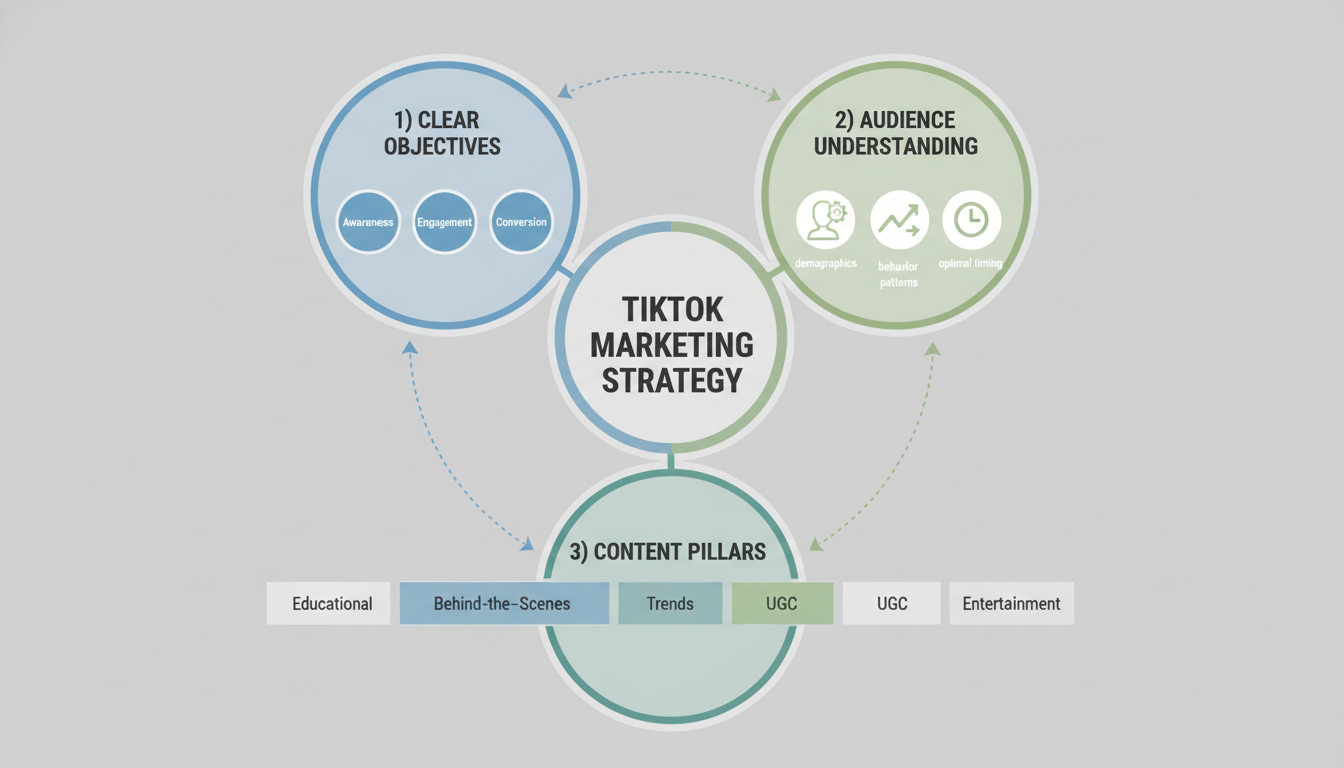
- Build around 3 to 4 content pillars (educational, behind-the-scenes, trend, UGC, entertainment).
- Run a hybrid model: organic to test and build, Spark Ads to amplify winners.
- Post 3 to 5 times per week minimum; consistency beats raw volume.
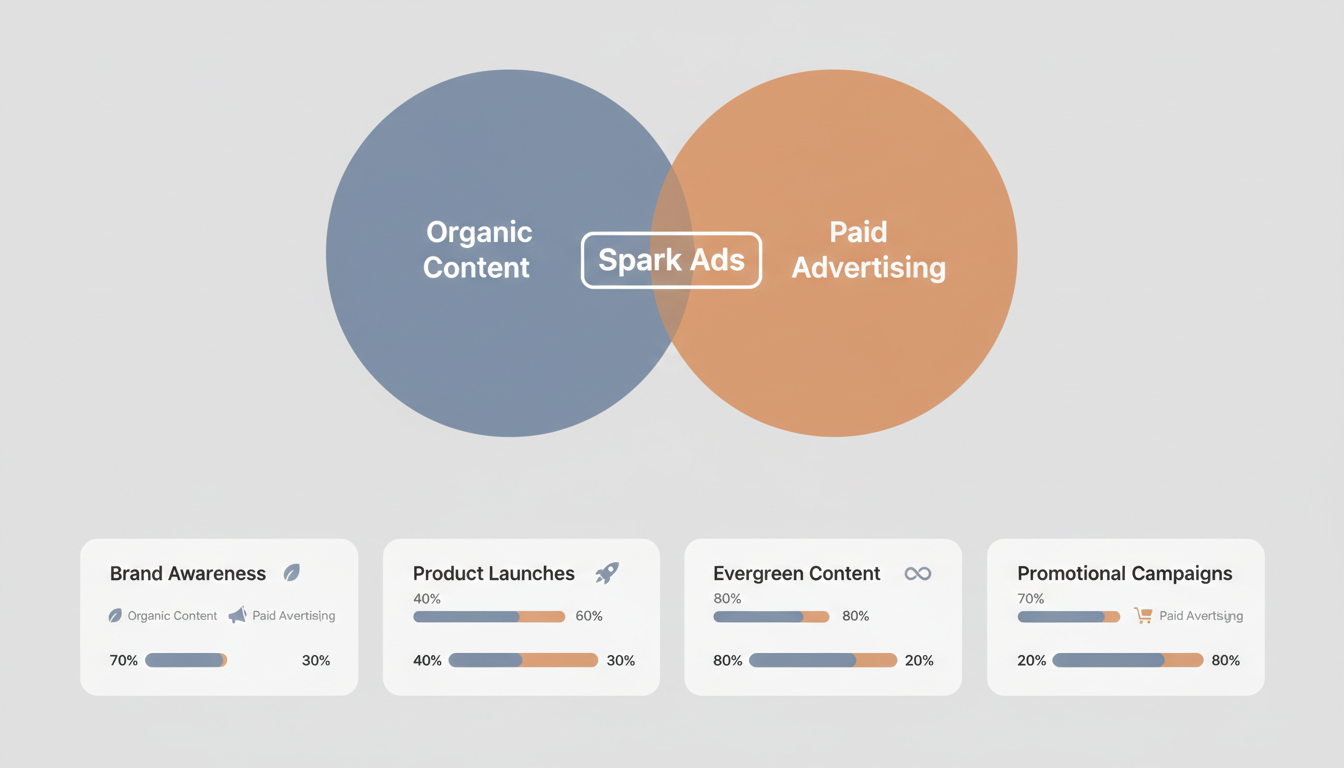
- Match your organic-to-paid split to the goal (70/30 for awareness, 20/80 for promotions).
- Review weekly, adjust pillars monthly, run a deep dive each quarter.
TikTok has evolved from a simple video-sharing app into a comprehensive discovery ecosystem that functions as much like a search engine as it does a social platform. In 2026, building an effective TikTok marketing strategy requires balancing search optimization, community interaction, and entertainment. For a deep dive into paid options, see our complete guide to TikTok advertising.
This playbook covers everything you need to build, execute, and refine a TikTok strategy that drives real business results -- whether you're starting from scratch or optimizing an existing presence.
How Do You Build a TikTok Strategy for 2026?
A successful TikTok strategy in 2026 requires more than posting videos and hoping for virality. It demands intentional planning, clear goals, and understanding of the platform's unique dynamics.
Start with Clear Objectives
Before creating content, define what success looks like for your brand:
Awareness objectives:
- Follower growth targets
- Video view goals
- Brand mention tracking
Engagement objectives:
- Average engagement rate (industry benchmark: 5-8% for smaller accounts)
- Comment and share rates
- Save-to-view ratio
Conversion objectives:
- Website traffic from TikTok
- TikTok Shop sales
- Lead generation
When setting conversion goals, consider how TikTok ROAS benchmarks vary by industry to establish realistic targets for your campaigns.
Know Your Audience
TikTok's algorithm is highly personalized, learning from each user's behavior -- what they watch, skip, like, comment on, and search for. Your content needs to resonate with specific audience segments.
Key audience questions:
- What problems does your audience face?
- What content do they already engage with?
- What language and tone do they use?
- When are they most active on the platform?
Understanding TikTok ads targeting options can help you refine audience segments for both organic and paid strategies.
Optimize Your Profile
Your profile is your brand's first impression. Optimize it for both discovery and conversion:
- Username: Keep it searchable and consistent with other platforms
- Bio: Include keywords, value proposition, and clear CTA
- Profile link: Direct to a dedicated landing page or link aggregator
- Profile image: High-contrast, recognizable at small sizes
Should You Focus on Organic or Paid TikTok?
The most effective TikTok strategies combine organic content building with strategic paid amplification. Understanding when to use each approach maximizes your budget and reach.
Organic-First Strategy
Organic content builds authentic audience relationships and provides creative testing ground. According to LinkedIn research, prospects exposed to both organic and paid content are 61% more likely to convert.
Benefits of organic:
- Builds genuine community
- Tests content without ad spend
- Creates assets for Spark Ads
- Establishes brand voice and personality
- Generates user-generated content
When to focus on organic:
- Building initial audience base
- Testing content themes and formats
- Limited marketing budget
- Long-term brand building
Paid Amplification
Paid advertising extends reach beyond your followers and accelerates growth. Use paid when organic proves concept. Check current TikTok CPC benchmarks to budget appropriately for your campaigns, and review our full TikTok ads pricing breakdown before you set an amplification budget.
Benefits of paid:
- Immediate scale and reach
- Precise audience targeting
- Measurable performance
- Conversion tracking
- A/B testing capabilities
When to invest in paid:
- Proven organic content performers
- Product launches or promotions
- Seasonal campaigns
- Reaching new audience segments
The Hybrid Approach
Most successful brands use a hybrid model:
Content Type | Organic | Paid |
Brand awareness | 70% | 30% |
Product launches | 40% | 60% |
Evergreen content | 80% | 20% |
Promotional campaigns | 20% | 80% |
Spark Ads bridge the gap: Boost your best-performing organic content through Spark Ads, maintaining authenticity while expanding reach. This approach typically delivers lower CPMs because the content has already proven engagement potential.
What Content Pillars Work Best for TikTok Marketing?
The strongest TikTok strategies are built around 3-4 content pillars -- recurring themes that make your brand feel consistent without becoming repetitive.
Proven Content Pillar Types
1. Educational / How-To Teach, explain, or solve problems. This content performs well in TikTok's search function and stays relevant longer.
Examples:
- Step-by-step tutorials
- Quick tips and hacks
- FAQ-style answers
- Industry explanations
2. Behind-the-Scenes Show the people, processes, and authentic moments. Community-first storytelling resonates because it feels like conversation, not broadcast.
Examples:
- Day-in-the-life content
- Office or workspace tours
- Product development process
- Team introductions
3. Trend Participation Join trending sounds, formats, and challenges -- but make them yours. Success requires fast execution and brand-relevant adaptation.
Examples:
- Trending audio with original spin
- Challenge participation
- Meme format adaptation
- Cultural moment reactions
4. User-Generated Content (UGC) Feature content from customers, fans, and creators. UGC builds social proof and community involvement.
Examples:
- Customer testimonials
- Product unboxings
- Before/after transformations
- Duets and stitches with fans
5. Entertainment Pure entertainment value without overt selling. This builds affinity and keeps your audience engaged between promotional content. For brands looking to partner with creators, explore the TikTok Creator Marketplace to find vetted talent.
Examples:
- Humor and relatable content
- Storytelling
- Creative showcases
- Industry commentary
Building Your Pillar Mix
Create a balanced rotation:
Pillar | Frequency | Goal |
Educational | 30% | Search visibility, authority |
Behind-the-Scenes | 20% | Authenticity, connection |
Trend Participation | 20% | Discovery, relevance |
UGC | 15% | Social proof, community |
Entertainment | 15% | Engagement, virality |
Adjust percentages based on your analytics and business goals. For ecommerce brands, TikTok ads for ecommerce strategies can inform your pillar mix to prioritize conversion-focused content.
How Often Should You Post on TikTok?
Consistency matters more than volume, but TikTok rewards active creators. Finding your optimal rhythm requires balancing platform recommendations with sustainable output.
Frequency Recommendations
TikTok officially recommends 7-28 posts weekly, but even the most active brands typically publish around 5 times weekly. Focus on quality and consistency over hitting maximum volume.
Starting recommendations:
- New accounts: 1-2 posts daily to build momentum
- Established accounts: 3-5 posts weekly minimum
- Growth phase: 1-3 posts daily if sustainable
Accounts with regular posting schedules see engagement rates 4x higher than inconsistent posters.
Best Times to Post
While the TikTok algorithm doesn't directly factor posting time, it does measure early engagement. Posting when your audience is active gives videos a better initial boost. Understanding TikTok algorithm advertising mechanisms helps you optimize timing strategies.
General best times in 2026:
- 6 AM to 10 AM (morning scroll)
- 7 PM to 11 PM (evening entertainment)
Day-specific peaks:
- Monday: 6 AM, 10 AM, 1 PM
- Tuesday-Thursday: 8 AM to 12 PM
- Friday: 5 PM to 9 PM
- Weekends: 9 AM to 12 PM
The 80/20 Posting Strategy
TikTok influencers report positive results using this approach:
- Post 80% of videos when followers are most active
- Post remaining 20% at varied times throughout the day
This maintains core audience engagement while reaching new viewers in different time zones.
Finding Your Best Times
Use TikTok Analytics to discover when YOUR audience is active:
- Go to Creator Tools > Analytics
- Check Follower Activity (times and days)
- Review top-performing posts for posting time patterns
- Test new time slots and track results
How Should You Integrate Trends into Your TikTok Strategy?
Trends are TikTok's currency. Participating intelligently can dramatically boost reach, but poor execution damages brand perception.
Types of Trends
Sound trends: Popular audio clips, songs, or voiceovers Format trends: Specific video structures or editing styles Challenge trends: Participatory activities with defined parameters Topic trends: Current conversations and cultural moments
Trend Evaluation Framework
Before jumping on a trend, evaluate:
Question | Why It Matters |
Is this relevant to my brand? | Forced participation looks desperate |
Can I add unique value? | Copying exactly won't stand out |
Is the trend still rising? | Joining late wastes effort |
Could this backfire? | Some trends carry hidden risks |
Can I execute quickly? | 48-hour turnaround or don't bother |
Trend Participation Best Practices
Do:
- Add your brand's unique spin
- Move fast -- trends have short lifespans
- Keep brand voice consistent
- Use trending sounds even on non-trend content
Don't:
- Force irrelevant trends
- Sacrifice brand values for virality
- Join controversial trends without strategy
- Post identical copies of existing content
Creating Trend-Ready Systems
Build processes that enable quick response:
- Monitor trend discovery tools daily
- Pre-approve flexible content guidelines
- Keep production capacity available
- Create "trend response" templates
Leverage the TikTok Creative Center to identify emerging trends and high-performing creative approaches before they peak.
How Do You Measure TikTok Marketing Success?
TikTok success requires tracking the right metrics at the right stages of your strategy.
Key Performance Indicators (Kpis)
Awareness metrics:
- Video views
- Reach and impressions
- Follower growth rate
- Profile visits
Engagement metrics:
- Engagement rate (likes + comments + shares / views)
- Average watch time
- Completion rate
- Save rate
Conversion metrics:
- Link clicks
- Website traffic from TikTok
- TikTok Shop conversions
- Lead form submissions
For comprehensive performance analysis, master TikTok ads reporting analytics to track both organic and paid metrics in one unified view.
Benchmarking Your Performance
Compare your metrics against industry standards:
Metric | Good | Great | Exceptional |
Engagement rate | 3-5% | 5-8% | 8%+ |
Watch completion | 40% | 60% | 75%+ |
Follower growth (monthly) | 5% | 10% | 20%+ |
Video view-to-profile ratio | 5% | 10% | 15%+ |
The TikTok Algorithm Score Card
The algorithm evaluates these signals -- track them to optimize content:
- Watch time: How long viewers watch
- Completion rate: Percentage who watch to the end
- Rewatches: Videos watched multiple times
- Shares: Most valuable engagement signal
- Comments: Active engagement indicator
- Saves: Content deemed valuable enough to return to
Content scoring high on these metrics earns broader distribution.
How Do You Iterate and Improve Your TikTok Strategy?
TikTok success requires continuous optimization. What works today may not work tomorrow as the platform and audience evolve.
Weekly Review Process
Every week, analyze:
- Top performers: What made them work?
- Underperformers: What can you learn?
- Trending content: What's gaining traction?
- Audience feedback: What are comments saying?
Use TikTok A/B testing methodologies to systematically test creative variations and refine your approach based on data.
Monthly Strategy Adjustments
Monthly, evaluate:
- Content pillar performance -- adjust mix as needed
- Posting frequency -- sustainable and effective?
- Trend participation rate -- missing opportunities?
- Conversion metrics -- driving business results?
Quarterly Deep Dives
Every quarter, conduct comprehensive review:
- Compare against quarterly goals
- Analyze competitor strategies
- Update audience insights
- Refresh content pillar themes
- Plan major campaigns or initiatives
The Content Refresh Cycle
TikTok users scroll fast. Keep content fresh:
- 2-3 weeks: Refresh creative approaches within pillars
- Monthly: Introduce new content formats
- Quarterly: Update pillar strategy based on performance
- Annually: Full strategy review and reset
Scaling What Works
When you find winning content formulas:
- Document the template (hook, structure, CTA)
- Create variations within the format
- Boost top performers with Spark Ads
- Train team on successful approaches
- Build repeatable production processes
Need help executing your strategy? Review the best TikTok marketing agencies of 2026 to find expert partners. For brands seeing success, explore TikTok Shop marketing strategies to integrate commerce directly into your content strategy and accelerate conversion paths.
For a focused deep dive, read our TikTok SEO guide.
Two platforms overlap heavily with TikTok's audience and creator model. For lifestyle and discovery content, our Lemon8 marketing guide covers the magazine-style discovery app, and our Snapchat marketing playbook covers camera-first, ephemeral growth with younger buyers.
Frequently Asked Questions
How Often Should I Post on TikTok for Business?
For business accounts, aim for 3-5 posts weekly at minimum, with 1-2 daily posts ideal during growth phases. TikTok recommends 7-28 weekly posts, but consistency matters more than volume. Accounts with regular posting schedules see engagement rates 4x higher than inconsistent posters. Start with what you can sustain long-term.
What Content Works Best for TikTok Marketing?
The most effective TikTok content in 2026 includes educational how-to videos, behind-the-scenes glimpses, trend participation with brand-relevant spins, and user-generated content. Build your strategy around 3-4 content pillars that balance entertainment value with business objectives. Educational content performs particularly well for search visibility. Review TikTok ad creative best practices to understand what resonates across both organic and paid formats.
How Do I Measure TikTok Marketing Success?
Track metrics aligned with your objectives: video views and follower growth for awareness, engagement rate and watch time for content quality, and link clicks or TikTok Shop conversions for business results. Good engagement rates range from 5-8% for most accounts. Use TikTok Analytics to monitor performance and identify patterns in your best-performing content.
Should I Focus on Organic TikTok or Paid Ads?
Most successful brands use a hybrid approach. Start organic to build audience, test content themes, and develop your brand voice. Once you identify what resonates, use Spark Ads to amplify top performers. The ideal split varies by objective: brand awareness might be 70% organic / 30% paid, while promotional campaigns could flip to 20% organic / 80% paid. Learn more about balancing platforms in our TikTok vs Google Ads comparison.
How Do I Keep Up with TikTok Trends?
Monitor the Discover page daily, follow trend-tracking accounts, and use tools like TikTok Creative Center to spot rising trends. Build systems for quick execution -- pre-approved guidelines, available production capacity, and "trend response" templates. If you can't execute within 48 hours, the trend may have passed.
How Much Budget Should I Allocate for TikTok Marketing?
Start with $500 to $1,000 per month for a test phase covering both organic content production and a small Spark Ads budget. Once you identify what works, scale to $2,000 to $5,000 monthly for consistent paid amplification. Brands running full-funnel TikTok strategies with TikTok Shop integration may spend $10,000 to $50,000 monthly depending on product margins and growth targets.