
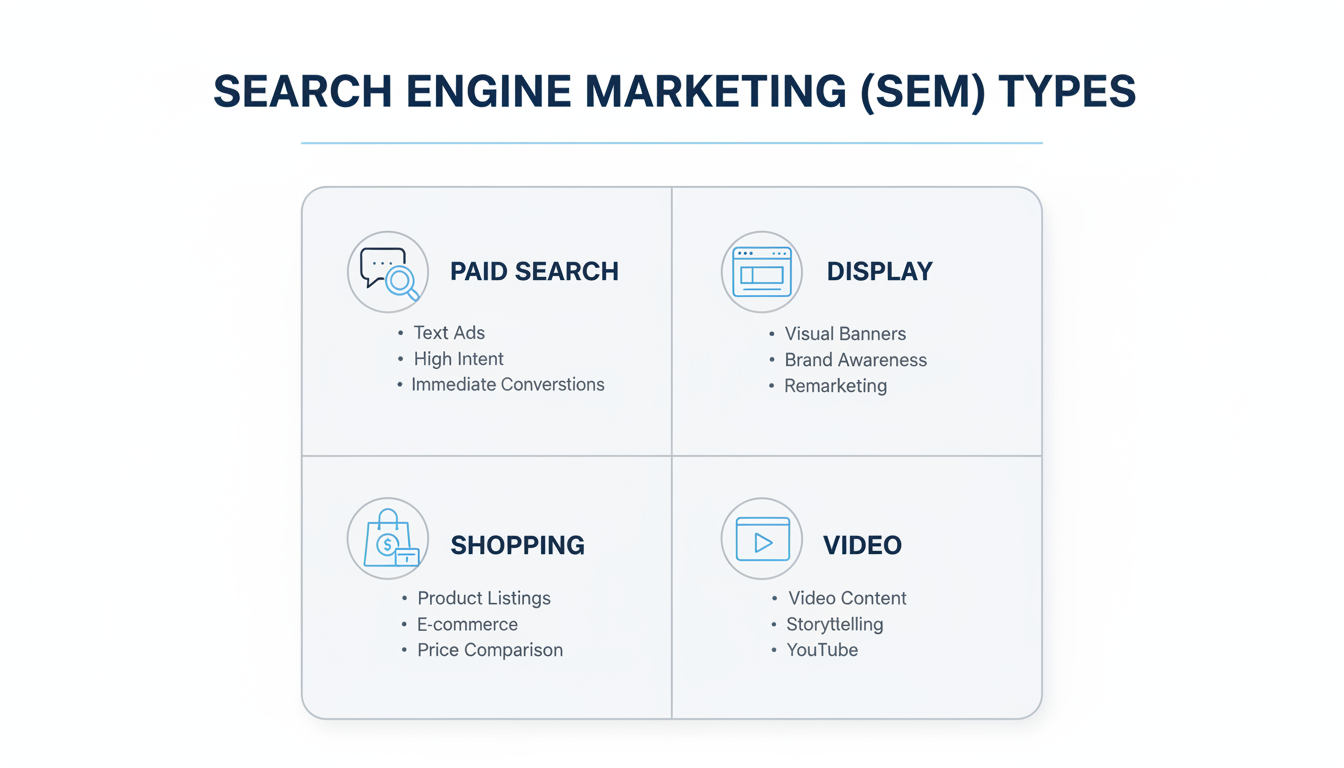
Search engine marketing (SEM) encompasses multiple advertising formats, each designed for specific business objectives. Understanding the different types of search engine marketing helps you choose the right approach for your goals-whether that's capturing high-intent buyers, building brand awareness, or driving e-commerce sales. This guide covers the major SEM types available on platforms like Google Ads and Microsoft Advertising.
What Is Search Engine Marketing?
Search engine marketing is a digital strategy that increases website visibility through paid advertising on search engine results pages (SERPs). Unlike organic SEO that builds traffic over time, SEM provides immediate visibility by allowing businesses to pay to appear at the top of search results.
SEM operates primarily through a pay-per-click (PPC) model where advertisers bid on keywords and pay only when users click their ads. Major platforms include Google Ads and Microsoft Advertising, which together reach the vast majority of search users. For those new to the space, a comprehensive SEM marketing beginners guide can help establish foundational knowledge.
Paid Search Ads
Paid search ads are text-based advertisements that appear above and below organic search results when users search for specific keywords.
How Paid Search Works
When someone searches for a keyword you're targeting, your ad enters an auction against other advertisers. Your ad's position depends on:
- Bid amount: What you're willing to pay per click
- Quality Score: Google's rating of your ad relevance and landing page experience
- Ad Rank: The combination of bid and quality factors
Key Features
- Text-based format with headlines, descriptions, and display URLs
- Appear on search engine results pages (SERPs)
- Target users actively searching for your products or services
- AI-powered bidding strategies like Target CPA and Maximize Conversions optimize in real-time
Best For
Paid search ads excel at capturing high-intent users. They're ideal for:
- Lead generation (form submissions, phone calls)
- Direct response campaigns
- Bottom-of-funnel conversions
- Service-based businesses
According to Bluehost, search ads target users with high-intent queries, making them effective for immediate conversions. To see how these ads perform in real-world scenarios, explore various paid search advertising examples from successful campaigns.
Display Advertising
Display ads are visual banner advertisements that appear across networks of partner websites, apps, and platforms.
How Display Advertising Works
Rather than appearing on search results, display ads show on websites within ad networks:
- Google Display Network: Over 2 million websites and apps
- Microsoft Audience Network: MSN, Outlook, Edge, and partner sites
Display targeting options include:
- Contextual targeting (content relevance)
- Audience targeting (demographics, interests)
- Remarketing (previous website visitors)
- Placement targeting (specific websites)
Key Features
- Visual format with images, graphics, or HTML5 animations
- Responsive display ads automatically adjust to available space
- Multiple sizes and placements available
- Lower cost-per-click than search ads
Best For
Display advertising works best for:
- Brand awareness campaigns
- Remarketing to previous visitors
- Upper-funnel engagement
- Visual product showcasing
Display ads reach users before they actively search, making them valuable for demand generation and staying top-of-mind with potential customers.
Shopping Ads
Shopping ads display product images, prices, and merchant information directly in search results.
How Shopping Ads Work
Shopping campaigns pull product information from a data feed submitted through:
- Google Merchant Center: For Google Shopping ads
- Microsoft Merchant Center: For Bing Shopping campaigns
Ads appear on search results pages, dedicated shopping tabs, and partner sites. Unlike search ads, you don't bid on keywords directly-the platform matches your products to relevant searches based on your feed data.
Key Features
- Product image prominently displayed
- Price shown upfront
- Merchant name and ratings visible
- Direct link to product page
- Can show multiple products for a single search
Best For
Shopping ads are essential for:
- E-commerce businesses
- Retail companies
- Product-focused advertisers
- Businesses with competitive pricing
Shopping ads display products directly in search results, capturing users at the moment they're comparing options.
Video Ads
Video advertising delivers video content across platforms like YouTube and partner video networks.
How Video Ads Work
Video campaigns run across:
- YouTube: The second-largest search engine
- Google Video Partners: Third-party sites and apps
- Microsoft Audience Network: Video placements on partner sites
Advertisers can target by demographics, interests, keywords, placements, or remarketing lists.
Ad Formats
Video advertising offers multiple formats:
Format | Length | Skippable | Best For |
Skippable In-Stream | Any length | After 5 seconds | Brand awareness |
Non-Skippable In-Stream | 15-20 seconds | No | Key messages |
Bumper Ads | 6 seconds | No | Quick impressions |
In-Feed (Discovery) | Any length | N/A | Engagement |
Best For
Video ads excel at:
- Brand storytelling
- Product demonstrations
- Emotional engagement
- Upper-funnel awareness
- Complex product explanations
Video reaches audiences where they consume content, building familiarity before they ever search for your products.
Choosing the Right SEM Type
Selecting the appropriate type of search engine marketing depends on your business goals, audience, and budget.
Match SEM Types to Your Goals
Business Goal | Recommended SEM Type |
Immediate leads/sales | Paid Search Ads |
E-commerce product sales | Shopping Ads |
Brand awareness | Display + Video Ads |
Remarketing warm audiences | Display Ads |
Product demonstrations | Video Ads |
Local service inquiries | Paid Search + Local Ads |
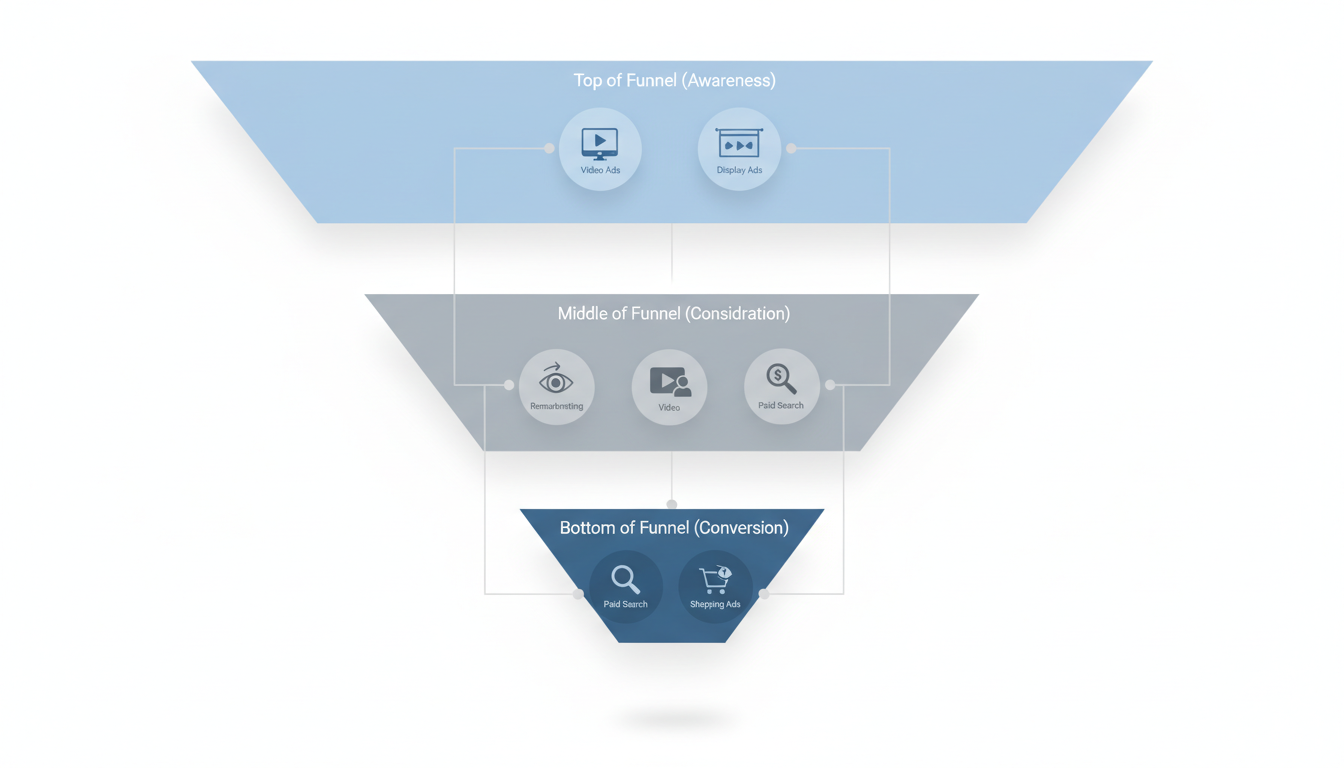
Consider Your Sales Funnel
Different SEM types serve different funnel stages:
- Top of funnel (awareness): Display, Video
- Middle of funnel (consideration): Display (remarketing), Video, Paid Search
- Bottom of funnel (conversion): Paid Search, Shopping
Platform Considerations
Both Google Ads and Microsoft Advertising offer these SEM types, but with important differences. For a detailed breakdown, see our Microsoft Ads vs Google Ads comparison:
- Google Ads: Largest reach (89% search market share), more competition, higher CPCs
- Microsoft Advertising: Lower competition, 30-40% lower CPCs, unique LinkedIn targeting
Many successful advertisers run campaigns on both platforms to maximize reach while optimizing costs. When evaluating paid search advertising platforms comparison, consider your specific industry and target audience demographics.
Start Simple, Then Expand
If you're new to SEM:
- Start with paid search ads targeting high-intent keywords
- Add remarketing display campaigns to recapture visitors
- Expand to shopping ads if you sell products
- Test video ads for brand building
Frequently Asked Questions
What Are the Main Types of Search Engine Marketing?
The main types of SEM include paid search ads (text ads on search results), display advertising (visual banner ads on websites), shopping ads (product listings with images and prices), and video ads (video content on YouTube and partner sites). Each type serves different marketing objectives.
Which Type of SEM Is Best for Beginners?
Paid search ads are typically best for beginners because they target users actively searching for your products or services. Start with a small budget, target high-intent keywords, and scale based on performance. Display remarketing is a good second step.
Can I Use Multiple Types of SEM Together?
Yes, using multiple SEM types together is a best practice. Paid search captures ready-to-buy customers, display remarketing brings back visitors, shopping ads showcase products, and video builds awareness. Most successful advertisers use an integrated approach.
SEM Campaign Optimization and Performance Auditing
To ensure maximum efficiency across your search engine marketing campaigns, establish a systematic optimization routine focused on quality scores, bidding adjustments, and negative keyword expansion.
A disciplined SEM audit framework includes three weekly execution pillars that protect ROI across all ad formats:
- Negative keyword management: Regularly review search term reports to identify irrelevant queries and add negative keywords, preventing wasted ad spend on low-intent search traffic.
- Quality Score optimization: Improve ad relevance and landing page experience to boost Quality Scores, lowering your cost-per-click while improving top-of-page ad rank.
- Smart bidding calibration: Monitor automated bidding strategies like Target CPA or Target ROAS, adjusting conversion values and target thresholds as historical conversion data accumulates.
- Ad extension updates: Refresh sitelinks, structured snippets, and callout extensions monthly to maintain high ad prominence and improve click-through rates.
By continuously auditing these core SEM metrics, marketers can scale successful campaign types while eliminating budget leaks across Google Ads and Microsoft Advertising.