
YouTube processes over 3 billion searches per month, making it one of the most important discovery platforms for video content. With more than 2.7 billion monthly active users and over 700 hours of video uploaded every minute as of 2026, effective YouTube search engine optimization is essential to stand out from the competition and reach your target audience.
Understanding the Importance of YouTube SEO
YouTube is not just a platform for entertainment; it's also a powerful search engine in its own right. In fact, many users turn to YouTube to search for information, tutorials, reviews, and much more. This presents a massive opportunity for businesses and content creators alike to tap into an audience actively seeking out relevant content. This is where YouTube SEO comes into play.
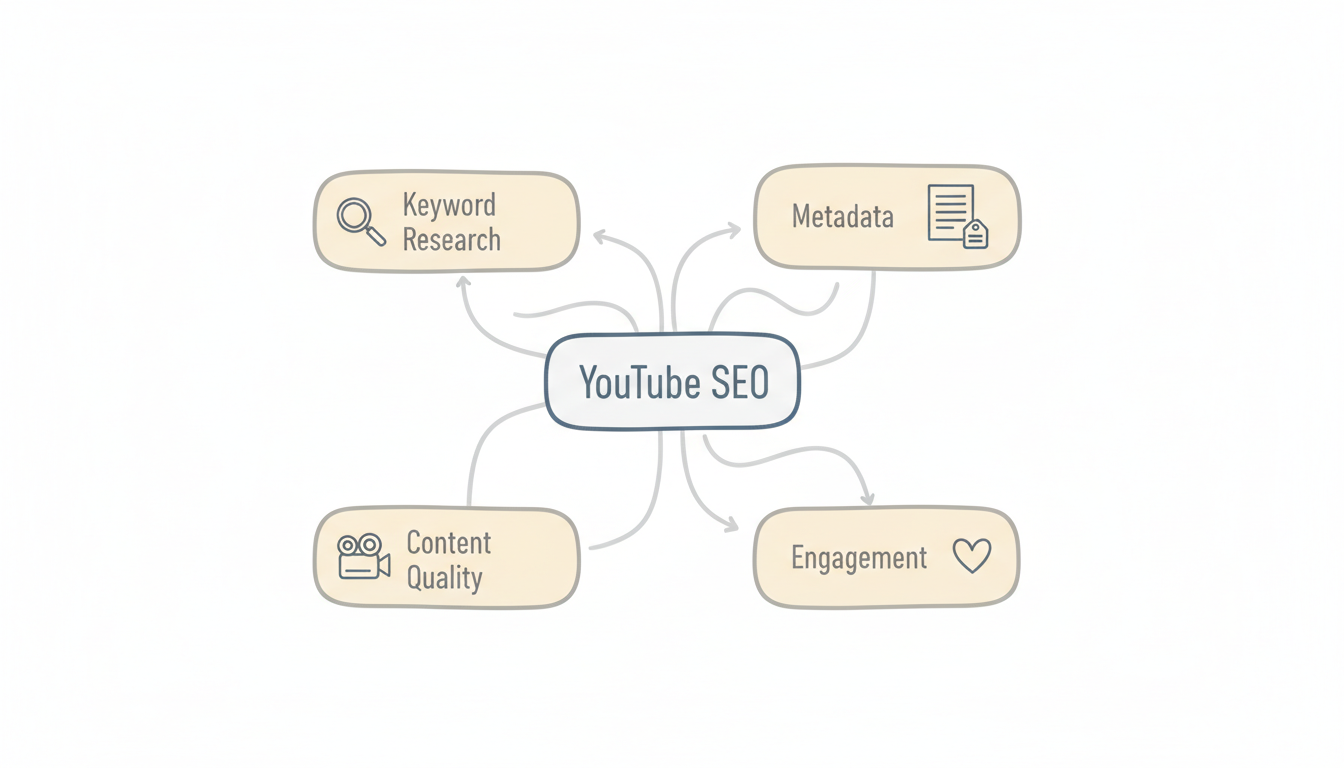
When it comes to YouTube SEO, it's important to understand the inner workings of YouTube's search algorithm. While factors like video titles and descriptions are important, YouTube's algorithm also takes into account user engagement metrics such as watch time, likes, comments, and shares. This means that simply optimizing your video's metadata is not enough; you need to focus on creating engaging content that keeps viewers hooked.
But why does SEO matter for your YouTube content? The answer lies in the potential benefits it can bring to your channel. By optimizing your YouTube content for SEO, you increase the likelihood of your videos appearing in relevant search results. This means your content has a higher chance of being discovered by your target audience, leading to increased visibility, organic traffic, and ultimately, higher engagement rates.
One of the key advantages of YouTube SEO is the ability to reach a global audience. With over 2.7 billion monthly active users, YouTube offers a vast pool of potential viewers from all around the world. By implementing effective SEO strategies, you can ensure that your content reaches the right people, regardless of their geographical location.
Another important aspect of YouTube SEO is the potential for long-term visibility. Unlike other social media platforms where content can quickly get buried in users' feeds, YouTube videos have the potential to gain traction and continue generating views over time. By optimizing your videos for relevant keywords and providing valuable content, you increase the chances of your videos appearing in search results months or even years after their initial upload.
Furthermore, YouTube SEO can also contribute to building your brand's authority and credibility. When your videos consistently appear in search results for relevant topics, it establishes your channel as a reliable source of information. This can lead to increased trust from viewers, who are more likely to subscribe to your channel, engage with your content, and even recommend it to others.
Lastly, YouTube SEO can also have a positive impact on your overall website traffic. By including links to your website in your video descriptions and utilizing cards and end screens, you can drive traffic from your YouTube channel to your website. This can result in increased conversions, whether it's signing up for a newsletter, making a purchase, or simply exploring more of your content.
In conclusion, YouTube SEO is a crucial aspect of growing your channel and reaching a wider audience. By understanding how YouTube's search algorithm works and implementing effective optimization strategies, you can increase the visibility of your videos, attract more viewers, and ultimately achieve your content goals.
Fundamentals of YouTube SEO
Now that you understand the importance of YouTube SEO, let's dive into the fundamentals of optimizing your videos to maximize visibility.
When it comes to YouTube SEO, there are several key strategies that can help your videos rank higher in search results and attract the right audience. One of the most crucial aspects is keyword research. By identifying and targeting the right keywords, you can increase the chances of your videos being discovered by users who are actively searching for content like yours.
Keyword Research for YouTube
Keyword research plays a crucial role in YouTube SEO. It involves finding the most relevant and popular keywords that are related to your video content. By incorporating these keywords strategically throughout your video's metadata, you can increase the likelihood of your videos appearing in search results.
There are various tools available to assist you in conducting keyword research for YouTube. One popular option is Google Keyword Planner, which provides insights into the search volume and competition level of different keywords. Additionally, YouTube's autocomplete feature can be a valuable resource for discovering relevant keywords that are frequently searched by users. Dedicated YouTube SEO tools like VidIQ and TubeBuddy also offer keyword research features with YouTube-specific search volume data, competition scores, and trending topic suggestions.
When conducting keyword research, it's important to strike a balance between high search volume and low competition. Targeting keywords with high search volume can potentially attract more viewers to your videos, but if the competition is too high, it may be challenging to rank well. On the other hand, targeting keywords with low competition can increase your chances of ranking higher, but if the search volume is too low, it may limit the potential reach of your videos.
Optimizing Your Video Titles and Descriptions
The titles and descriptions of your videos are key factors in YouTube SEO. Crafting informative and keyword-rich titles can help users understand what your video is about and entice them to click on it. It's important to accurately describe your content in the title while incorporating relevant keywords to improve its visibility in search results.
In addition to the title, the video description is another crucial element for YouTube SEO. It provides an opportunity to provide a concise summary of your video's content and further optimize it with relevant keywords. Including timestamps for different sections of your video can also make it more user-friendly, allowing viewers to easily navigate to specific parts that interest them.
When writing video descriptions, it's important to strike a balance between being informative and concise. Avoid keyword stuffing, as it can negatively impact your video's visibility and user experience. Instead, focus on providing valuable information that accurately represents your video's content and engages viewers. Adding relevant hashtags in your description (up to 15, though 3-5 targeted hashtags is optimal) helps YouTube categorize your content and makes it discoverable through hashtag search pages.
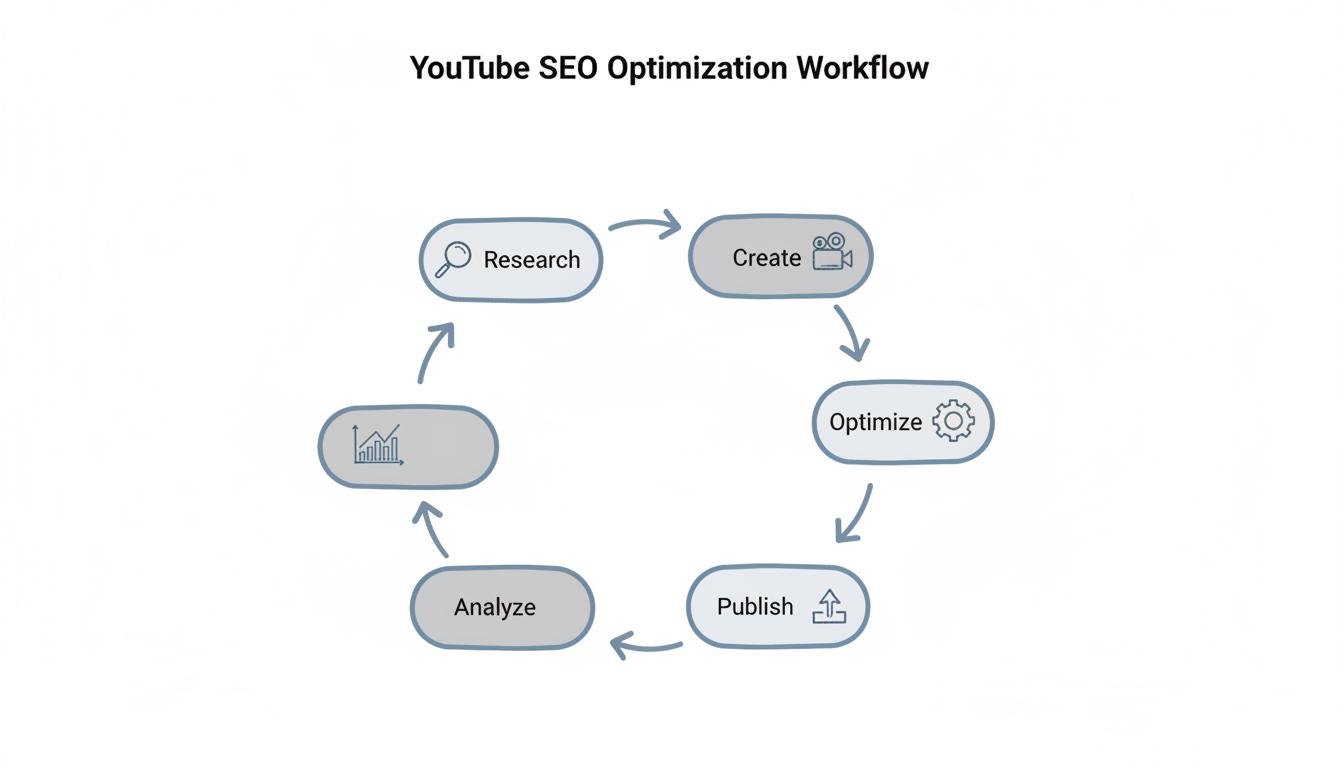
Remember, YouTube SEO is an ongoing process. Continuously monitoring and adjusting your keyword strategy, titles, and descriptions based on performance metrics can help improve the visibility and discoverability of your videos over time.
The Role of Video Content in YouTube SEO
While optimizing your metadata is crucial, the quality of your video content also plays a significant role in YouTube SEO.
YouTube rewards videos that engage viewers and keep them watching. Therefore, it is essential to focus on creating high-quality videos that provide unique value to your audience.
Investing in good equipment, lighting, and sound can significantly enhance the viewing experience. High-quality visuals and clear audio not only make your videos more appealing but also help in capturing and retaining the attention of your viewers.
However, it's not just about the technical aspects. The narrative flow of your videos is equally important. A clear and concise narrative keeps viewers engaged throughout the video, increasing the chances of them watching till the end.
Creating High-Quality Videos
Creating high-quality videos involves a combination of technical and creative skills. To ensure your videos stand out, it is essential to plan and execute them meticulously.
Start by identifying your target audience and understanding their preferences. This will help you tailor your content to their needs and interests, increasing the chances of engagement and viewership.
When it comes to equipment, investing in a good camera, tripod, and lighting setup can make a significant difference in the overall quality of your videos. Crisp visuals with proper lighting not only make your videos visually appealing but also help in conveying your message effectively.
Sound quality is another crucial aspect to consider. Poor audio can be a major turn-off for viewers, so investing in a good microphone or audio recording equipment is highly recommended.
Additionally, it's important to pay attention to the editing process. Smooth transitions, well-timed cuts, and engaging visuals can greatly enhance the overall viewing experience.
The Impact of Video Length on SEO
The length of your videos can have a significant impact on their SEO performance. While there is no fixed rule, longer videos tend to rank higher in search results as they often provide more comprehensive and in-depth information.
However, it's important to strike a balance and keep your videos concise and engaging. Viewers have limited attention spans, and if your video is too long or lacks engaging content, they may lose interest and click away.
Analyzing your audience's preferences and behavior can help you determine the optimal length for your content. Pay attention to metrics such as average watch time, audience retention, and engagement rates to gauge how well your videos are performing.
Experimenting with different video lengths and analyzing the results can help you find the sweet spot that maximizes both viewer engagement and SEO performance.
In conclusion, while optimizing metadata is crucial for YouTube SEO, the quality of your video content is equally important. By creating high-quality videos that engage viewers and keeping them watching, you can increase your chances of ranking higher in search results and attracting a larger audience.
Leveraging YouTube Features for SEO
YouTube offers various features that can be leveraged to improve your SEO and increase your visibility within the platform.
Utilizing Tags and Categories
Tags and categories help YouTube understand the context and relevance of your videos. Include relevant tags that describe your content accurately, and choose the most appropriate categories to assist YouTube in categorizing your videos correctly. This enhances the chances of your videos appearing in related searches and recommended playlists.
The Importance of Custom Thumbnails
Incorporating eye-catching custom thumbnails is crucial for attracting viewers and increasing click-through rates. Use compelling images and fonts that accurately represent your video's content and pique viewers' curiosity. A well-designed custom thumbnail can significantly impact your video's visibility and encourage more clicks.
Using Cards and End Screens
Cards and end screens are powerful YouTube features that can boost both viewer engagement and SEO performance. Cards are interactive elements that appear during your video, allowing you to link to other videos, playlists, channels, or external websites. End screens appear in the final 5-20 seconds of your video and can promote other content, encourage subscriptions, or direct viewers to your website. By strategically placing cards at moments when viewers might otherwise click away and designing compelling end screens, you increase session duration and channel engagement, both of which are positive signals for the YouTube algorithm.
YouTube Chapters and Timestamps
YouTube chapters (also called timestamps or key moments) allow you to break your video into labeled sections that viewers can jump to directly. Adding timestamps in your video description in the format "0:00 Introduction" creates clickable chapters in the video progress bar. This improves user experience by letting viewers navigate to the content they care about most. Chapters also help YouTube understand the structure and topics covered in your video, which can improve how your content appears in search results. Videos with chapters are more likely to appear in Google's video carousel with specific section links, increasing your visibility in both YouTube and Google search.
Hashtags for YouTube Discovery
YouTube hashtags serve as a categorization and discovery mechanism for your content. When you add hashtags to your video title or description, they become clickable links that lead to a feed of other videos sharing the same hashtag. Use a mix of broad hashtags (like #YouTubeSEO) and niche-specific ones relevant to your video's topic. YouTube displays up to three hashtags above your video title, making them visible to viewers before they even click play. While hashtags alone will not dramatically change your rankings, they provide an additional discovery pathway and help YouTube's algorithm understand your content's topic and relevance.
YouTube Shorts Optimization
YouTube Shorts has become one of the fastest-growing content formats on the platform, with over 70 billion daily views as of 2026. Optimizing your Shorts for SEO requires a different approach than long-form content, but it can significantly expand your channel's reach and drive subscribers to your main content.
Creating SEO-Friendly Shorts
While Shorts are primarily surfaced through the Shorts feed algorithm rather than traditional search, SEO still matters. Use descriptive titles with relevant keywords, as Shorts can appear in YouTube search results and Google video carousels. Keep titles concise since they display with limited space in the Shorts shelf. Include 2-3 targeted hashtags such as #Shorts along with topic-specific tags to help categorize your content.
Shorts-To-Long-Form Strategy
One of the most effective YouTube SEO strategies in 2026 is using Shorts as a funnel to your long-form content. Create Short clips that tease or summarize key points from your full-length videos, then pin a comment linking to the full video or use the related video feature. This cross-promotion increases watch time across your channel, boosts subscriber counts, and sends positive engagement signals that benefit your entire channel's SEO performance. The YouTube algorithm increasingly rewards channels that publish consistently across both Shorts and long-form formats.
Closed Captions and Subtitles for SEO
Adding closed captions and subtitles to your YouTube videos is one of the most underutilized SEO strategies available to creators. While YouTube generates automatic captions using speech recognition, these auto-generated captions often contain errors that can misrepresent your content to the algorithm.
Why Captions Matter for Rankings
YouTube indexes the text in your captions and uses it to understand the content and context of your video. Accurate, manually uploaded captions provide the algorithm with a reliable transcript of everything said in your video, effectively giving YouTube more keyword-rich text to associate with your content. This can improve your video's relevance for a wider range of search queries. Studies have shown that videos with accurate captions see increased watch time because viewers can follow along more easily, especially in noisy environments or when watching without sound.
Subtitle Localization for Global Reach
Translating your captions into multiple languages through subtitle files opens your content to a global audience. YouTube supports subtitles in virtually every language, and adding translations allows your videos to appear in search results for non-English queries. This is particularly valuable given YouTube's worldwide user base, with significant viewership in markets like India, Brazil, Japan, and across Europe. You can upload SRT or VTT subtitle files through YouTube Studio, or use community contributions to crowdsource translations from your existing audience.
Playlist Optimization for YouTube SEO
YouTube playlists are a powerful but often overlooked tool for improving your channel's SEO performance. Playlists can rank in both YouTube and Google search results independently of individual videos, giving you additional opportunities to capture search traffic.
Structuring Playlists for Search
Treat each playlist like a standalone piece of content with its own SEO strategy. Give your playlists keyword-rich titles that reflect what viewers are searching for, such as "YouTube SEO Tutorial for Beginners" rather than generic names like "My Videos Part 3." Write detailed playlist descriptions that include relevant keywords and explain what viewers will learn by watching the series. Organize videos within playlists in a logical order that encourages viewers to watch multiple videos in sequence, as this increases session duration, a key ranking factor in the YouTube algorithm.
Using Playlists to Boost Watch Time
When a viewer finishes one video in a playlist, YouTube automatically plays the next one, creating a continuous viewing experience that dramatically increases your channel's total watch time. Create thematic playlists that group related content together, and feature your best-performing videos early in the playlist to maximize retention. You can also embed playlists on your website or share playlist links on social media, which starts an auto-play session beginning with your chosen video. Channels that effectively use playlists typically see higher average view durations and improved rankings across their entire video library.
Best YouTube SEO Tools
Choosing the right tools can make your YouTube video optimization workflow significantly more efficient. Here is a comparison of the most popular YouTube SEO tools available in 2026, from free built-in options to premium third-party platforms.
YouTube Studio Analytics
YouTube Studio is the free, built-in analytics platform every creator should master before investing in third-party tools. It provides detailed data on traffic sources, search terms viewers used to find your videos, audience retention graphs, click-through rates, and real-time performance metrics. The Research tab in YouTube Studio is particularly valuable for SEO, as it shows search terms your audience is looking for and identifies content gaps on the platform. Use YouTube Studio's analytics to identify which keywords drive the most traffic, which videos have the highest retention, and where viewers are dropping off so you can optimize future content accordingly.
Vidiq
VidIQ is one of the most widely used YouTube SEO tools, offering a browser extension that overlays SEO data directly on the YouTube interface. Its key features include a keyword research tool with YouTube-specific search volume, a competitive intelligence dashboard that shows how competitors rank for specific terms, and an SEO score card that grades your video's optimization. VidIQ's trend alerts can notify you of emerging topics in your niche, allowing you to create timely content. The free tier provides basic keyword data and video analytics, while paid plans unlock advanced features like AI-powered title and description suggestions and bulk keyword research.
Tubebuddy
TubeBuddy is a browser extension and mobile app that integrates directly with YouTube Studio, adding SEO and productivity tools to your existing workflow. It offers A/B testing for thumbnails and titles (a feature unique among YouTube SEO tools), tag suggestions, best-time-to-publish analysis, and a keyword explorer with competition and search volume data. TubeBuddy's tag lists feature allows you to save and reuse sets of tags across videos, streamlining your optimization process. Like VidIQ, it offers both free and paid tiers, with the free version providing enough functionality for creators just starting with YouTube SEO.
Ahrefs for YouTube Keyword Research
While primarily known as a website SEO tool, Ahrefs offers a dedicated YouTube keyword research feature through its Keywords Explorer. By selecting "YouTube" as the search engine, you can access search volume data, keyword difficulty scores, click metrics, and related keyword suggestions specific to YouTube search. Ahrefs is particularly useful for creators who also manage website SEO, as it allows you to identify keywords that perform well on both Google and YouTube, enabling a cross-platform content strategy.
AI-Powered YouTube SEO Tools
The emergence of AI-powered YouTube SEO tools is reshaping how creators optimize their content. Tools leveraging artificial intelligence can now generate optimized titles, descriptions, and tags based on analysis of top-performing videos in your niche. Some AI tools offer automated thumbnail generation, script optimization suggestions, and predictive analytics that forecast a video's potential performance before you publish. While these tools are still maturing, they represent the future of YouTube video optimization and can save significant time in the content creation workflow.
Building an Engaged YouTube Community
In addition to optimizing your videos, fostering an engaged YouTube community is vital for long-term success.
Encouraging Likes, Comments, and Shares
Engagement metrics like likes, comments, and shares are key indicators of audience interest and help boost your video's visibility. Encourage your viewers to interact with your videos by asking questions, requesting feedback, or creating engaging calls-to-action that prompt likes, comments, and shares. Responding to comments and engaging with your audience further strengthens your community.
The Impact of Subscriber Count on SEO
Building a loyal subscriber base not only increases your reach but also positively impacts your SEO. Subscribers are more likely to engage with your videos, watch them in full, and share them with others. Focus on providing valuable content consistently to attract and retain subscribers, further enhancing your visibility and organic growth.
By understanding and implementing effective YouTube SEO strategies, from optimizing your metadata and leveraging tools like VidIQ and TubeBuddy, to creating high-quality videos and fostering an engaged community, every aspect contributes to maximizing your visibility and reaching your target audience effectively. Take the time to master these YouTube SEO fundamentals, and watch your content thrive on this dynamic and influential platform.