
Beauty Ads in Meta Ads Library: 2026 Trends to Study
The beauty ad formats trending on the Meta Ads Library in 2026 are ingredient-story visuals, split-screen before-and-after statics, short-form UGC video, myth-vs-fact carousels, and cinemagraph-style motion statics. Any beauty ad running 30 or more days is almost certainly a proven winner, so study long-running ads over freshly launched creative.
TL;DR:
- Winning formats: ingredient-story visuals, split-screen before-and-after, routine-based UGC video, myth-vs-fact carousels, and motion statics.
- Ad longevity is your data: ads running 30+ days are near-certain winners; 60+ days are strong performers worth close study.
- Verticals differ: cosmetics run the most ads and refresh fastest; fragrance and luxury beauty refresh slowest.
- Emerging angles: dermatologist and expert authority, founder story and brand origin, and subscription or refill value framing.
- Brands to study: CeraVe, The Ordinary, Rare Beauty, Glossier, and Sol de Janeiro.
- Method: build a 10-15 brand watch list, extract structural principles instead of copying, and test 5-10 variants.
You open the Meta Ads Library to spy on competitor creative and find thousands of beauty ads -- but no clear way to separate the noise from the signals. Which formats are brands actually scaling? Which creative approaches are emerging versus fading? Without a systematic research method, the Ads Library becomes an overwhelming gallery instead of a strategic tool. Tracking beauty ads meta ads library trends gives you a concrete competitive advantage: you see what the market is testing before the results show up in your CPA.
This post shows you how to use the Meta Ads Library for actionable beauty advertising research, breaks down the format and creative trends dominating beauty advertising right now, and compares how different beauty verticals approach their Meta creative differently.
How to Use the Meta Ads Library for Beauty Ad Research
The Meta Ads Library is a free, public database of every active ad running across Meta's platforms. Here is how to extract actionable intelligence from it instead of browsing aimlessly.
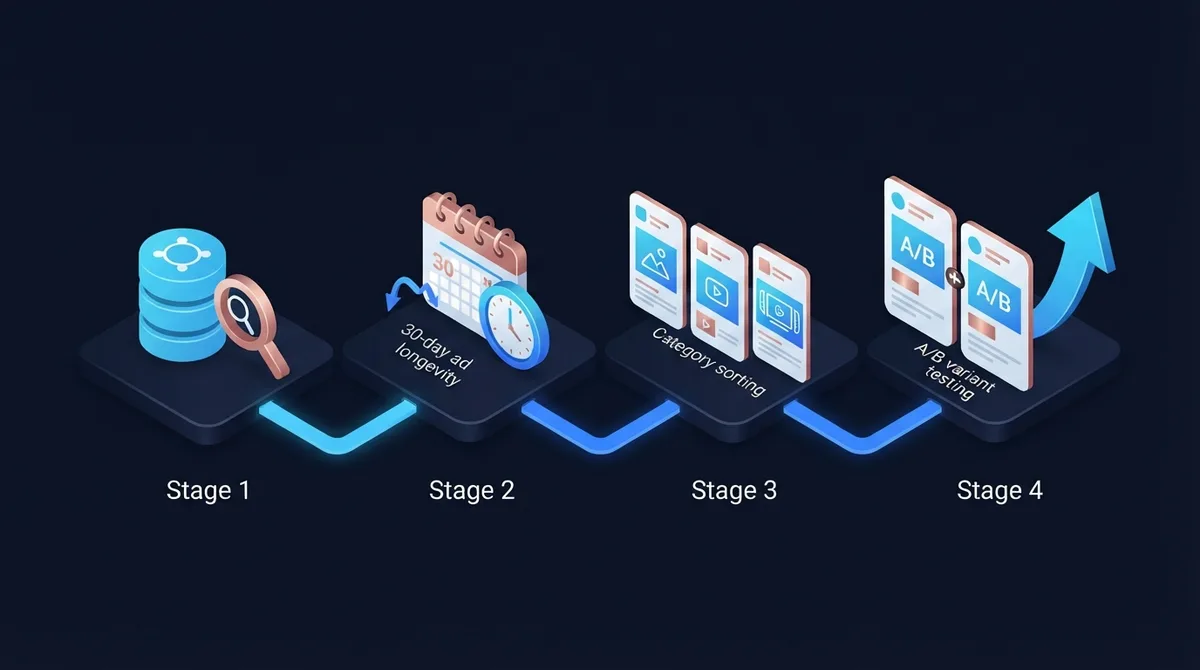
Step 1: Build Your Competitor Watch List
Identify 10-15 beauty brands to monitor. Include three tiers:
- Direct competitors (3-5 brands): Same price point, similar products, targeting the same customer
- Aspirational competitors (3-5 brands): Larger brands in your category whose creative quality you want to match
- Adjacent category leaders (3-5 brands): Top performers in related beauty verticals (skincare brand watching haircare, cosmetics brand watching fragrance)
Search each brand by name in the Ads Library. Filter by country (United States or your primary market) and platform (Facebook, Instagram, or both).
Step 2: Analyze Active Ad Volume and Longevity
The number of active ads tells you how aggressively a brand is testing. Brands running 50+ active ads are in heavy testing mode. Brands with 10-15 active ads are likely running proven winners.
More importantly, check ad start dates. Ads that have been running for 30+ days are almost certainly profitable -- brands do not sustain spend on losing creative. These long-running ads are your most valuable research subjects. They reveal what actually converts, not just what looks creative.
Step 3: Categorize Creative Patterns
For each competitor, categorize their active ads by:
- Format: Static image, video (short vs. long), carousel, collection
- Creative style: UGC, polished brand, editorial, tutorial, before-and-after
- Hook type: Problem statement, transformation, social proof, product demo, trend-riding
- Offer: No offer, discount, bundle, free shipping, gift with purchase
After analyzing 10+ brands, patterns emerge. You will see which formats and styles appear most frequently among long-running ads -- those are the proven approaches in your vertical.
Step 4: Document and Test
Create a swipe file of the 20-30 strongest ads you find. Do not copy them -- extract the structural principles (format, hook, composition, proof type) and apply them to your own brand and product. Produce 5-10 variants inspired by the patterns you identified and test them against your current best performers.
This research methodology applies across beauty verticals. For specific creative execution guidance, reference our posts on static image ads for beauty brands on Meta, video vs. image ad performance, and our guide to the best ad formats for beauty products on Instagram.
Trending Formats and Creative Approaches in Beauty Advertising
Based on Meta Ads Library analysis across 200+ beauty brands in Q1 2026, these are the formats and creative styles appearing most frequently in long-running (30+ day) ads.

Trend 1: The "Ingredient Story" Format
Beauty brands are leading ads with a single hero ingredient rather than the finished product. A close-up of hyaluronic acid gel, niacinamide crystals, or vitamin C serum droplets serves as the visual hook. The ingredient visual stops the scroll because it is unexpected in a feed full of polished product shots. The ad copy then connects the ingredient to the product benefit.
This trend appears across skincare (most prevalent), haircare, and body care brands. Cosmetics brands use a variation -- showing pigment powders or raw color before the finished lipstick or eyeshadow.
Trend 2: Split-Screen Before-And-After
Rather than showing before and after as separate images, the trending format uses a single image with a vertical split: left side showing the "before" state, right side showing the "after" with the product. This format delivers 40-60% higher engagement than traditional two-image before-and-after posts because it communicates the transformation in a single glance without requiring the viewer to swipe or wait for a video transition.
Meta's ad policies are strict about before-and-after claims, so the top performers use subtle demonstrations: skin texture improvement, hair shine, lip color vibrancy. Avoid dramatic weight-loss or skin-clearing claims that trigger policy rejections.
Trend 3: "Day in My Routine" UGC
Short-form UGC videos (8-15 seconds) showing a real person using the product as part of their daily routine are now the most common video format among long-running beauty ads. The production quality is intentionally low -- filmed on a phone, in a bathroom mirror, with ambient audio. This format works because it mirrors organic content and bypasses the "this is an ad" filter in viewers' minds.
The brands with the longest-running UGC ads source content from 10-20 different creators and rotate them frequently. One creator's video might run for 2-3 weeks before being replaced by a fresh face with the same product.
Trend 4: Carousel "Myth vs. Fact" Educational Content
Educational carousels that debunk beauty myths while positioning the brand's product as the solution are gaining traction, especially in skincare. Each card presents a common misconception ("Myth: You don't need SPF indoors") and then the correction with a subtle product tie-in. These carousels generate high save rates and shares, which extends organic reach beyond the paid impression.
Trend 5: Static Ads with Motion Elements
A hybrid format is emerging: static product images with one subtle animated element -- a shimmer effect on a highlighter, a drip of serum, or a color shift on a lipstick bullet. These "cinemagraph-style" ads command attention because the motion is unexpected within a still image. They deliver static-level CPMs with video-level engagement rates.
Trend 6: Dermatologist and Expert Authority
Beauty brands are increasingly opening ads with a credentialed expert - a dermatologist, cosmetic chemist, or trichologist - explaining why an ingredient or formulation works. The expert-authority hook borrows the trust of a professional to short-circuit skepticism, which is especially effective in skincare and haircare where efficacy claims are hard to prove in a feed. Top performers put the credential on screen in the first two seconds ("Board-certified dermatologist here") and keep the delivery conversational rather than scripted. This angle also strengthens E-E-A-T signals when the same expert is credited on your landing page.
Trend 7: Founder Story and Brand Origin
Founder-led ads in which the person who created the brand explains the problem that drove them to build it are converting well across emerging beauty labels. The founder story reframes a product pitch as a personal mission, which raises perceived authenticity and gives smaller brands a differentiator that established competitors cannot easily copy. These ads run long because the narrative does not fatigue the way a discount-led creative does. Keep the founder on camera, name the specific frustration the product solves, and close with the outcome rather than a hard sell.
Trend 8: Subscription and Refill Value Framing
As consumables like serums, cleansers, and shampoos move to subscription, brands are testing ads that lead with value framing - cost per use, auto-refill convenience, and the savings of subscribing versus one-off purchases. The hook is retention economics made visible: "Never run out, and save 20% on every refill." This framing works because it addresses the objection (recurring commitment) directly and reframes it as a benefit. Refill and pouch formats also let brands add a sustainability angle, which resonates with the same audience.
Beauty Ad Formats by Vertical (Quick Reference)
Use this quick reference to match the dominant Meta ad format to each beauty vertical, with an example creative angle that consistently performs in long-running ads.
| Vertical | Dominant Format | Example Angle |
|---|---|---|
| Skincare | Ingredient close-up static and UGC video | Hero ingredient plus dermatologist authority and subtle before-and-after |
| Makeup | Carousel swatches and static shade grids | Color and shade variety with fast, high-volume creative refresh |
| Haircare | Transformation video | Texture and shine before-and-after with a routine walkthrough |
| Fragrance | Lifestyle video and editorial static | Aspirational mood and setting rather than product demonstration |
| Tools and Devices | Demonstration video and split-screen static | Show the mechanism working plus the measurable result it delivers |
How Beauty Verticals Differ in Their Meta Ad Approaches
Not all beauty brands advertise the same way. Here is how the major verticals diverge in their Meta creative strategies.
| Vertical | Dominant Format | Primary Hook | Average Active Ads | Creative Refresh Cycle |
|---|---|---|---|---|
| Skincare | UGC video, ingredient close-ups | Before-and-after results | 30-60 | Every 2-3 weeks |
| Cosmetics/Makeup | Static image, carousel swatches | Color/shade variety | 40-80 | Every 1-2 weeks |
| Haircare | Transformation video | Before-and-after texture/shine | 20-40 | Every 3-4 weeks |
| Fragrance | Lifestyle video, editorial static | Aspirational mood/setting | 10-25 | Every 4-6 weeks |
| Nail care | Carousel, short video | Color showcase, application demo | 15-30 | Every 2-3 weeks |
| Luxury beauty | Editorial static, craftsmanship video | Exclusivity, heritage | 10-20 | Every 4-8 weeks |
The table reveals an important insight: cosmetics brands refresh creative most frequently and run the highest volume of active ads. This is because shade-driven products demand more variants, and cosmetics audiences fatigue faster due to heavy category competition on Meta. Fragrance and luxury beauty brands refresh least often because their brand-building creative has longer shelf life.
For luxury-specific strategies, our analysis of luxury handbag Meta ad examples shows how premium brands balance exclusivity with Meta's performance-driven ad ecosystem. And for niche service verticals within the beauty space, see how tattoo studio Meta ads creative applies these principles to a completely different business model.
These vertical differences connect to the broader strategic framework in our beauty brand digital advertising guide, which covers cross-platform strategy, budget allocation, and creative testing methodology applicable across all beauty verticals.
Top Beauty Brands to Study in the Meta Ad Library
Start your research with brands that run large, long-lived ad sets and iterate fast - their libraries are effectively a public creative-testing lab. For a broader set of high-performing creative beyond beauty, see our roundup of Meta ad examples.
- CeraVe - masterful dermatologist and expert-authority creative that makes clinical credibility feel native to the feed.
- The Ordinary - ingredient-story ads that lead with a single active and a transparent, no-hype value proposition.
- Rare Beauty - high-volume UGC and shade-variety creative with a fast refresh cycle and strong founder and community narrative.
- Glossier - editorial, community-led statics that turn customers and real routines into the primary creative asset.
- Sol de Janeiro - sensory, lifestyle-driven video that sells mood and scent experience rather than a spec sheet.
Frequently Asked Questions
How Often Should Beauty Brands Check the Meta Ads Library for Competitor Research?
Conduct a thorough competitor analysis monthly and do quick check-ins bi-weekly. Monthly deep dives let you spot format shifts and new creative trends before they saturate the market. Bi-weekly scans help you catch new entrants, seasonal creative shifts, and promotional campaigns from direct competitors that might affect your own performance.
Can You See Performance Data for Ads in the Meta Ads Library?
No. The Meta Ads Library shows active status, start date, platforms, and creative content, but not performance metrics like impressions, clicks, or conversions. Use ad longevity as a proxy for performance -- ads running for 30+ days are almost certainly generating positive returns, otherwise the brand would have paused them. Ads running for 60+ days are strong performers worth close study.
What Beauty Ad Trends from the Meta Ads Library Should Brands Avoid Copying?
Avoid copying trends that depend on a specific brand's equity rather than a transferable creative principle. A prestige brand's minimalist single-image ad works because of existing brand recognition -- a new brand copying that exact approach will underperform because there is no brand equity to leverage. Extract the structural principle (minimal composition, single product focus) and adapt it with stronger hook elements that compensate for lower brand awareness.
Which Beauty Ad Formats Convert Best on Meta?
Short-form UGC video (8-15 seconds) and split-screen before-and-after statics are the highest-converting beauty ad formats on Meta in 2026. UGC video mirrors organic content and bypasses the 'this is an ad' filter, while split-screen statics communicate the transformation in a single glance. Ingredient-story visuals and static ads with subtle motion also perform well. Test 5-10 variants of each against your current best performer rather than assuming one format wins for every product.
How Do I Find Beauty Ads in the Meta Ad Library?
Go to facebook.com/ads/library, set the country filter to your primary market, choose the 'All ads' category, and search a beauty brand by name or a keyword like 'serum' or 'foundation'. Filter by platform (Facebook or Instagram) and media type (image, video, or carousel). Sort your findings by ad start date, because ads running 30 or more days are almost certainly profitable and worth studying closely.
How Many Beauty Brands Should Be on a Meta Ads Library Watch List?
Build a watch list of 10 to 15 beauty brands across three tiers: direct competitors, aspirational competitors, and adjacent category leaders. This spread reveals what your closest rivals test, what quality bar to match, and which proven approaches from related verticals you can adapt to your own brand.
Why Are Ads Running 30 or More Days Considered Winners?
Brands do not keep spending on losing creative, so an ad live for 30 or more days is almost certainly profitable. Ads running 60 plus days are even stronger performers. Use longevity as your main signal because the Ads Library shows no impressions, clicks, or conversion data to judge performance directly.
Which Beauty Vertical Refreshes Meta Creative the Fastest?
Cosmetics and makeup brands refresh most often, roughly every one to two weeks, because shade driven products need many variants and audiences fatigue quickly under heavy competition. Fragrance and luxury beauty refresh slowest, every four to eight weeks, since brand building creative has longer shelf life.
What Is the First Step When Analyzing a Competitor'S Beauty Ads?
Start by categorizing each active ad by format, creative style, hook type, and offer, then note its start date. After reviewing 10 or more brands, repeated patterns among long running ads reveal the proven approaches in your vertical that are worth adapting and testing with your own variants.
Key Takeaways
- Use the Meta Ads Library systematically by building a 10-15 brand watch list, analyzing ad longevity as a performance proxy, and categorizing creative patterns across format, style, hook, and offer.
- The five dominant beauty ad trends in 2026 are ingredient-story visuals, split-screen before-and-after, routine-based UGC, myth-vs-fact carousels, and static images with subtle motion elements.
- Cosmetics brands refresh creative most frequently (every 1-2 weeks) and run the highest active ad volume, while fragrance and luxury beauty brands maintain creative for 4-8 weeks.
- Ads running 30+ days in the Meta Ads Library are near-certain winners -- prioritize studying these over freshly launched creative.
- Extract structural principles from competitor research rather than copying executions, then produce 5-10 test variants applying those principles to your own brand.