
How to Use Your Accelerator Network for Early Traction
To use your accelerator network for traction, treat it as a distribution channel, not a rolodex: line up batchmates as first customers and design partners, ask mentors and investors for specific warm intros, spend partner perks to fund experiments, and give help before you request it. The network is dense with buyers, referrers, and credibility - activate it deliberately.
This post covers why the accelerator network is your most underused distribution channel and the exact moves that turn batchmates, alumni, mentors, investors, and perks into early customers and momentum.
TL;DR
- Your batch and alumni network is a pre-qualified cluster of buyers, design partners, and referrers - most founders never work it systematically.
- Warm intros from a shared accelerator convert far better than cold outreach because the affiliation transfers trust instantly.
- Partner perks and credits are runway: they free cash you can redirect into marketing experiments and paid tests.
- Mentors and investors become a referral engine when you give them specific, forwardable asks instead of vague "let me know if you know anyone."
- The network compounds only if you give first - be useful, make intros, share what worked, and the returns follow.
Why Is the Accelerator Network an Underused Distribution Channel?
Most founders treat their accelerator as a funding event and a stamp on the deck. That leaves the single densest distribution asset they will ever have sitting idle. A batch is a hand-picked cluster of companies solving adjacent problems, staffed by operators who buy software, sign design-partner deals, and know hundreds of other founders. The affiliation itself carries weight - a "we were in the same batch" email gets opened and answered when a cold one gets deleted.
Three things make the network different from any other channel:
- Warm intros at scale. Every batchmate, mentor, and investor is one message away from introducing you to their network. Trust transfers through the shared affiliation, so the intro lands with credibility you did not have to earn from scratch.
- Credibility by association. "Backed by Y Combinator" or "Techstars '25" shortcuts the trust-building that early-stage sales normally require. Buyers assume you passed a bar. You inherit that signal in every conversation.
- A dense pool of first customers and design partners. Your batchmates have budgets, real problems, and a bias toward helping the companies they went through the program with. Some of them are your ICP. Many know people who are.
The reason it stays underused is simple: nobody schedules it. Founders default to cold ads and content because those feel like "real" marketing, while the highest-conversion channel in the building goes unworked. If you are still deciding where to spend limited hours, the sequencing logic in our guide to startup marketing channels by priority puts warm, network-driven traction near the top for exactly this reason. Think of the network as the demand you already have permission to reach - which pairs directly with how you generate demand as an early-stage startup from a cold start.
How Do You Get Early Customers and Design Partners from Your Batch and Alumni?
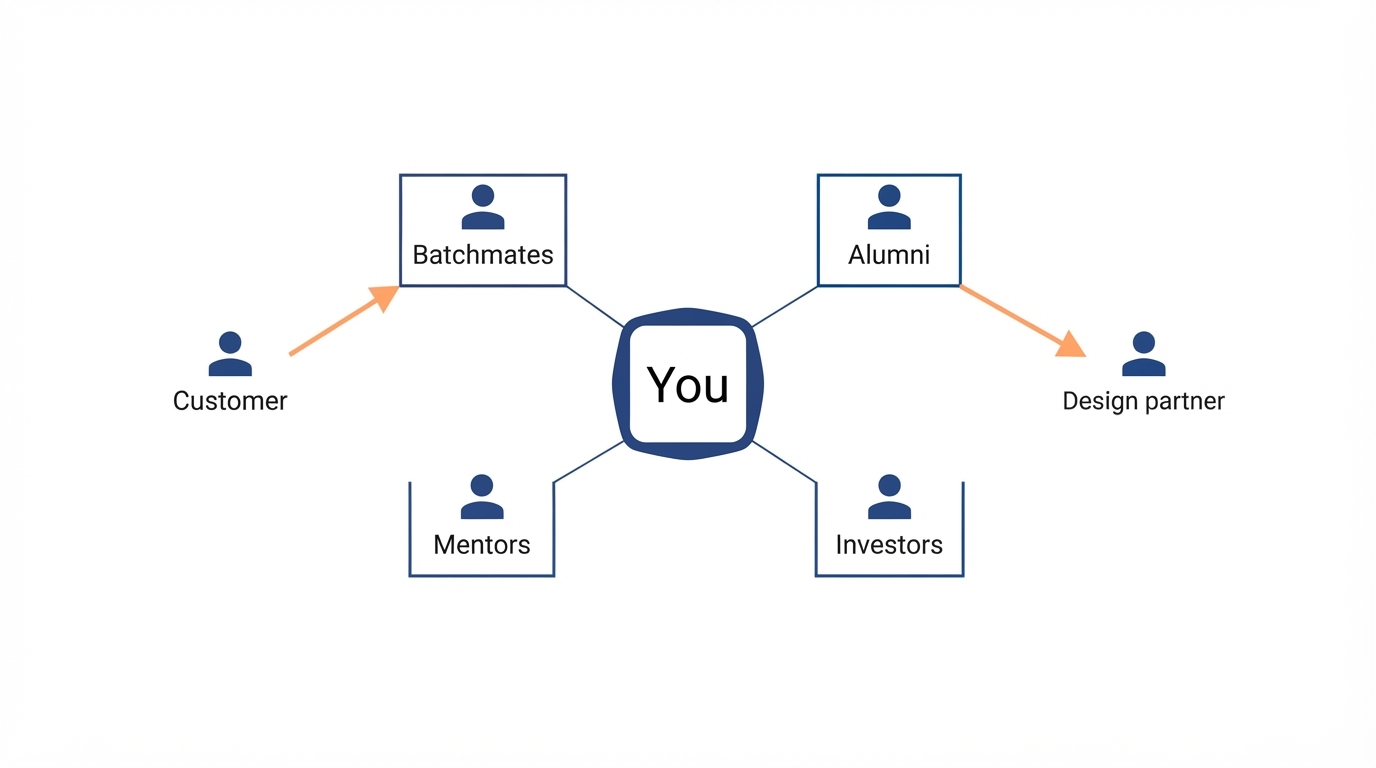
Start with the people who already want you to win. Your batch is the warmest audience you will ever pitch, and the alumni network extends that goodwill to thousands of companies. Work it in a deliberate order.
Map Your Batch for ICP Fit and Adjacency
Before demo day, list every company in your cohort and tag three things: are they your ICP, do they sell to your ICP, and do they have a network worth an intro. A typical seed-stage team finds two or three direct prospects and a dozen founders who can introduce them to the right buyers. That map is your first outreach list.
Turn Batchmates into Design Partners
Design partners are batchmates who use your product early, in exchange for hands-on support and influence over the roadmap. They are easier to close than paying customers because the ask is collaboration, not budget. Offer a real problem-solving relationship: weekly check-ins, direct access to you, features shaped by their feedback. In return you get usage data, testimonials, and case-study material you can point every future prospect at.
Run Cross-Promotion with Adjacent Companies
When a batchmate serves the same customer without competing with you, cross-promote. Co-host a webinar, swap newsletter mentions, bundle a joint offer, or trade logo placements. Each of you borrows the other's audience for free. A founder who sells onboarding software and one who sells analytics both reach the same operators - one shared email doubles the reach of both.
Ask for Second-Degree Intros
The batch is finite; the batch's networks are not. Once a batchmate has seen your product, ask who else should. "Who are the two people in your network who have this problem?" is a concrete, answerable question. That is how a cohort of 200 companies becomes a reachable market of thousands.
How Do You Use Partner Perks and Credits as a Growth Lever?
Accelerators come with a stack of partner perks: cloud credits, discounted tooling, free tiers of expensive software, legal and accounting deals. Founders treat these as nice-to-haves. Reframe them as runway - and runway is marketing budget you did not have to raise.
The mechanics are direct. Every dollar of infrastructure or tooling a perk covers is a dollar you can move into acquisition experiments. Cloud credits that cover your hosting for a year free up cash for paid tests. A discounted analytics or email platform lets you run the measurement and nurture you otherwise could not afford. The perks do not market for you; they extend the window in which you can afford to run more experiments and find the channel that works.
- Convert credits into experiments. Redirect the cash a perk frees up into small, measurable paid tests. More runway means more shots at finding a repeatable channel before you have to raise again.
- Use tool perks to build infrastructure early. Free or discounted CRM, analytics, and email tooling lets you stand up proper measurement from day one, so you actually learn from each experiment instead of guessing.
- Bank the runway, then spend it deliberately. Do not let credits expire unused. Map every perk to a specific growth activity it unlocks, and put a date on it.
Extending runway this way is one piece of a broader sequencing question - what to fund now versus later - which we lay out in the post-accelerator growth plan.
How Do You Turn Mentors and Investors into a Distribution Engine?
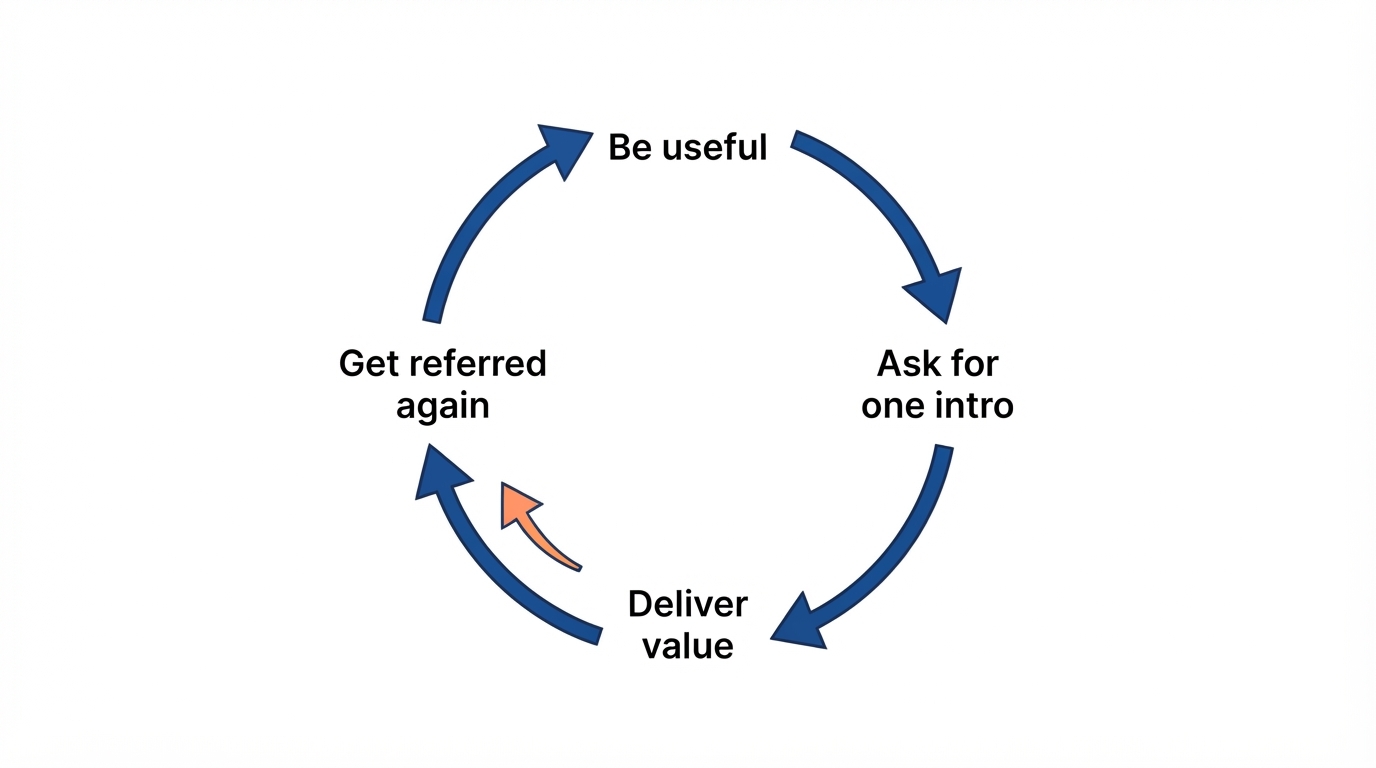
Mentors and investors are not just advisors - they are hubs. Each one sits on top of a portfolio and a professional network built over a career. Most founders waste that access with vague asks. The founders who get results make it effortless to help them.
Make Asks Specific and Forwardable
"Let me know if you know anyone who might be interested" puts the work on the other person and gets ignored. Instead, send a specific, forwardable ask: name the company or role you want to reach, and include two sentences the mentor can paste straight into a forward. Write the intro for them. The easier you make the mechanics, the more intros you get.
Work the Investor Portfolio for Cross-Sell
An investor who backed you also backed dozens of other companies - many of them your potential customers. Ask your investors which portfolio companies fit your ICP, then request warm intros to those specific ones. Portfolio cross-sell is one of the highest-converting motions available to a funded startup because the investor has a direct incentive to see their companies help each other.
Give Investors and Mentors Updates They Can Forward
Send a tight monthly update with one clear ask in it. When you report a milestone, mentors forward it. When you name the exact intro you need, they act on it. The update doubles as a standing, low-friction referral request - and it keeps you top of mind for the opportunities you never thought to ask for.
How Do You Give-To-Get Inside the Community?
The network compounds only for founders who put in before they take out. Communities have long memories, and the fastest way to get cut off from intros is to show up only when you need something. The etiquette is not soft - it is the mechanism that makes the whole thing work.
- Be useful first. Answer questions in the batch channel, share a playbook that worked, make an intro before you ask for one. Reputation for helpfulness is what gets your own asks answered fast.
- Make intros generously. Connecting two batchmates who should know each other costs you nothing and builds credit you can draw on later. Founders who broker connections become the hub everyone routes through.
- Share what worked, specifically. Post the exact channel, the exact number, the exact tactic. Specific generosity earns specific generosity back, and it positions you as someone worth helping.
- Keep score loosely, not transactionally. Do not demand a return on every favor. Give broadly and the network routes opportunities to you without being asked.
This give-first posture is the difference between a network that opens doors for years and one that stops replying after demo day.
Network Asset Activation Table
Use this map to turn each asset the accelerator hands you into a concrete traction outcome.
| Network asset | How to activate it | Traction outcome |
|---|---|---|
| Batchmates (ICP fit) | Offer a design-partner deal: hands-on support for early usage and roadmap input | First paying customers, testimonials, case-study material |
| Batchmates (adjacent audience) | Co-host webinars, swap newsletter mentions, bundle joint offers | Doubled audience reach at zero paid cost |
| Alumni network | Ask for second-degree intros to named companies or roles | Reachable market of thousands from a cohort of hundreds |
| Partner perks and credits | Bank the runway, redirect freed cash into paid experiments | More marketing tests before the next raise |
| Mentors | Send specific, forwardable intro asks and monthly updates | Warm intros to buyers and hard-to-reach operators |
| Investors | Request intros to portfolio companies that fit your ICP | High-converting portfolio cross-sell pipeline |
The network is one lever among several in a full early-stage program. For how it fits alongside content, paid, and product-led motions, start from our pillar on marketing for accelerator startups.
Frequently Asked Questions
How Do I Get My First Customers from My Accelerator Batch?
Map your cohort for ICP fit, then offer the best-fit companies a design-partner deal - early access and hands-on support in exchange for roadmap input and a testimonial. Design partners are easier to close than cold buyers because the ask is collaboration, not budget. Once they see value, ask each one for two second-degree intros to others with the same problem.
Are Accelerator Perks and Credits Actually Useful for Marketing?
Yes, indirectly. Perks like cloud credits and discounted tooling do not market for you, but they extend runway by covering costs you would otherwise pay in cash. That freed cash can fund paid experiments and measurement infrastructure, giving you more shots at finding a repeatable channel before your next raise. Map each perk to a specific growth activity and put a date on it.
How Do I Ask a Mentor or Investor for an Introduction?
Make the ask specific and forwardable. Name the exact company or role you want to reach and include two sentences the person can paste straight into a forward. Vague asks like "let me know if you know anyone" put the work on them and get ignored. For investors, ask which of their portfolio companies fit your ICP, then request warm intros to those specific ones.
What Is the Etiquette for Using the Accelerator Network?
Give before you take. Answer questions in the batch channel, make intros for others, and share tactics that worked before you ask for anything. Communities remember who shows up only when they need something. Founders who are useful first get their own asks answered fastest, because generosity builds the credit the network runs on.
Should I Focus on My Own Batch or the Wider Alumni Network?
Start with your batch - it is the warmest audience and the fastest to activate. But the batch is finite, so treat it as a launchpad into the alumni network. Once a batchmate has seen your product, ask for intros into their circle. That is how a cohort of a few hundred companies becomes a reachable market of thousands.
Key Takeaways
- Treat the accelerator network as a distribution channel and schedule the work - it is the highest-conversion, most underused asset you have.
- Convert batchmates into design partners first, then use them as a bridge to second-degree intros across the alumni network.
- Cross-promote with adjacent, non-competing batch companies to double reach at zero paid cost.
- Reframe partner perks and credits as runway, and redirect the freed cash into measurable marketing experiments.
- Give mentors and investors specific, forwardable asks and mine investor portfolios for cross-sell intros.
- Give before you get - being useful first is what makes the network compound instead of going cold after demo day.