
Last Updated: January 2026
AI search optimization focuses on getting your content cited by AI-powered search platforms like ChatGPT, Perplexity, and Google AI Overviews. As these platforms reshape how users find information, visibility in AI-generated responses has become essential for maintaining organic reach.
This guide covers the core principles and practical tactics for optimizing content for AI search systems.
What Is AI Search Optimization?
AI search optimization is the practice of structuring content so AI systems can find, understand, and cite it when generating answers. Unlike traditional SEO, which aims for page rankings, AI search optimization targets citation - being selected as the source when AI synthesizes responses.
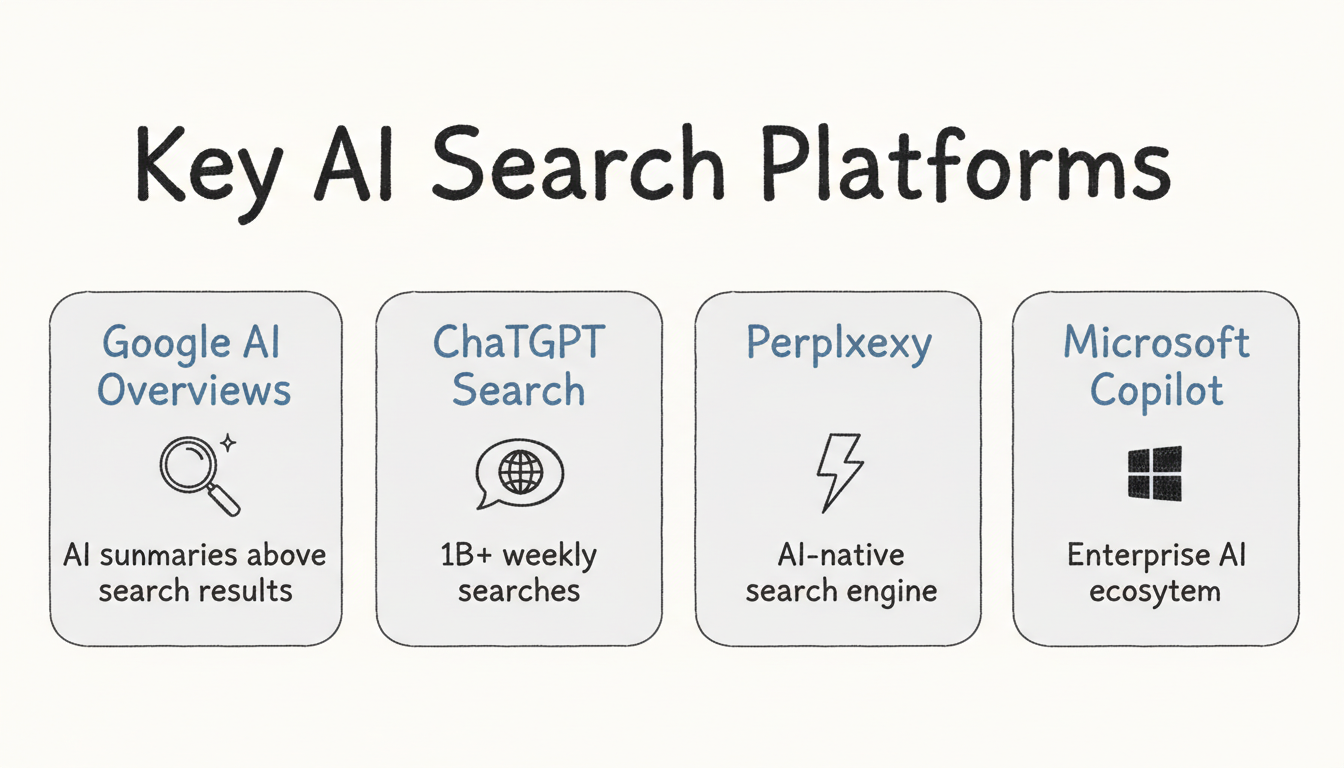
The key platforms requiring optimization include:
- Google AI Overviews: AI-generated summaries appearing above traditional search results
- ChatGPT with search: Over 1 billion weekly searches with web browsing capabilities
- Perplexity: AI-native search engine processing millions of queries daily
- Microsoft Copilot: AI-integrated search across the Microsoft ecosystem
Each platform uses different retrieval methods, but the optimization fundamentals overlap significantly. Organizations implementing AI search optimization services often see improved visibility across multiple platforms simultaneously.
Core Principles of AI Search Optimization
Effective AI search optimization builds on several foundational concepts that determine whether your content gets cited.
Content Extractability
AI systems extract specific passages to include in responses. They don't summarize entire articles - they pull discrete statements. Optimize for extraction by:
- Front-loading information: Place key points immediately after headings
- Writing standalone statements: Each paragraph should make sense without surrounding context
- Using specific facts: Replace vague claims with concrete data points
- Keeping paragraphs short: Under 80 words enables cleaner extraction
Understanding AI search content structure principles helps ensure your content remains quotable and extractable by AI systems.
Authority Signals
AI systems evaluate whether sources deserve citation. Research shows that sites appearing across multiple platforms are significantly more likely to be cited. Build authority through:
- Earned media presence: Coverage in trusted publications increases citation likelihood
- Cross-platform visibility: Consistent presence across authoritative sites signals trustworthiness
- Expert authorship: Content attributed to recognized experts performs better
- Original research: Proprietary data and studies attract citations
Content Freshness
Freshness matters more for AI search than traditional SEO. Perplexity in particular strongly favors recently updated content. Optimization tactics:
- Update high-priority content regularly
- Include clear "last updated" timestamps
- Remove outdated information promptly
- Cover current developments in your topics
Technical Accessibility
AI crawlers need access to your content. Ensure:
- Robots.txt allows AI crawlers (PerplexityBot, GPTBot, ChatGPT-User)
- Critical content renders server-side (not JavaScript-dependent)
- Schema markup helps AI understand content structure
- Pages load quickly and function on mobile
Practical AI Search Optimization Tactics
Beyond principles, specific tactics improve AI visibility.
Structure Content for AI Extraction
Format content so AI can easily quote it:
- Use question-based headers that match how users search
- Provide direct answers in the first sentence after each header
- Include comparison tables for complex topics
- Add FAQ sections with specific, complete answers
Build Citation-Worthy Content
Research indicates certain content elements increase AI citation likelihood:
- Statistics with sources: Data-backed claims are more quotable
- Expert quotations: Named expert opinions add credibility
- Step-by-step instructions: Clear how-to content gets referenced
- Definitions and explanations: Authoritative explanations earn citations
Optimize for Multiple Platforms
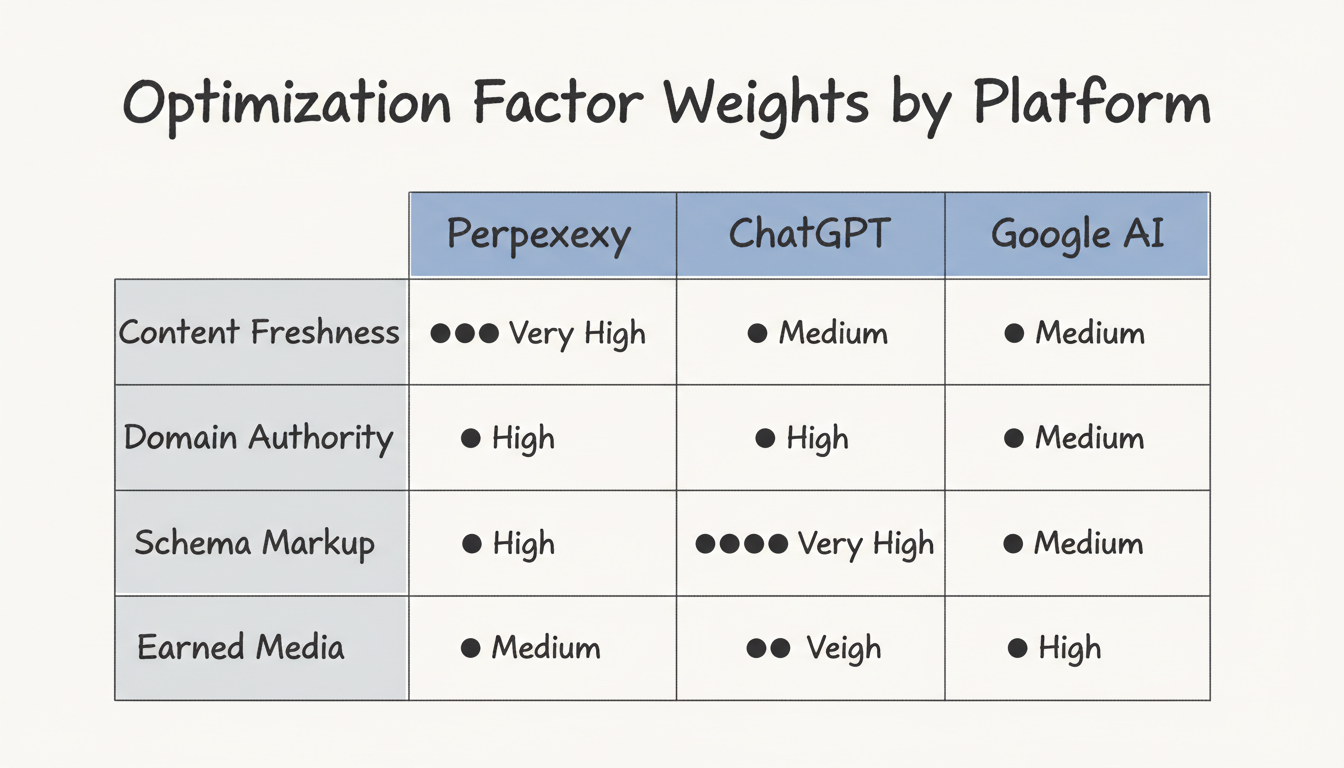
Different AI platforms weight different factors:
Factor | Perplexity | ChatGPT | Google AI |
Content freshness | Very High | Medium | Medium |
Domain authority | High | Very High | High |
Schema markup | High | Medium | Medium |
Earned media | Medium | Very High | High |
Diversify your optimization approach rather than focusing on a single platform. Many teams leverage AEO tools to manage optimization across multiple AI search engines efficiently.
Implement Schema Markup
Schema helps AI systems parse your content. Priority implementations:
- Article schema: Establish authorship and publication dates
- FAQ schema: Make Q&A pairs explicitly extractable
- Organization schema: Build entity recognition for your brand
- HowTo schema: Structure instructional content for AI extraction
Proper schema markup alignment ensures AI systems can correctly interpret and cite your content.
Measuring AI Search Performance
Traditional SEO metrics don't capture AI visibility. Track:
- Citation frequency: How often your brand appears in AI responses
- AI referral traffic: Visits from perplexity.ai, chat.openai.com, etc.
- Citation accuracy: Whether AI represents your information correctly
- Share of voice: Your visibility versus competitors in AI responses
Tools like Otterly.AI, Search Party, and Conductor now offer AI visibility tracking.
Key Takeaways
AI search optimization complements traditional SEO. Research shows significant overlap between pages that rank well organically and those cited in AI responses. Build SEO foundations first, then add AI-specific optimization.
Extractability matters most. Structure content so AI can pull clean, quotable statements. Short paragraphs, front-loaded information, and specific facts improve citation likelihood.
Freshness signals increasingly important. Update content regularly and include clear timestamps. This matters especially for Perplexity visibility.
Track AI-specific metrics. Citation frequency and AI referral traffic reveal what traditional analytics miss.
How to Prioritize Optimization Tactics
Start with the pages already earning some visibility, because improving a near-miss is cheaper than manufacturing a new winner. Map your top queries, find the posts that appear but do not cite, and tighten the answer, structure, and evidence until the model pulls them. The highest-leverage work is usually on content you already have.
Then schedule new content only for genuine gaps where no page answers the question. Spreading effort across hundreds of low-intent queries dilutes the program; concentrate on the questions that map to your buyers' research, and let the core set earn citations before expanding.
Common AI Search Optimization Mistakes
The first mistake is writing for ranking alone. A page that buries the answer three scrolls down may still rank but will not be cited, because the model cannot extract a clean response. Lead with the direct answer and label the sections so the extraction is trivial.
The second is treating schema as the whole job. Markup helps a model confirm what it read, but it cannot rescue thin or inaccurate copy. The deciding factor is whether the visible content is genuinely useful and trustworthy, so invest in the writing before the tags.
Building a Repeatable Optimization Routine
Make the citation check a fixed habit, not an occasional audit. A short list of target queries verified on a set cadence turns optimization from a one-time rewrite into a loop that compounds as platforms re-read your category. The routine, not the single burst, is what produces steady gains.
Pair the check with a lightweight log of what changed and what moved, so you learn which edits correlate with citations. Over a few quarters that log becomes your playbook, and new pages ship pre-optimized instead of needing a later rescue.
FAQs
How Is AI Search Optimization Different from SEO?
SEO aims to rank pages in search results where users click through to websites. AI search optimization aims to get content cited in AI-generated responses where users may receive answers directly. Both share foundational elements like quality content and authority, but AI optimization adds focus on extractability and freshness.
Does AI Search Optimization Replace Traditional SEO?
No. Google AI Overviews heavily draw from pages already ranking well in traditional search. AI search optimization layers additional tactics on top of SEO fundamentals rather than replacing them.
How Long Does AI Search Optimization Take to Work?
Technical improvements like schema markup can show impact within weeks. Authority-building activities take 3-6 months for meaningful visibility gains. Content freshness improvements can affect Perplexity visibility quickly given its emphasis on recent updates.
Which AI Search Platform Should I Prioritize?
Google AI Overviews reach the largest audience since they appear within Google Search. Perplexity and ChatGPT are growing rapidly and valuable for thought leadership. B2B companies should also consider Microsoft Copilot given its enterprise integration.
Once you earn AI citations, you also need to watch them over time. Our AI brand monitoring guide covers the tools and metrics for tracking how models describe your brand.
Paid placements can complement the organic work above. See our Perplexity Ads overview for a testing plan.
For a concrete example of optimizing an independent index, see our Brave Search SEO guide.