
A design partner is an early user who agrees to help build and validate your 0-1 product in exchange for close access and influence, not a discount. To find them, profile the person feeling the pain acutely, mine your warm network and a few targeted communities, then pitch a mutual-value collaboration instead of a sale. Aim for roughly three to six engaged partners.
For a pre-seed or seed founder taking a brand-new product to market, design partners are how you turn a hunch into a validated product. They give you real usage, honest feedback, and a reference story before you have a repeatable sales motion. This guide covers what a design partner is, who qualifies, where to find them, and how to structure the relationship so it converts into revenue.
What Is a Design Partner (and How Is It Different from an Early Adopter or a Customer)?
A design partner is an early customer who co-builds the product with you. They commit real time, share candid feedback, and let you observe how they work, in return for shaping the roadmap and getting a solution to a problem they care about. The relationship is a collaboration, not a transaction.
That is different from an early adopter, who buys a rough product because they want the outcome now and tolerate the sharp edges. It is different again from a beta user in a private beta launch, who tests features you already built, and from a paying customer, who expects a finished, supported product. Design partners sit earliest on this curve and have the most influence over what you build.
| Type | What they want | What you give | What you get | When to use |
|---|---|---|---|---|
| Design partner | Influence over the product and a fix for an acute pain | Deep access, roadmap input, white-glove support, often free | Problem validation, usage insight, a reference story | Pre-product or v0.1, when you are still shaping the solution |
| Early adopter | The outcome now, even if rough | A working-enough product, maybe a discount | First revenue and proof of demand | You have a usable v1 but no polish |
| Beta user | Early access to new features | A free or cheap preview to test | Bug reports and feature feedback | Feature is built and needs real-world testing |
| Paying customer | A reliable product that solves the job | A finished, supported product with SLAs | Recurring revenue and expansion | You have product-market fit signals and can support at scale |
Why Do Early-Stage Startups Need Design Partners?
Because building in a vacuum is the fastest way to ship something nobody wants. Design partners, often supported by a forward deployed engineer, compress your learning loop: instead of guessing at the problem, you watch someone live it and react to your solution in real time. That is worth more than any survey.
- Problem validation. You confirm the pain is real, frequent, and expensive enough to pay for before you overbuild.
- Product direction. Their workflow exposes the features that matter and the ones you imagined but nobody needs.
- Proof and references. A named partner who got a result becomes your first case study and social proof for the next ten prospects.
- A path to revenue. Engaged partners often convert to paying customers, and they warm-intro you to peers with the same problem.
Design partners are also the raw material for your first real pipeline. Treat what you learn from them as the foundation of your demand generation from zero and your broader go-to-market strategy, not a side experiment.
Who Makes a Good Design Partner?
The best design partners share a specific profile. Screen for it deliberately, because the wrong partner sends you chasing features that only they need.
- Acute, current pain. They feel the problem now and have already tried to solve it with spreadsheets, scripts, or a rival tool. Painkillers beat vitamins.
- Representative of your target segment. They look like the customers you eventually want, so their feedback generalizes.
- Willing to invest time. They will take weekly calls, share their workflow, and respond quickly. Enthusiasm is a feature.
- Candid, not polite. You want the partner who tells you what is broken, not the one who nods along.
- Some authority to act. They can adopt the tool and, later, sign off on paying for it.
Get precise about this profile before you start outreach. If you have not written it down, build a sharp data-driven customer persona first so you are recruiting a pattern, not a random volunteer.
Where Do You Actually Find Design Partners?
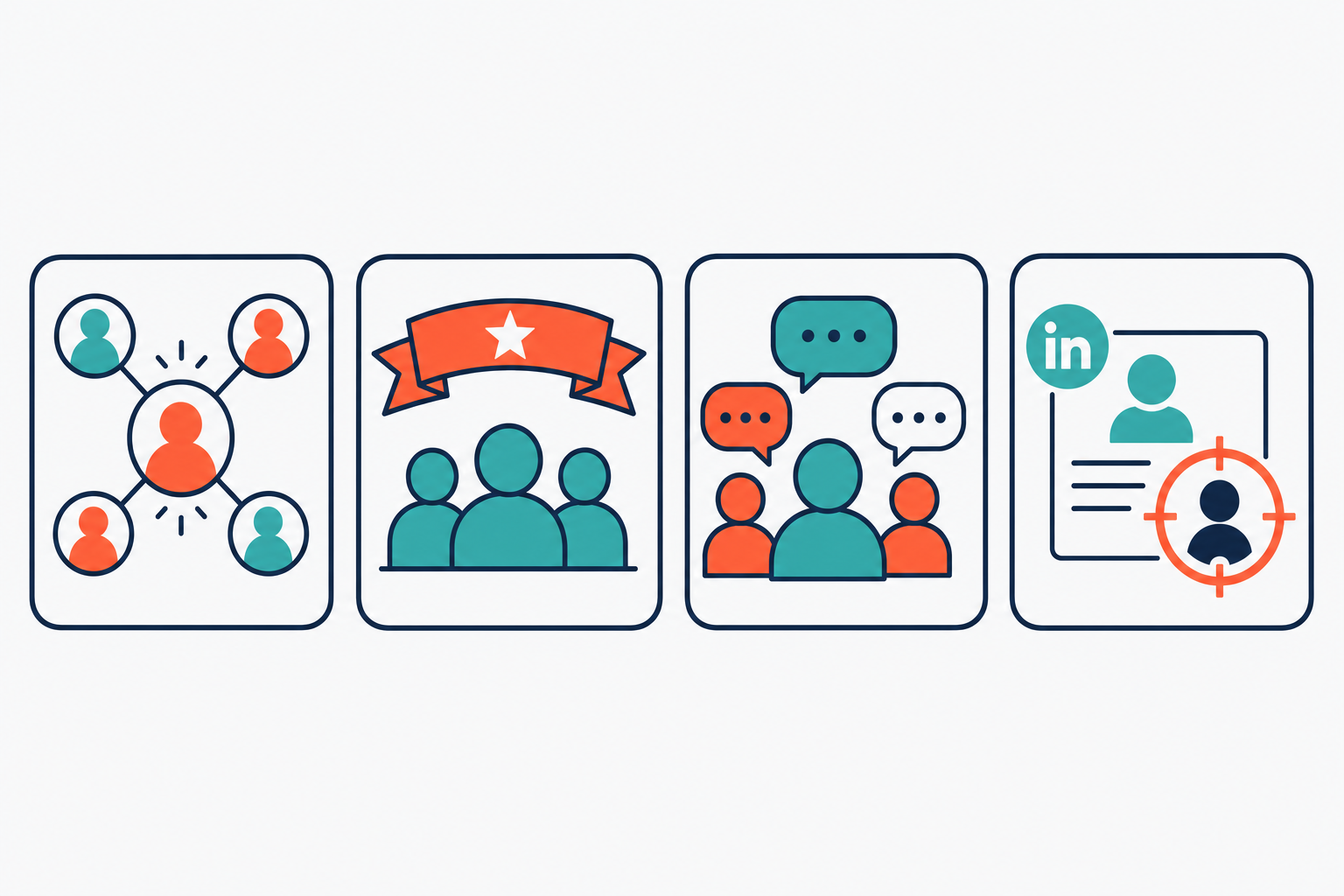
You find them where your acute-pain users already gather. Start with the warmest channels and widen out. Warm sources convert far better than cold, so exhaust them first.
- Warm network. Former colleagues, past customers, friends of friends. Ask for intros to the specific role you defined, not "anyone who might be interested."
- Accelerator and YC batchmates. If you are in a program, your cohort and its alumni are the highest-trust B2B pipeline you will ever have. Many are your ICP or know it.
- Niche communities. Slack groups, Discord servers, and subreddits built around the job you solve. Contribute genuinely for weeks before you pitch, then reach out to people whose posts describe your problem.
- Targeted LinkedIn outreach. Search the exact title and industry, send a short personalized note that names the pain, and ask for a 20-minute conversation, not a demo.
- Industry events and meetups. Small, focused gatherings where practitioners complain about the exact problem out loud. Follow up within 24 hours.
At this stage the founder is the salesperson. Doing this outreach yourself is the whole point of founder-led sales, because the signal you gather is as valuable as the partner you land.
How Do You Pitch and Structure a Design Partnership?
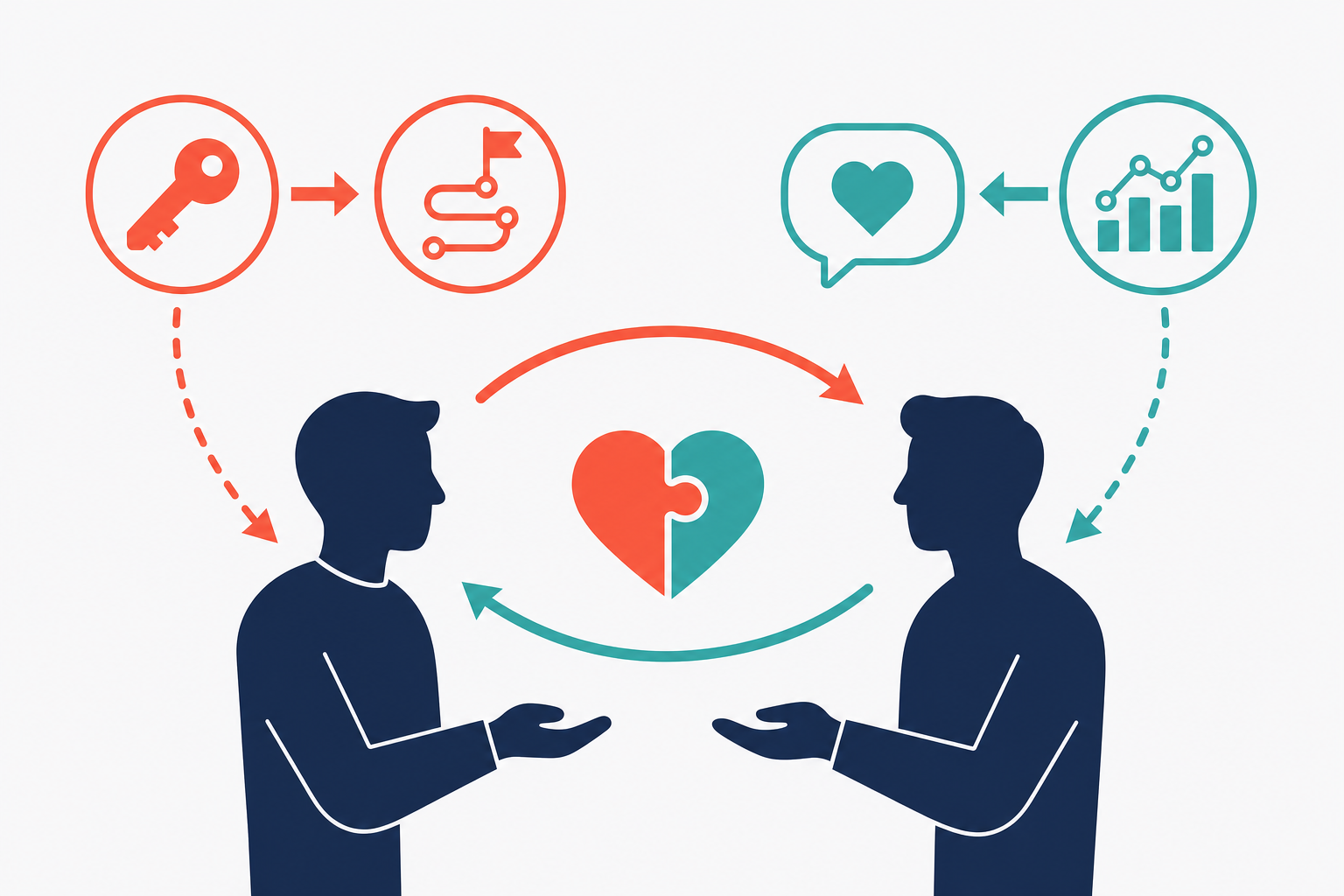
Pitch collaboration, not a purchase. The message is: "I am building X to solve Y. You clearly live with Y. Would you help me shape it, and in return get early access and direct influence over what I build?" Lead with their problem, offer mutual value, and be explicit that it is early.
Then make the arrangement concrete so both sides know what "partner" means:
- Set a clear scope and cadence. A defined window, often 6 to 12 weeks, with a weekly or biweekly check-in.
- Name the mutual value. They get a fix for the pain, roadmap influence, and hands-on support. You get access, feedback, and a reference.
- Decide on price up front. Many design partnerships are free or heavily discounted during the build phase, with an agreed path to a paid plan once you deliver value.
- Define success together. Write down the outcome that would make them a happy paying customer, so you are both aiming at the same result.
- Put light terms in writing. A one-page agreement covering the term, expectations, data handling, and the conversion conversation prevents drift.
How Many Design Partners Do You Need, and When Do You Graduate Them to Paying Customers?
Aim for roughly three to six deeply engaged partners, not twenty shallow ones. Too few and you overfit to one voice; too many and you cannot give each the attention that produces good signal. Three to six lets you spot patterns while staying hands-on.
Graduate a partner to paying customer when the signals line up: they use the product without prompting, they get a result they can articulate, and they would be genuinely annoyed if you took it away. That is your cue to have the pricing conversation you flagged at the start. Convert your happiest partners into paid plans and case studies, then use those references to reach the next wave of buyers described in how to get your first customers.
What Mistakes Ruin a Design Partner Program?
- Recruiting friends who lack the pain. Polite feedback from someone outside your segment sends you the wrong direction.
- Building every request. Partners describe symptoms; your job is to find the shared problem underneath, not to become a custom dev shop.
- Pitching a sale instead of a collaboration. Leading with price or a demo kills the co-building dynamic that makes partners valuable.
- Too many partners, too little depth. Spreading thin means shallow feedback and no one who feels ownership.
- No conversion plan. If you never agreed on a path to paid, "free forever" becomes the default and you never test willingness to pay.
- Going silent. Slow responses and skipped check-ins signal you are not serious, and engaged partners quietly disengage.
Once a partnership is working, run the conversion play: how to convert free pilots into paid contracts.
FAQ
How is a design partner different from a beta tester? A design partner helps shape what you build and influences the roadmap before the product is finished, while a beta tester evaluates features you have already built. Partners co-create; testers give feedback on your decisions.
Should design partners pay? Usually not during the build phase, since their time and candid feedback are the currency. Agree up front on a clear path to a paid plan once you deliver measurable value, so free access does not become permanent.
How many design partners should a startup have? Around three to six deeply engaged partners is the sweet spot. That is enough to spot real patterns across users but few enough that you can give each one the attention that produces high-quality signal.
How long does a design partnership last? Most run 6 to 12 weeks of active collaboration, enough to ship iterations and validate the outcome. After that you either graduate the partner to a paying customer or part ways having learned what you needed.
Key Takeaways
- A design partner co-builds and validates your 0-1 product in exchange for access and influence, not a discount.
- Screen for acute, current pain, segment fit, and willingness to invest time and be candid.
- Find them warm first: your network, accelerator batchmates, niche communities, targeted LinkedIn, and focused events.
- Pitch a mutual-value collaboration, set scope and cadence, and agree on a path to paid up front.
- Aim for three to six engaged partners, then graduate the happiest into paying customers and case studies.
- Avoid friends without the pain, building every request, and running with no conversion plan.