
A startup mentor is someone who has already made the mistakes you are about to make, and will tell you about them before you pay for them. For an early-stage founder, the right mentor compresses years of trial and error into a few honest conversations about product, go-to-market, and the fundraising path. This guide covers how founders find a mentor, how the role differs from an advisor, and how to make the relationship actually pay off.
TL;DR: How Founders Should Approach Mentorship
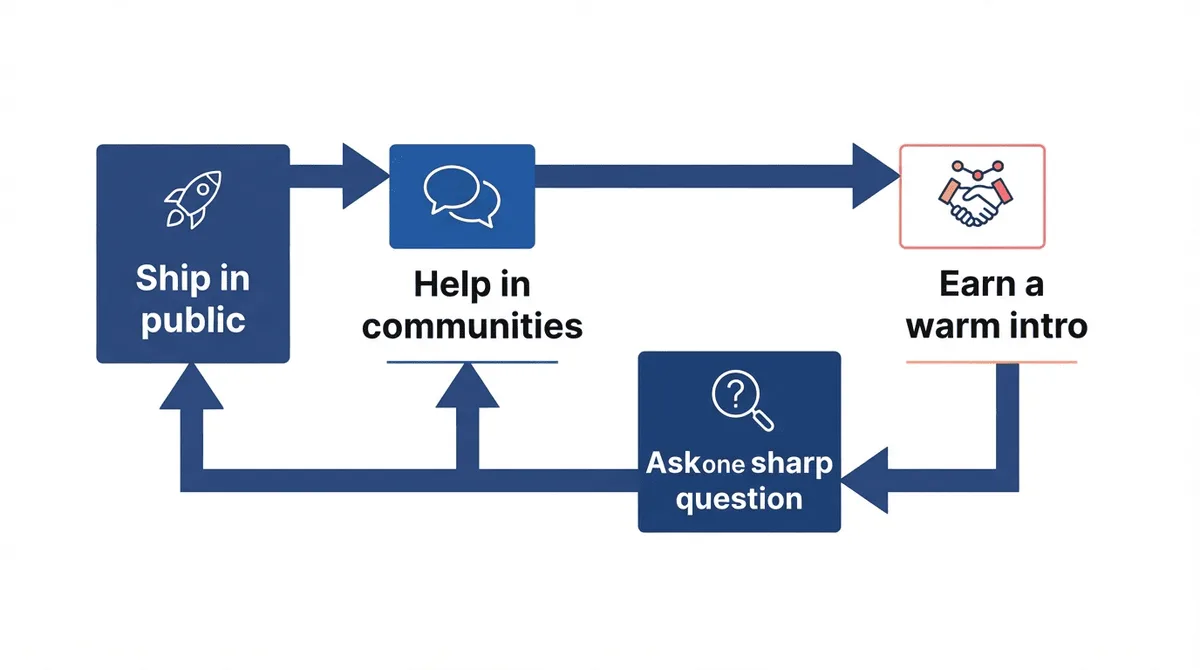
- Find mentors by giving first: ship in public, help in communities, and ask specific questions.
- A mentor guides and connects; an advisor usually has a formal, often equity-based role.
- Choose mentors whose scars match your stage and sector, not the biggest name.
- Structure the relationship with a clear ask, a cadence, and reciprocity.
- Avoid treating one mentor as the single source of truth, and don't let advice replace decisions.
Why Does a Startup Mentor Matter More at the Early Stage?
At seed and pre-seed you are making high-stakes calls with almost no data: who to hire, what to build next, how to price, when to raise. A mentor who has lived those decisions can flag the trap you cannot see because you have never hit it. The leverage is not the answer, it is the avoided mistake and the introduction you would not have earned alone.
Mentors also steady the founder. Isolation is one of the quiet killers of early startups, and a mentor who has been there normalizes the chaos and keeps you honest about what is working. That steadiness shows up in better decisions and, often, in warmer investor and customer intros.
What Is the Difference Between a Startup Mentor, Advisor, and Coach?
The three get confused because all give guidance, but the commitment and incentive differ. A mentor is usually informal and free, driven by genuine interest. An advisor typically has a formal role and equity, and a coach is often paid to improve specific founder skills. Knowing which you need prevents awkward, mismatched relationships.
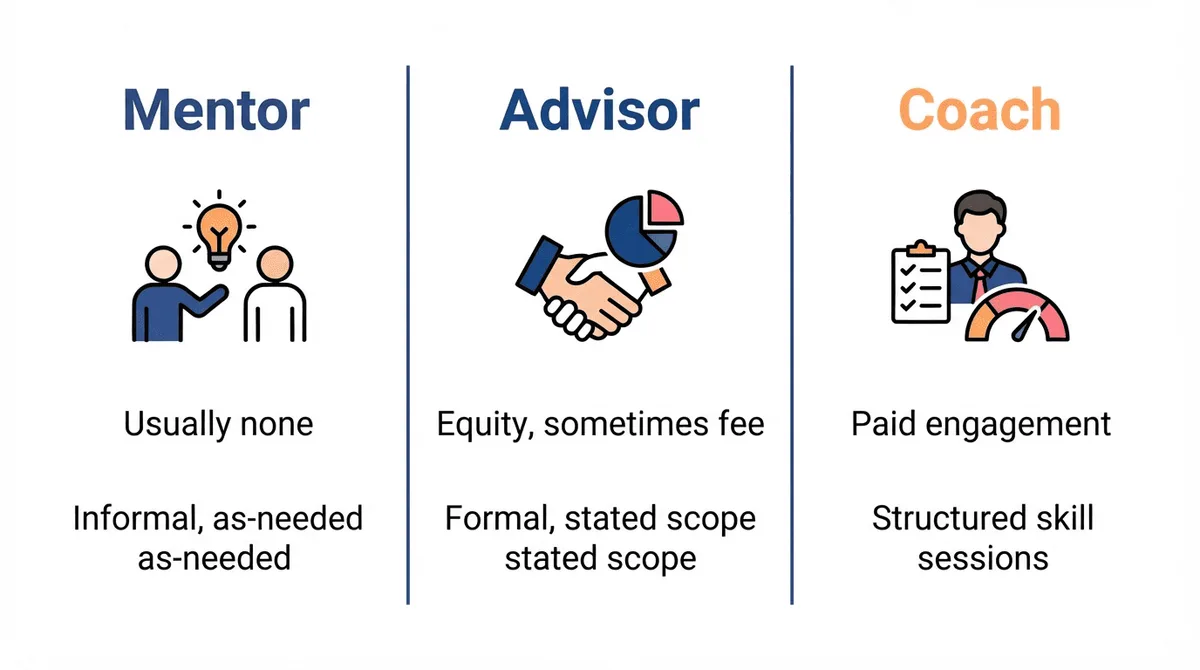
| Role | Compensation | Typical commitment |
|---|---|---|
| Mentor | Usually none | Informal, as-needed conversations |
| Advisor | Equity, sometimes a fee | Formal, often a stated time and scope |
| Coach | Paid engagement | Structured sessions on specific skills |
Where Do Founders Find a Startup Mentor?
- Ship in public and help others in communities; mentors notice useful people.
- Work your accelerator and alumni network if you are in one.
- Ask a trusted investor or peer for one specific introduction.
- Attend small, focused events where operators outnumber spectators.
- Follow and genuinely engage operators you respect before asking for time.
The pattern is give before you ask. A founder who shows up with a sharp, specific question and some proof of work gets far more intros than one sending cold "can I pick your brain" notes. Your accelerator network and accelerator marketing peers are a natural first pool.
How Do You Choose the Right Mentor for Your Startup?
Match the mentor's scars to your problem. If you are stuck on enterprise sales, a mentor who scaled self-serve consumer product may give confident but wrong advice. Look for someone a step or two ahead of you, not ten, because they remember the details that matter at your stage. A great mentor asks better questions rather than dispensing answers.
Also check for bias and ego. Some mentors relitigate their own past instead of understanding your context. The right fit is someone who respects your call after giving their view. If you are weighing formal help, our advisory board and advisor equity guides explain the step beyond mentoring.
How Should You Structure a Mentor Relationship?
Make the ask specific and the cadence predictable. Instead of "can we chat sometime," ask "can I get 20 minutes on Thursday about whether to hire sales now or stay founder-led?" Then do the work, report back, and offer value in return, whether that is an intro, a testimonial, or simply a clear update on progress. Reciprocity is what keeps a busy operator engaged.
Keep a light written record of advice and decisions so you can revisit it as context changes. If the relationship is with a customer-facing mentor, coordinate with your first-customer work so the guidance translates into motion rather than more thinking.
What Are the Common Mistakes Founders Make with Mentors?
The first mistake is collecting mentors like trophies and then ignoring all of them. The second is treating one loud mentor as the single source of truth, which can pull you off your own read of the market. The third is asking vague questions that waste the limited time you have. Finally, some founders let mentorship become a substitute for deciding, endlessly gathering opinions instead of shipping.
Balance is the fix: a small set of mentors whose strengths complement each other, a clear decision owner (you), and a bias to act. If you are in YC or a similar program, also align mentor input with what YC looks for so guidance points at the same goals your investors care about.
Key Takeaways
- A mentor compresses years of mistakes into a few honest conversations and warm intros.
- Mentor is informal and free; advisor is formal and equity-based; coach is paid and skill-focused.
- Find mentors by giving first: ship in public, help in communities, ask specifically.
- Match the mentor's scars to your stage and sector, and keep the cadence predictable.
- Do not treat one mentor as the only truth, and never let advice replace a decision.
Frequently Asked Questions
How Do I Find a Mentor for My Startup?
Find mentors by being useful in public first: ship, write, and help inside communities where operators gather, then ask one specific question or for a single intro. Work your accelerator alumni network and ask a trusted investor for a warm introduction. The founders who get mentorship are the ones who show proof of work and respect the other person's time. Avoid generic "pick your brain" requests.
What Is the Difference Between a Mentor and an Advisor for a Startup?
A mentor is usually informal, unpaid, and driven by genuine interest, while an advisor has a formal role, often with equity, and a stated scope. Coaches sit between, paid to build specific founder skills. Use a mentor for perspective and intros, and move to an advisor when you want ongoing, accountable guidance tied to the company. See our advisor equity guide for the formal step.
Should a Startup Pay a Mentor?
Most mentors do not expect payment, and paying can change the dynamic from candid help to a service relationship. If you want structured, accountable help, a coach or a formal advisor with equity is the cleaner model. Pay when you need repeatable skill-building or a defined scope, not for the occasional conversation a mentor gladly gives for free. Keep mentorship informal and save equity or fees for real commitment.
How Many Mentors Should a Startup Founder Have?
Three to five is a healthy range: enough perspectives to challenge your thinking without so many that advice paralyses you. Pick mentors whose strengths cover your biggest gaps, such as product, go-to-market, and fundraising, and make sure they complement rather than contradict each other. You stay the decision owner. If the group pulls you in circles, narrow it and act.
Can a Mentor Help a Startup Raise Funding?
Yes, often indirectly. A good mentor sharpens your story, pressure-tests your assumptions, and makes warm introductions to investors they trust. They rarely replace your own fundraising motion, but they can shorten the path by flagging weak spots and opening doors. Align their input with what investors look for so the guidance points at the right milestones.